
06-05-2026 17:23
Thomas Læssøehttps://svampe.databasen.org/observations/10594257
06-05-2026 11:25
 Castillo Joseba
Me mandan el material seco de Galicia (España) re
28-04-2026 20:07
 Lothar Krieglsteiner
... on twig in the air at standing Ceratonia siliq
05-05-2026 22:40
Gernot FriebesHi,I believe this is a Plagiostoma growing on a Sa
04-05-2026 18:13
 Stephen Martin Mifsud
ID request for what seems to be a true aquatic fun
04-05-2026 16:39
Stephen Martin Mifsud
ID request: This specimen was collected in Malta o
28-07-2011 18:31
 Alex Akulov
Dear FriendsToday I made the pdf file of Velenovsk
04-05-2026 09:50
Castillo Joseba
Me mandan el material seco de Galicia,(España) re
02-05-2026 12:42
Alain BRISSARDBonjour à tousJeuidi 30 avril dernier on m'a remi
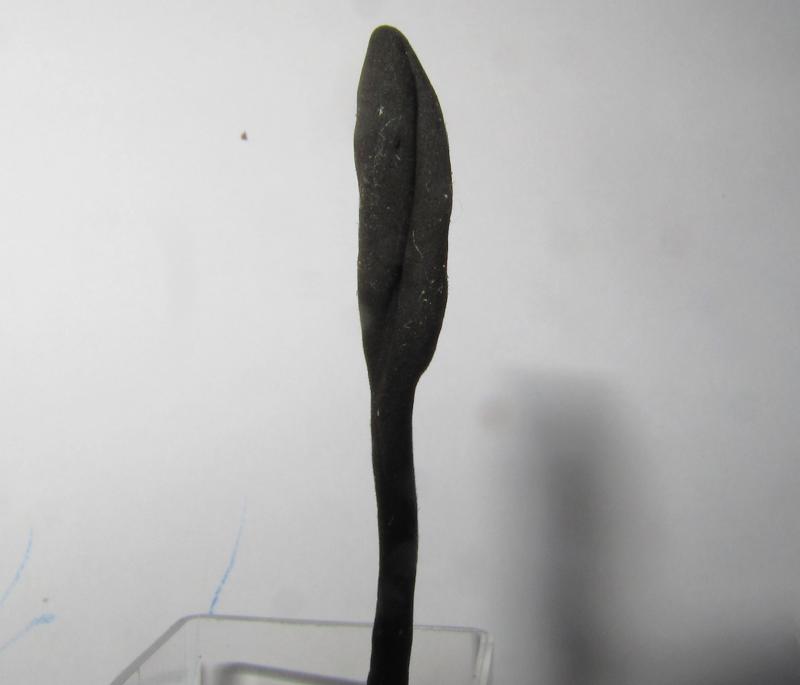
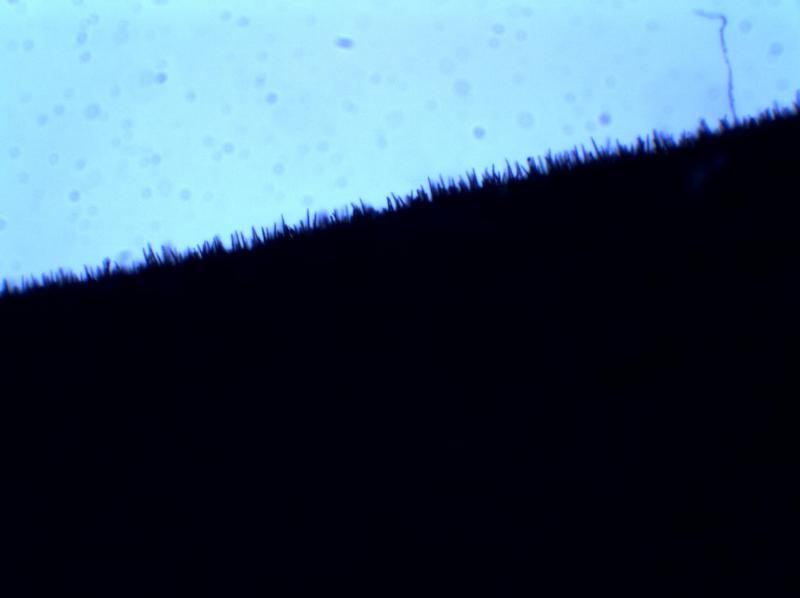
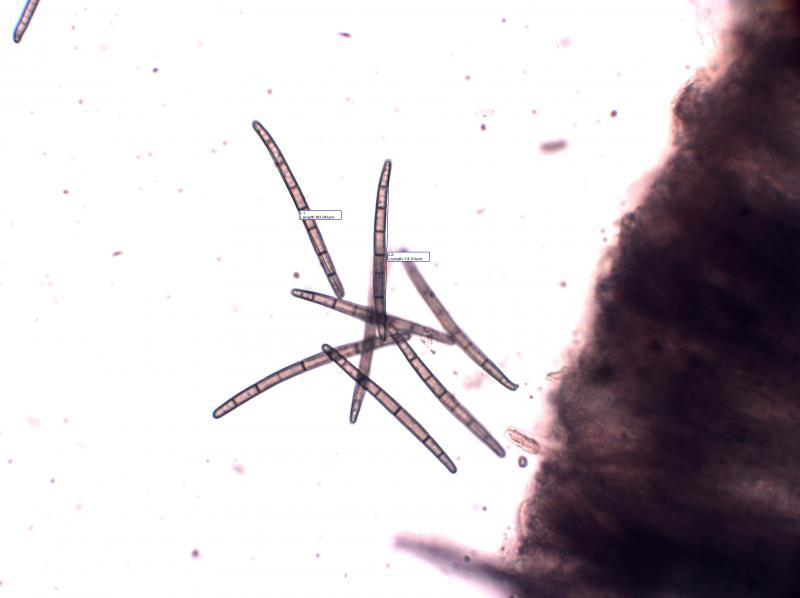
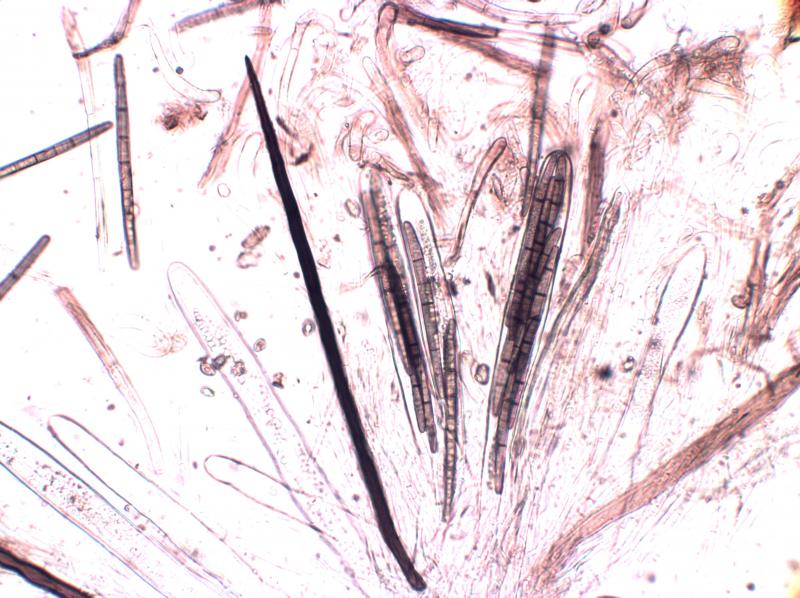
 This Trichoglossum was found in my garden lawn in an area where one or two Waxcaps grow. c4cm tall and covered in hairs. An obvious first choice was T hirsutum but the spores were all 7 septate. The hairs were up to 80µ and pointed. I have very little literature on this group but it seems to point to T walteri. Can someone with more experience pass comment.
Thanks
Mal
Hi Malcolm,
this should bei Trichoglossum walteri as all spores of the ripe collection seem to be at most 8-celled. I found this repeatedly in different regions in Germany, on acid soil iin meadows and heathland, and once at stream-side in a forest (with Fraxinus) also. The shape is in the range of the species. I show a foto with some carpophores.
Regards from Lothar
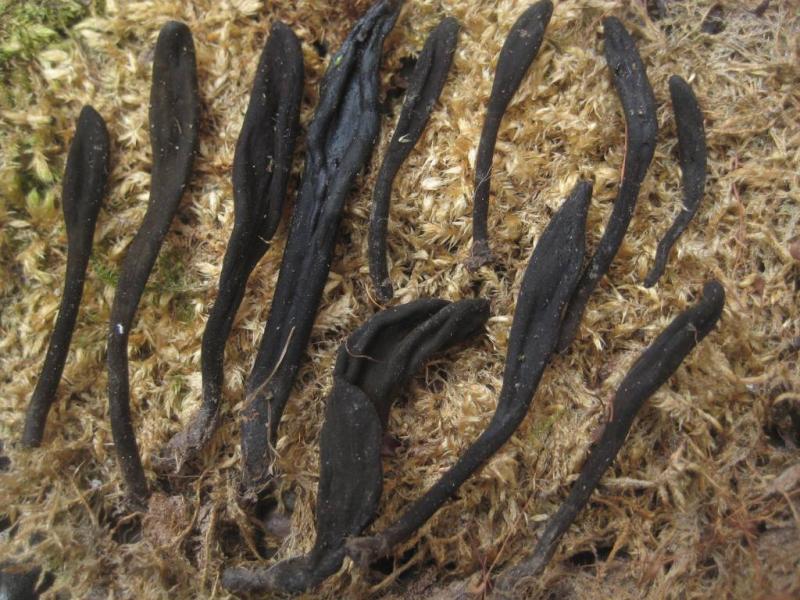
Mal
Very difficult question if one reccal the conclusions of the recent paper
Sabino Arauzo and Placido Iglésias, La familia Geoglossaceae ss. str. en la península ibérica y laMacaronesia, Errotari 11, 166-259, 2014;
where the authors claim for an urgent revision of the genus Trichoglossum. They mention specimens usually atributed to other species of Trichoglossum, besides T. hirsutum, that are indistinguishable by DNA from the type species. These include specimens with 7-septate spores. I don't know if this also includes T. walteri, that usually has 7-septate spore (in majority) and is said to differ from other 7-septate species by having spores less than 100 um, that however was not found in the study area. By this reason they include all such species (T. octopartitum, T. variabile, T. velutipes) under the name T. variabile, until the situation be clarified.
Best regards,
zaca
Hi Zaca,
I cannot say if all the taxa you mention are identical or not - at least my collections of T. walteri (approximately 20 - all witih spores (mostly) below 100 µm and with spores never more than 7-septate) seem to be all the same, a well-characterized taxon (and I think Malcolms specimens should belong there). Once I determined a specimen (with doubt) as T. variabile, from a more base-rich habit (together with T. hirsutum) - it was not what I call T. walteri in my opinion.
Regards from Lothar
http://www.pilzkunde.de/index.php/publikationen - first Link 49
Hi all:
in this case the option T. walteri seems correct, the ascospore guttulation is similar to that of Gl. glutinosum or G. fallax.
Zaca, T. octopartitum is a true species, with multiguttulate spores>100. Another question is the group of species with variable septation.
Best regards.
Sabino.
Hi Sabino,
thank you for your statement.
Coincidence: Geoglossum fallax (often) and G. glutinosum (few times) are the only other earth tongues I found in the sites with Trichoglossum walteri.
Regards from Lothar
for clarifying this matter.
Regards,
zaca
Hi Sabino or Zaca,
could I have this, too?
Sabino Arauzo and Placido Iglésias, La familia Geoglossaceae ss. str. en la península ibérica y laMacaronesia, Errotari 11, 166-259, 2014;
Regards from Lothar
Mal