
22-04-2026 20:17
 Marian Jagers
Is anyone familiar with the Hyphomycetes genus Pse
22-04-2026 20:54
 Enrique Rubio
Hi to everybody.This Pyrenopeziza grew in moist le
22-04-2026 01:06
 Richard VALERI
Bonjour à tous.Je vous présente cette Nectria s.
21-04-2026 13:36
Gernot FriebesHi,I am out of ideas for this one. I collected Sal
21-04-2026 13:19
Gernot FriebesHi,this Lophodermium on Typha has ascospores measu
21-04-2026 13:05
Gernot FriebesHi,this hyphomycete feels familiar but I was not a
20-04-2026 22:00
 Malcolm Greaves
These pale yellow, hairy ascos were growing on cul
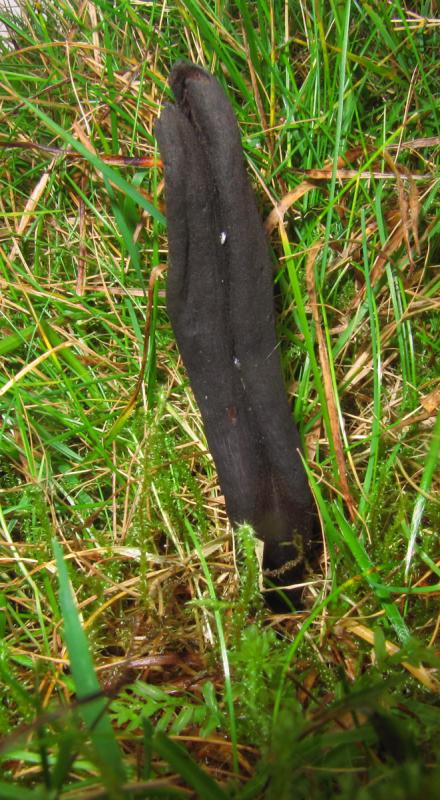
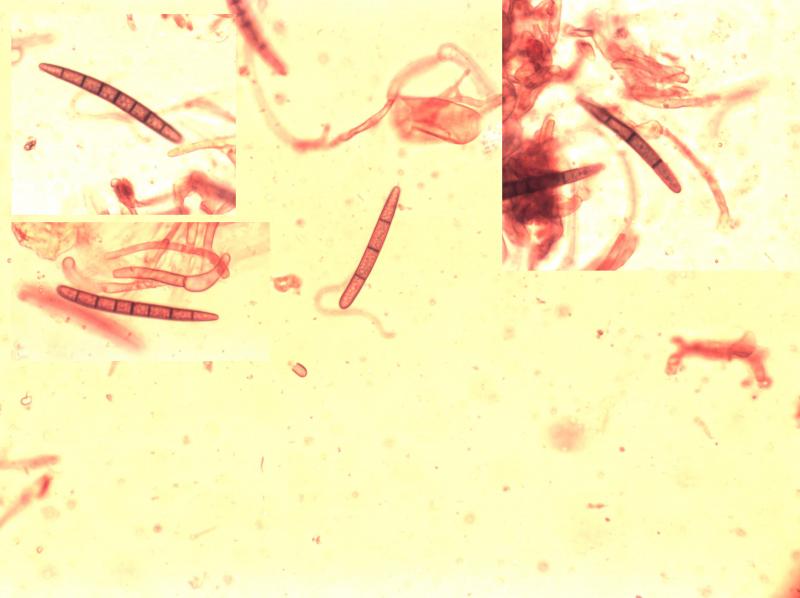
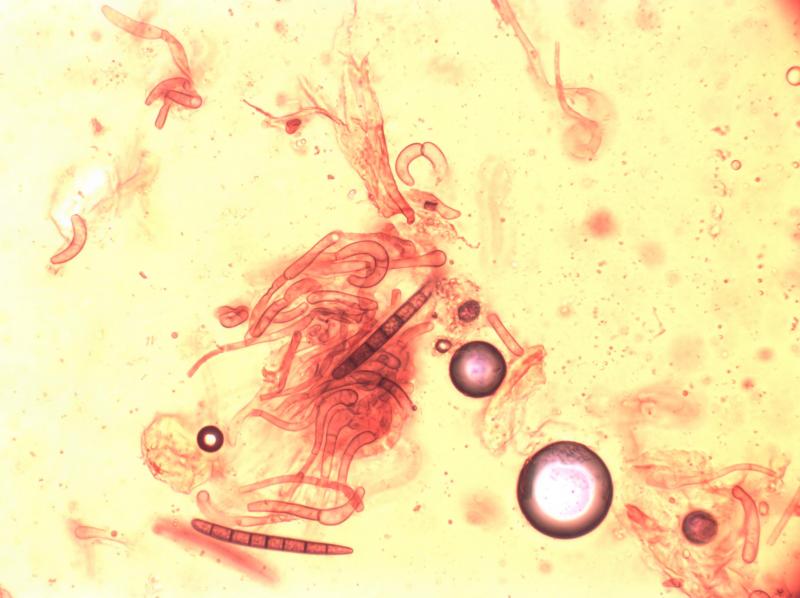
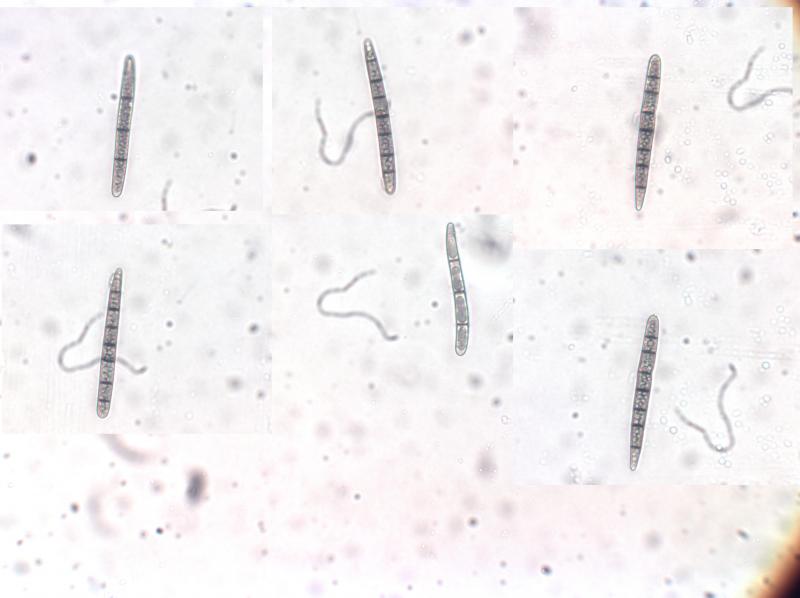
This was found alongside a Geoglossum hirsutum. With almost no stalk and over 11cm tall it is the largest one I have found. Spores hyaline when immature with 1 - 7 septa, dark with 7 spepta when mature 70 x 6µ. Paraphyses swollen and mostly bent at the top.Is this G umbratile.
Thanks
Mal

Zotto
Mal
Mal
Thanks for your comments Zotto.
Mal
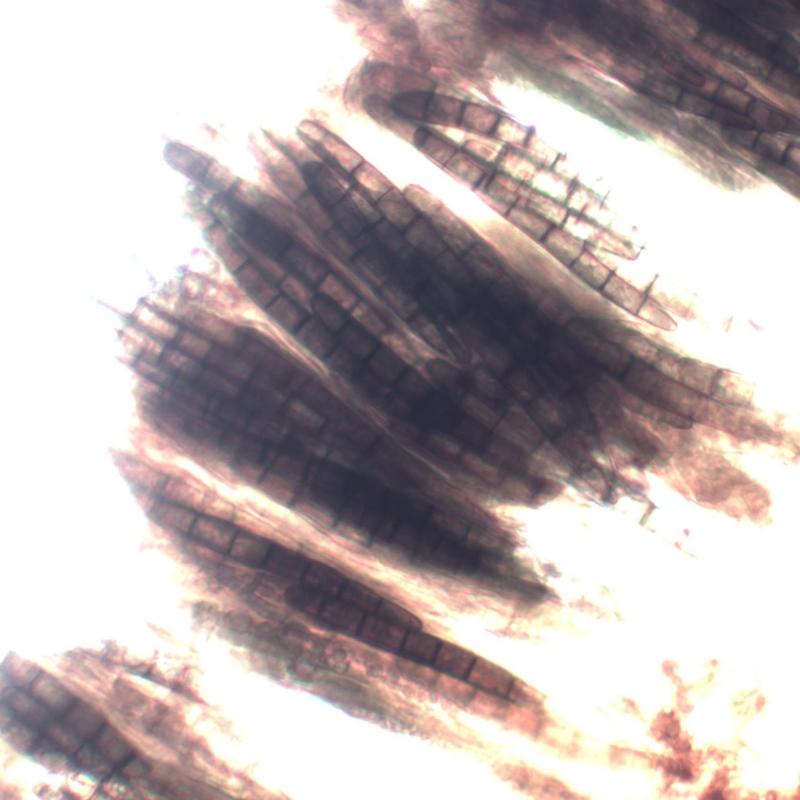
Hi Malcolm, Zotto:
The morphology of the spores (guttules) and paraphyses is not G. fallax.
The stipe looks smooth, fit into our concept of G. umbratile.
Best regards.
Sabino Arauzo.
And yes indeed, in G. fallax I saw the spores with large drops with some small around, but here they are multiguttulate.
In your work, Sabino, G. nigritum and G. umbratile, are synonyms, and you figured a multiguttulate spore. But my cf. umbratile HB6543 has gutules like fallax and also hyaline spores inside the asci. I compared it otherwise with G. (Hemileucoglossum) elongatum.
Zotto
Hi Zotto:
I have not seen amorphous brown material in paraphyses of G umbratile or closest species. H. elongatum has ephitecium and stipe hairy.
I think that HB6543 belongs to G. fallax - starbaeckii group.
Sabino.
I only wonder why in my HB 1217 no exudate is shown, perhaps I overlooked.
Zotto