
06-05-2026 17:23
Thomas Læssøehttps://svampe.databasen.org/observations/10594257
06-05-2026 11:25
 Castillo Joseba
Me mandan el material seco de Galicia (España) re
28-04-2026 20:07
 Lothar Krieglsteiner
... on twig in the air at standing Ceratonia siliq
05-05-2026 22:40
Gernot FriebesHi,I believe this is a Plagiostoma growing on a Sa
04-05-2026 18:13
 Stephen Martin Mifsud
ID request for what seems to be a true aquatic fun
04-05-2026 16:39
Stephen Martin Mifsud
ID request: This specimen was collected in Malta o
28-07-2011 18:31
 Alex Akulov
Dear FriendsToday I made the pdf file of Velenovsk
04-05-2026 09:50
Castillo Joseba
Me mandan el material seco de Galicia,(España) re
02-05-2026 12:42
Alain BRISSARDBonjour à tousJeuidi 30 avril dernier on m'a remi
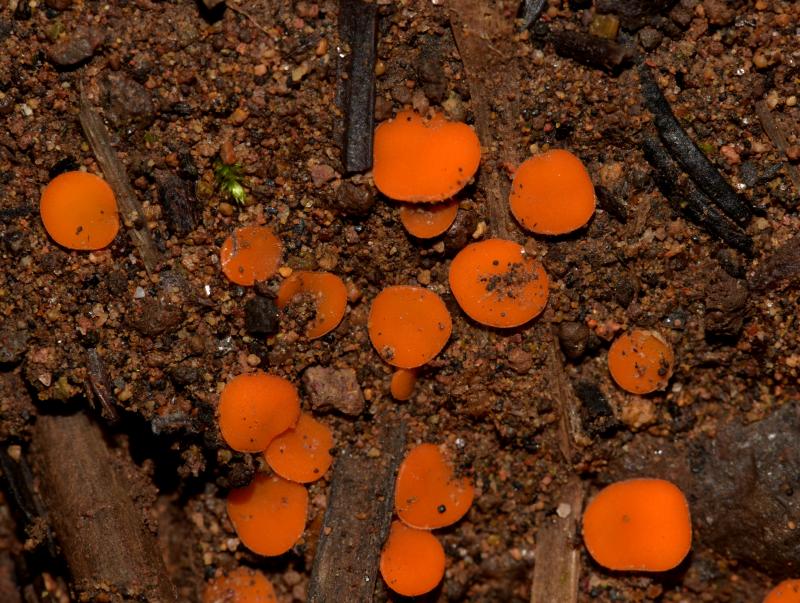
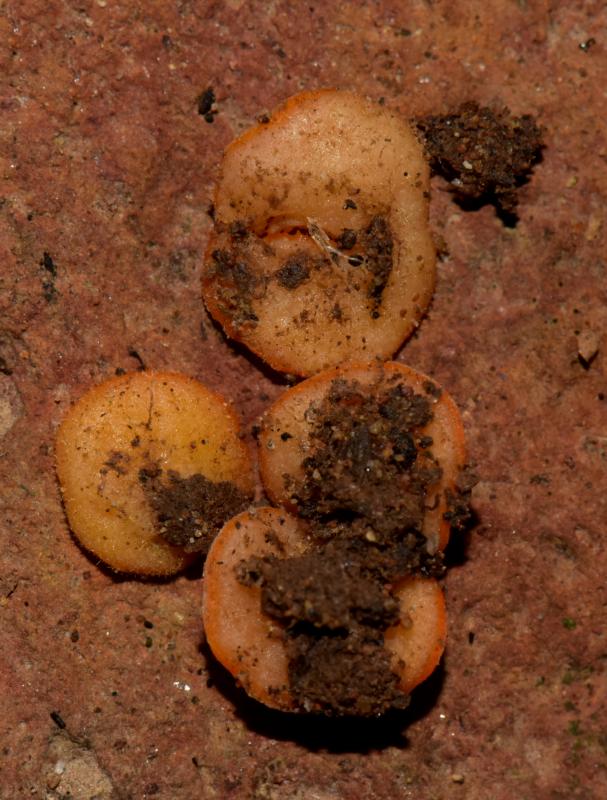
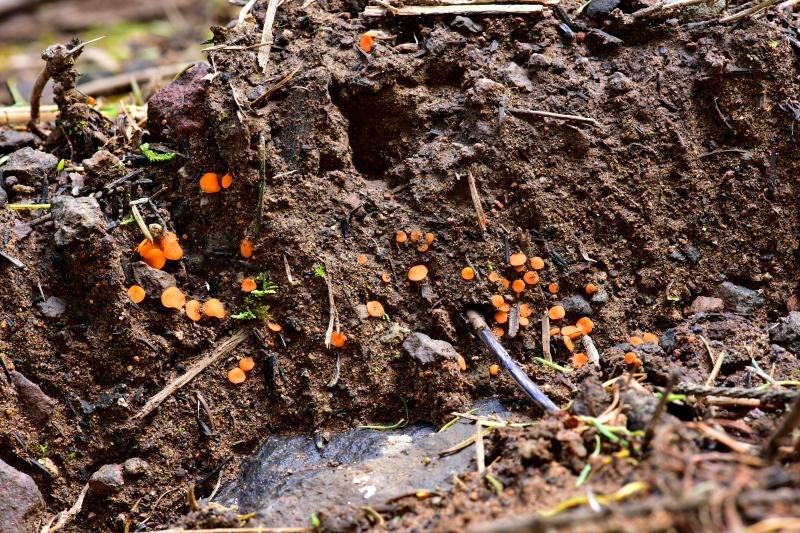
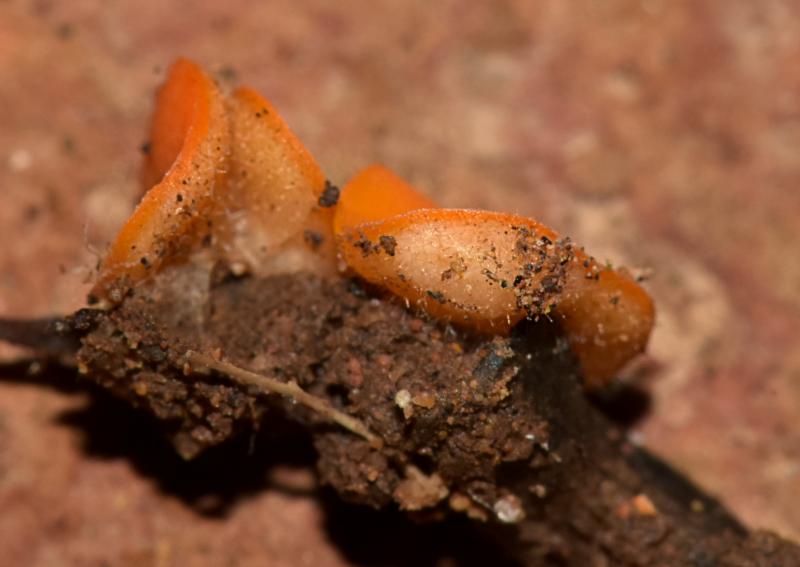
 I found a couple collections of this small asco at 3100 meters under Abies religiosa at the Reserva de la biosfera de la Mariposa Monarca, El Rosario, Michoacan, Mexico. It was growing in tire tracks of a rarely used road, and also on road sides.
 It has no stipe, but as attached to the substrate in the middle of the underside. 3 - 8 mm diameter. Sometimes attached to organic matter. Under Abies religiosa.
Cheilymenia and Scutellinia have been suggested, any opinion on which name is more likely? Or another genus? I have not scoped it yet, but I do have a microscope. If I scope it, what should I look for?
Hi Alan,
I think nobody can reliably say anything without microscopical details. You should dry your collected ascomata in the air, maybe on a heating, and afterwards examine the dried specimens or give them to somebody who has a microscope.
Scutellinia does not seem very likely to me - and a lot of genera are possible. The only thing we know definitely is that it has carotinoid pigments that are very much distributed in Pezizales.
Regards from Lothar

This looks like Cheilymenia crucipila, but as Lothar said, microscopic data are required to help you.