
05-03-2026 10:07
Hulda Caroline HolteHello, I found and collected this species growing
07-03-2026 13:06
 éric ROMERO
Bonjour tous, Sur cône d'épicea fortement imbu,

08-03-2026 14:05
 Thierry Blondelle
Bonjour à tous,Sur 3 récoltes supposées de H. l

05-03-2026 16:30
François BartholomeeusenDear forum members, On the 2nd of February 2026,
06-03-2026 09:41
 Alain GARDIENNET
Hi forum, I'm now looking for another reference c

Hola a todos.
Subo unas fotos de una Peziza que encontré en talud húmedo cerca de un camino encharcado y a las que le salpicaba agua cada coche que pasaba por allí. Estaban un poco embarradas...
Miden hasta 3,5 cm y no aprecié látex significativo al cortarlas.
Esporas de 15,3-18,9 x 8,5-10 micras.
Pensé que podría tratarse de P. infuscata, ¿Qué les parece?
Gracias por su ayuda.
Un saludo
Rubén
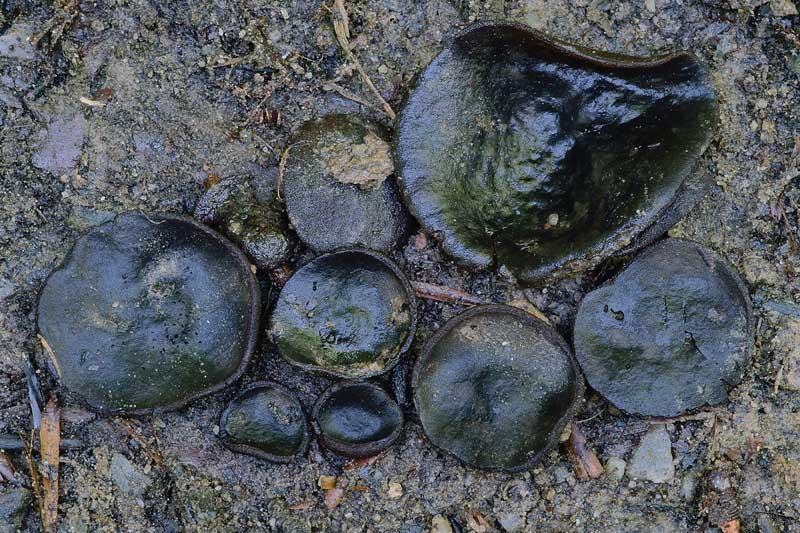
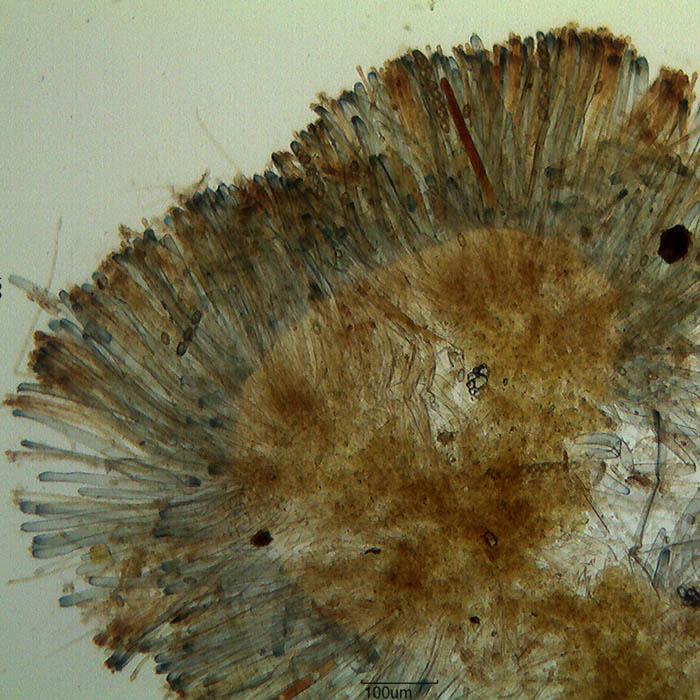
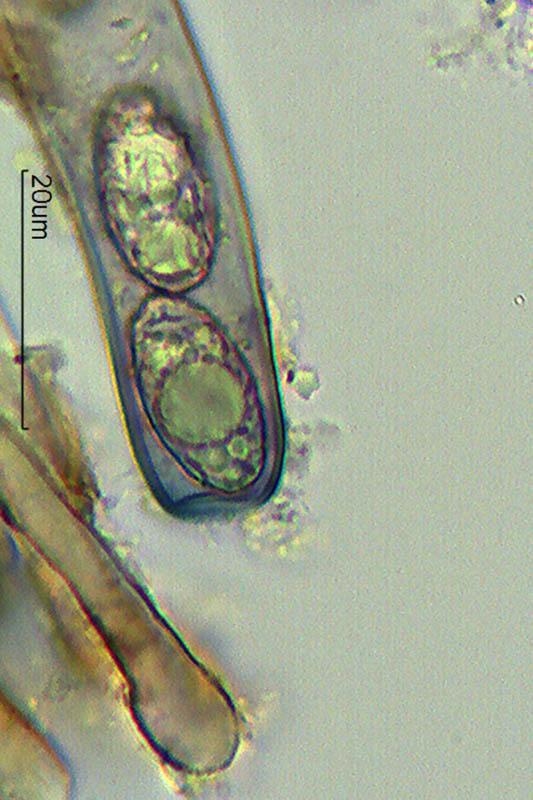
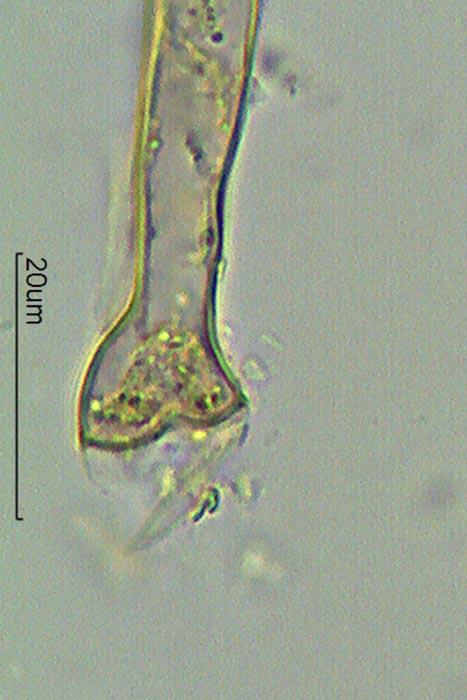
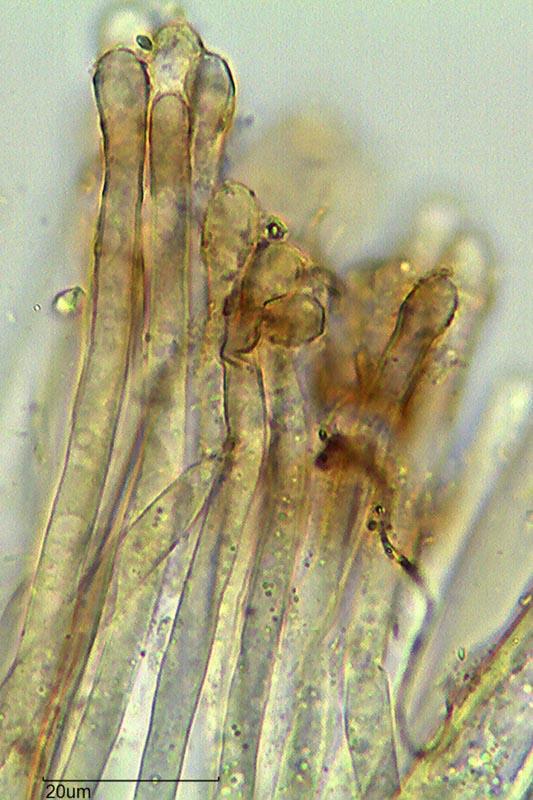
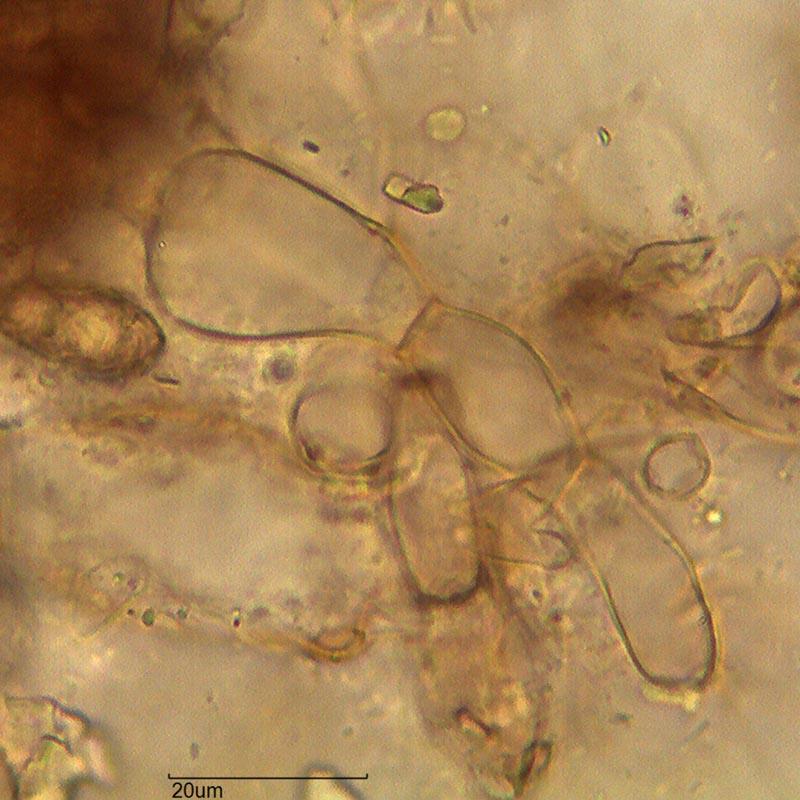
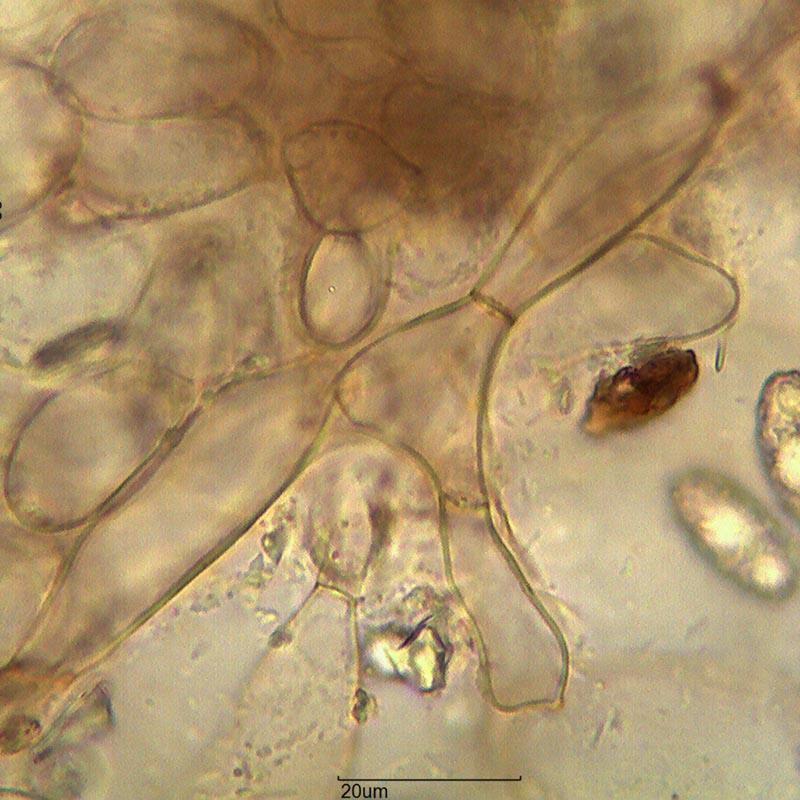
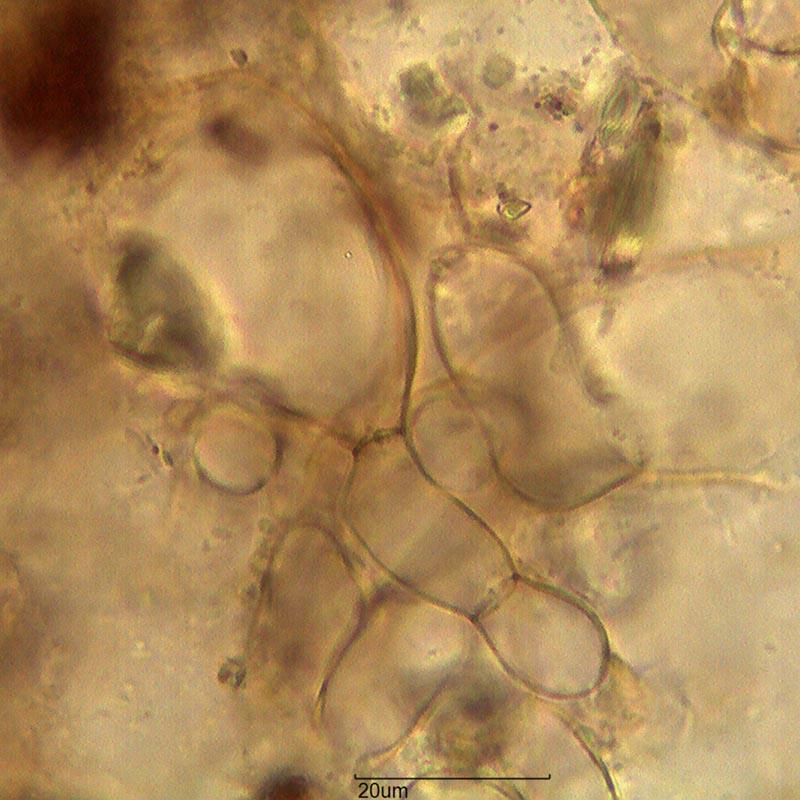
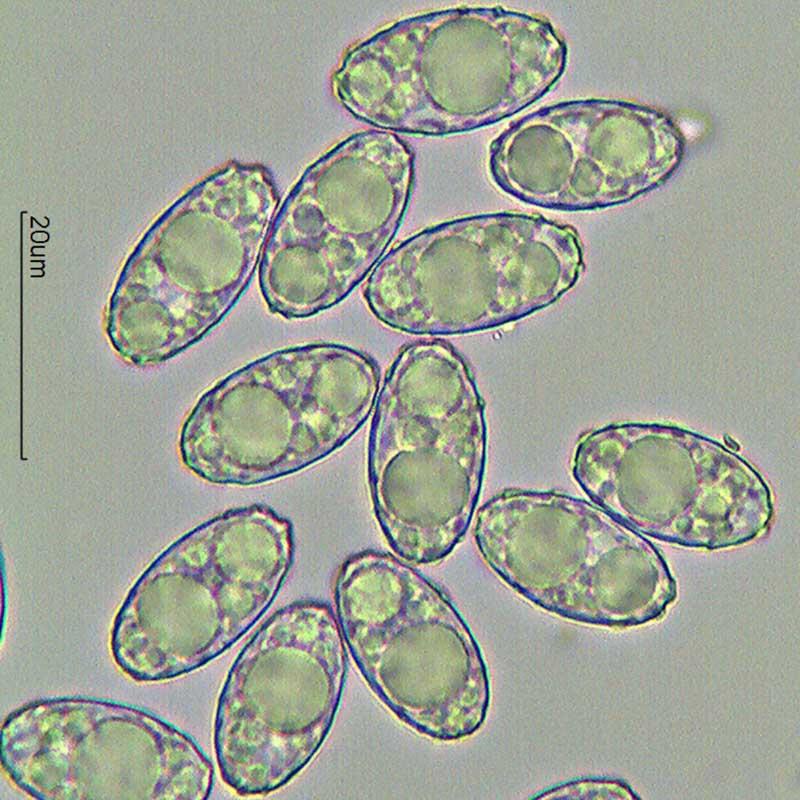
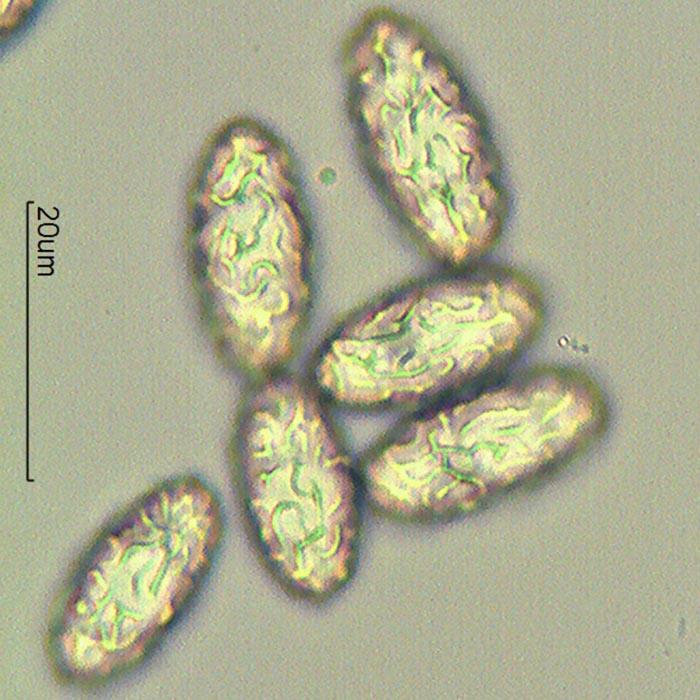
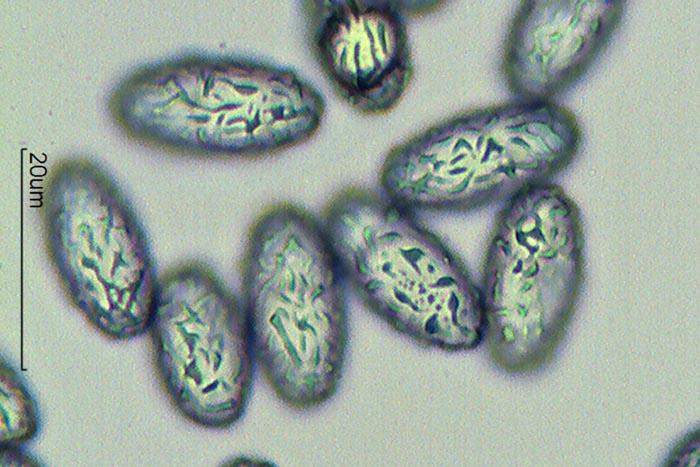
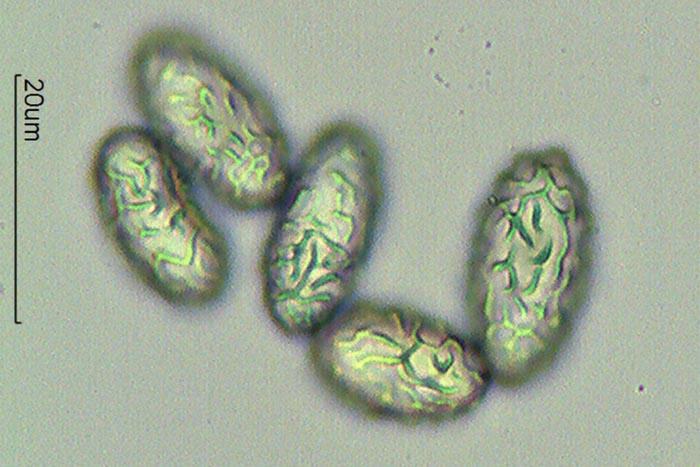

Your collection is very interesting, but difficult to propose a name.
I exclude P. infuscata (if this taxon really exists) because it should belong to the complex succosa/succosella, so with a yellowish latex.
The spore oranamentation reminds me P. limnaea but I never saw a collection with such colours.
Peziza atrovinosa Cooke is given (by Donadini) with biguttulate ascospores, 15.5-16.5 × 7.5-8 µm, elongated warts that can produce a network; flesh without latex; it grows in sandy soil in wet areas, under Salix.
P. badiofuscoides Donadini has uni-(bi-)guttulate ascospores, 15-16 × 7.5-8.5 µm, with elongated and ± anastomosed warts, but the flesh produces an opalescent latex.
As I never found these two species I cannot help you more.
Keep the material, it could be useful for a sequencing.
I wonder if the dark violet tint is fully natural, it seems to spray on the ground nearby the Peziza?
Gracias por sus respuestas, Nicolas y Jean-Pierre.
Guardaré el material para un futuro análisis de ADN.
Mando otra foto hecha un poco más alejada para ver si se aprecian mejor los colores de los apotecios. Eran negros y me parecieron al principio ejemplares de P. saniosa, pero no tenían látex.
Los colores estaban un poco subidos de tono, pero la foto se hizo dentro de un hayedo y con muy poca luz.
Saludos
Rubén
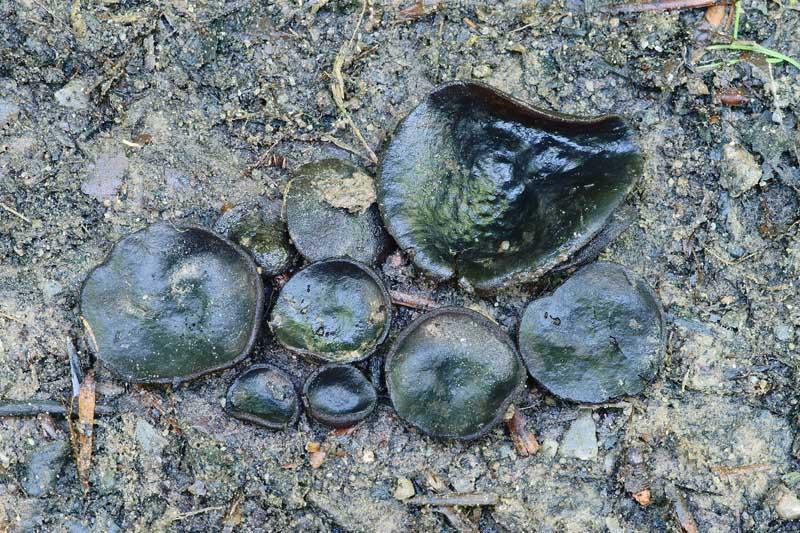

Macro maybe looks strange because they are so water-soaked, but micro fits well.
Cheers,
Raúl