
22-05-2026 13:29
Gernot FriebesHi,I am curious to hear your opinion on this mater
04-06-2026 07:02
 François Freléchoux
Bonjour, Voici la description d'une espèce qui p
18-10-2022 00:12
Valencia Lopez Francisco JavierHola amigos/asRecientemente encontré esta colecci
03-06-2026 19:45
 Miguel Ángel Ribes
Good afternoonI'm completely baffled by this suppo
03-06-2026 14:39
Thomas FlammerApothecia yellow, glassy-transparent, 80 - 120 ymS

16-03-2014 13:39
 Enrique Rubio
HI to all I'm looking for B. Hein's article on Wi
02-06-2026 14:33
 Nicolas VAN VOOREN
Hello.I'm searching for a PDF copy of the followin
Hymenoscyphus repandus
Steve Clements,
21-07-2015 15:32
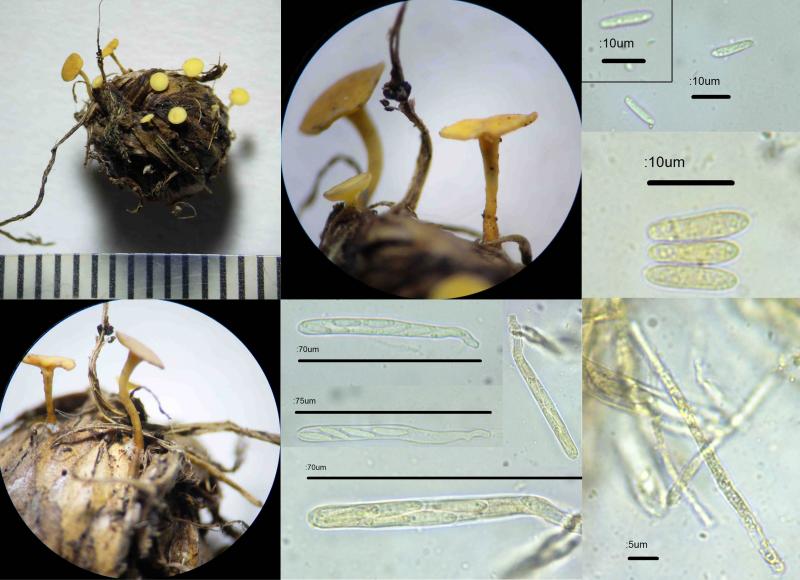
Trouvé le 15 Juillet sur fleur morte. Je crois qu'il est Hymenoscyphus repandus, mais il ya beaucoup de questions au sujet de cette espèce sur Asco France. C'est pourquoi je n'en suis pas sûr. Une confirmation serait très appréciée.
Cordialement,
Steve
Hi,
Found on July 15 on dead flower remains in mixed woodland. I work this out to be Hymenoscyphus repandus, but I note that there are many queries about this species on Asco France. A confirmation would be very much appreciated.
"Cap" up to 1.7mm, "stem" up to 2mm (0.3mm wide at apex, 0.2mm wide at base, which is a little tormentose). Colour is dull yellow all over. Shed spores 11-13.5 x 2.5-3, measured in water. Asci 65-75 x 6, blueing in Lugol. Spores arranged in a roughly biseriate fashion. Paraphyses threadlike, 2.5 wide.
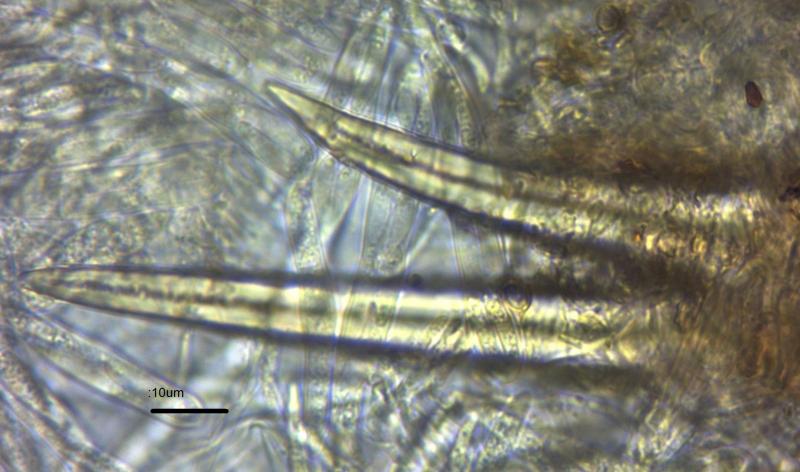
I was perplexed by the sharply pointed, refractive hair-like structures in my second picture. Are these part of the fungus or accidental inclusions?
Kind regards,
Steve
Hans-Otto Baral,
21-07-2015 17:08

Re : Hymenoscyphus repandus
Hi Steve
this looks quite correct. It seems like being part of the plant between the apothecia.
Are you sure with the absence of croziers? Because the species may sometimes occur with croziers. To me it looks like without, but this could be better seen.
Only some of the spores are alive in your preparations. In living asci the spores would be larger and more accurately obliquely biseriate.
By accident I got today a sequence of H. repandus, and it falls near H. menthae as I expected. The two are rather marginal within Hymenoscyphus.
Zotto
this looks quite correct. It seems like being part of the plant between the apothecia.
Are you sure with the absence of croziers? Because the species may sometimes occur with croziers. To me it looks like without, but this could be better seen.
Only some of the spores are alive in your preparations. In living asci the spores would be larger and more accurately obliquely biseriate.
By accident I got today a sequence of H. repandus, and it falls near H. menthae as I expected. The two are rather marginal within Hymenoscyphus.
Zotto
Steve Clements,
21-07-2015 20:09
Re : Hymenoscyphus repandus
Thanks very much Zotto,
The croziers aren't very pronounced.
It's a beautiful little asco!
Kind regards,
Steve
The croziers aren't very pronounced.
It's a beautiful little asco!
Kind regards,
Steve
Hans-Otto Baral,
21-07-2015 21:53
Re : Hymenoscyphus repandus
The feature of the crozier is quite a consistent and unequivocal character. I presume that diferent species are involved when H. repandus appears with croziers, which is the rarer case.
It helps to stain with Congo Red to see them better. I think your sample is without.
Zotto
It helps to stain with Congo Red to see them better. I think your sample is without.
Zotto
Steve Clements,
21-07-2015 23:26
Re : Hymenoscyphus repandus
Hello Zotto,
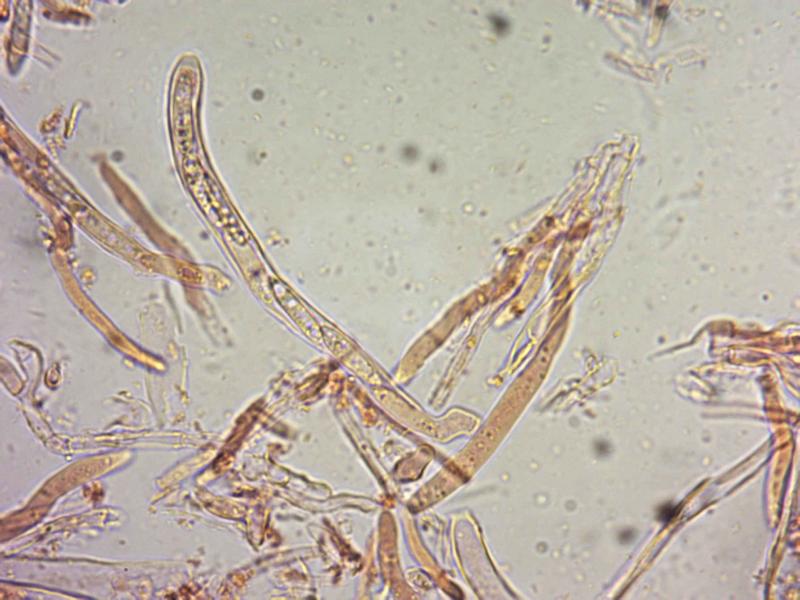
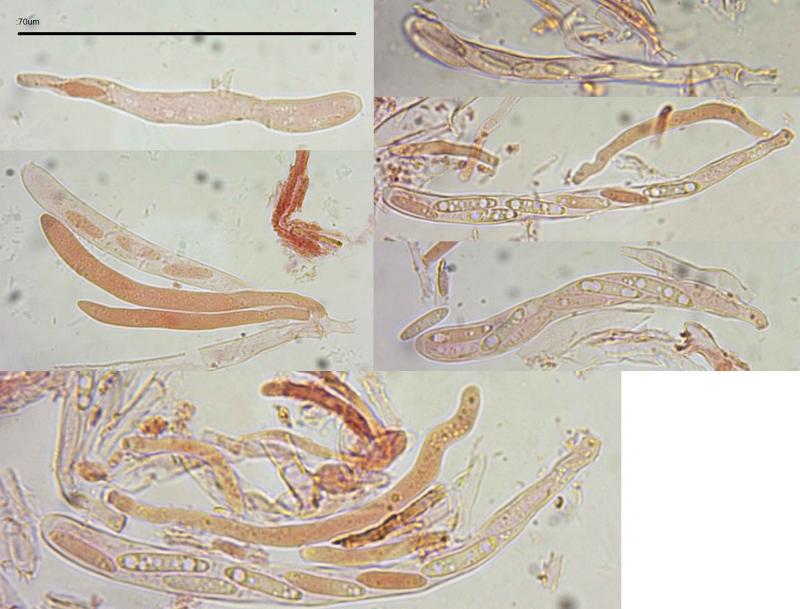
I have checked for croziers using Congo Red and oil immersion. Interestingly I could find only one ascus which looks as though it has something like a crozier. All the rest I looked at do not have croziers.
Steve
I have checked for croziers using Congo Red and oil immersion. Interestingly I could find only one ascus which looks as though it has something like a crozier. All the rest I looked at do not have croziers.
Steve
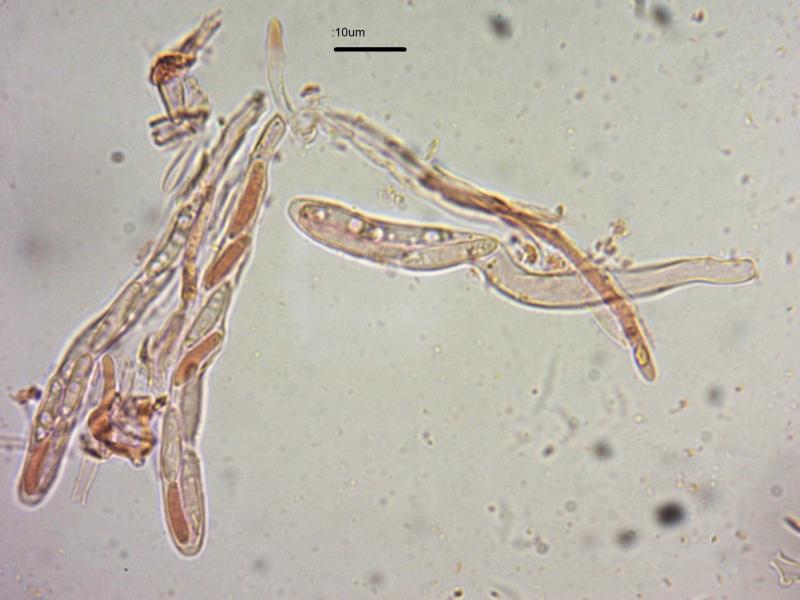
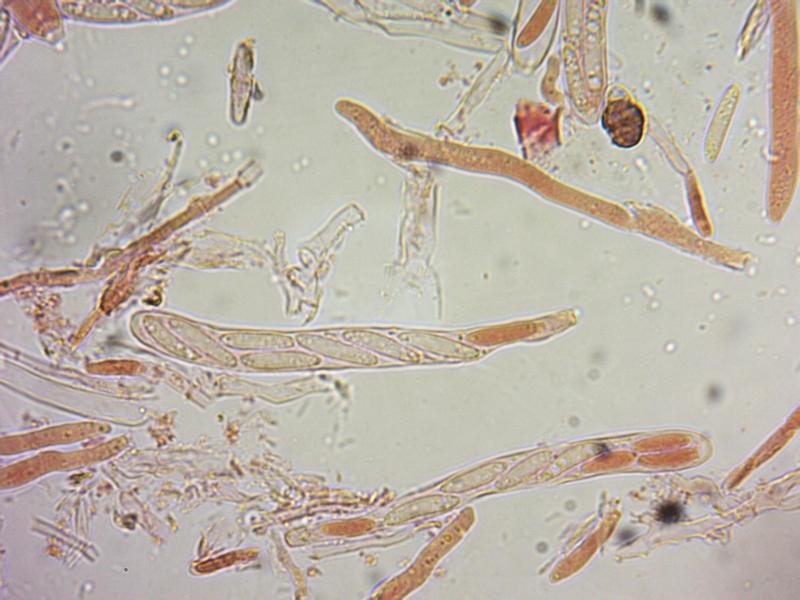
Hans-Otto Baral,
22-07-2015 06:46
Re : Hymenoscyphus repandus
Thanks! I think they are clearly without, could not find a case looking like a crozier.
Did you sample the species in England, and have you any idea about the plant?
Zotto
Did you sample the species in England, and have you any idea about the plant?
Zotto
Steve Clements,
22-07-2015 19:13
Re : Hymenoscyphus repandus
Hi Zotto,
The specimen was from the Longshaw Estate in the Peak District National Park, Derbyshire, N.England.
I don't know the species of the host.
Steve
The specimen was from the Longshaw Estate in the Peak District National Park, Derbyshire, N.England.
I don't know the species of the host.
Steve
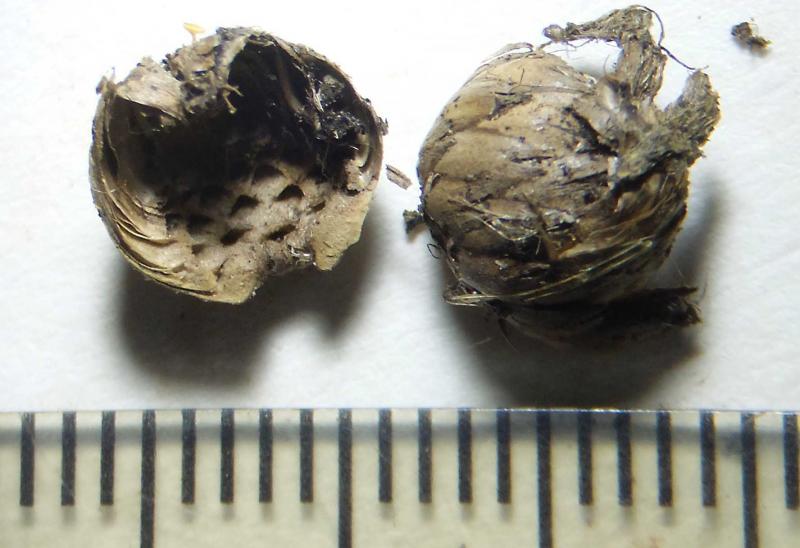
Hans-Otto Baral,
22-07-2015 20:14
Re : Hymenoscyphus repandus
Thanks! Surely an Asteraceae (Composite). Reminds me of an artichoke.
Steve Clements,
24-07-2015 12:43
Re : Hymenoscyphus repandus
Hi Zotto,
We used the GPS to find the exact location - the only compositae present is Cirsium arvense - Creeping Thistle. We found more old flower remains on the ground, but were unable to find any more of the fungus,
Regards,
Steve
We used the GPS to find the exact location - the only compositae present is Cirsium arvense - Creeping Thistle. We found more old flower remains on the ground, but were unable to find any more of the fungus,
Regards,
Steve
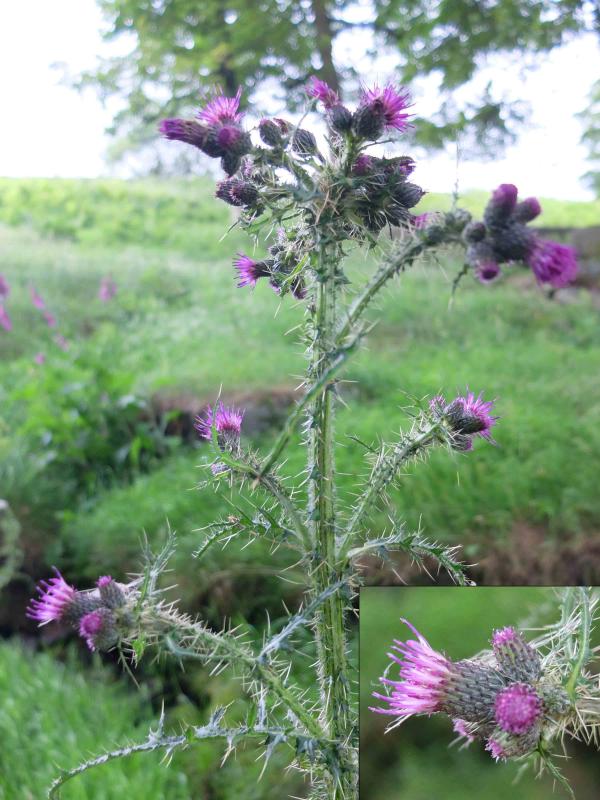
Hans-Otto Baral,
24-07-2015 17:12
Re : Hymenoscyphus repandus
Great, this sounds reasonable!