
18-05-2026 12:43
Sylvie Le GoffBonjour à tousPuis je avoir votre aide sur ce que
18-05-2026 10:13
 Lieve Deceuninck
Dear forum members,I identified this as the teleom

17-05-2026 19:05
Thomas FlammerI have found this tiny 200 ym cup shaped apothecia
17-05-2026 16:41
Margot en Geert VullingsWe found this Lachnum on an old Rubus stem.Fruitbo
05-04-2026 22:46
 Lothar Krieglsteiner
on wood of Ceratonia, Algarve, 3.4.2026.The color
15-05-2026 13:33
Sylvie Le GoffBonjour à tousJe serais très reconnaissante enve
16-03-2011 14:31
roman vargas albertoHi. I would like some opinion about this Peziza
14-05-2026 05:36
Ethan CrensonHi all, I haven't paid much attention to Lachnu
10-05-2026 23:17
 Andreas Gminder
Hello,today we found in a moist steep decidous for
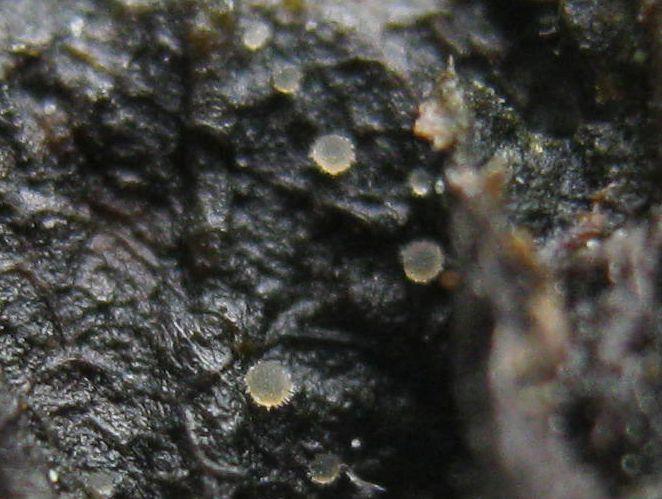
Urceolella on Epilobium leaves
Marja Pennanen,
11-07-2015 16:54
once again Raitviirs study gave me no answer to my determination problem.
These are about 0,2 mm wide and grow on a Epolobium angustifolium leaf.
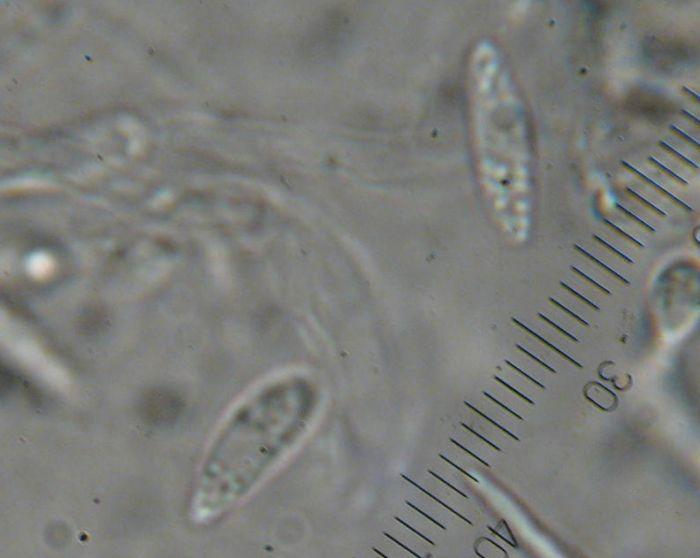
The spores are about 8-11x2-3 and contain some small droplets.
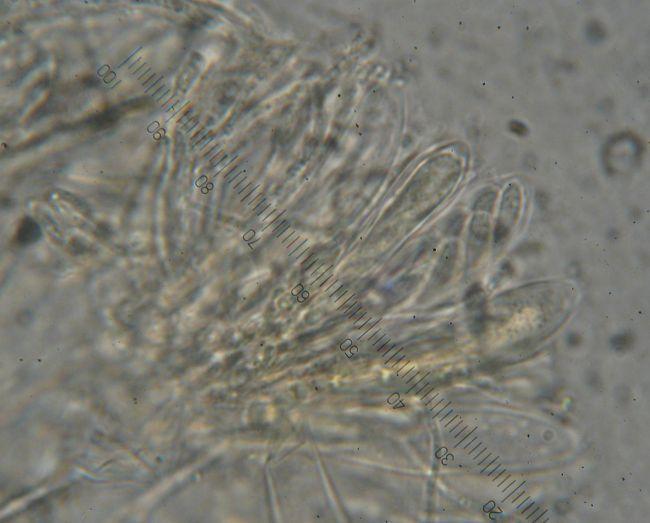
The asci are about 55-70x10-11 and seemed IKi negative.
The paraphyses are cylindric and about 2-3 wide.
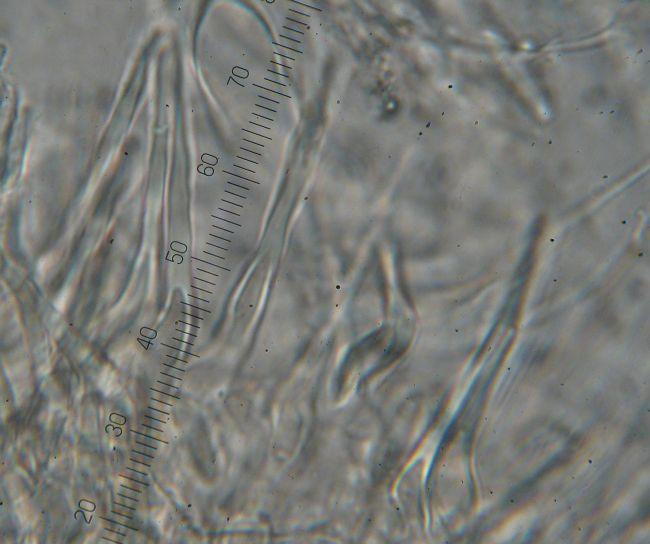
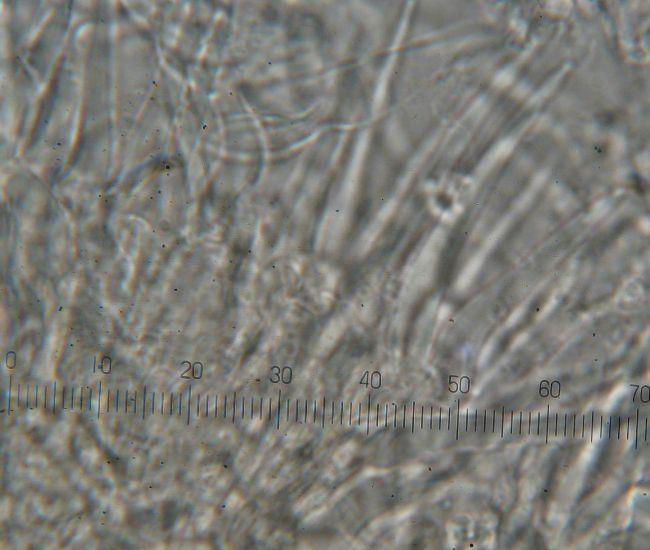
The hairs are with basal lumen, about 20-40x4-5 and tapering.
Hopefully someone here has experience of this species or a newer key to the genera: Marja
Hans-Otto Baral,
11-07-2015 17:30

Re : Urceolella on Epilobium leaves
Do you have a photo of the asci too? What about KOH, does it remove the glassiness?
If it doesn't I recommend to hold a flame under the slide untl bubbles appear - to be sure.
Urceolella juniperi = conspicua has larger spores but similar ascus size.
Zotto
If it doesn't I recommend to hold a flame under the slide untl bubbles appear - to be sure.
Urceolella juniperi = conspicua has larger spores but similar ascus size.
Zotto
Marja Pennanen,
11-07-2015 17:40
Re : Urceolella on Epilobium leaves
Dear Zotto,
I was so thrilled about the hairs, that took only few other photos, luckily some.
The specimen is scanty, so it is not possible to make very many preparates.
Marja
I was so thrilled about the hairs, that took only few other photos, luckily some.
The specimen is scanty, so it is not possible to make very many preparates.
Marja
Hans-Otto Baral,
12-07-2015 00:05
Re : Urceolella on Epilobium leaves
o.k., spores are indeed rather narrow compared to the wide asci even when dead.
And hairs seem to loose glassiness, so indeed Urceolella.
You need to find some more to make Seppo happy :-)
And hairs seem to loose glassiness, so indeed Urceolella.
You need to find some more to make Seppo happy :-)
Marja Pennanen,
12-07-2015 20:25
Re : Urceolella on Epilobium leaves
Thank you.
Ooh yes, should I find these more, would make Seppo happy. But trying to find them will not make me happy. These are from our country place and if I have not met them ealier, they must be uncommon.
Phialina species, Phialina pseudopuberula is the present determination, has been common on Epilobium leaves there for years. Seppo's allready got that. Then there is Mollisina propably M. rubi, that occurs on Epilobium, too.
This summer is a bit strange here, it has been raining a lot and there are only few days, when temperature has raised above 20 C.
So, many interesting species have had time to develop.
I'm a bit curious. Is there some connection between paraphyses and moisture? I have had serious difficulties to find paraphyses on many species and it surely has been moist here. Do they occur more when it is dry? Do they protect asci, when times are bad?
Marja
Ooh yes, should I find these more, would make Seppo happy. But trying to find them will not make me happy. These are from our country place and if I have not met them ealier, they must be uncommon.
Phialina species, Phialina pseudopuberula is the present determination, has been common on Epilobium leaves there for years. Seppo's allready got that. Then there is Mollisina propably M. rubi, that occurs on Epilobium, too.
This summer is a bit strange here, it has been raining a lot and there are only few days, when temperature has raised above 20 C.
So, many interesting species have had time to develop.
I'm a bit curious. Is there some connection between paraphyses and moisture? I have had serious difficulties to find paraphyses on many species and it surely has been moist here. Do they occur more when it is dry? Do they protect asci, when times are bad?
Marja