Accès membres

Mot de passe perdu? S'inscrire

08-01-2026 21:22

Blasco Rafael Blasco Rafael

Hola, He recogido esta muestra de Orbilia sobre Re

07-01-2026 10:24

Danny Newman Danny Newman

Pezicula sp. on indet. hardwood Appalachian Highl

07-01-2026 22:22

Danny Newman Danny Newman

Tatraea sp. on indet. hardwood The Swag, Great Sm

07-01-2026 17:29

Marc Detollenaere Marc Detollenaere

Dear Forum,On a barkless Populus I found some smal

10-11-2021 17:33

Riet van Oosten Riet van Oosten

Add-on topic http://www.ascofrance.com/forum/7059

07-01-2026 10:05

Danny Newman Danny Newman

cf. Chaetospermum on XylariaCosby Campground, Grea

06-01-2026 20:54

Thierry Blondelle Thierry Blondelle

Bonjour à tous et meilleurs voeux pour cette nouv

02-01-2026 17:43

MARICEL PATINO

Hi there, although I couldn't see the fruitbody, I

04-01-2026 17:45

Stephen Martin Mifsud Stephen Martin Mifsud

I was happy to find these orange asmocyetes which

02-01-2026 22:48

éric ROMERO éric ROMERO

Bonjour tous, Je profite de cette nouvelle demand

« < 1 2 3 4 5 > »
Peziza varia?
Andy Overall, 24-04-2015 13:55
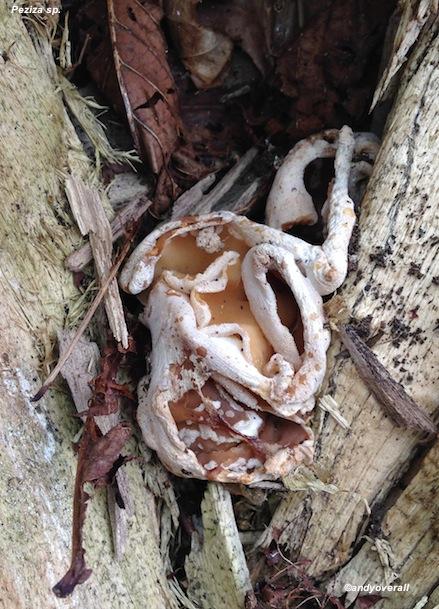
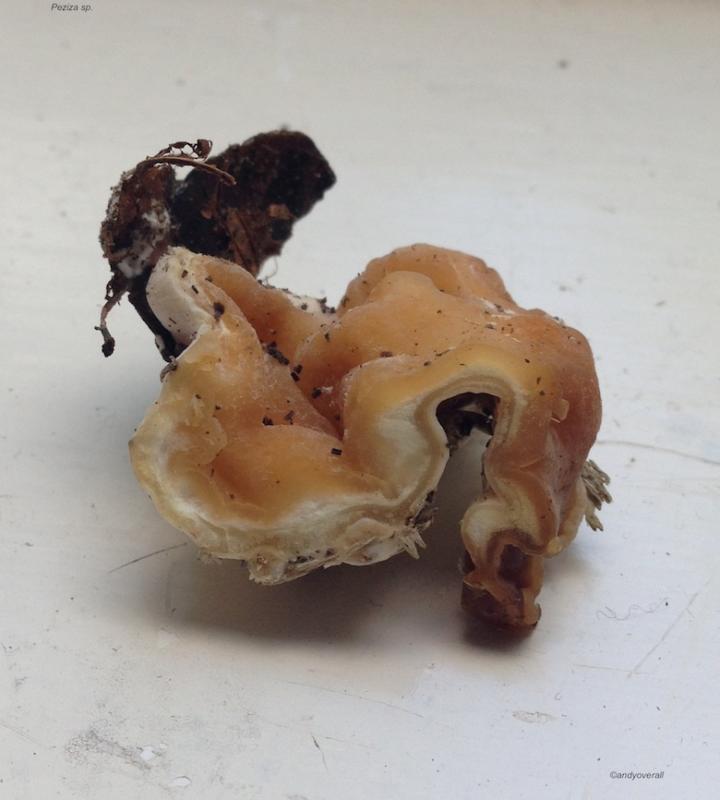
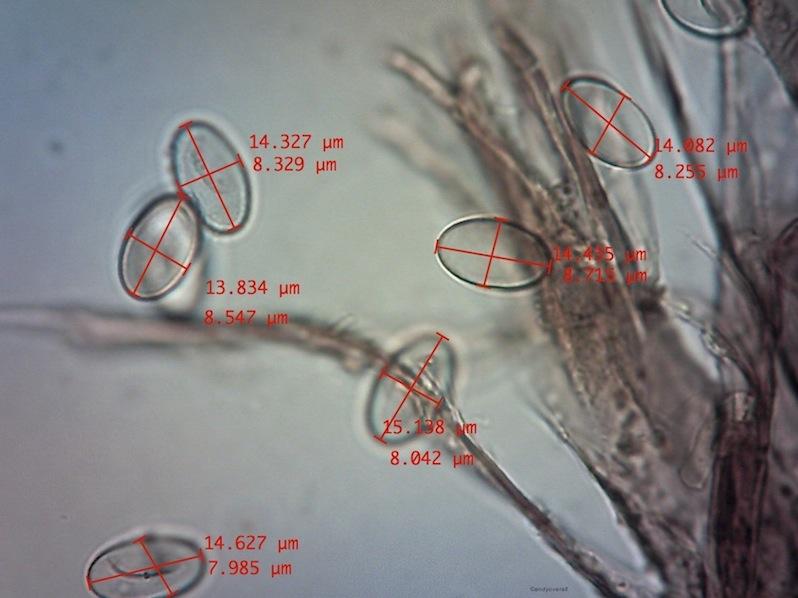
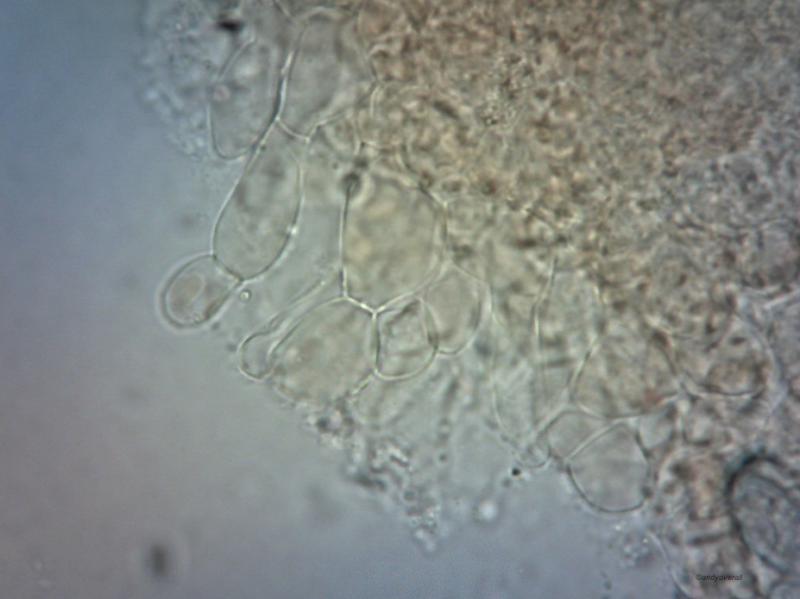
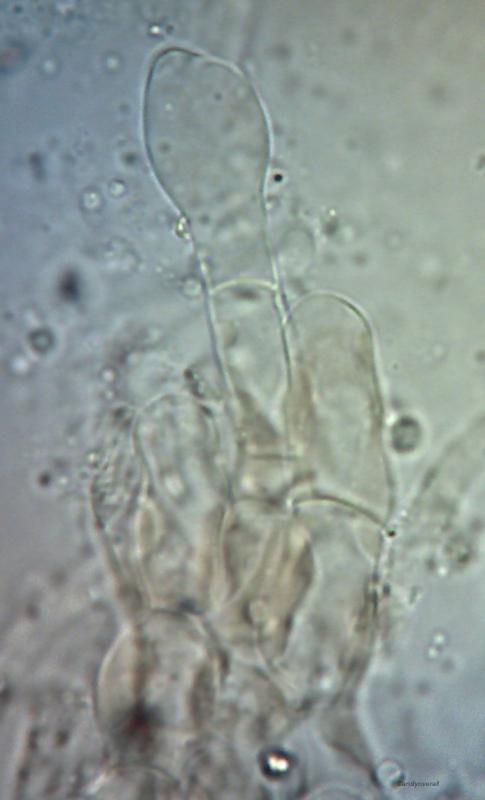
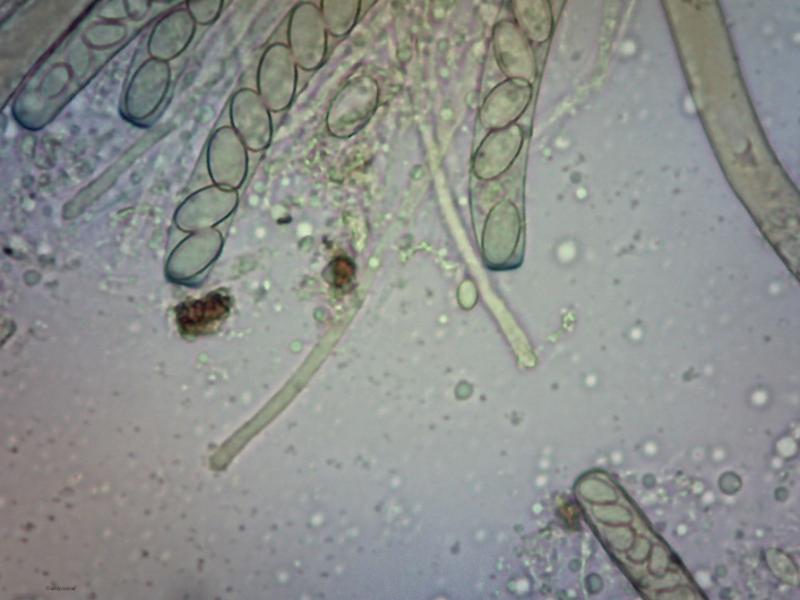
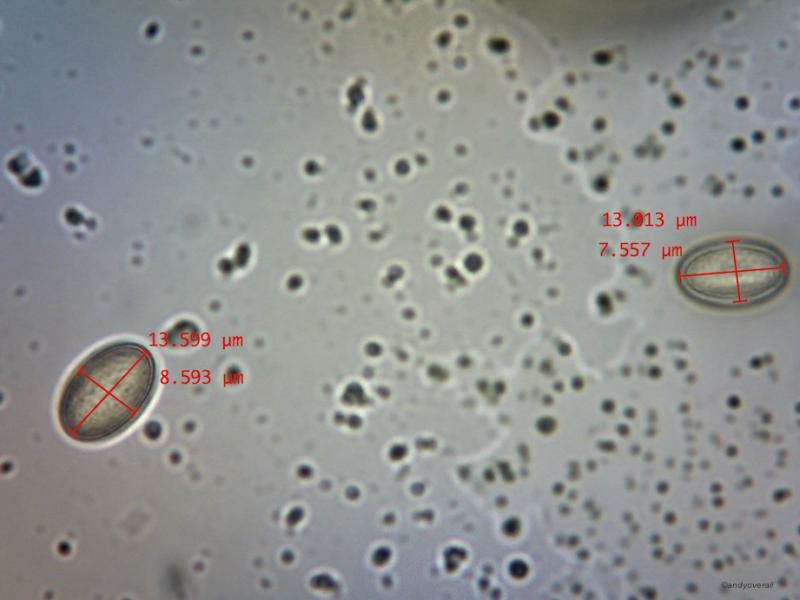
I found this Peziza just inside a fallen, dead, hollowed out Poplar tree.  It was fruiting on the pulped wood inside the hollow. The spores vary in length from 12-15µm (-17µm) x 8 -8.5 (8.7). They are very faintly punctate and aguttulate. My first choice would have been P. micropus due to the simple paraphyses, however, having taken a section of the flesh, not only did I observe layers in the flesh but under the microscope I noticed chain-like cells similar to those associated with P. varia, but the chained cells did not have long, projecting end cells, hence my quandry. Please find a series of pictures, of the ascomata in situ, cut in section and microscopic shots of spores, paraphyses and the chained cells. Any help toward clarification most appreciated.
Thanks in advance Andy
  • message #35399
  • message #35399
  • message #35399
  • message #35399
  • message #35399
  • message #35399
  • message #35399