
05-05-2026 22:40
Gernot FriebesHi,I believe this is a Plagiostoma growing on a Sa
04-05-2026 18:13
 Stephen Martin Mifsud
ID request for what seems to be a true aquatic fun
04-05-2026 16:39
Stephen Martin Mifsud
ID request: This specimen was collected in Malta o
28-07-2011 18:31
 Alex Akulov
Dear FriendsToday I made the pdf file of Velenovsk
28-04-2026 20:07
 Lothar Krieglsteiner
... on twig in the air at standing Ceratonia siliq
04-05-2026 09:50
 Castillo Joseba
Me mandan el material seco de Galicia,(España) re
02-05-2026 12:42
Alain BRISSARDBonjour à tousJeuidi 30 avril dernier on m'a remi
02-05-2026 13:06
Pauline. PennaBonjour Please can someone help me with this id
01-05-2026 22:45
 Thierry Blondelle
Bonjour à tous, Une récolte sur bouse séchée d
Clypeosphaeria mamillana?
Jenny Seawright,
28-03-2015 00:09
 Hello all,
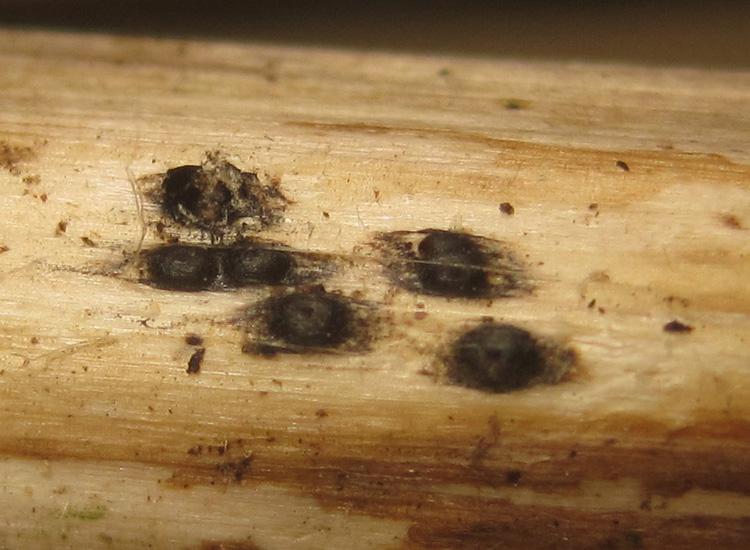
 This was found on a dead Eupatorium stem and the closest I can come is possibly Clypeosphaeria mamillana, though in Ellis that is given for twigs of Acer, Cornus and Quercus. Perithecia initially immersed.
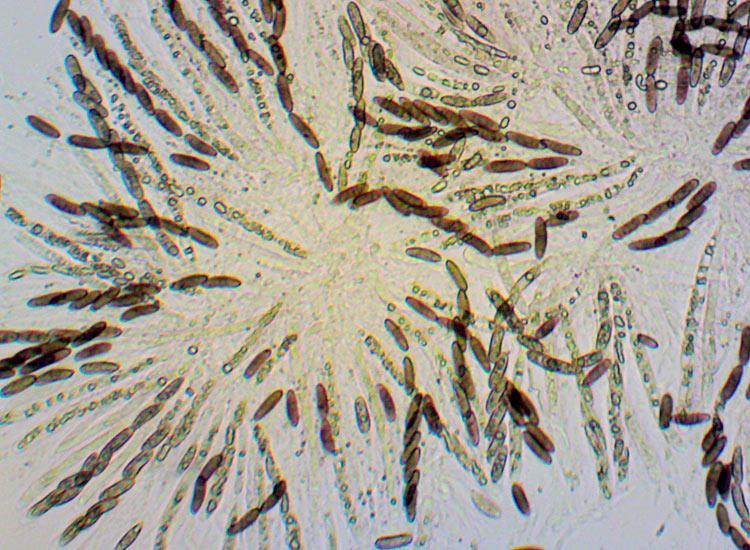
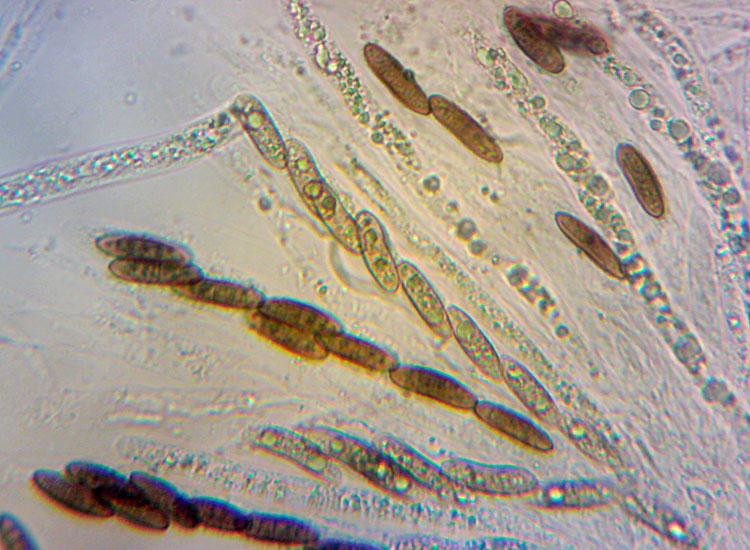
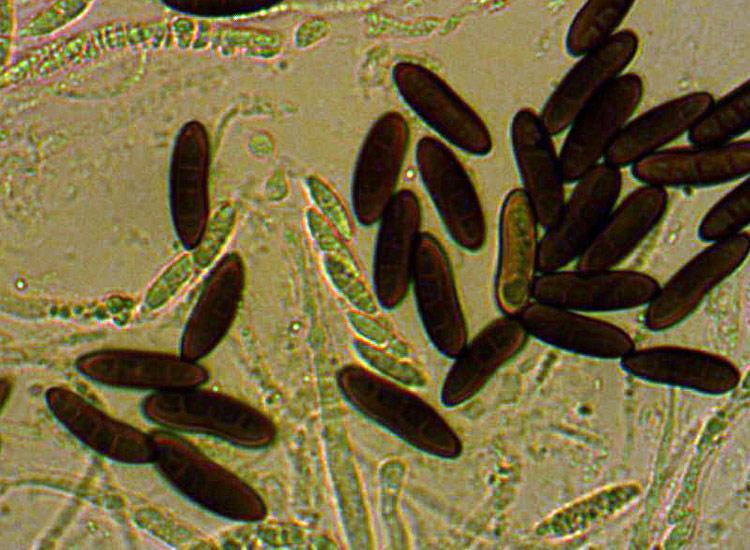
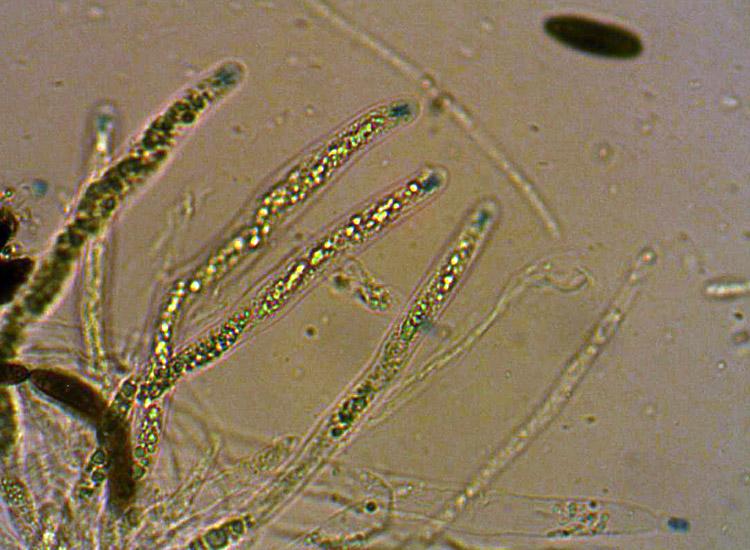
Spores becoming brown and faintly 3-septate, 20-24 x 6(-7) µm.Asci tips immediately blue in Lugols. (Is it correct to describe that as IKI+blue, euamyloid?) I tried adding KOH but wasn;t very successful ....
With regards,
Jenny
Alain GARDIENNET,
28-03-2015 06:27

Re : Clypeosphaeria mamillana?
Hi Jenny,
Yes it is, I think.
It has already been seen on Rubus, Rosa, Lonicera... why not Eupatorium ?
Alain
Jenny Seawright,
28-03-2015 09:40
Re : Clypeosphaeria mamillana?
Thank you Alain
Chris Yeates,
28-03-2015 17:06

Re : Clypeosphaeria mamillana?
Those brown septate / pseudoseptate (?) ascospores certainly look like those of a Clypeosphaeria. The only Clypeosphaeria species for which I have decent descriptions / images are this and C. notarisii. If anyone has access to Barr's paper in Systema Ascomycetum 8 (1989) it would be very useful . . . .
Cordialement
Chris
Cordialement
Chris