
27-04-2026 12:54
Steve ClementsBonjour. Ce petit champignon blanc résupiné et
27-04-2026 09:59
Pauline. PennaBonjour Can anyone advise me on these pycnidia fo

22-04-2026 20:54
 Enrique Rubio
Hi to everybody.This Pyrenopeziza grew in moist le
24-04-2026 03:16
 David Chapados
Found while looking at something else from wood in
22-04-2026 01:06
 Richard VALERI
Bonjour à tous.Je vous présente cette Nectria s.
22-04-2026 20:17
 Marian Jagers
Is anyone familiar with the Hyphomycetes genus Pse

21-04-2026 22:14
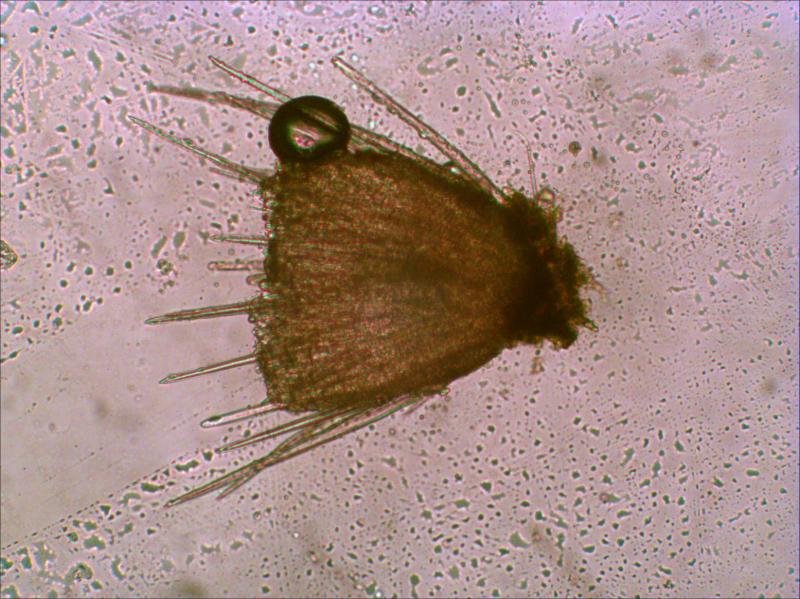
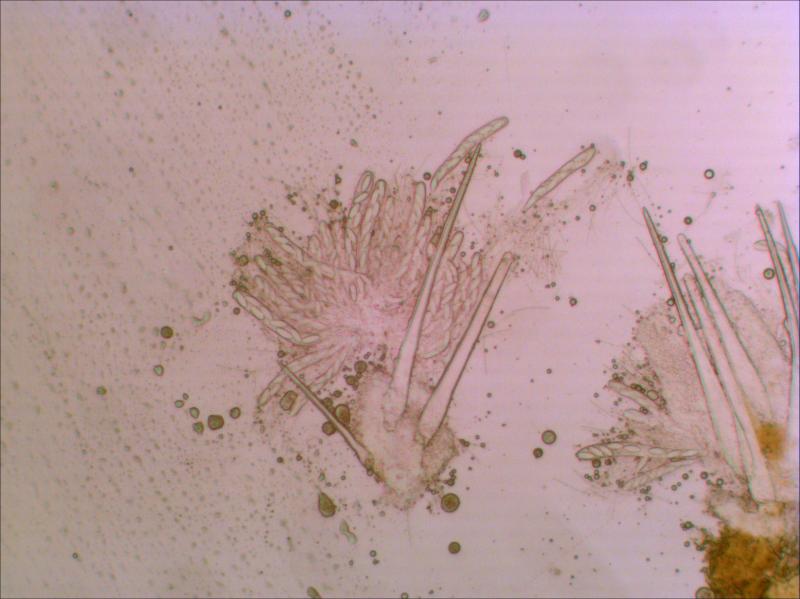
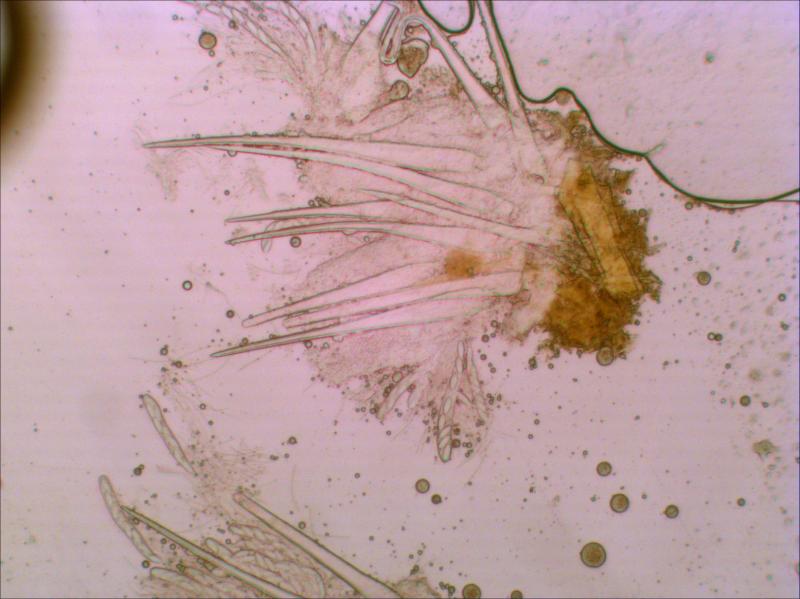
Margot en Geert VullingsThis cup fungus was found on April 10, 2026, on lo

Found on deer dung.
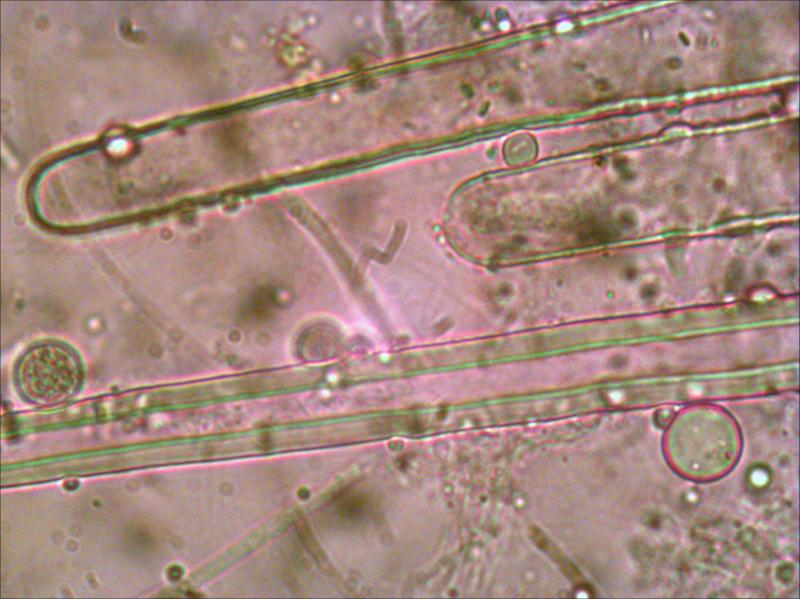
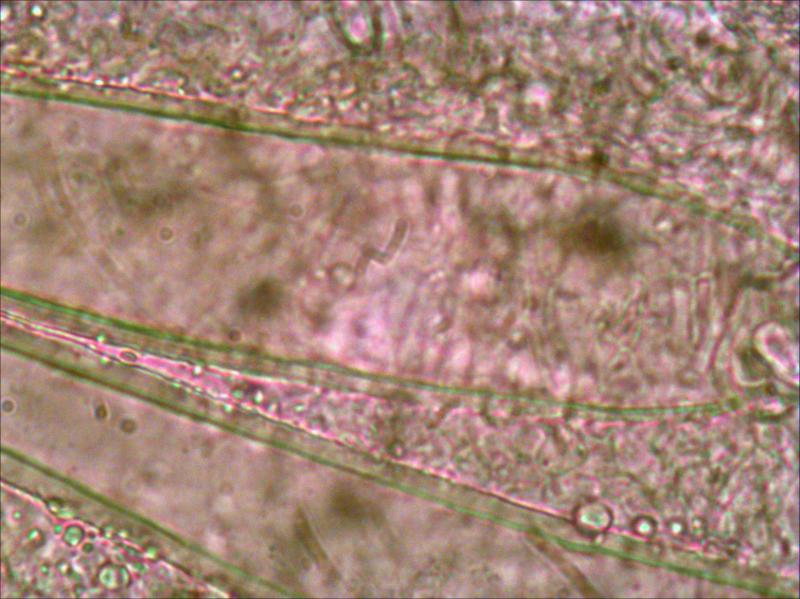
Fruitbody: 297 um wide - 305 um high, covered with straight setea originating from the base.
Setea: Non sepltated with round and pointed tops, thick walled.
Setea with round tops - 234-280x24.5-25 um (width measured at the base), wall 1.5-1.8 um
Setea with pointed top: 334-380x26-27.5 um (width measured at the base), wall 3.0-3.2 um
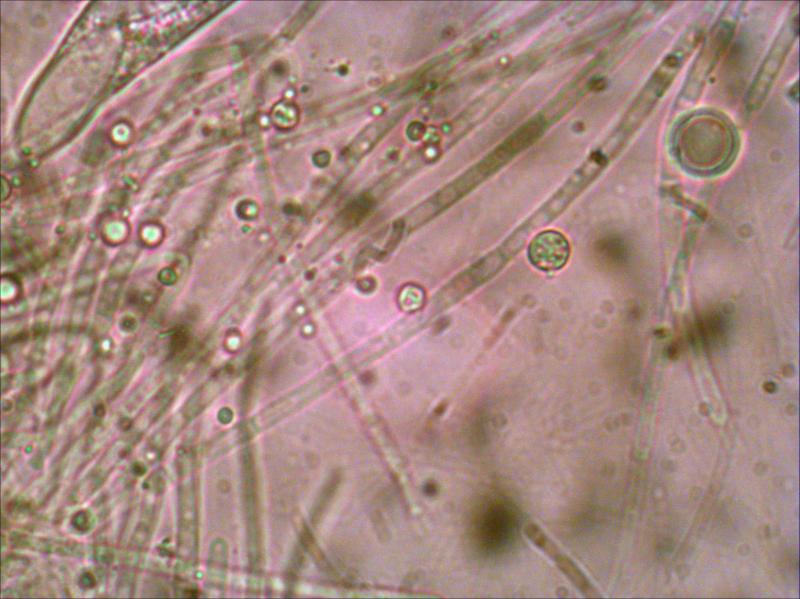
Pararyses: rounded top, septated, width 2.1-2.4 um
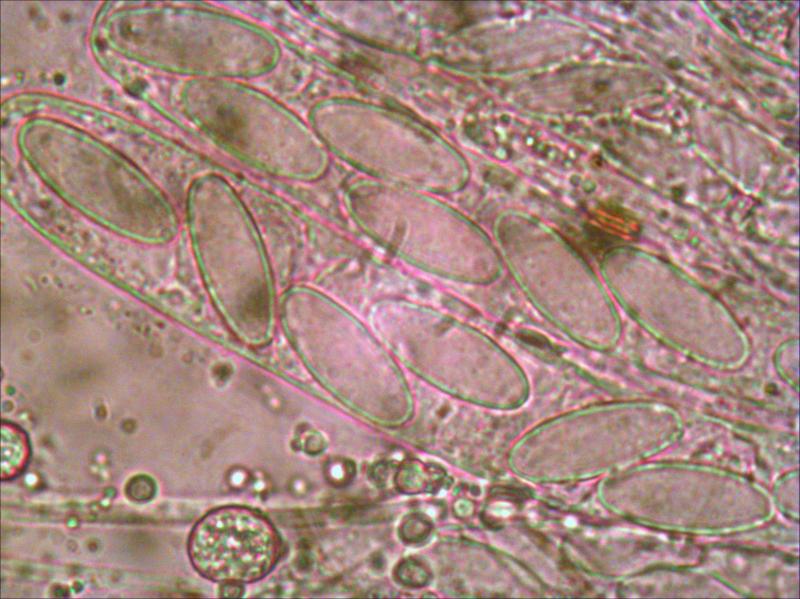
Asci: 8-spored, 149-170x13-14.5.
Spores: ellipsoid, thick walled, 18.5-20x7-7.5 um.
No free spores were found so only spores inside asci were measured but difference in final measurement will not be that much I think.
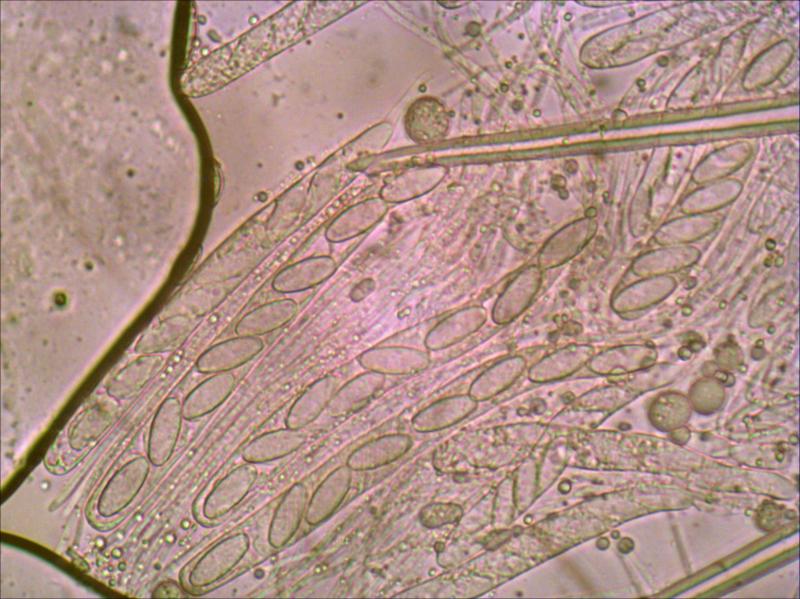

It must have somewhat shorter and broader, more elliptical spores.
Maybe, that the spores in the asci, you show us, are not mature, but however your species should be Lasiobolus macrotrichus.
The narrow, more or less fusiforme spores are typical for this species!
Regards, Norbert