
28-04-2026 20:07
 Lothar Krieglsteiner
... on twig in the air at standing Ceratonia siliq
04-05-2026 18:13
 Stephen Martin Mifsud
ID request for what seems to be a true aquatic fun
04-05-2026 16:39
Stephen Martin Mifsud
ID request: This specimen was collected in Malta o
04-05-2026 09:50
 Castillo Joseba
Me mandan el material seco de Galicia,(España) re
02-05-2026 12:42
Alain BRISSARDBonjour à tousJeuidi 30 avril dernier on m'a remi
02-05-2026 13:06
Pauline. PennaBonjour Please can someone help me with this id
01-05-2026 22:45
 Thierry Blondelle
Bonjour à tous, Une récolte sur bouse séchée d
14-04-2026 05:32
Ethan CrensonHi all, A few weeks back a friend pointed out som
28-04-2026 20:33
Vitus SchäfftleinHello, I found Trochila ilicina on Ilex aquifoliu
Disco on bark of Pinus sylvestris
Gernot Friebes,
09-02-2015 13:25
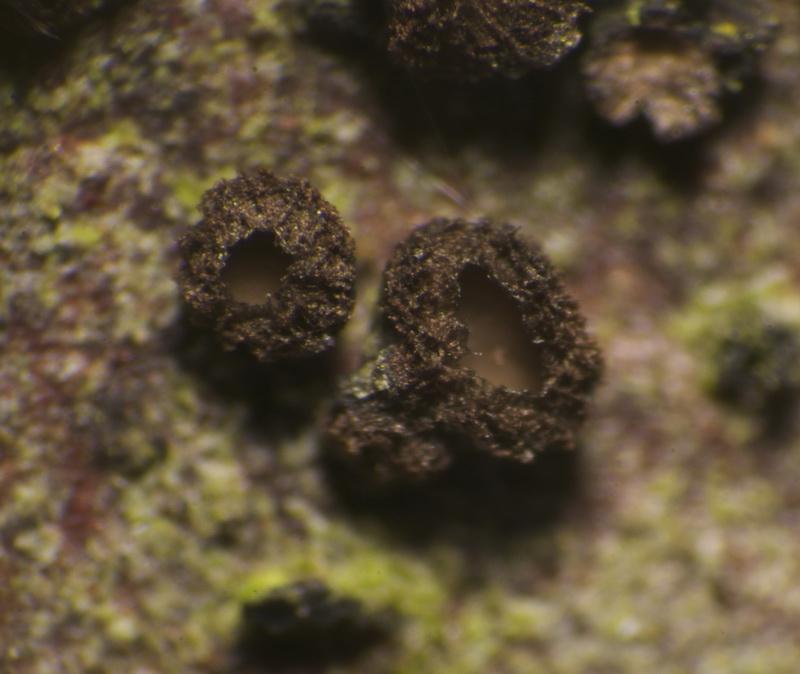
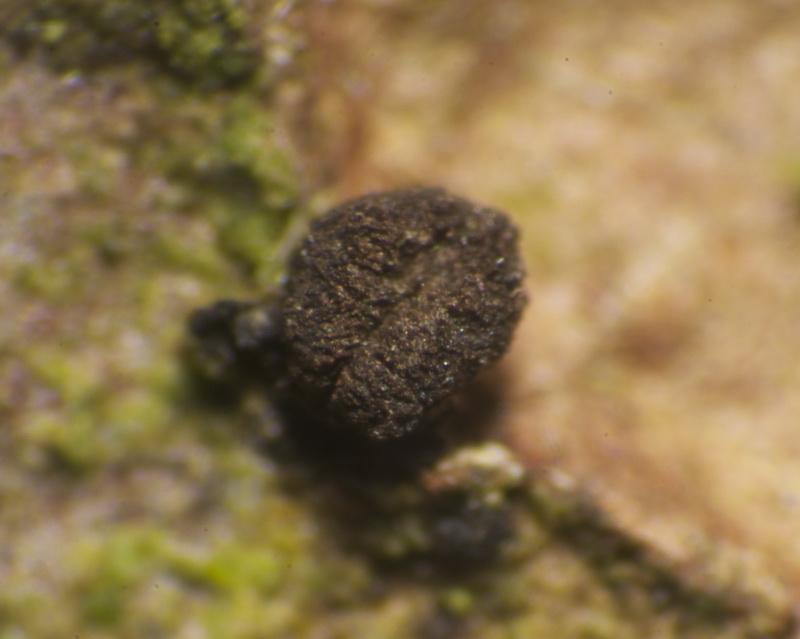
I recently found this species on the bark of a living Pinus tree. Unfortunately the material is not in good shape because the apothecia are either old and decayed or too young without any free ascospores... But I am hoping that someone might recognize it regardless.
At first I tought that this species might be Cenangium ferruginosum but the micros do not fit. I attach a few photos. The first two show the apothecia. Even after rehydration they wouldn't open more than those on the first pic.
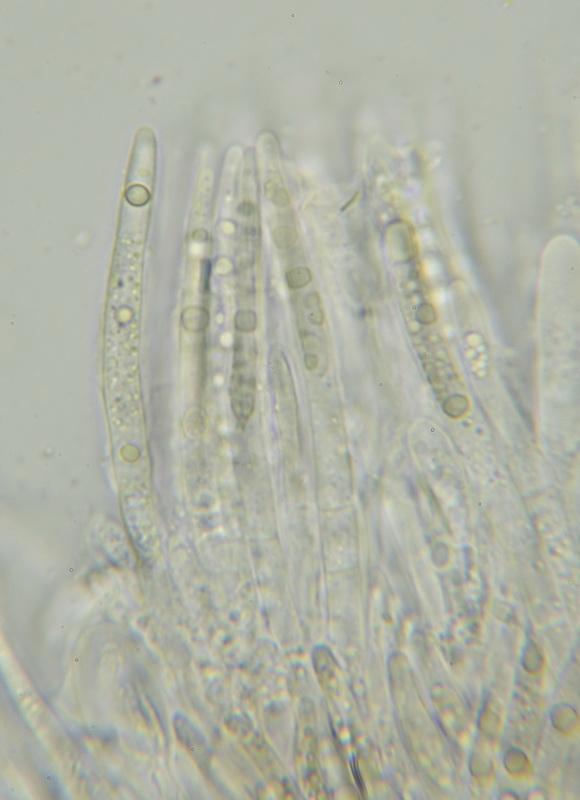
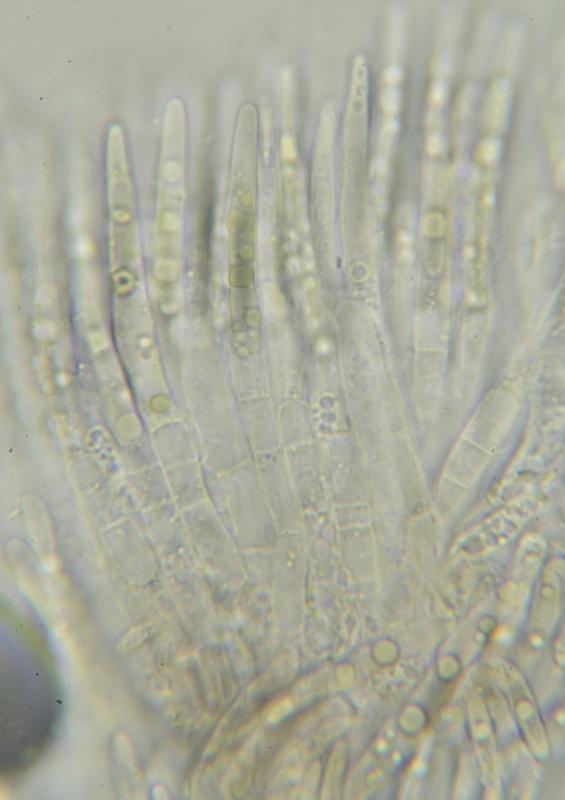
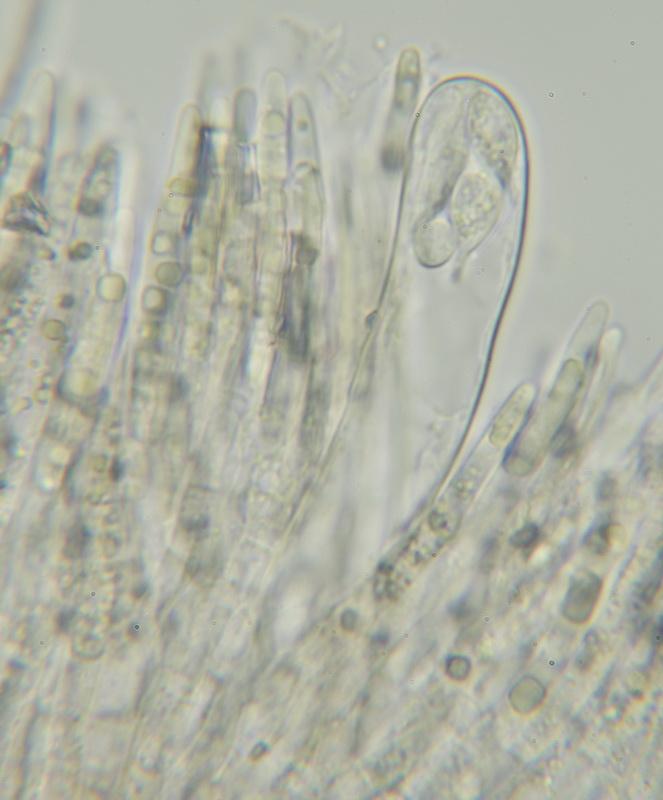
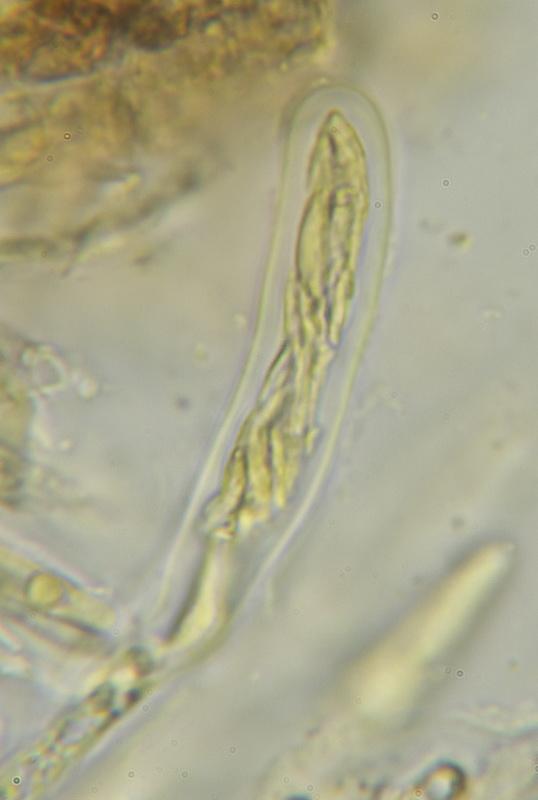
Pictures 3 and 4 show paraphyses.
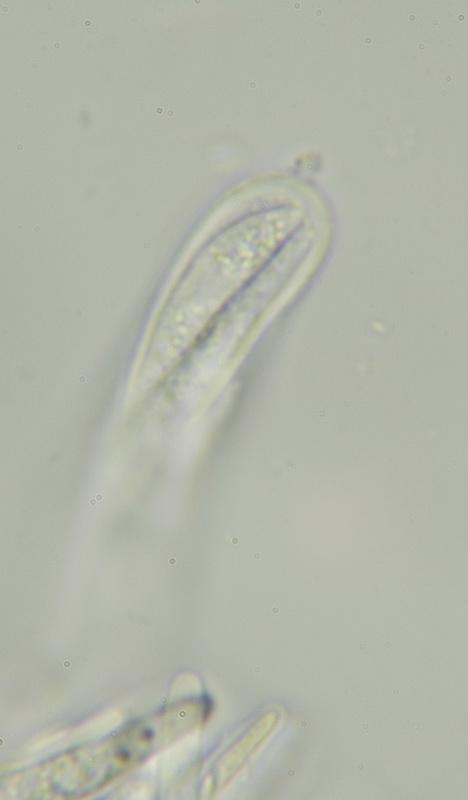
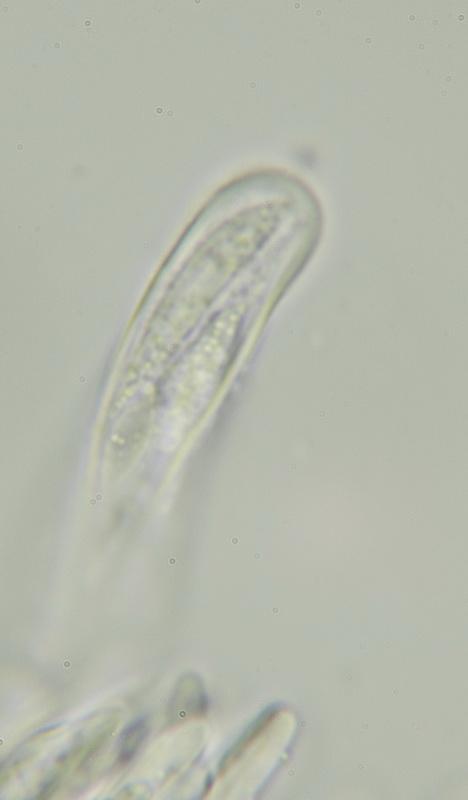
Picture 5 shows an ascus with ascospores which appear to have an acute end.
Pictures 6 and 7 show the same ascus but with a different focus to give you an idea of what the ascospores look like.
Picture 8 shows a brown substance at the bottom of the hymenium.
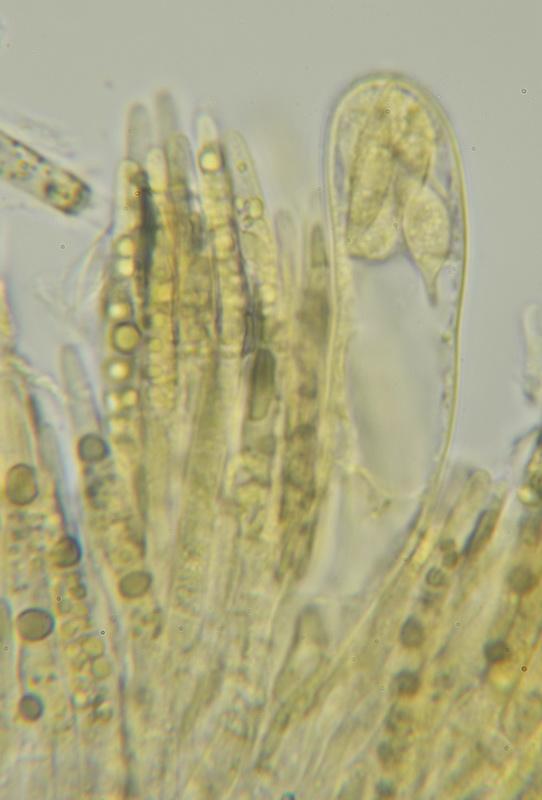
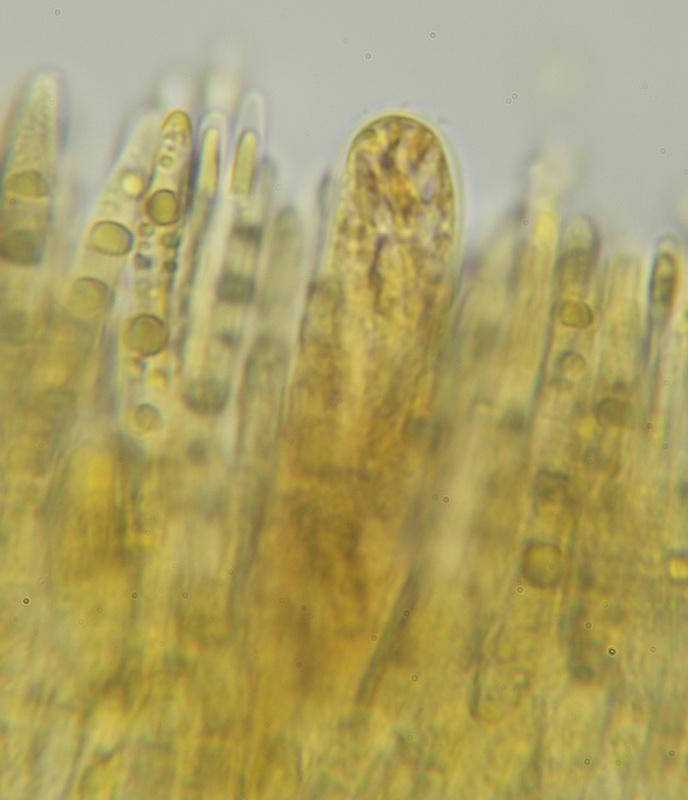
Pictures 9-11 show asci and paraphyses in IKI (asci are IKI-).
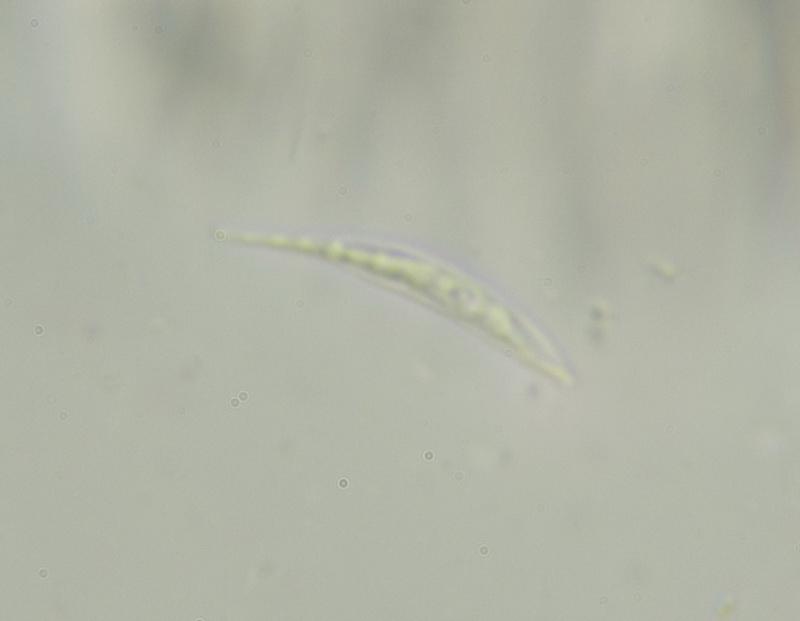
Picture 12 shows what I think is a dead ascospore.
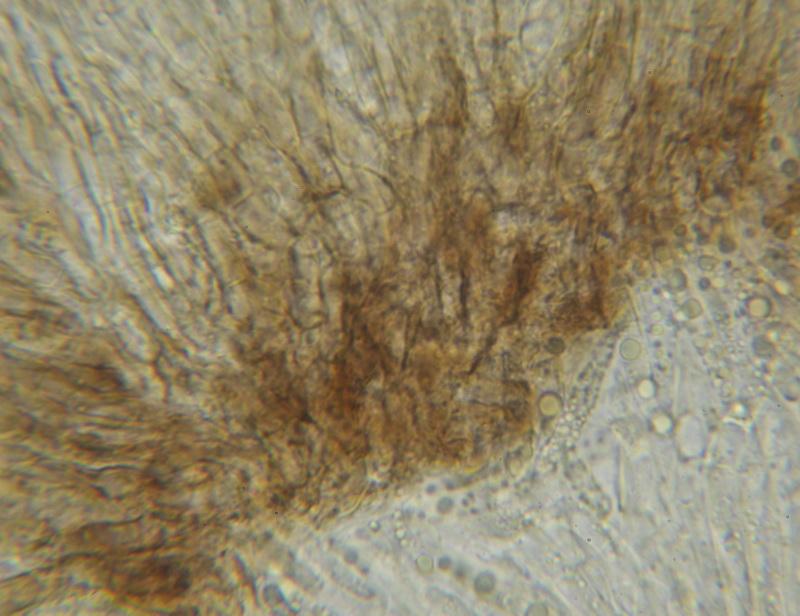
Picture 13 shows the excipulum with patches of a dark brown substance.
Pictures 14 to 16 show the hairs.
Best wishes,
Gernot
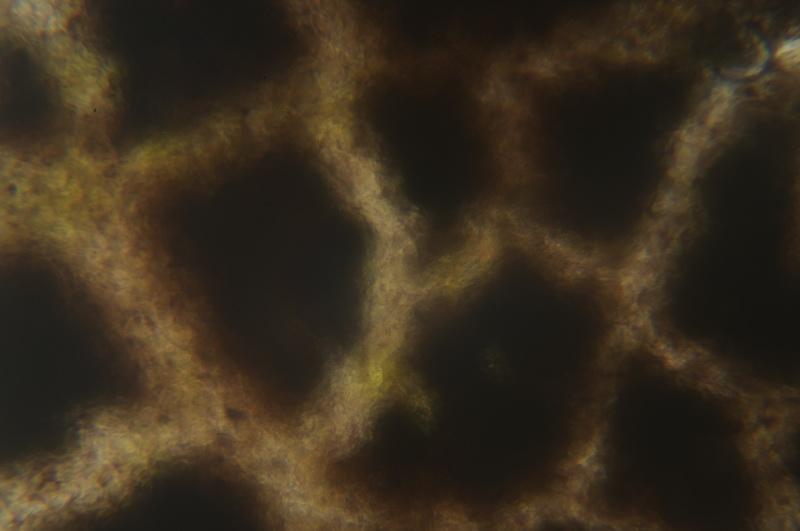
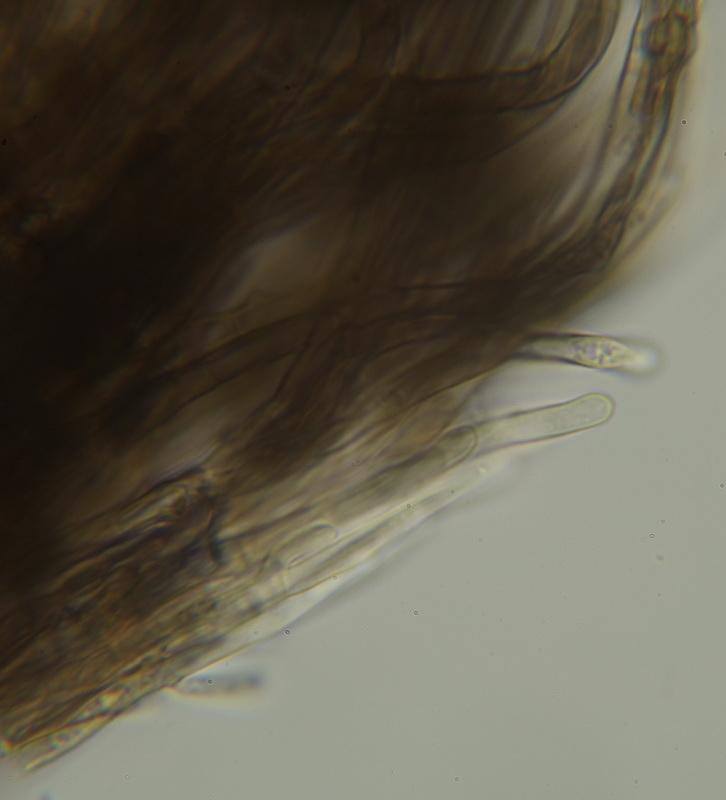
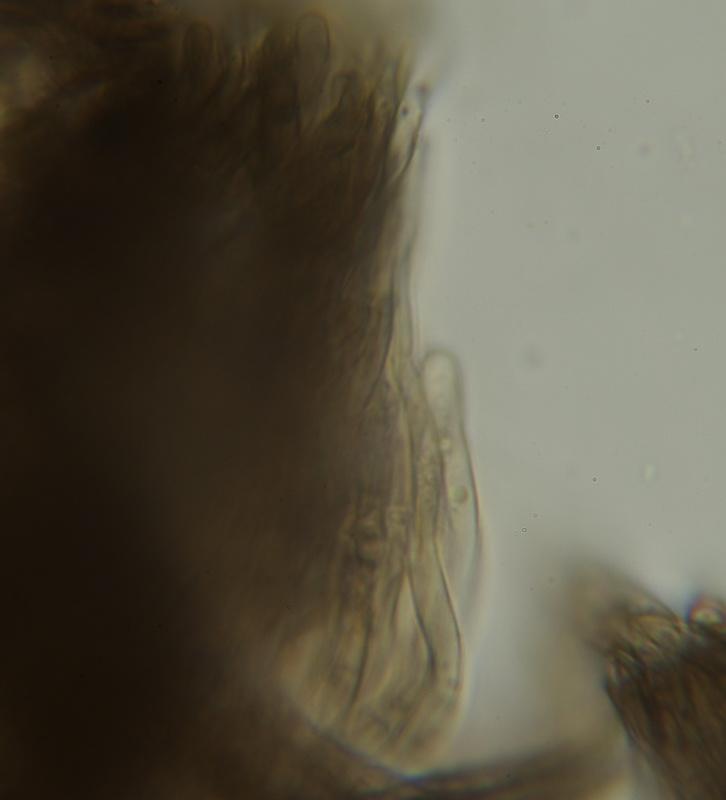
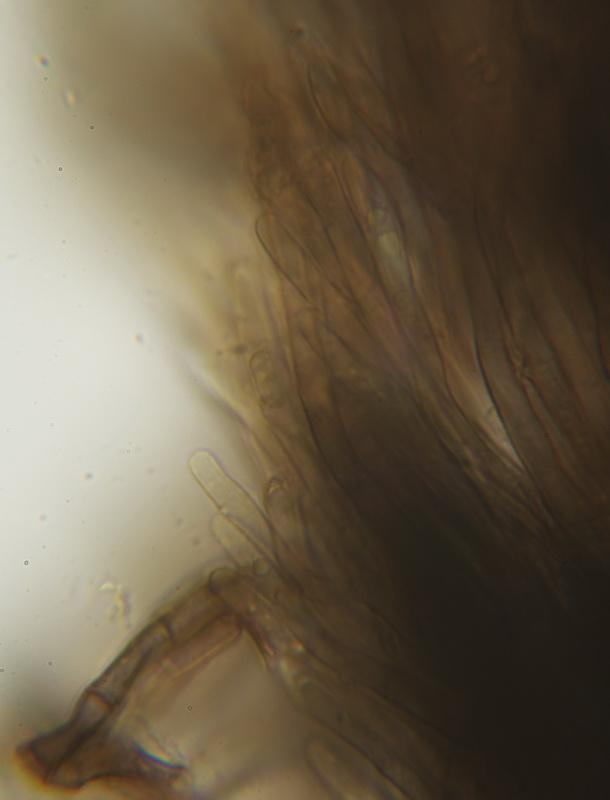
Raúl Tena Lahoz,
09-02-2015 13:40

Re : Disco on bark of Pinus sylvestris
Hi Gernot
I will try to be quicker than Zotto ;-)
Compare with Crumenulopsis pinicola. What was the Pinus species?
Cheers,
Raúl
I will try to be quicker than Zotto ;-)
Compare with Crumenulopsis pinicola. What was the Pinus species?
Cheers,
Raúl
Gernot Friebes,
09-02-2015 13:57
Re : Disco on bark of Pinus sylvestris
Hi Raúl,
that seems to be a very good suggestion, thanks!
The tree was Pinus sylvestris, I wrote it in the title. :-)
Best wishes,
Gernot
that seems to be a very good suggestion, thanks!
The tree was Pinus sylvestris, I wrote it in the title. :-)
Best wishes,
Gernot
Raúl Tena Lahoz,
09-02-2015 14:31
Re : Disco on bark of Pinus sylvestris
Sorry, I overlooked it! I also found it on Pinus sylvestris bark.
Raúl
Raúl
Till Lohmeyer,
09-02-2015 20:31
Re : Disco on bark of Pinus sylvestris
Hallo, Gernot,
I found C. pinicola only once, back in 2004 (15th of February), on bark of a dead but still upright trunk of Pinus sylvestris, and it took me several days to find a name for the collection. As it turned out, good old Heinrich Rehm (in Rabenhorsts Kryptogamen-Flora, 1896) opened my eyes with one of his rare illustrations. Later on the descriptions by Leopold Ettlinger (Beitr. Krypt.fl. Schweiz 10 (1), 1945) - who didn't at all like Rehm's interpretation of the species - and J. W. Groves (Can. J. Bot. 47, 1969, pp. 47-51 supported the determination.
Who knows any more recent descriptions of C. pinicola?
Schöne Grüße!
till
I found C. pinicola only once, back in 2004 (15th of February), on bark of a dead but still upright trunk of Pinus sylvestris, and it took me several days to find a name for the collection. As it turned out, good old Heinrich Rehm (in Rabenhorsts Kryptogamen-Flora, 1896) opened my eyes with one of his rare illustrations. Later on the descriptions by Leopold Ettlinger (Beitr. Krypt.fl. Schweiz 10 (1), 1945) - who didn't at all like Rehm's interpretation of the species - and J. W. Groves (Can. J. Bot. 47, 1969, pp. 47-51 supported the determination.
Who knows any more recent descriptions of C. pinicola?
Schöne Grüße!
till