
06-05-2026 17:23
Thomas Læssøehttps://svampe.databasen.org/observations/10594257
06-05-2026 11:25
 Castillo Joseba
Me mandan el material seco de Galicia (España) re
28-04-2026 20:07
 Lothar Krieglsteiner
... on twig in the air at standing Ceratonia siliq
05-05-2026 22:40
Gernot FriebesHi,I believe this is a Plagiostoma growing on a Sa
04-05-2026 18:13
 Stephen Martin Mifsud
ID request for what seems to be a true aquatic fun
04-05-2026 16:39
Stephen Martin Mifsud
ID request: This specimen was collected in Malta o
28-07-2011 18:31
 Alex Akulov
Dear FriendsToday I made the pdf file of Velenovsk
04-05-2026 09:50
Castillo Joseba
Me mandan el material seco de Galicia,(España) re
02-05-2026 12:42
Alain BRISSARDBonjour à tousJeuidi 30 avril dernier on m'a remi
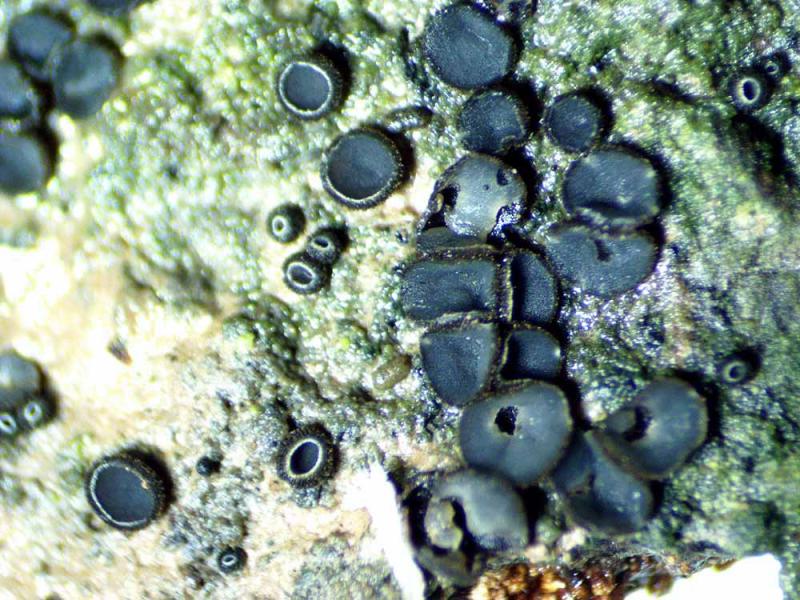
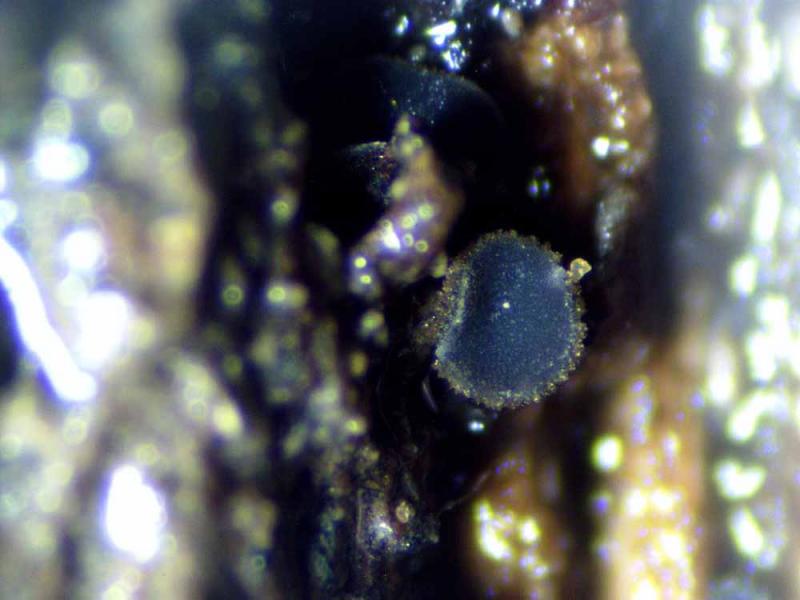
 Hola tengo estas muestras recogidas en Tamarix.
Lo mas cercano que veo es Mollisia rosae, pero esta es de Rosal, no se si saldra en otro sustrato o simplemente estoy equivocado y puede ser una Pyrenopeziza.
La mayor medida es de 0,53 mm.
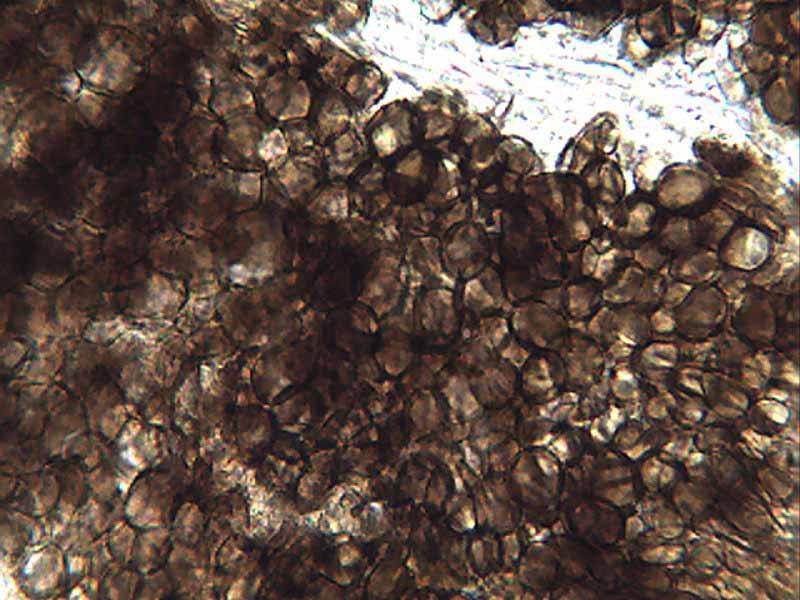
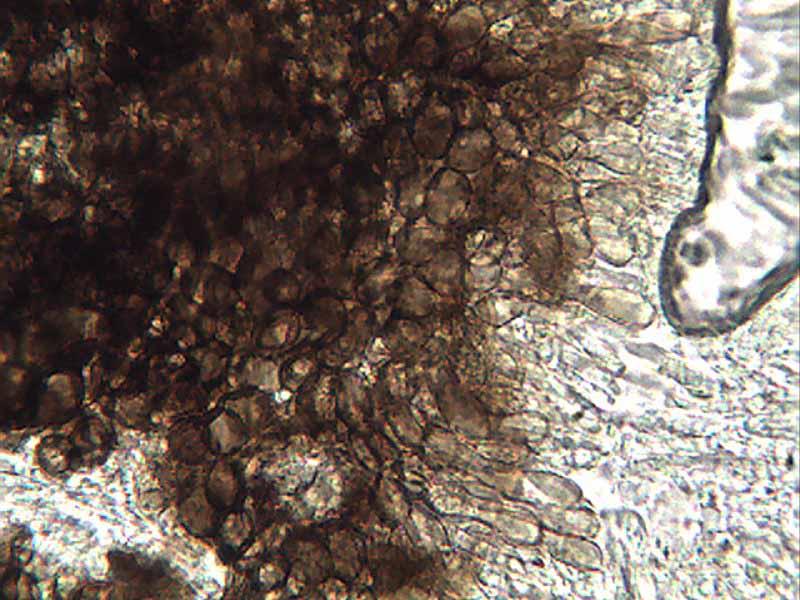
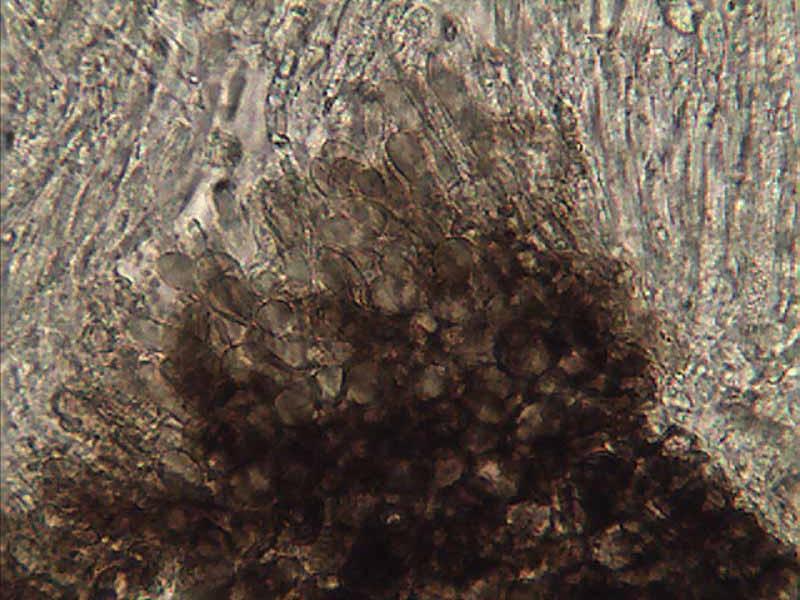
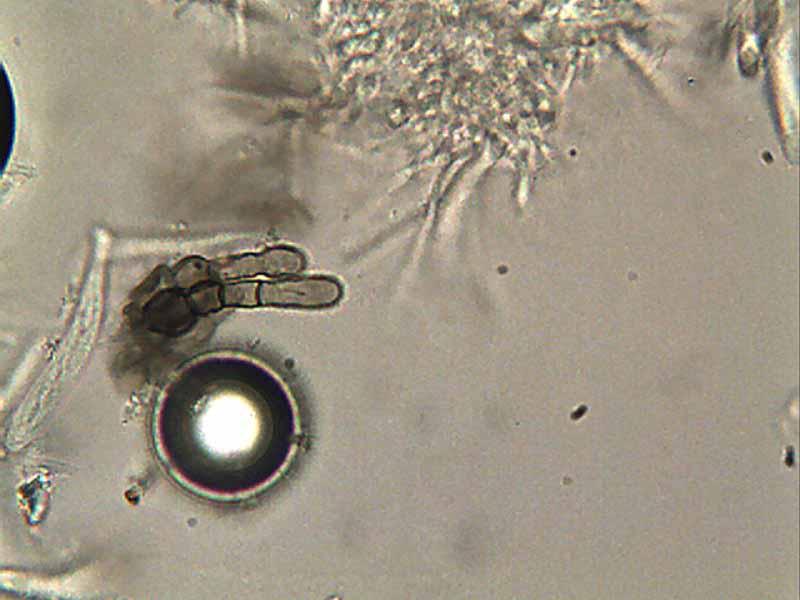
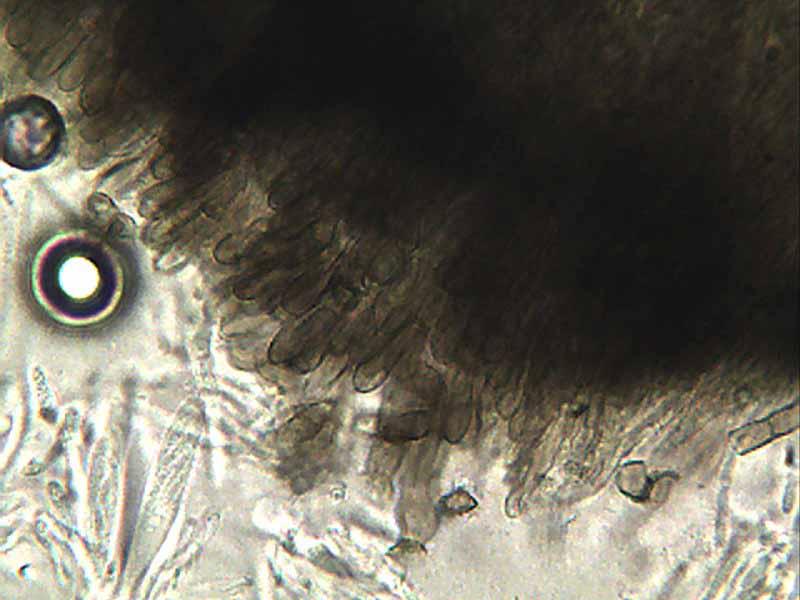
Excipulo de color marron con celulas globosas a subglobosas.
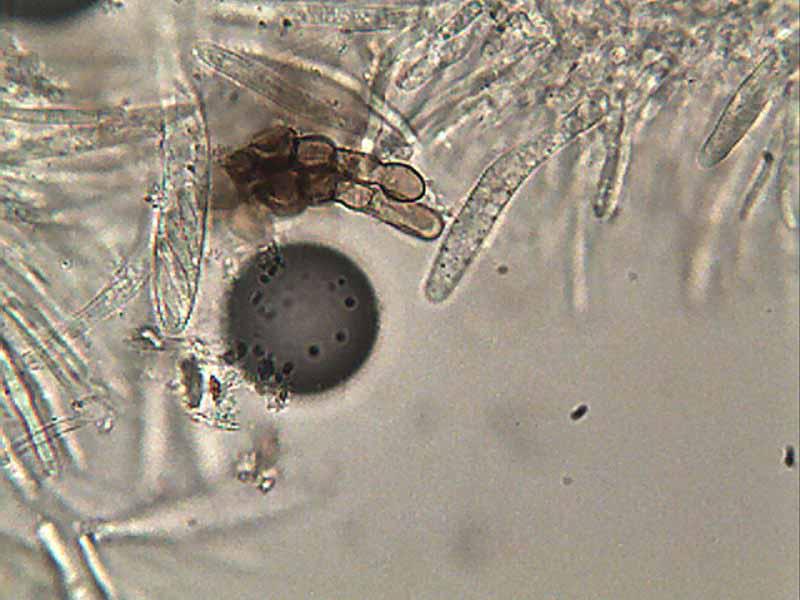
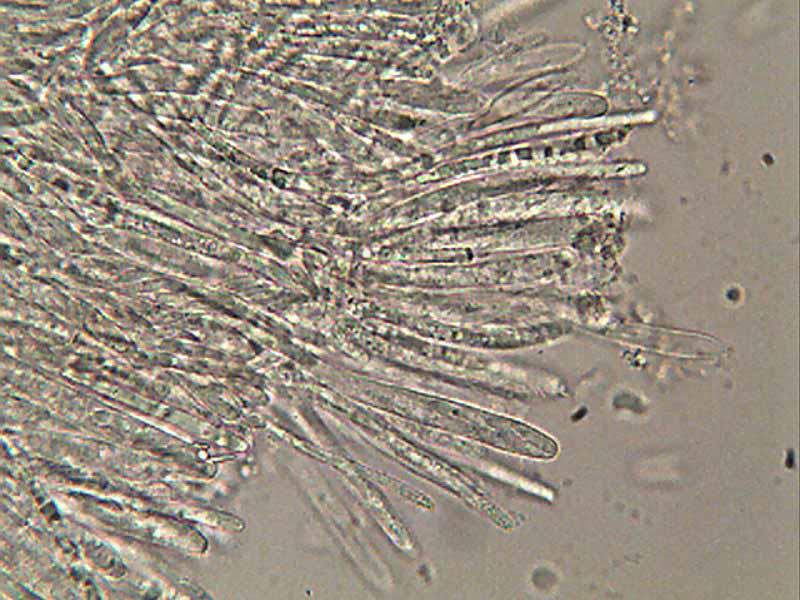
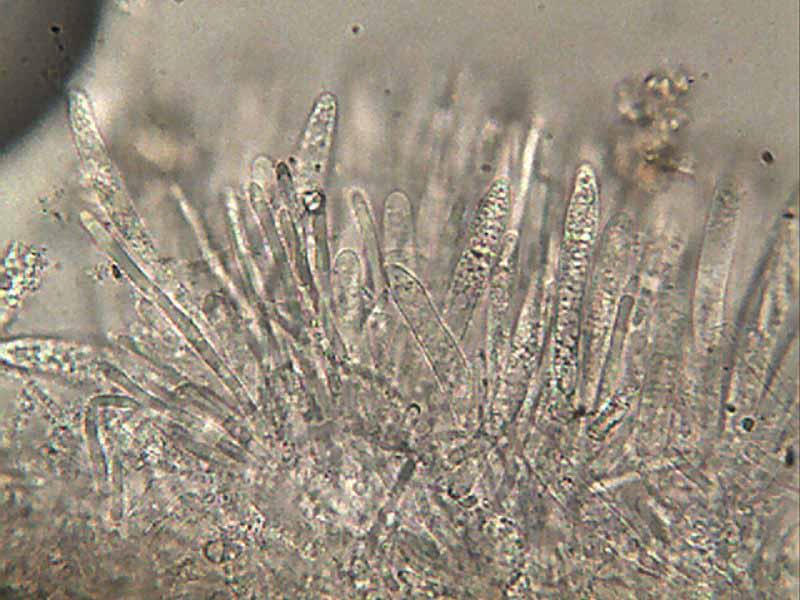
Ascas con croziers, J-, miden entre 52--56 x 5,5--7.
Esporas 8--12 x 1,8--2,3 con una gota lipidica en cada extremo.
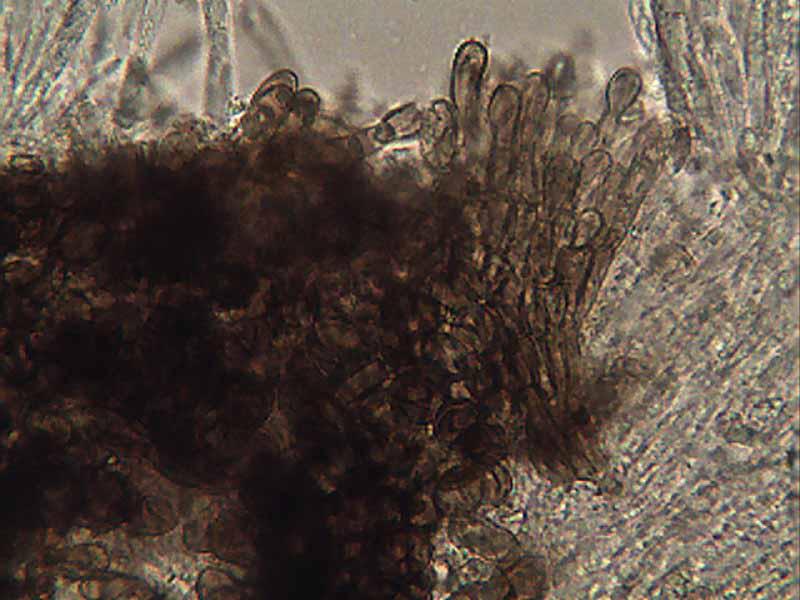
Parafisis X 3--X 3,5, apice redondeado.
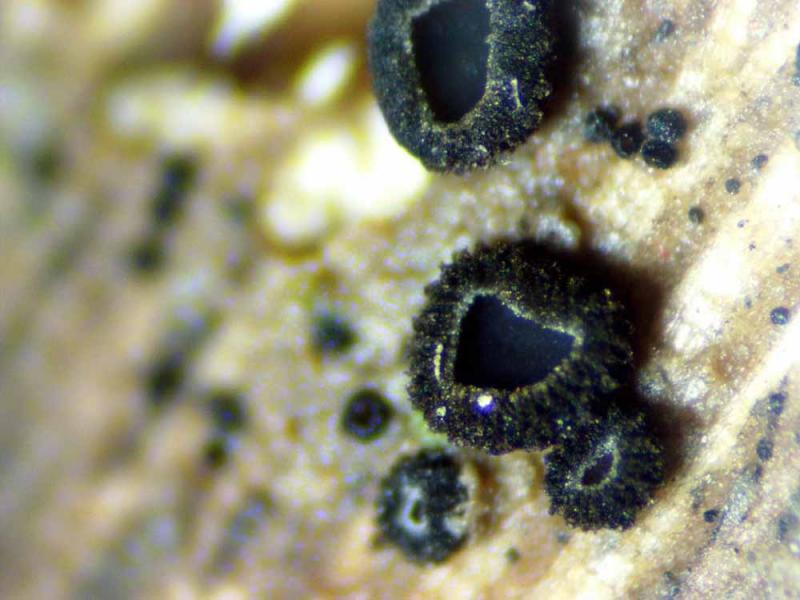
Pelos 40--70 X 4, apice mas inflado 5--6,5.
Con KOH los pelos marrones viran a grises
Con Melzer J -
Un saludo
Rafael
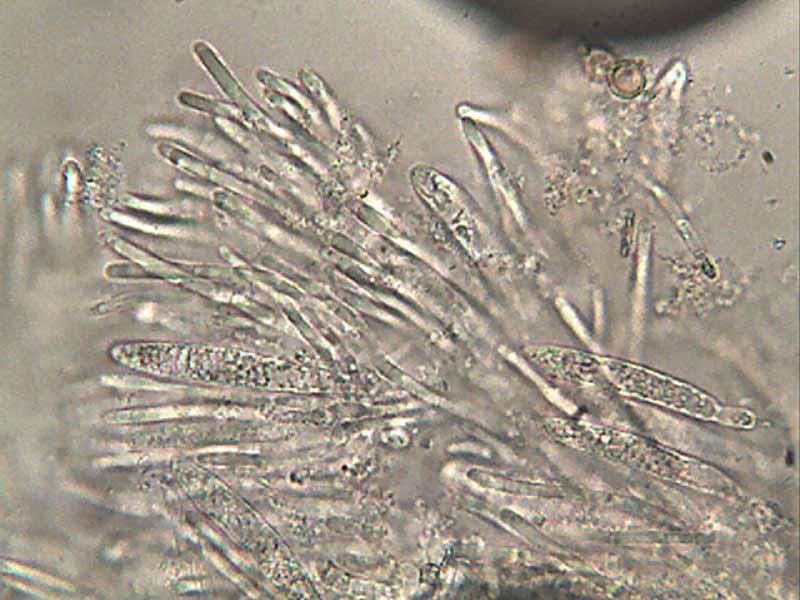
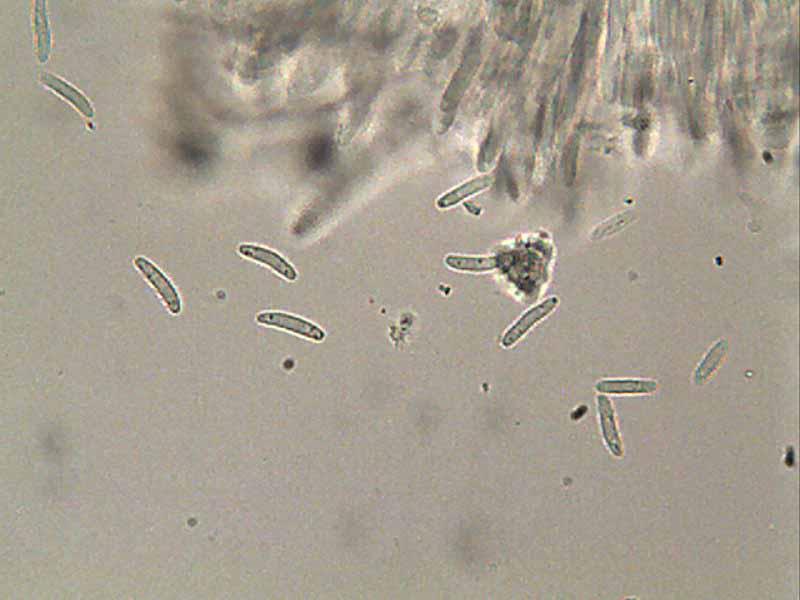

Hello,
this is a Mollisia ss. str (no Pyrenopeziza)., and I think this could be Mollisia ligni.
The spores are a little too long for this species, but the rest would fit.
The ascus porus reaction, is it really negative?
Did you observe the shape of the fruitbodies, when it is slowly drying? Does it become triangular when slowly dehydrating?
best regards,
Andreas
A ver si nos podemos ir acercando
Rafael
Rafael
Con Melzer muy positivo da suave, Casi inperceptible
Rafael
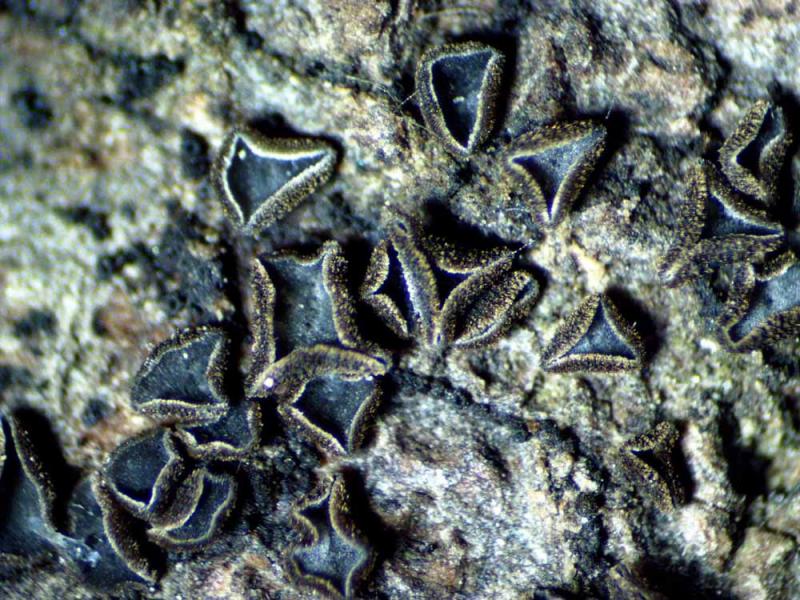
Hola Rafael,
the shape of the ascomata is very typical for Mollisia lignI!
So I would have no probelms to name this M. ligni (non ss. BREITENBACH & KRÄNZLIN!!)
best regards,
Andreas