
06-05-2026 17:23
Thomas Læssøehttps://svampe.databasen.org/observations/10594257
06-05-2026 11:25
 Castillo Joseba
Me mandan el material seco de Galicia (España) re
28-04-2026 20:07
 Lothar Krieglsteiner
... on twig in the air at standing Ceratonia siliq
05-05-2026 22:40
Gernot FriebesHi,I believe this is a Plagiostoma growing on a Sa
04-05-2026 18:13
 Stephen Martin Mifsud
ID request for what seems to be a true aquatic fun
04-05-2026 16:39
Stephen Martin Mifsud
ID request: This specimen was collected in Malta o
28-07-2011 18:31
 Alex Akulov
Dear FriendsToday I made the pdf file of Velenovsk
04-05-2026 09:50
Castillo Joseba
Me mandan el material seco de Galicia,(España) re
02-05-2026 12:42
Alain BRISSARDBonjour à tousJeuidi 30 avril dernier on m'a remi
On Lycopodium annotinum
Marja Pennanen,
15-11-2014 11:16
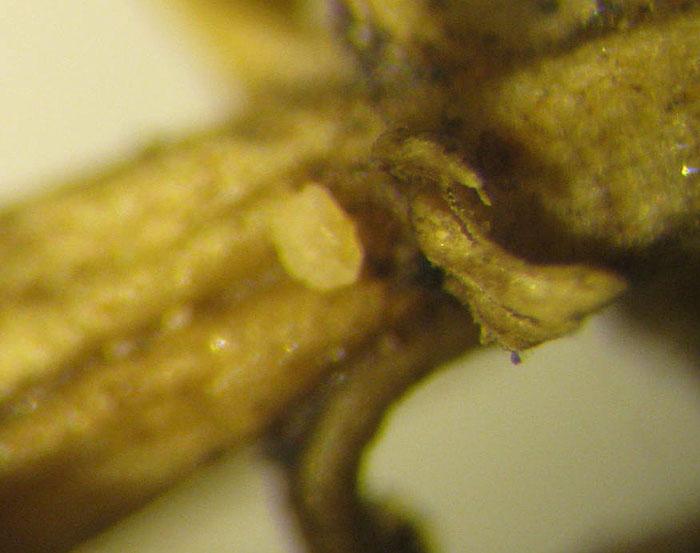
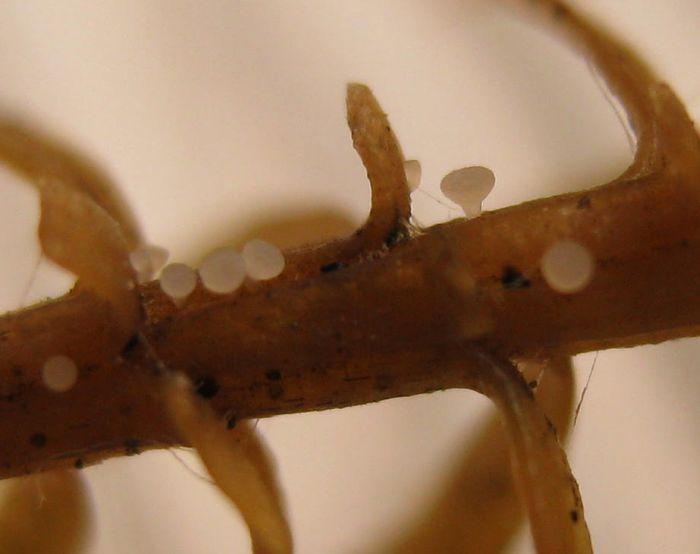
these have as long stipe as they are wide, about 0,3 mm.
Curiously: what is the limit between subsessile and stipate?
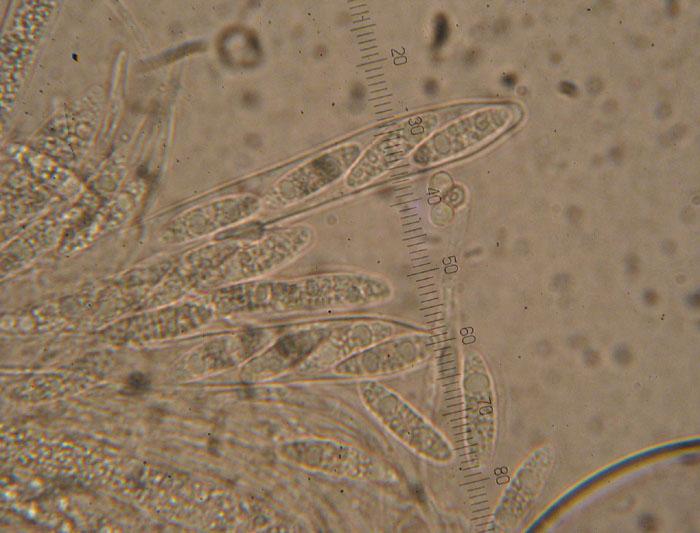
The spores have many droplets and are about 14-18 (-20)x3-4,5.
The asci are 4 spored, 70-100x6-9 and to my seeing IKI-.
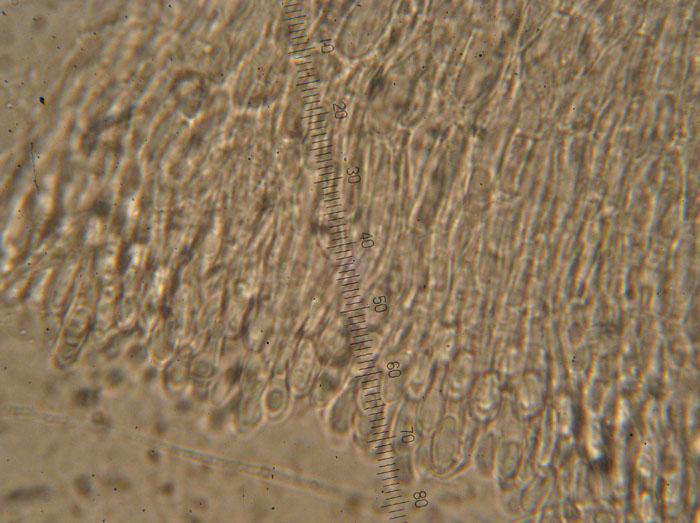
The paraphyses are about 2 micrometers wide an may have a big vacuole at the top.
I saw one septum in some of them.
Ascomycetes on Nordic Lycopods gave me no answers.
Once again no other ideas except here to look for help with determination: Marja
Hans-Otto Baral,
15-11-2014 11:46

Re : On Lycopodium annotinum
hui, what big spores. Bad that the asci are inamyloid - so we are not sure whether it is hymenoscyphoid, or a member of Pezizellaceae (what I more suspect). Something around Allophylaria perhaps, or Calycellina.
I have nothing in my database on Lycopodium with such large spores.
Zotto
I have nothing in my database on Lycopodium with such large spores.
Zotto
Marja Pennanen,
15-11-2014 13:44
Re : On Lycopodium annotinum
Hi Zotto,
those are good ideas for the genus. I shall check them. I can not say, that I'm very sure of the amyloidity.
The asci seemed to be without reaction.
But the fact, that there are only 4 spores in asci is not very common and I find it interesting.
Funny, that now, that I know a bit more, my findings are no easier for me to determine. Finding new for me species is still as easy, but the species turn more uncommon.
Marja
those are good ideas for the genus. I shall check them. I can not say, that I'm very sure of the amyloidity.
The asci seemed to be without reaction.
But the fact, that there are only 4 spores in asci is not very common and I find it interesting.
Funny, that now, that I know a bit more, my findings are no easier for me to determine. Finding new for me species is still as easy, but the species turn more uncommon.
Marja
Hans-Otto Baral,
15-11-2014 17:07
Re : On Lycopodium annotinum
ah, I overlooked the tetraspory. If you have immature asci, do they also show 4 spores or 8?
Is the excipulum of text. prismatica or oblta?
Is the excipulum of text. prismatica or oblta?
Marja Pennanen,
15-11-2014 18:22
Re : On Lycopodium annotinum
Hi,
I got to look the asci again and test Iki, too. The immature asci were filled with vacuoles and the amount of spores was not a thing easy to notice.
The cells were like elongate brickwall, prismatica I suppose.
Be back later: Marja
I got to look the asci again and test Iki, too. The immature asci were filled with vacuoles and the amount of spores was not a thing easy to notice.
The cells were like elongate brickwall, prismatica I suppose.
Be back later: Marja
Marja Pennanen,
15-11-2014 22:04
Re : On Lycopodium annotinum
Hi,
now. when I had time, I looked through my photos.
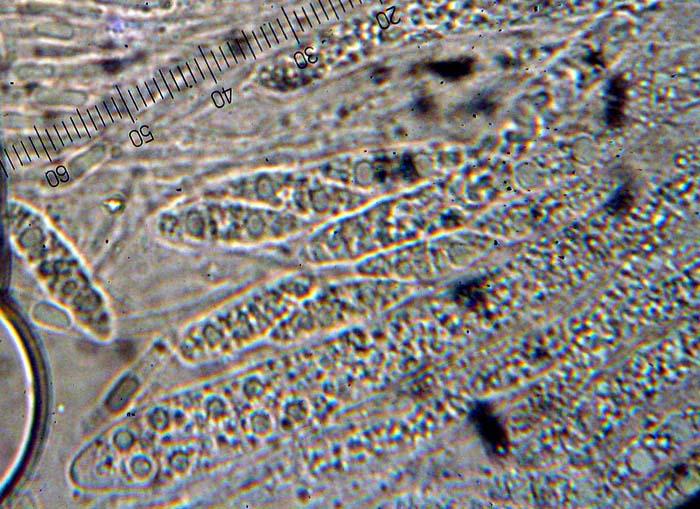
Here is now one with autolevels adjustment, funny colour, but vacuoles show pretty well.
There are loads of vacuoles in the immature asci, but 4 spores seems to develop in the top of the asci.
By the way, one septum is found in spores, when droplets disappear.
Marja
now. when I had time, I looked through my photos.
Here is now one with autolevels adjustment, funny colour, but vacuoles show pretty well.
There are loads of vacuoles in the immature asci, but 4 spores seems to develop in the top of the asci.
By the way, one septum is found in spores, when droplets disappear.
Marja
Hans-Otto Baral,
15-11-2014 22:22
Re : On Lycopodium annotinum
It is typical for spores rich in oil that the immature ascus is full of LB droplets. To see the immature spores is often only possible when the asci are alive. yours are too much pressed.
Marja Pennanen,
23-10-2015 15:40
Re : On Lycopodium annotinum
Hello,
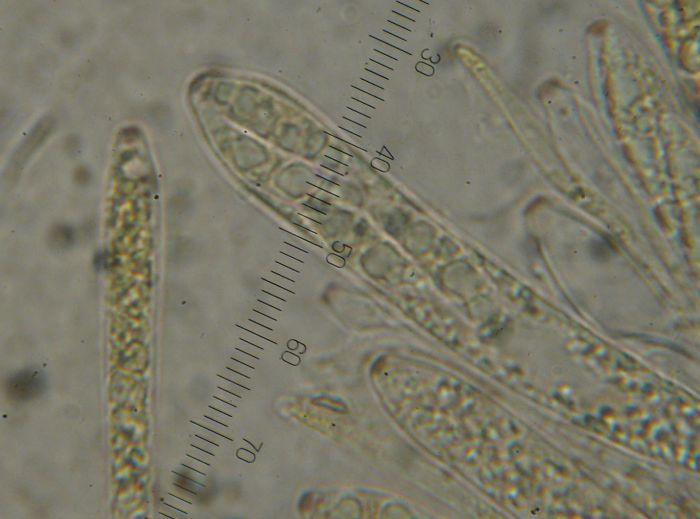
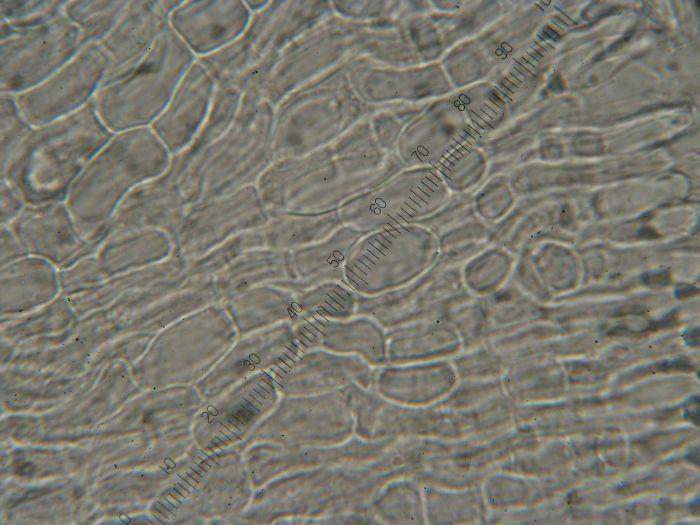
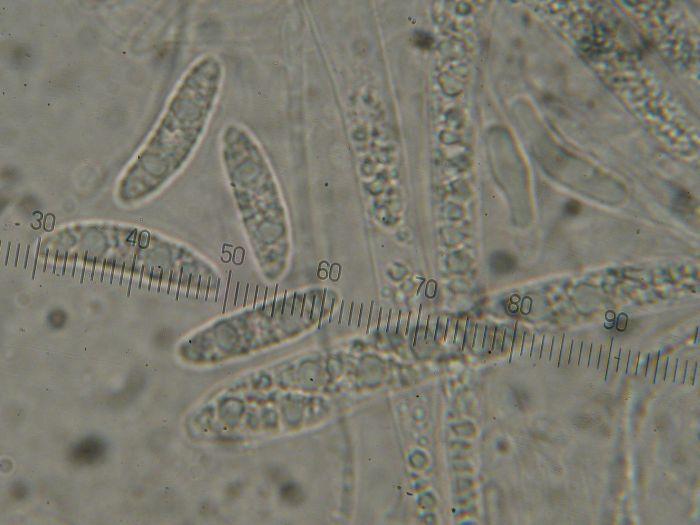
I found these again. Now I can tell, that the asci are IKI+ red.
The cells get narrower towards the base.
The paraphyses seem to have VB filled tops, up to 3 wide.
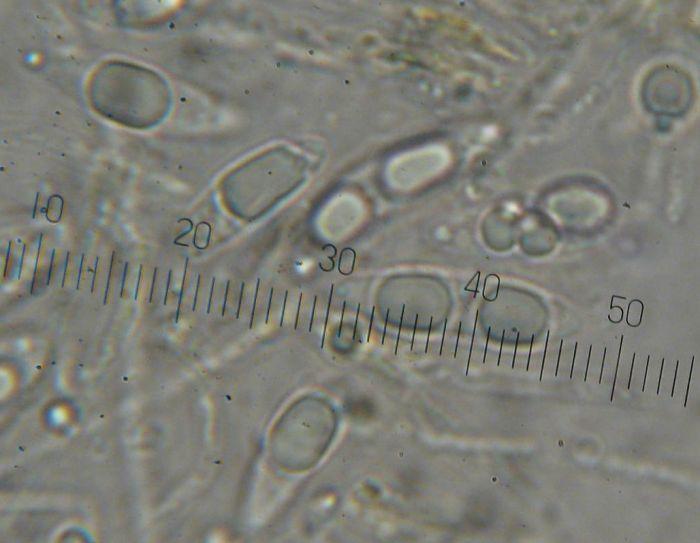
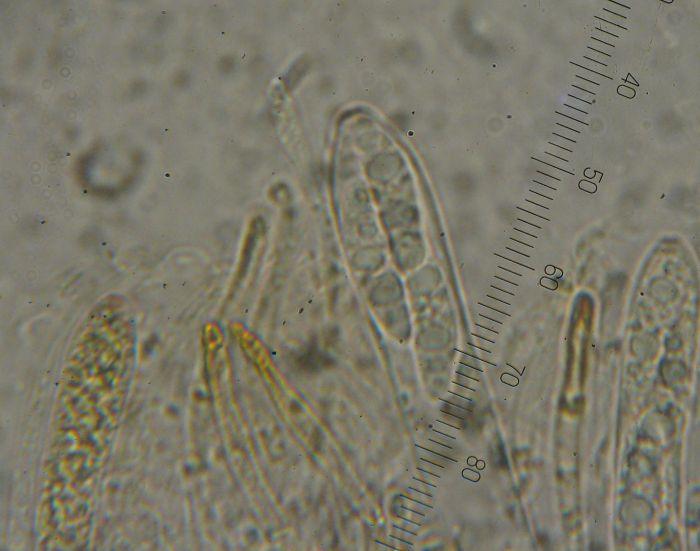
The spores were 15-20x4-5 and asci 90-110x8-10, 4 spored.
Here some more photos.
The microscophy is so peculiar, that this should be very easy species to determine, after finding the genus and the right description. Or could this be a species, that is still waiting to be published?
Marja
I found these again. Now I can tell, that the asci are IKI+ red.
The cells get narrower towards the base.
The paraphyses seem to have VB filled tops, up to 3 wide.
The spores were 15-20x4-5 and asci 90-110x8-10, 4 spored.
Here some more photos.
The microscophy is so peculiar, that this should be very easy species to determine, after finding the genus and the right description. Or could this be a species, that is still waiting to be published?
Marja
Hans-Otto Baral,
23-10-2015 16:14
Re : On Lycopodium annotinum
Yes! And it is clearly an Allophylaria.
Zotto
Zotto
Marja Pennanen,
23-10-2015 18:29
Re : On Lycopodium annotinum
Thank you!!!
Now I can write Allophylaria sp. on the specimen and the determination process has taken a huge step further.
There seems to be 14 Allophylaria species at this moment.
Marja
Now I can write Allophylaria sp. on the specimen and the determination process has taken a huge step further.
There seems to be 14 Allophylaria species at this moment.
Marja
Hans-Otto Baral,
23-10-2015 18:52
Re : On Lycopodium annotinum
Yes, about this number.
Would be interesting to find out whether 4 spores abort or the spores are binucleate as I observed in one collection on Poaceae. Your photos look like uninucleate.
Would be interesting to find out whether 4 spores abort or the spores are binucleate as I observed in one collection on Poaceae. Your photos look like uninucleate.