
11-01-2022 16:36
 Jason Karakehian
Hi does anyone have a digital copy of Raitviir A (
20-05-2026 17:47
Margot en Geert VullingsWe found this Mollisia on dead Juncus stems mown l
22-05-2026 14:47
Gernot FriebesHi,superficial ascomata collected on bark of a liv
22-05-2026 14:44
 Lothar Krieglsteiner
in unripe condition citrine yellow, then soon fadi
22-05-2026 13:29
Gernot FriebesHi,I am curious to hear your opinion on this mater
22-05-2026 10:59
 Nicolas VAN VOOREN
Trouvé sur Phragmites, ce que je pense être un L
20-05-2026 21:49
Margot en Geert VullingsWe found this Lachnum on Juncus stems mown last ye
21-05-2026 17:01
Pierre RepellinBonjour à toutes et à tous,Je recherche l'articl
20-05-2026 20:08
 Andreas Millinger
Good evening,another quite distinctive find from M
20-05-2026 12:57
 Ingo Ibelshäuser
Hello everybody, on decayed hardwood e.g. Quercus

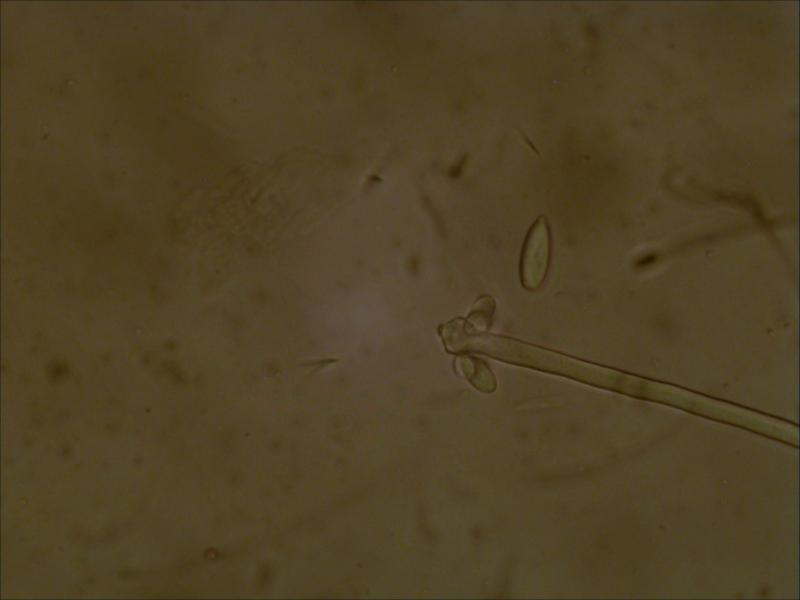
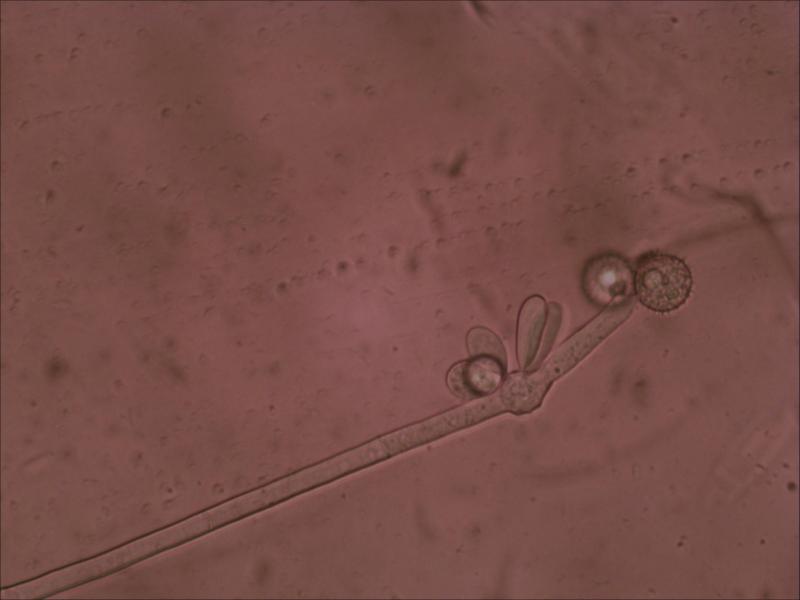
Found on cow dung.
It looks as if it developes two kinds op conidia's circular and ovel shaped on two places of the stem.
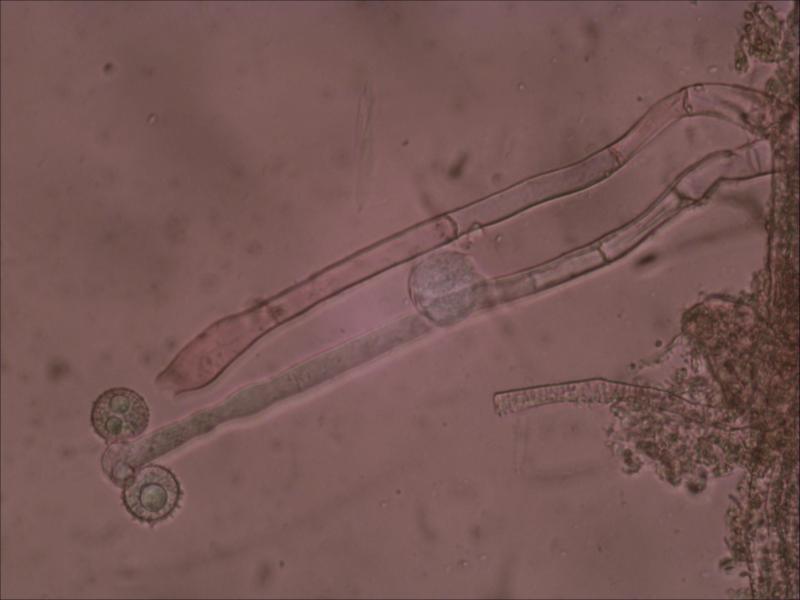
Circular conidia's are covered with wrats and the oval conidia's are not.
Stem: hyaline; 420-450x3-3.5um; septated, with two conidia origins; distance between origins 13-14 um; stem can be branched.
Oval conidia's: 7-8x2.5-3.5 um
Circular conidia's: 6-7 um in diameter.
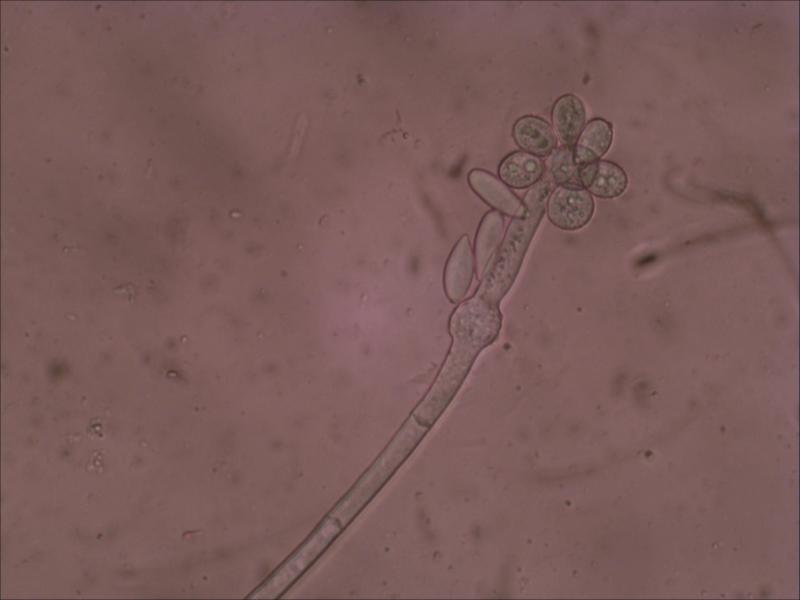
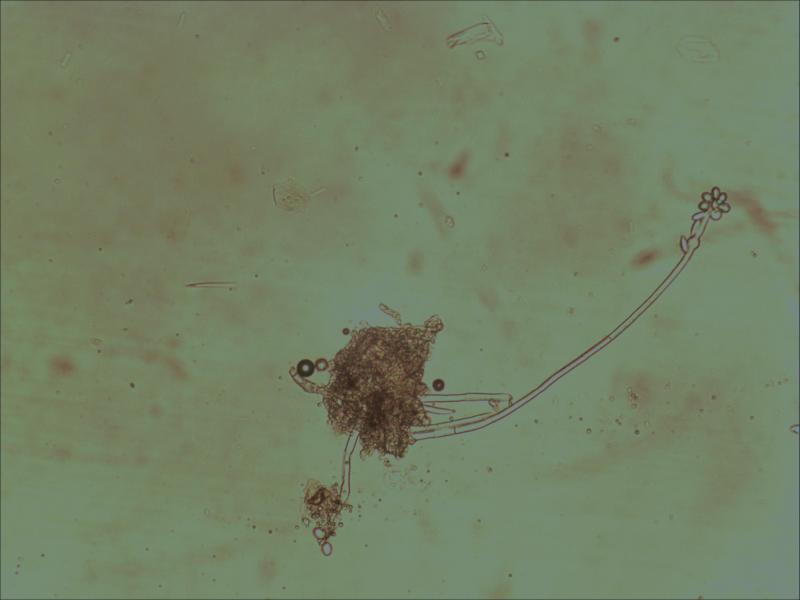
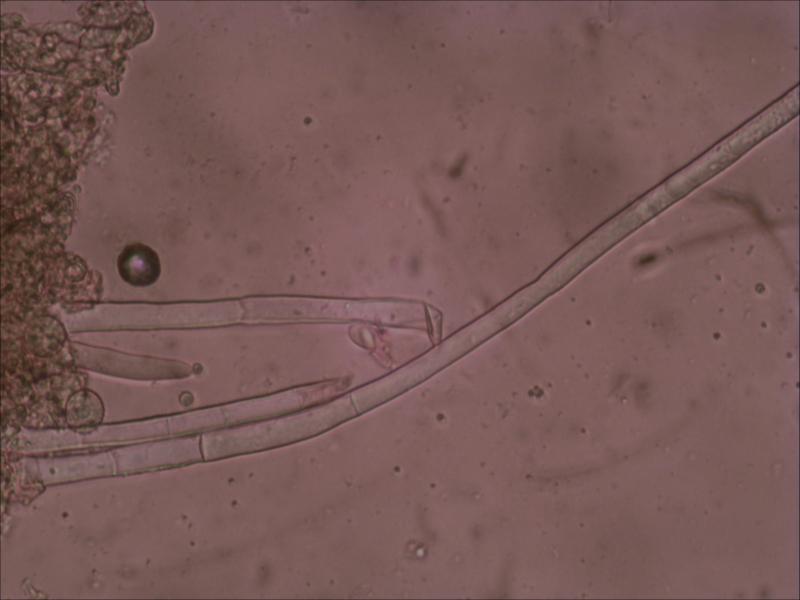
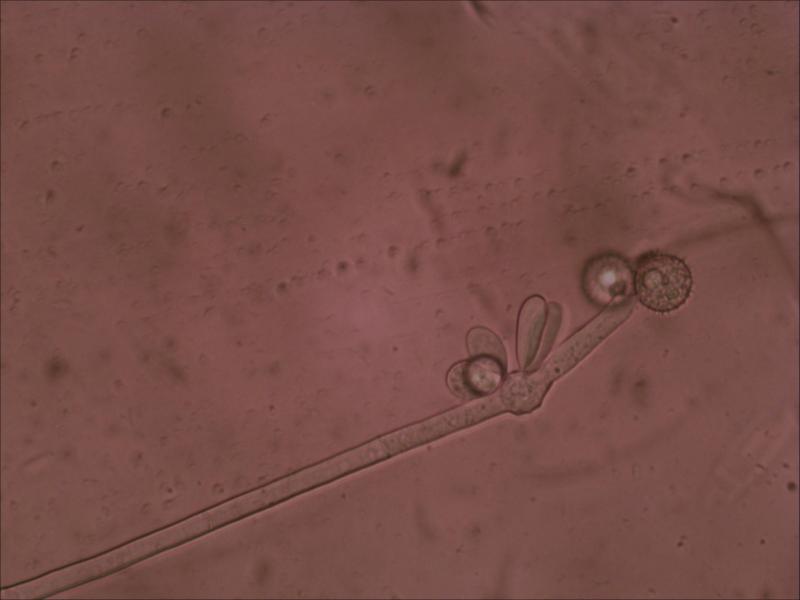
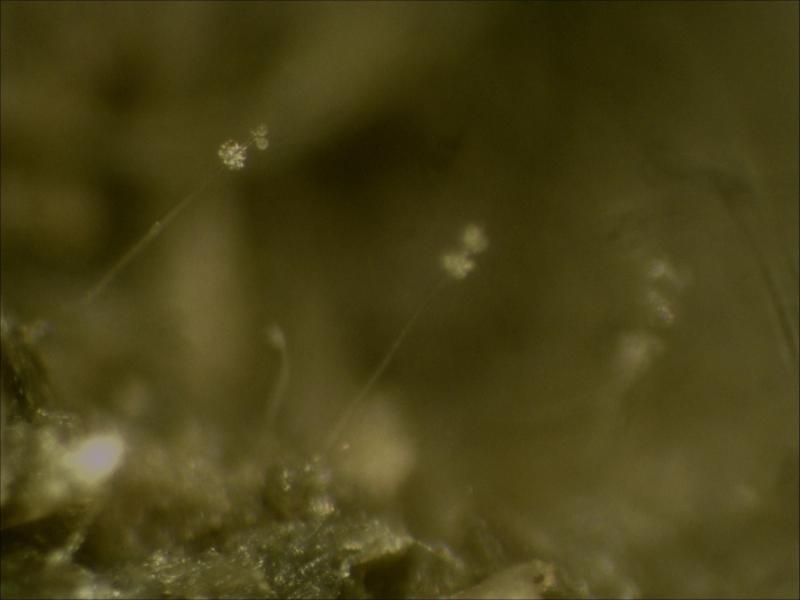

the 'hyphomycete' with the elongate conidia looks very like Gonatobotrys simplex (anamorphic Melanospora damnosa (Sacc.) Lindau), a species which is often found associated with other fungi. Your photo's show these conidia both on the apical and the intercalary swellings.
The globose conidia I don't know about - are you absolutely sure only one fungus species is involved here? Might these globose conidia be "strays".
cordialement
Chris
Hello Chris,
You probably may be right that we do have two different species, one with elongated codidia's and one with globose conidia's.
The stem with elongated conidia's does not have an intercalary swelling underneath the apical one, and the is branched.
The stem with globose conidia's is not branched, but the photo's also show elongated originating from the intercalary swelling.
On the other hand the last photo gives the impression that the elongated conidia's are attached to the bulbous thickening of the stem.
The photo of the species on dung, although not good in focus, clearly shows globose conidia's on top of the stem and a bunch of conidia's beneath the top not positively identified as being elongated or globose.
I will have a look for more species hopefully solving the identification problem.
Joop
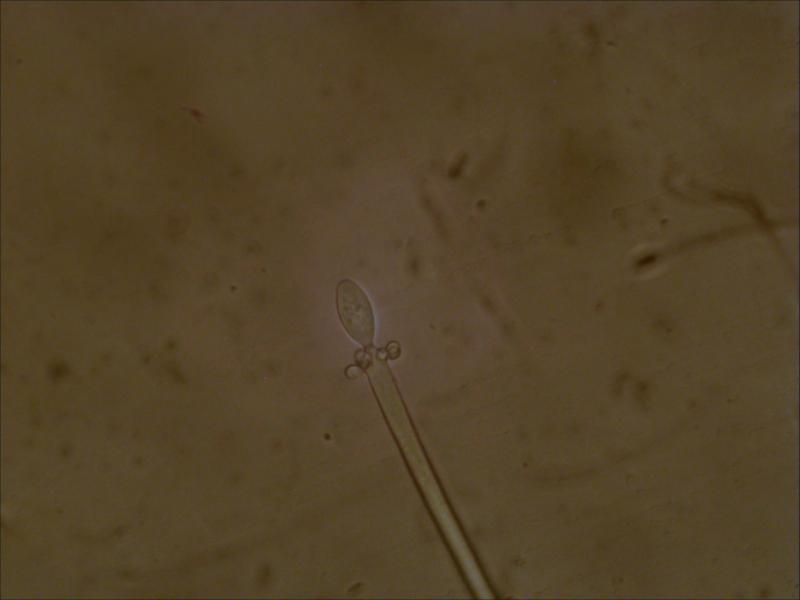
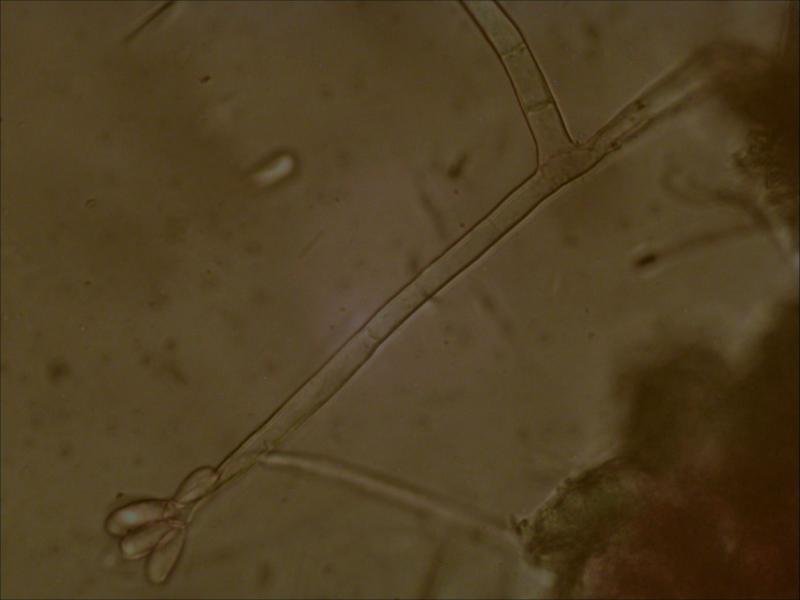
Chris