
13-05-2026 15:26
 François Freléchoux
Bonjour,Voici une récolte faite il y a quelques j
12-05-2026 15:41
 Nicolas VAN VOOREN
Dear Ascolovers, especially interested in Pezizale
13-05-2026 12:05
 Thierry Blondelle
Bonjour à tous,J'aimerais avoir confirmation de c
11-05-2026 12:32
 Bernard CLESSE
Pourriez-vous m'aider à identifier cette héloti
10-05-2026 23:17
 Andreas Gminder
Hello,today we found in a moist steep decidous for
28-04-2026 20:07
 Lothar Krieglsteiner
... on twig in the air at standing Ceratonia siliq
27-04-2026 20:52
Lothar Krieglsteiner
Found on hanging tiwg of Olea europaea in dried-ou
11-05-2026 20:22
Lothar Krieglsteiner
on attached twig of standing Ficus caricaquite uns
29-04-2026 10:44
Lothar Krieglsteiner
growing at moist, drying-out soil at the side of a
 Hola, buenos días, les parece que la Muestra sea Otidea onotica ????
 Recogida en camino de montaña a 1400 m, a un lado del camino Quercus, Al otro lado del camino Pinus sylvestris ..
el ejemplar mas grande mide 5 cm diametro X 6.5 cm Altura.
Esporas 9--10,5 X 5--6.
Ascass 110--140 X 9--12 (M-125 X 10).
+ báculos
Parafisis X 3,5--4, apice curvado (bastantes RECTAS) .
Un saludo
Rafael
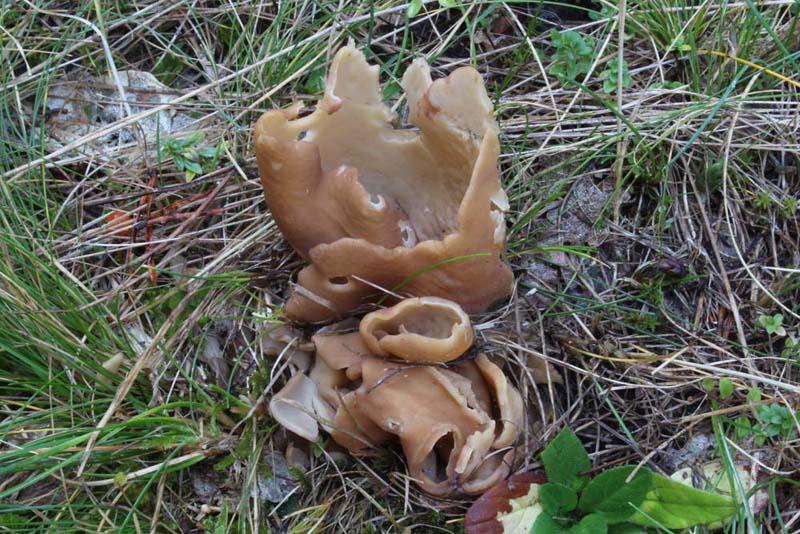
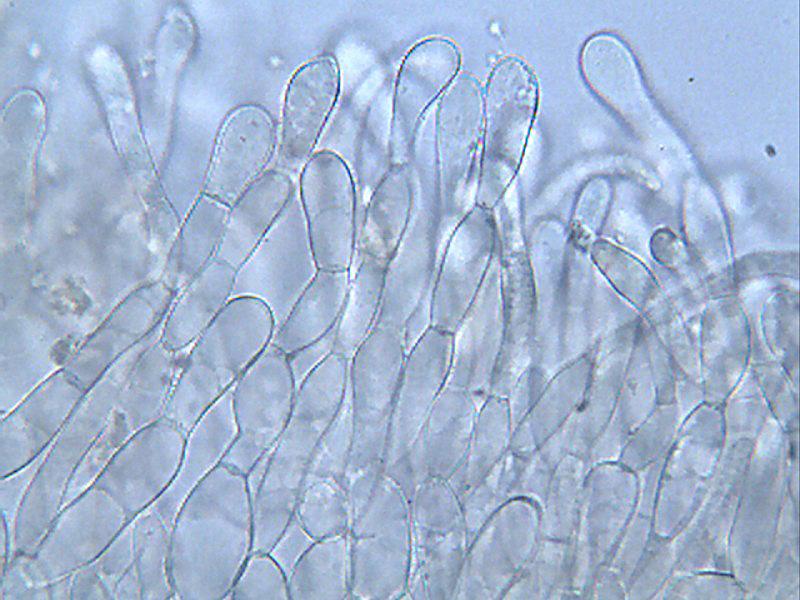
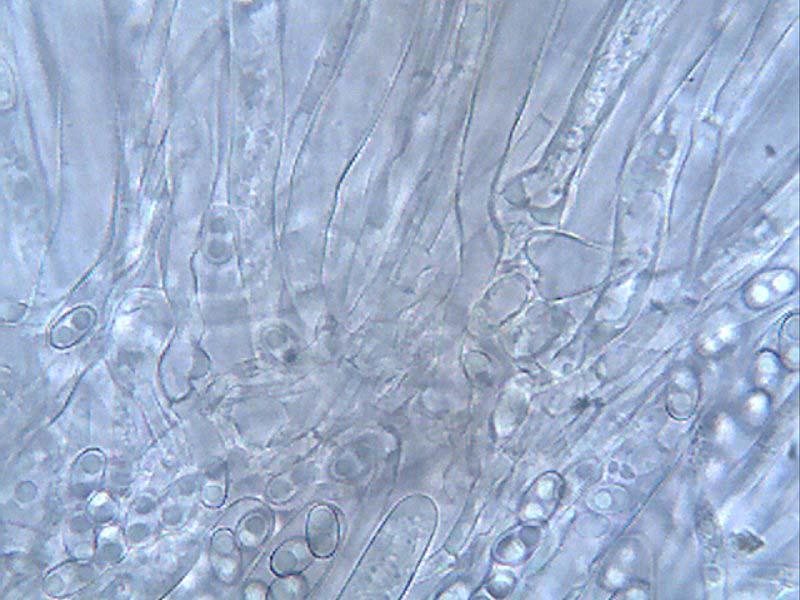
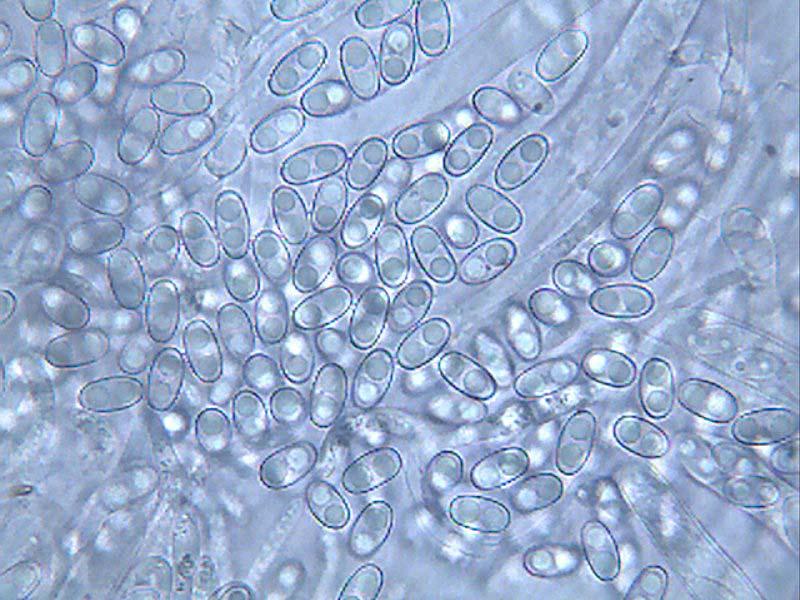
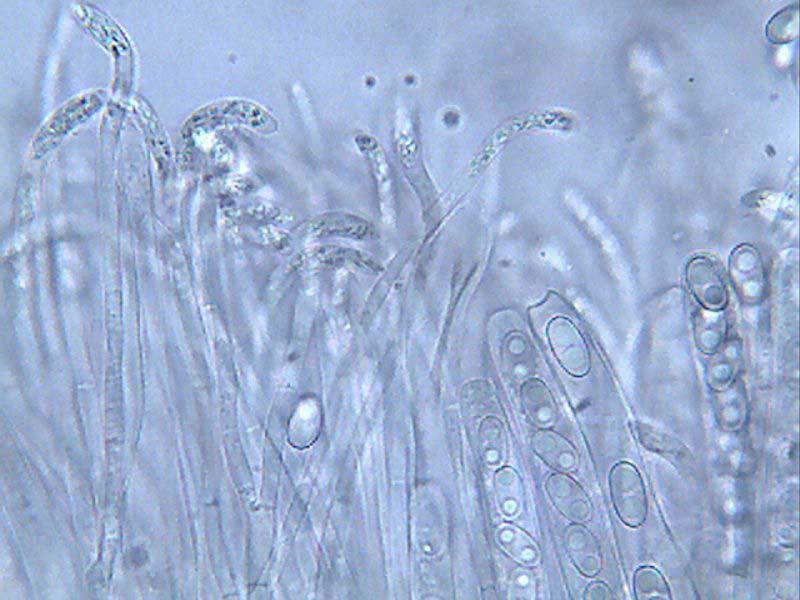
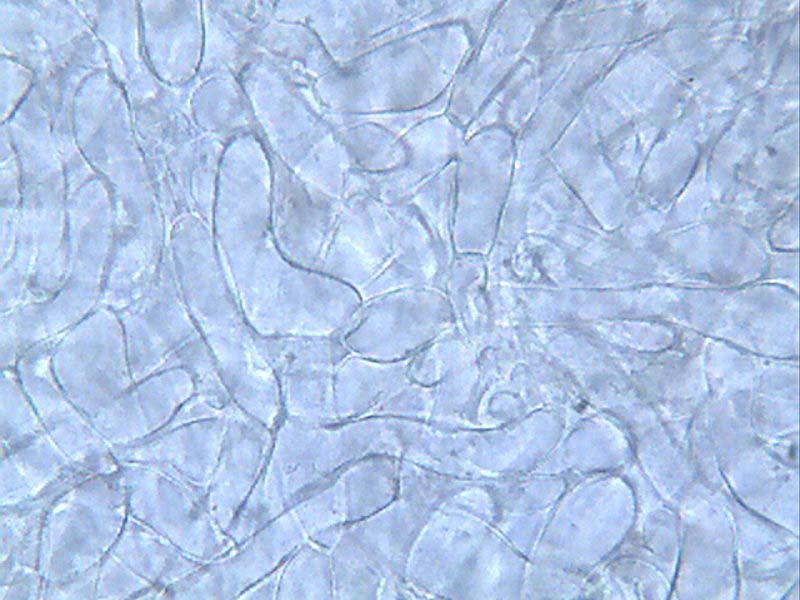
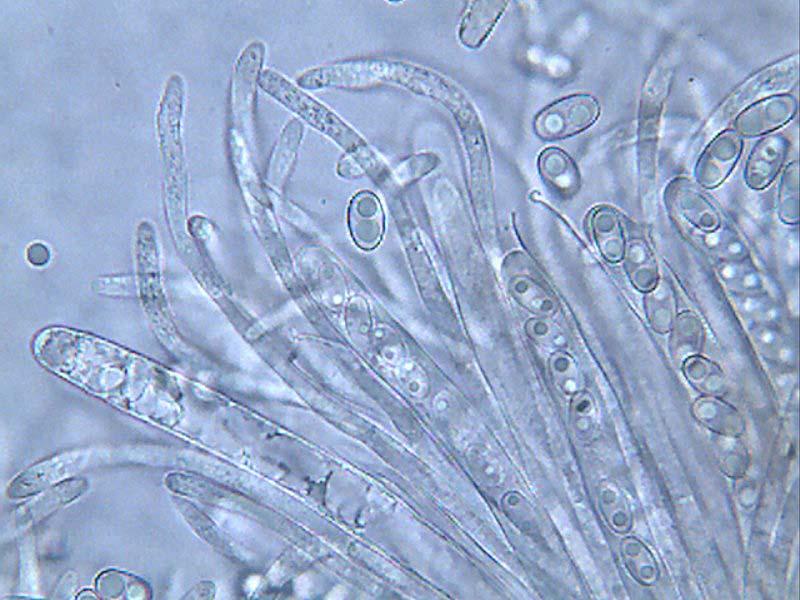
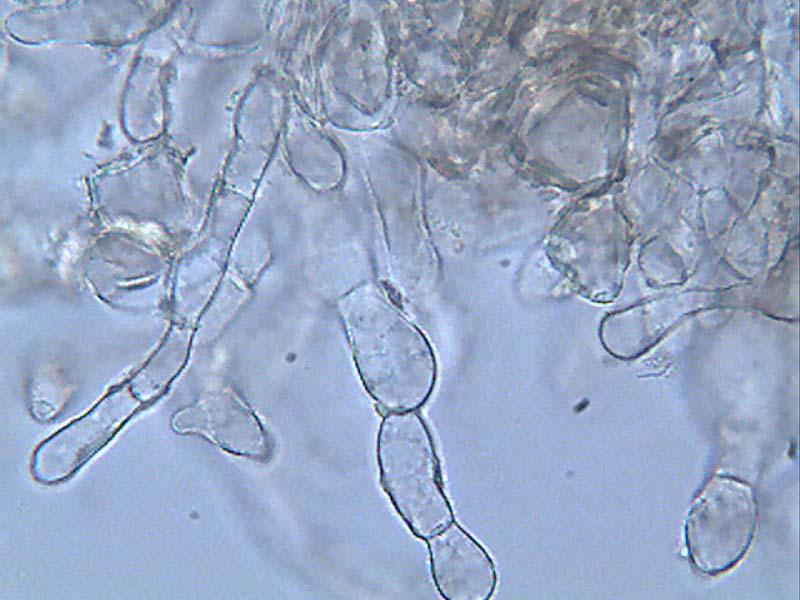
Couleurs d'Otidea tuomikoski dont le sommet a été mangé car en général c'est une espèce assez allongée.
La forte furfuration externe et les spores semblent conformes.
Gilbert
la verdad es que parecian que tenian la parte de arriba rota o comida
Un saludo
Rafael
Est-ce qu'on pourrait avoir une photo agrandie pour voir la surface externe ?
Esto es lo que usted quiere ?????
rafael
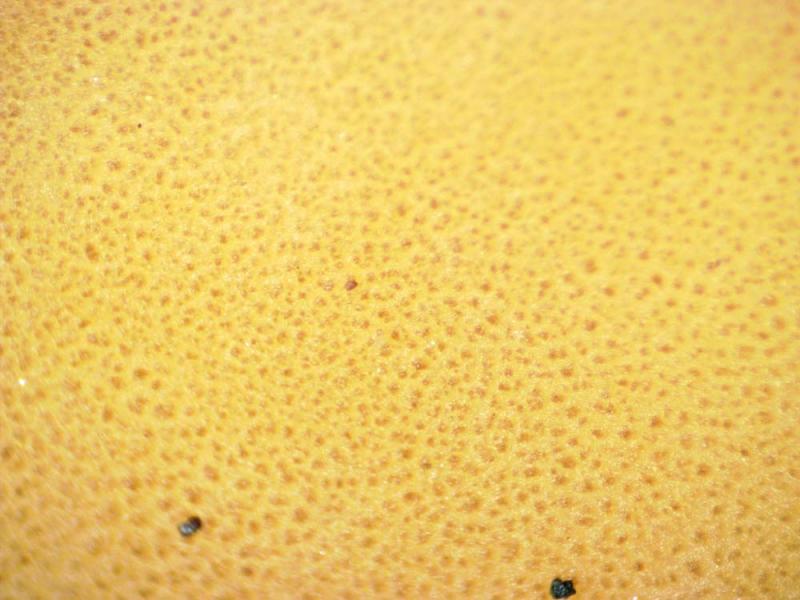
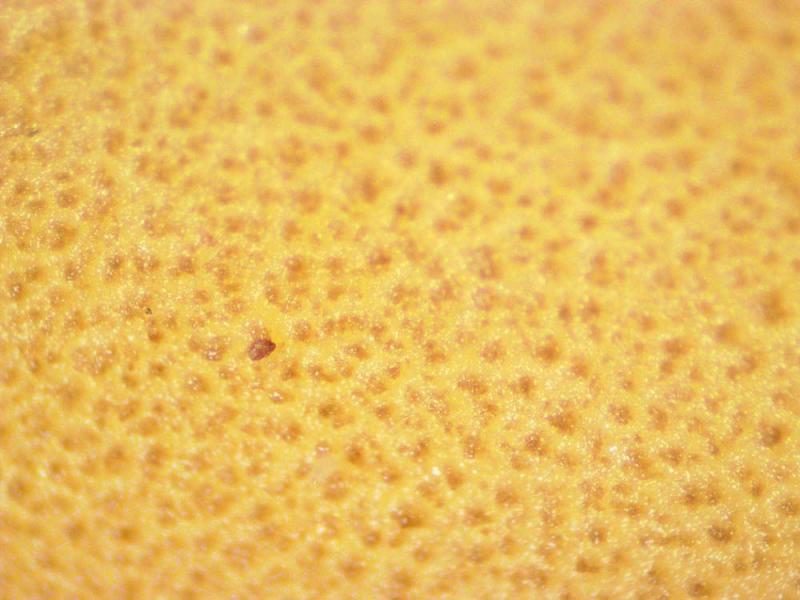
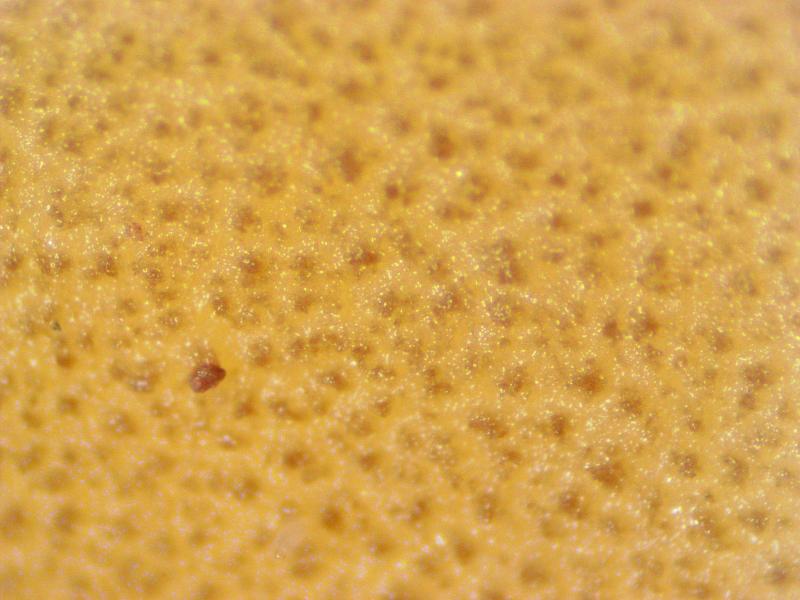
Rafael
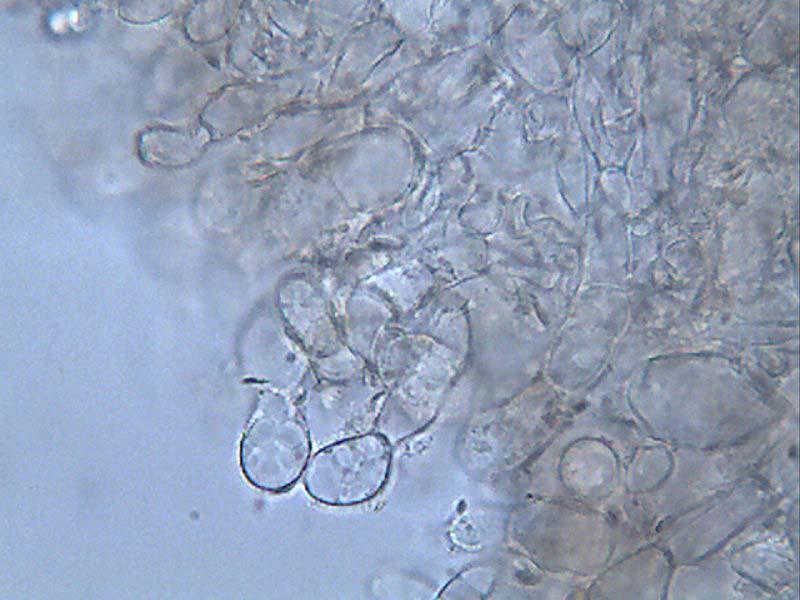
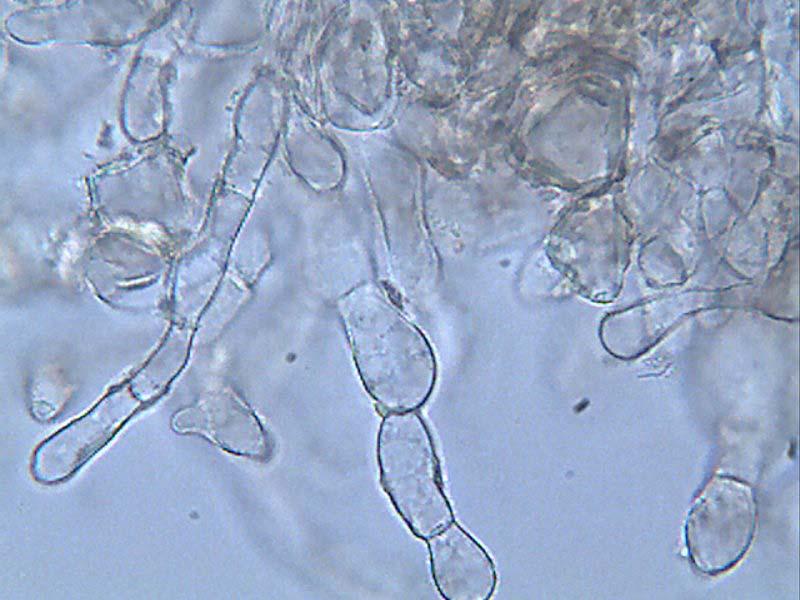
Interesting!
In my opinion it might be Otidea flavidobrunneola. The claviform excipular cells would be typical for it and related species in the O. concinna group.
To be sure:
a) can we see sections of the warts? How high are they?
b) Can we see how the crystals of the ectal excipulum react in KOH? Does the ectal excipulum turn yellow in KOH?
If we can confirm it is O. flavidobrunneola it would be very interesting as it is so far only known from Fennoscandia.
Cheers,
_______________
Interesante!
En mi opinión podría ser O. flavidobrunneola. Las células claviformes en el excípulo ectal es típico de esta especie y especies relacionadas en el grupo O. concinna.
Para estar seguros:
a) Podríamos ver secciones de las verrugas? Cuánto miden?
b) Sobre la misma preparación, podemos ver cómo reaccionan los cristales del excípulo ectal en KOH? Reacciona el excípulo ectal a amarillo en KOH también?
Si pudiéramos confirmar que es O. flaviidobrunneola sería muy interesante, ya que se conoce sólamente de unas pocas localidades en Escandinavia.
Saludos!
Ibai.
a ver si puedo responder a tus preguntas.
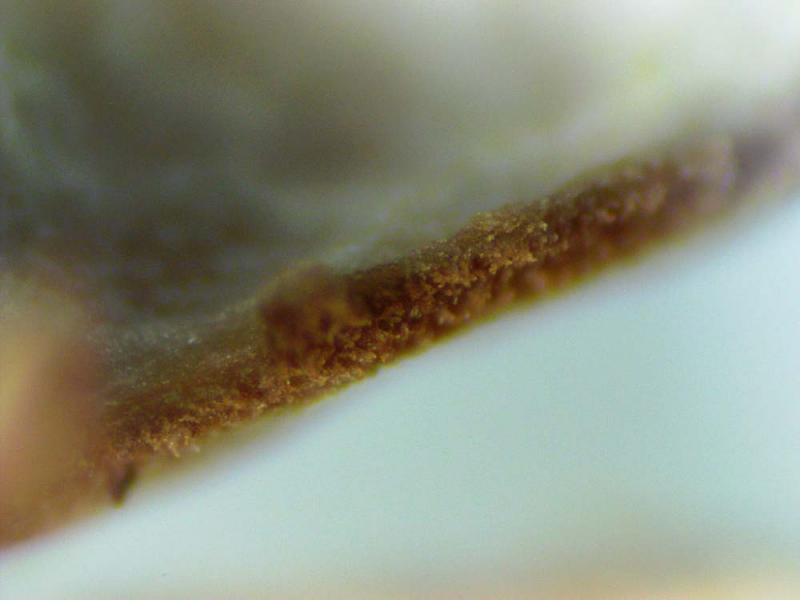
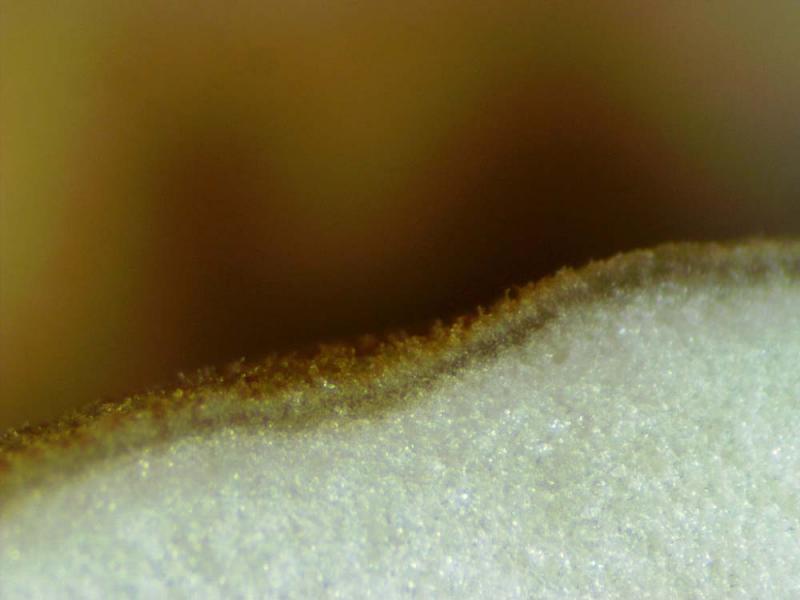
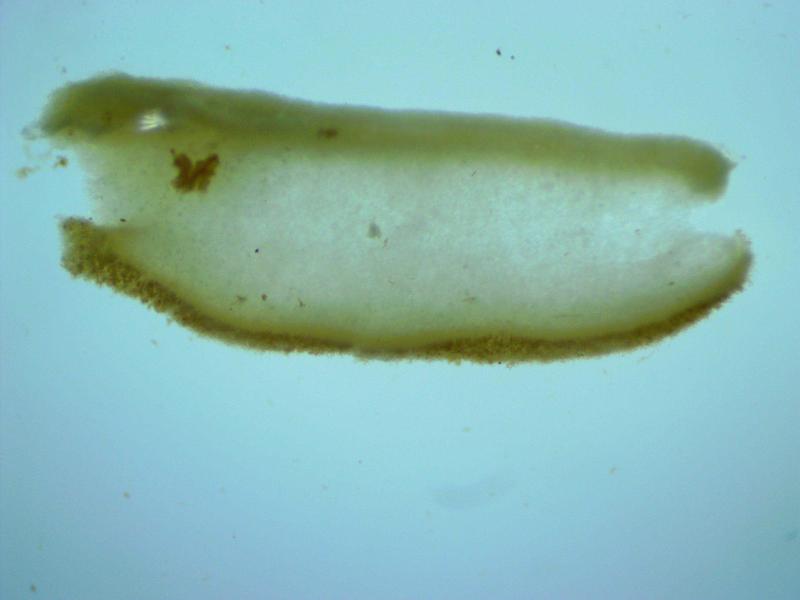
a- van fotos del corte, mido en las verrugas la zona oscura + los pelos que veo dan 105--125 micras, las celulas encadenadas solas dan 60--80 micras.
A- las verrugas llegan hasta la base
B- no veo cristales como tal
d- con KOH en un corte fino de excipulo, todas las celulas se vuelven amarilla
Mañana mando fotos con KOH , hoy las que he tomado son de una zona que no habia cambiado
Rafael
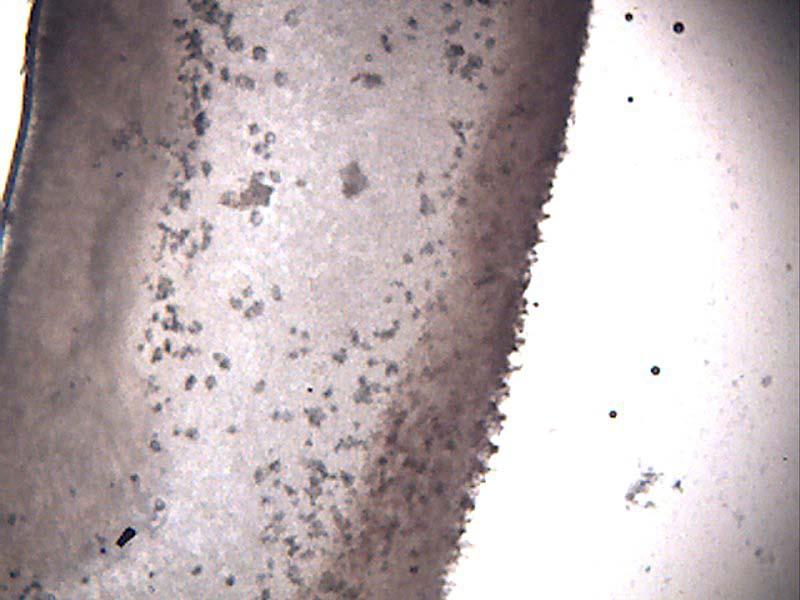
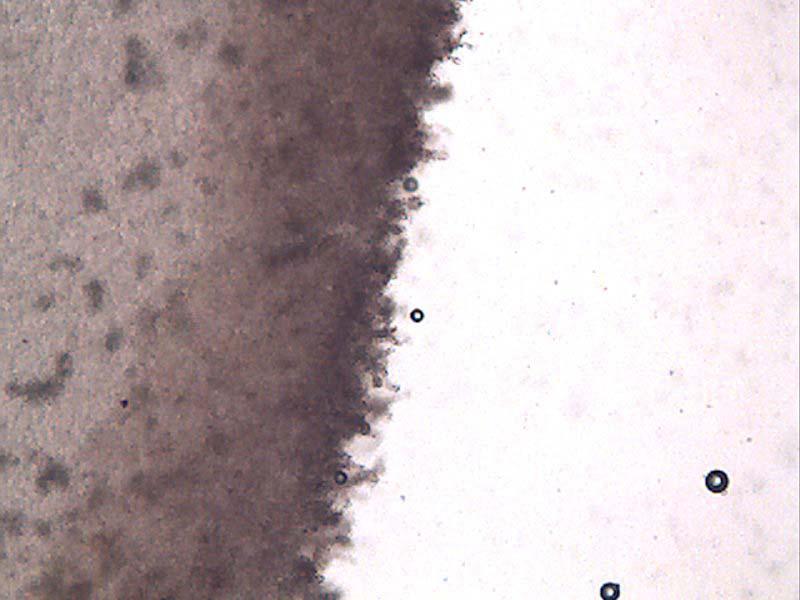
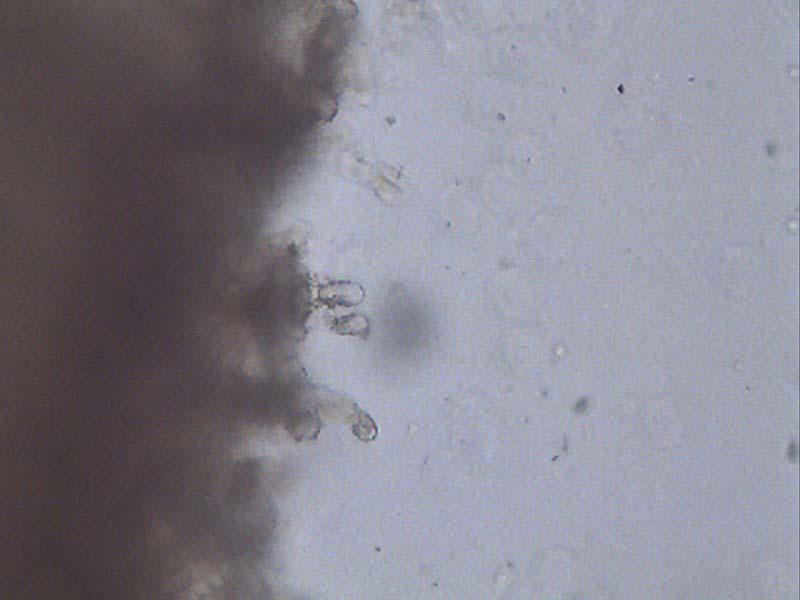
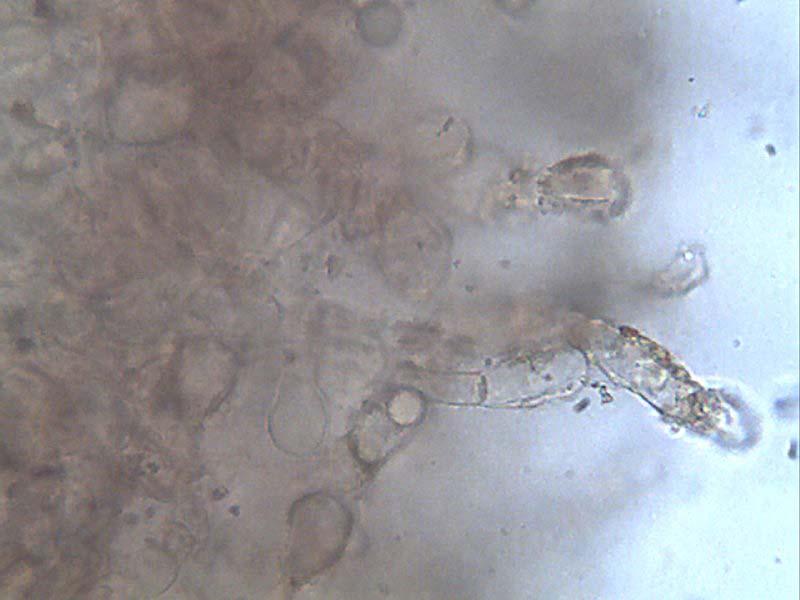
Rafael
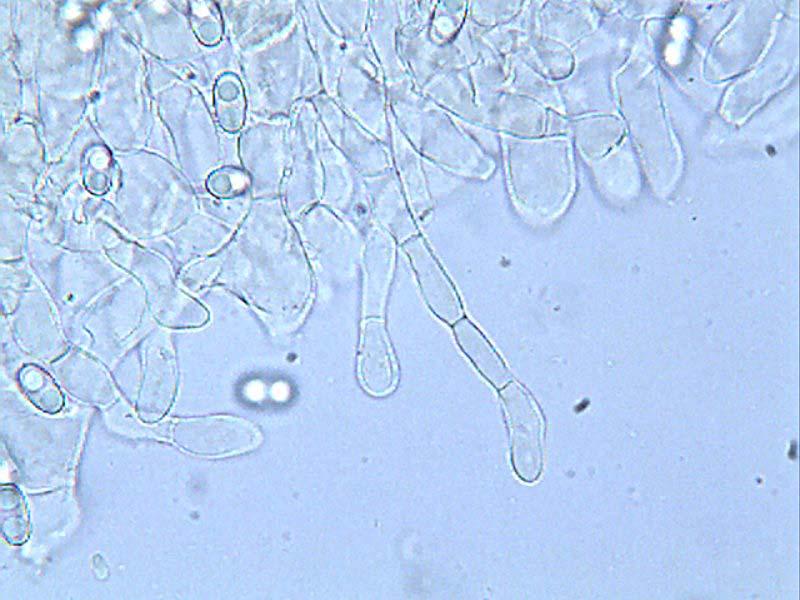
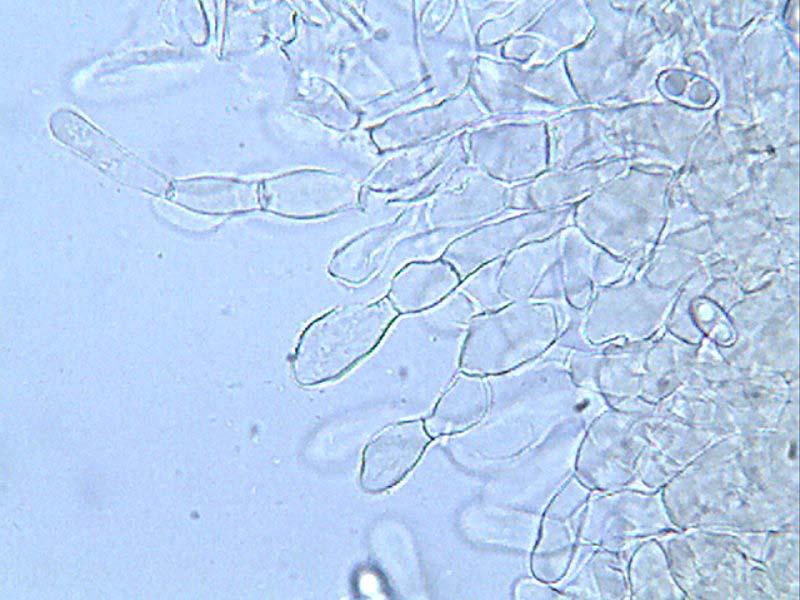
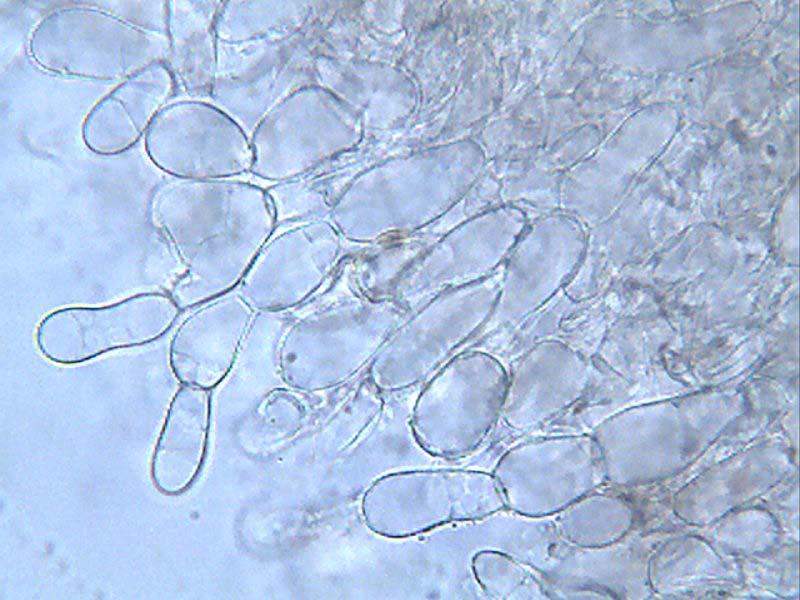
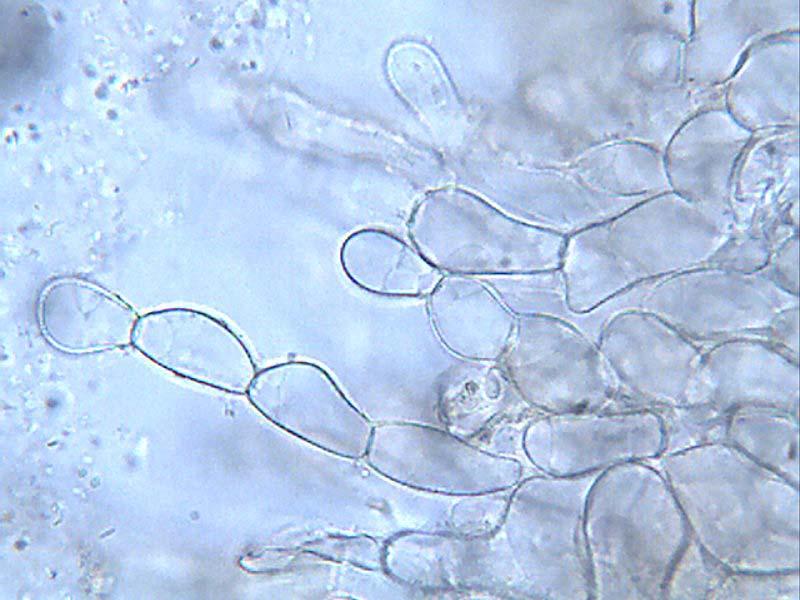
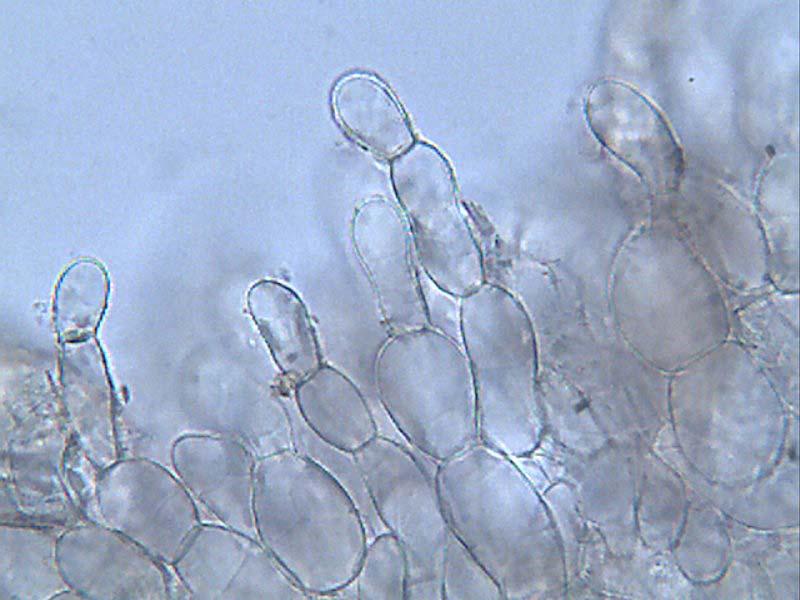
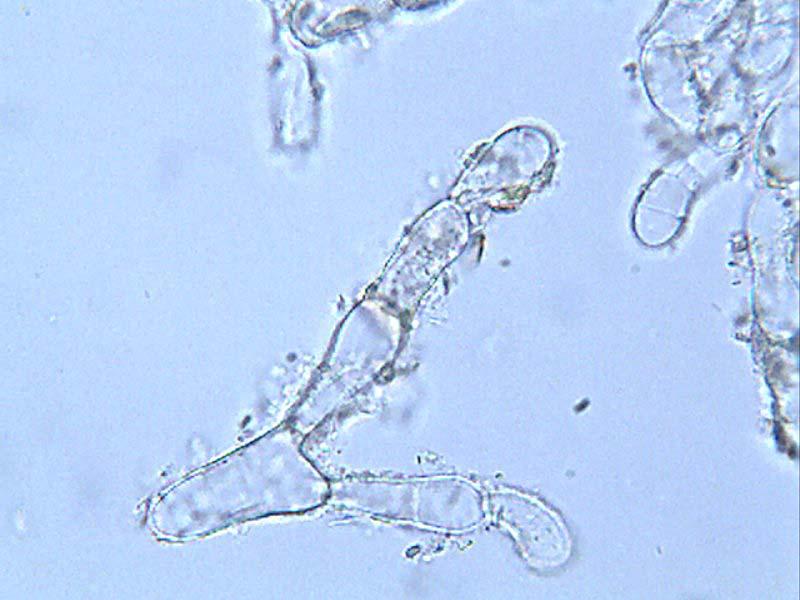
En KOH X10, todo vira a un color mas amarillo fuerte anaranjado, cristales no he visto ninguno en varias preparaciones, he visto unos restos pequeños que no se si pudieran ser, foto nº 28.
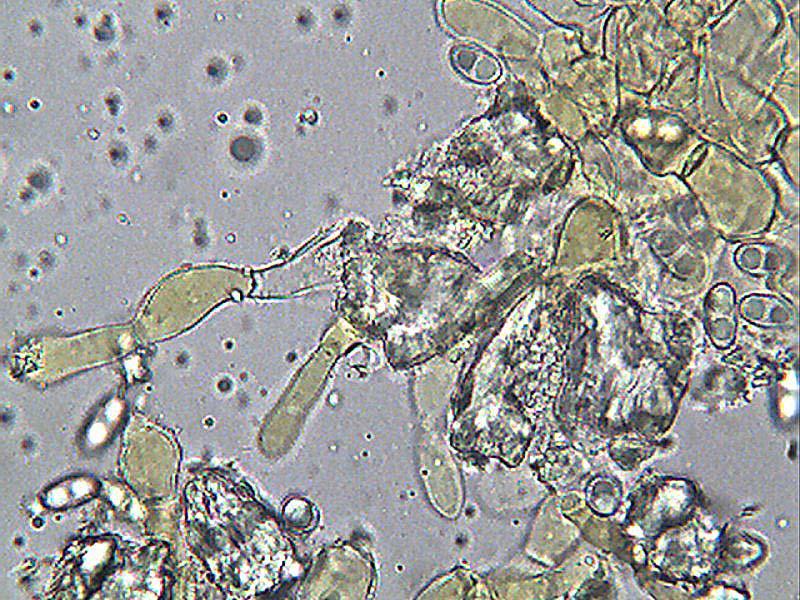
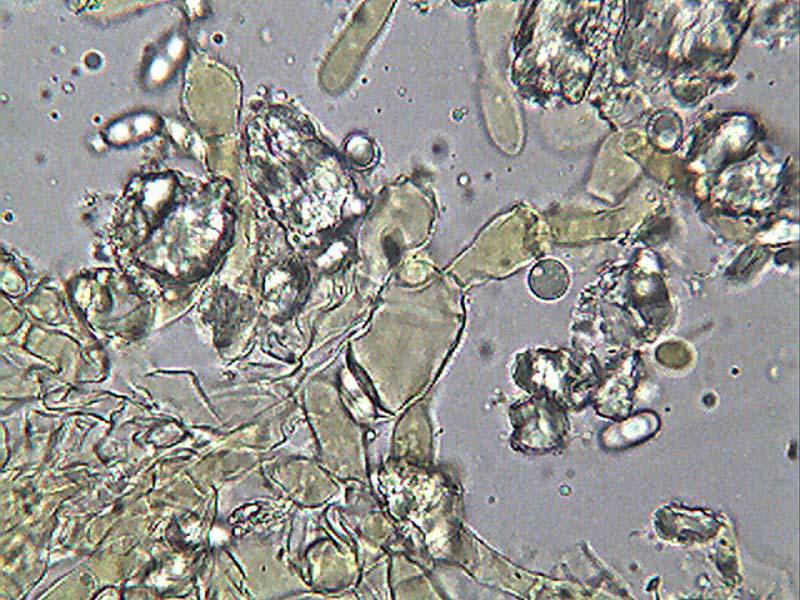
En KOH X5, celulas queviran al amarillo, he visto cristales mayores que tienen un color amarillo muy suave,
Un saludo
Rafael
Hi there,
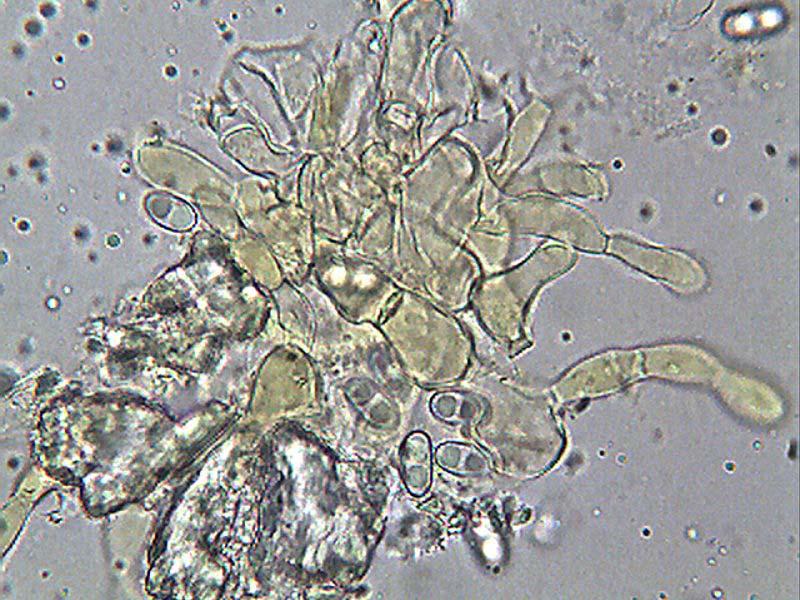
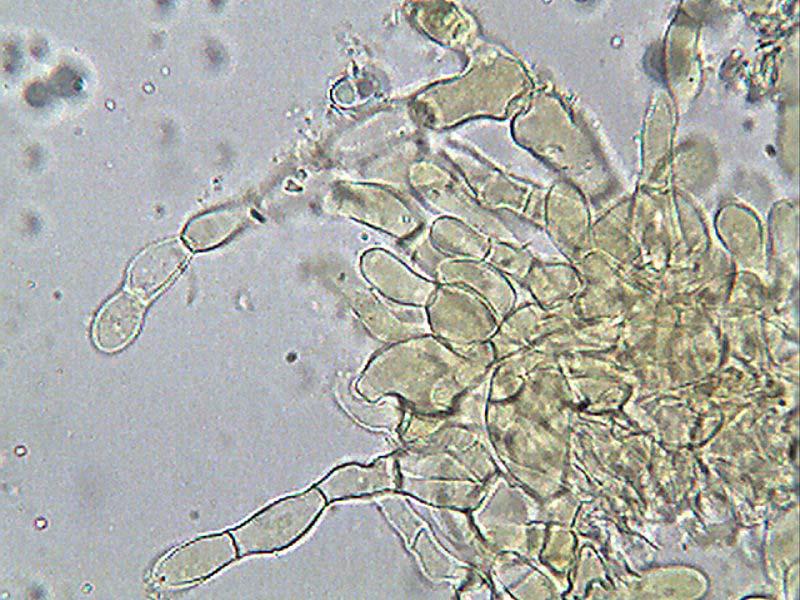
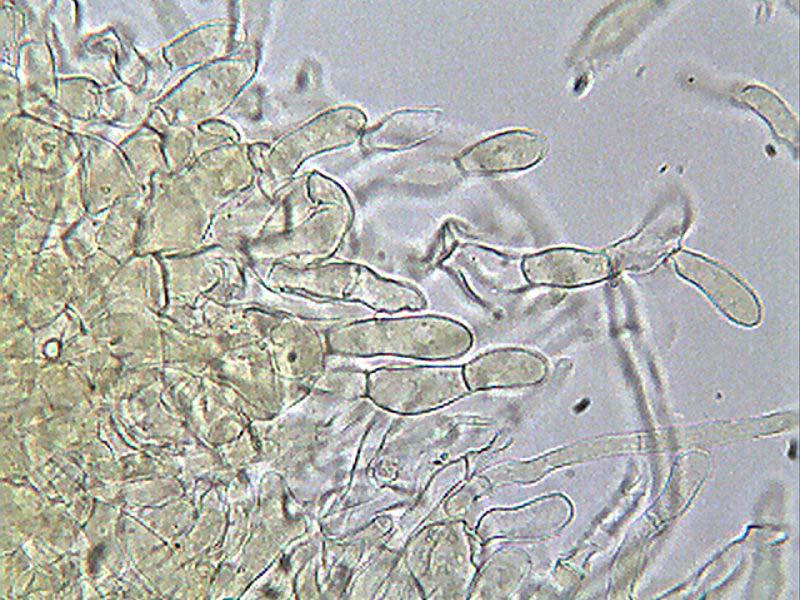
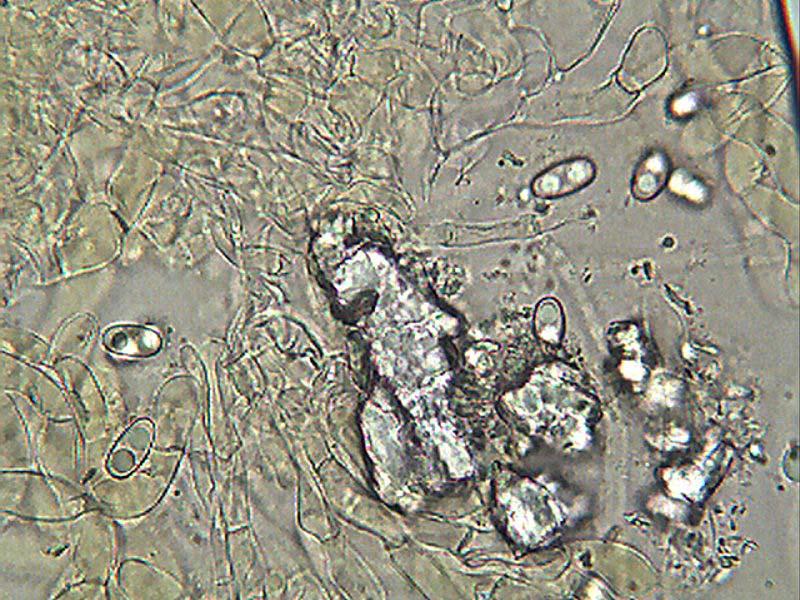
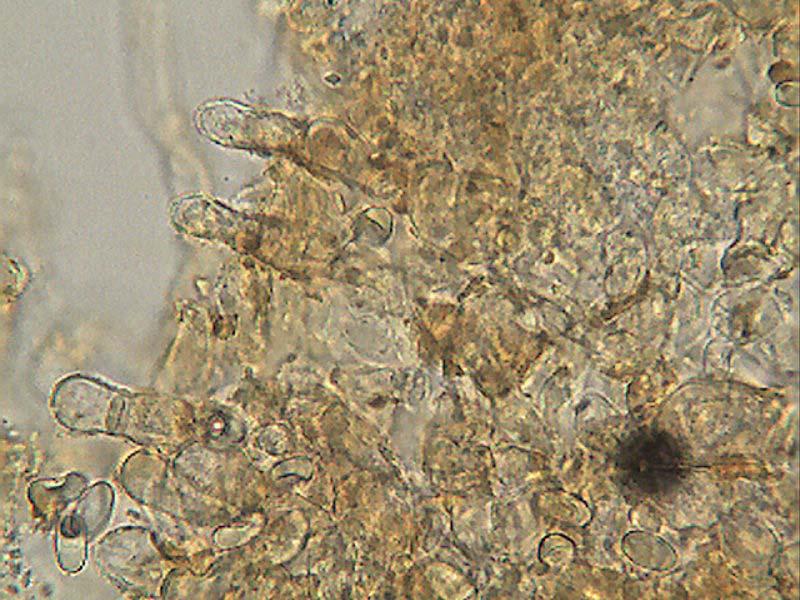
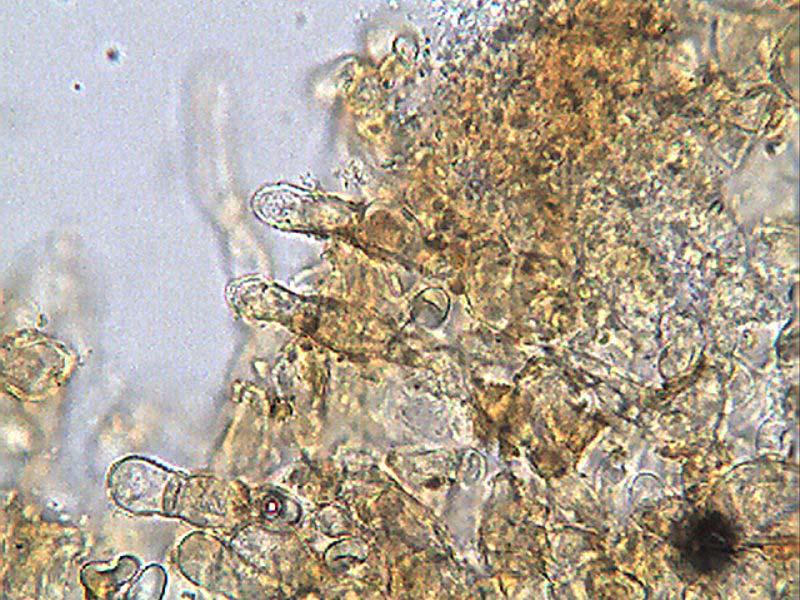
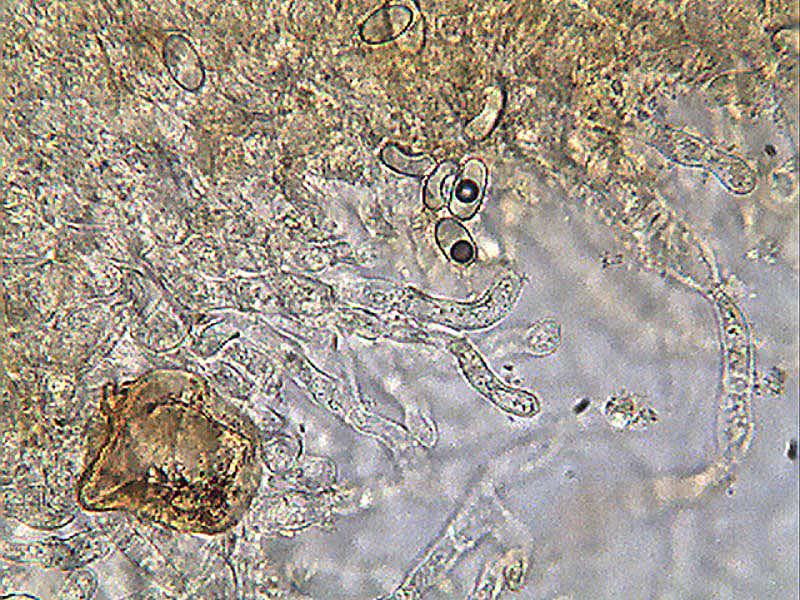
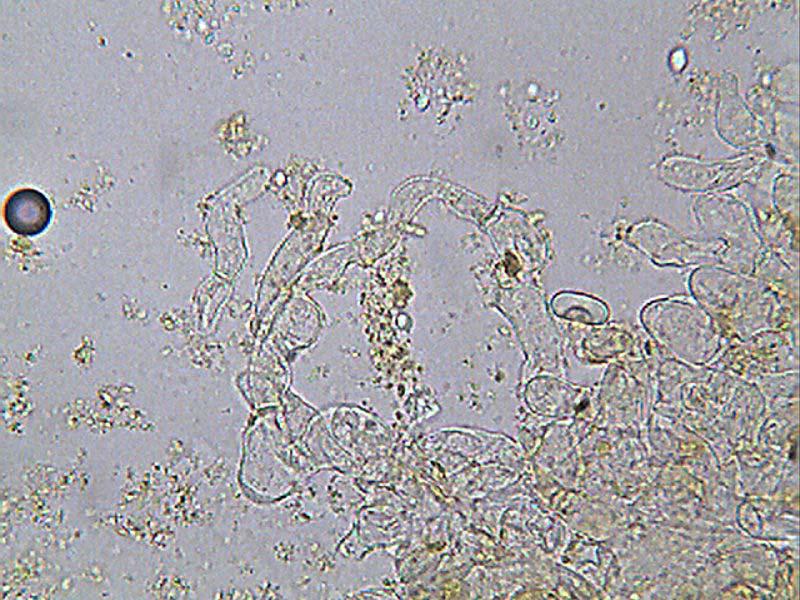
I examined the material and it fits well the rest of the material of O. flavidobrunneola. The crystals on the ectal excipulum cells dissolve and produce a yellow reaction on the ectal excipulum in KOH. As Nicolas suggested, the material differs in many aspects from O. tuomikoskii.
According to my notes, so far very few records are known: two in Finland, two in Sweden and one in Norway. Congratulations!
Cheers,
Hola Rafael,
Estudié el material que me mandaste y coincide con el resto de material de O. flavidobrunneola que hemos estudiado. Los cristales del excípulo ectal se disuelven y producen una reacción amarilla en las células del excípulo ectal en KOH. Como Nicolas sugerió, el material difiere de O. tuomikoskii en varios caracteres.
Según mis notas, se conocen muy pocos registros previos de O. flavidobrunneola: dos en Finlandia, dos en Suecia y uno en Noruega. Por tanto, enhorabuena!
Saludos, ?
Ibai.
Estupenda noticia, no tenia ni idea de esta especie.
Un saludo
Rafael