
21-04-2026 13:36
Gernot FriebesHi,I am out of ideas for this one. I collected Sal
21-04-2026 13:19
Gernot FriebesHi,this Lophodermium on Typha has ascospores measu
21-04-2026 13:05
Gernot FriebesHi,this hyphomycete feels familiar but I was not a
20-04-2026 22:00
 Malcolm Greaves
These pale yellow, hairy ascos were growing on cul
19-04-2026 21:23
Steve ClementsBonjour, I found this anamorphic fungus on old pl
19-04-2026 20:46
Steve Clements1 mm diameter approx spherical conidiophores on pl
12-04-2026 17:56
 Hardware Tony
Found on dead stems in February earlier this year
17-04-2026 19:16
 Enrique Rubio
Hi to everybodyI would appreciate any assistance r
14-04-2026 05:32
Ethan CrensonHi all, A few weeks back a friend pointed out som
17-04-2026 15:14
 Bruno Coué
Bonjour.Récoltes du 16/04/2026, sur feuilles mort
Pachyella 1898
Leandro Sánchez,
04-08-2014 17:35
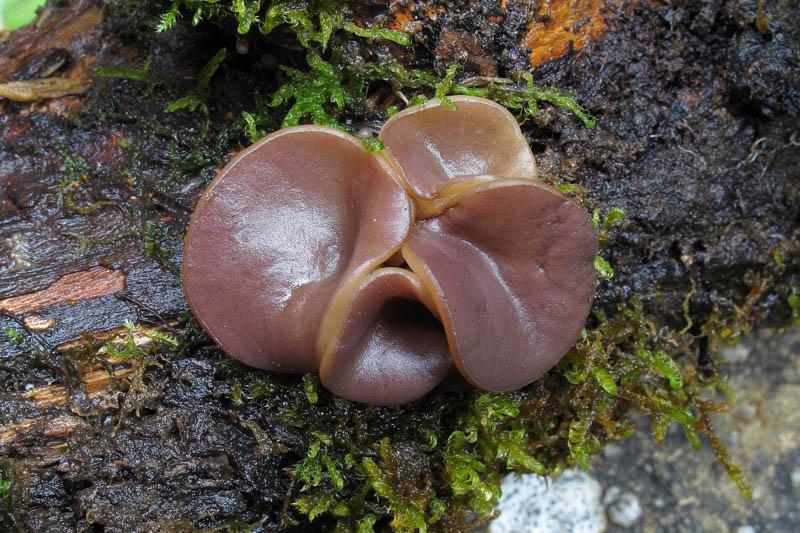
 Sur branche de feuillus, jusqu'à 22 mm diamètre, chair 3 mm
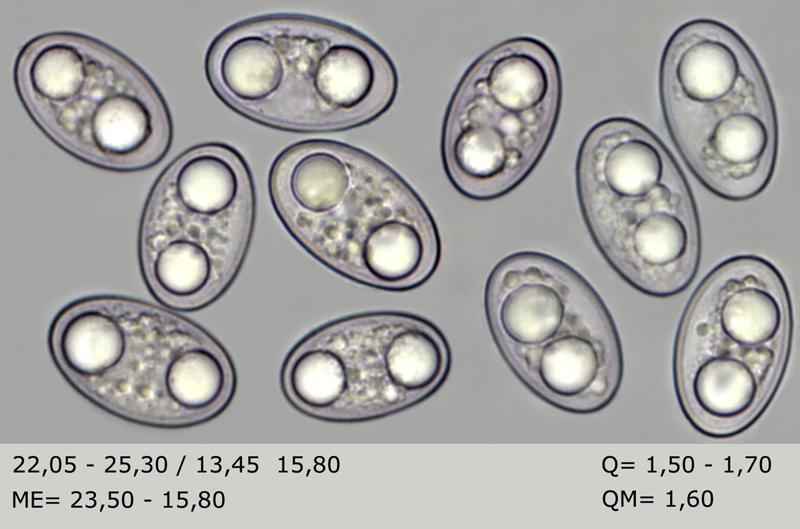
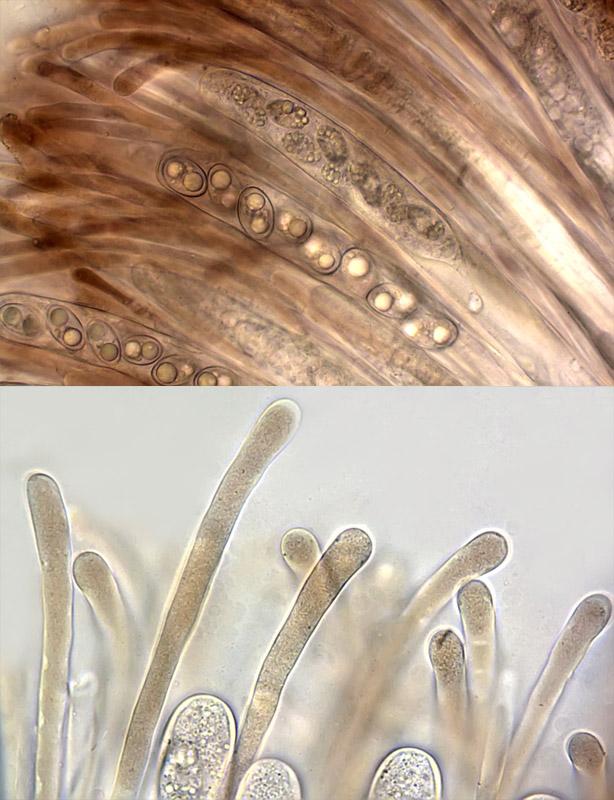
Asques 445-475/18-21, croziers +, IKI +
Je pense en violaceonigra/babingtonii
Corialement
Sabino Arauzo,
04-08-2014 17:57
Re : Pachyella 1898
Hola Leandro, creo que puede ser Peziza pseudoampelina o saliciphila.
Un saludo.
Sabino.
Nicolas VAN VOOREN,
11-08-2014 15:21

Re : Pachyella 1898
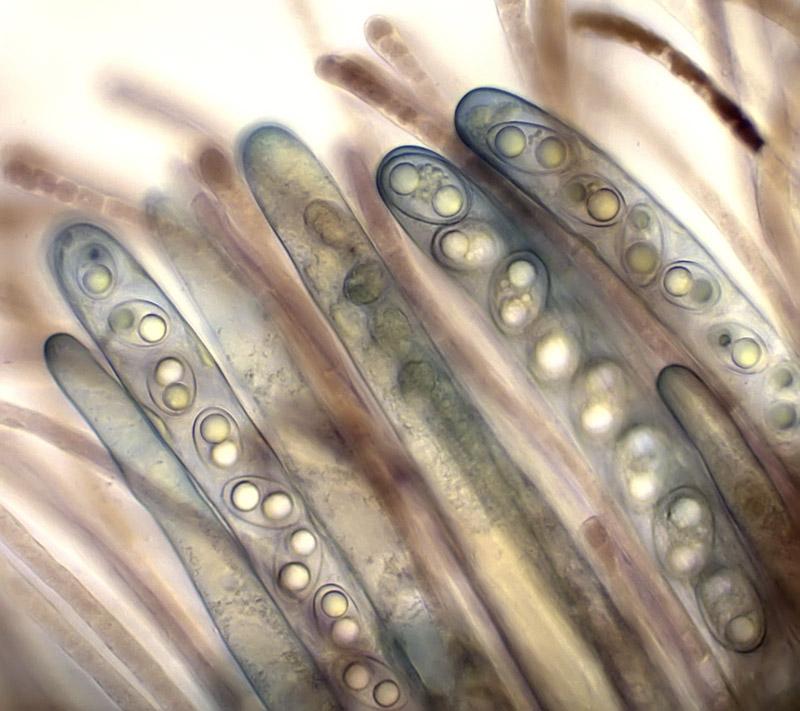
Est-ce que la réaction amyloïde se produit au sommet de l'asque ou sur la paroi ?
L'aspect général et les spores font penser au genre Pachyella.
L'aspect général et les spores font penser au genre Pachyella.
Leandro Sánchez,
11-08-2014 18:25
Re : Pachyella 1898
Avec IKI
Nicolas VAN VOOREN,
12-08-2014 17:31
Re : Pachyella 1898
La réaction amyloïde se produit sur toute la paroi, donc ça pourrait confirmer le genre Pachyella.
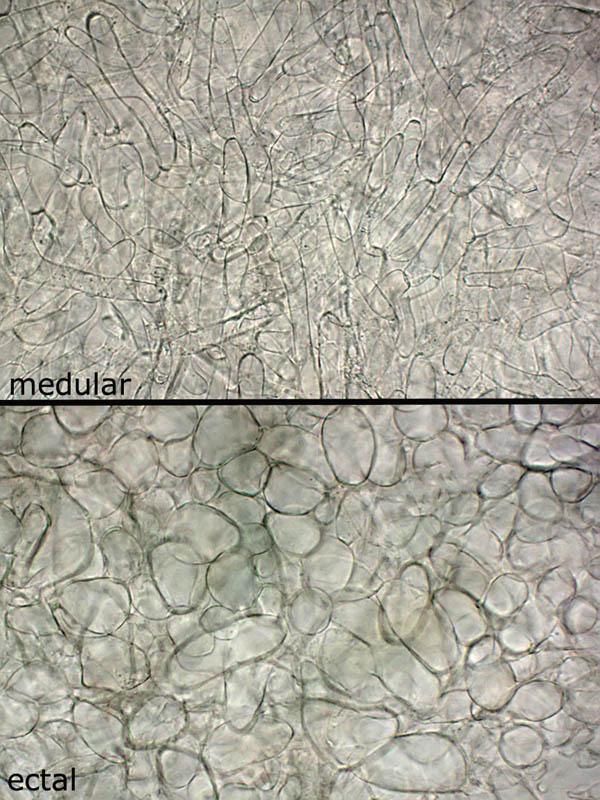
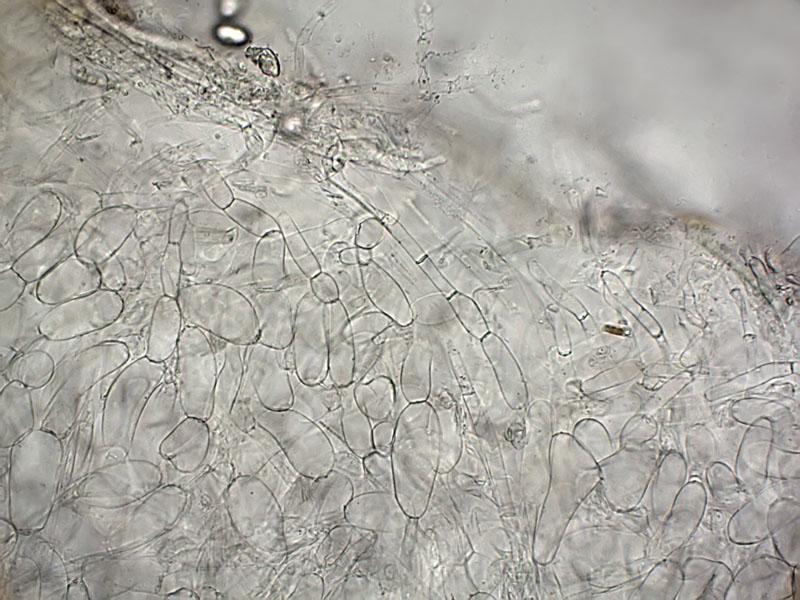
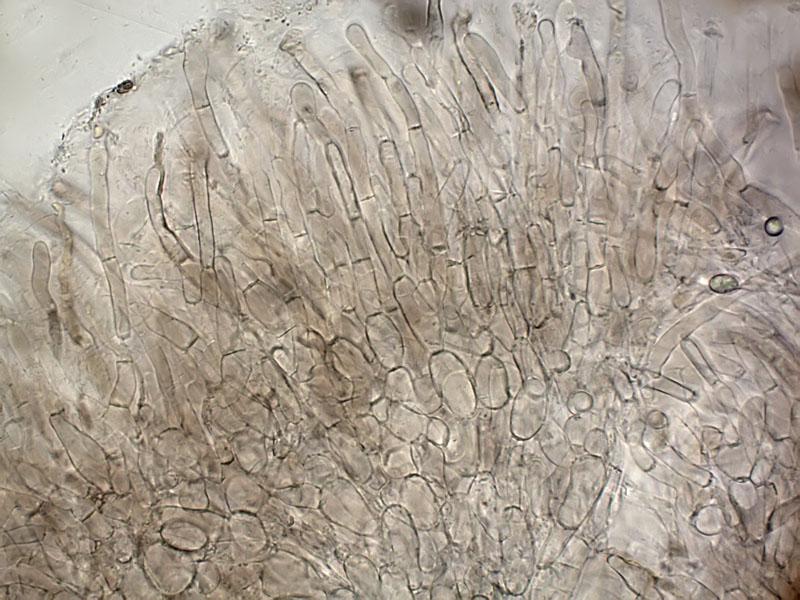
Chez les Pachyella, la surface externe comporte des "poils" qui se projettent sur l'extérieur, généralement entourés d'une substance gélifiée. Est-ce le cas ici ?
Chez les Pachyella, la surface externe comporte des "poils" qui se projettent sur l'extérieur, généralement entourés d'une substance gélifiée. Est-ce le cas ici ?
Leandro Sánchez,
12-08-2014 20:44
Re : Pachyella 1898
J'ai observé ces éléments
Nicolas VAN VOOREN,
13-08-2014 08:42
Re : Pachyella 1898
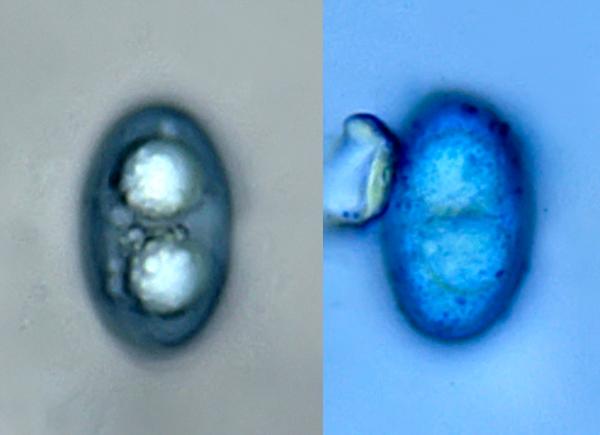
OK, donc ça semble bien être un Pachyella, mais cette couleur d'hyménium ne me rappelle aucune espèce dans ce genre. Peut-on avoir une image des spores dans le bleu coton pour voir l'ornementation des spores ?
René Dougoud,
13-08-2014 14:20
Re : Pachyella 1898
Chers Tous,
Oui, sans aucun doute possible, une espèce du genre Pachyella. Les exemplaires présentés sont sans doute très jeunes. Il faut contrôler deux choses encore: la présence de fines verrues recouvrant la paroi sporale dans le bleu coton lactique et la possible présence suc jaune (normalement abondant à la coupure) (une récolte personelle) Je pense à P. violaceonigra ou à P. pseudosuccosa, si présence de suc !
Cordialement
René
Oui, sans aucun doute possible, une espèce du genre Pachyella. Les exemplaires présentés sont sans doute très jeunes. Il faut contrôler deux choses encore: la présence de fines verrues recouvrant la paroi sporale dans le bleu coton lactique et la possible présence suc jaune (normalement abondant à la coupure) (une récolte personelle) Je pense à P. violaceonigra ou à P. pseudosuccosa, si présence de suc !
Cordialement
René
Leandro Sánchez,
14-08-2014 13:07
Re : Pachyella 1898
Je n'ai observé suc jaune à le coupe.
Cordialement
Cordialement
Lothar Krieglsteiner,
06-02-2026 12:17

Pachyella pseudoampelina - salicina
Today I examined an own collection that has a lot in common with that showed in this thread. Unfortunately, there was no final result published here, only the proposal of the both names pseudoampelina and salicina and the confirmation as a Pachyella.
My recherche led to the following new combination:
Pachyella salicina (Velen.) Van Vooren, in Donadini ex Van Vooren, Cahiers de la FMBDS 7: 33 (2020)
Unfortunately, I have only Cahiers 3-5 and not 7, so I cannot look up. Is edition 7 still available? Or can perhaps Nicolas give me a pdf of the Pachyella paper?
Best regards, Lothar
My recherche led to the following new combination:
Pachyella salicina (Velen.) Van Vooren, in Donadini ex Van Vooren, Cahiers de la FMBDS 7: 33 (2020)
Unfortunately, I have only Cahiers 3-5 and not 7, so I cannot look up. Is edition 7 still available? Or can perhaps Nicolas give me a pdf of the Pachyella paper?
Best regards, Lothar