
11-05-2026 12:32
 Bernard CLESSE
Pourriez-vous m'aider à identifier cette héloti
13-05-2026 15:26
 François Freléchoux
Bonjour,Voici une récolte faite il y a quelques j
12-05-2026 15:41
 Nicolas VAN VOOREN
Dear Ascolovers, especially interested in Pezizale
13-05-2026 12:05
 Thierry Blondelle
Bonjour à tous,J'aimerais avoir confirmation de c
10-05-2026 23:17
 Andreas Gminder
Hello,today we found in a moist steep decidous for
28-04-2026 20:07
 Lothar Krieglsteiner
... on twig in the air at standing Ceratonia siliq
27-04-2026 20:52
Lothar Krieglsteiner
Found on hanging tiwg of Olea europaea in dried-ou
11-05-2026 20:22
Lothar Krieglsteiner
on attached twig of standing Ficus caricaquite uns
29-04-2026 10:44
Lothar Krieglsteiner
growing at moist, drying-out soil at the side of a
Apothecia sessile, whitish to yellowish, translucent, up to 0.6 mm in diameter, outer surface minutely pubscent, more pronounced in the edge (in some specimens), gel tissue absent.
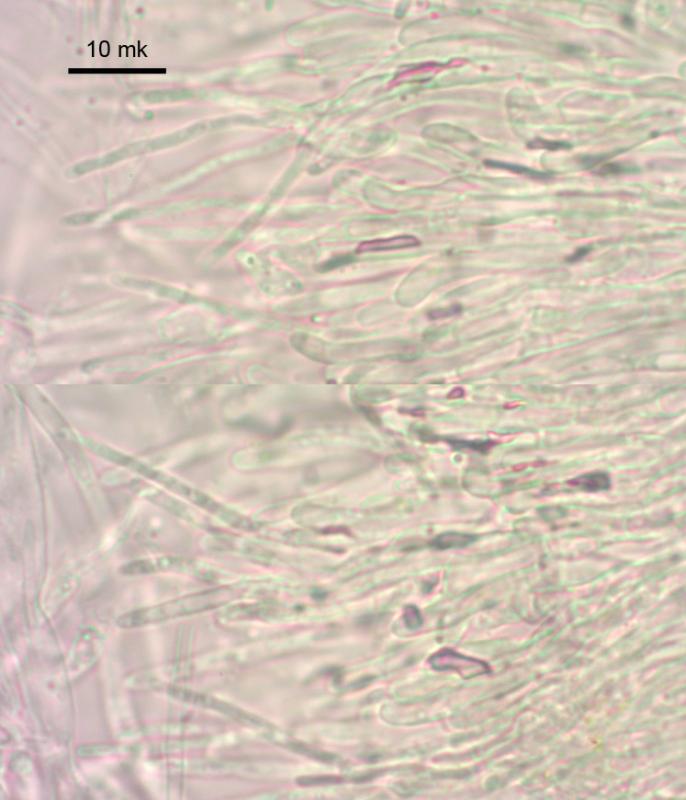
Excipulum hyaline, from prismatic/ellipsoid cells, 15 x 5 mk at base, narrow to the edge (2 mk), where hyphoid up to 30 mk long, 1.6 mk broad hair-like elements could be developed; asci without crozier, with euamyloid ring, 60-70 x 8-9 mk (n=7); paraphyses cylindrical, rarely branched, 2 mk broad; spores ellipsoid, without oils, 9.3 (8.1-10.9) x 3.7 (3.2-4.2) mk (n=25).
Date of collection: 11.07.2014, Coordinate: N60,892580° E68,679586°.
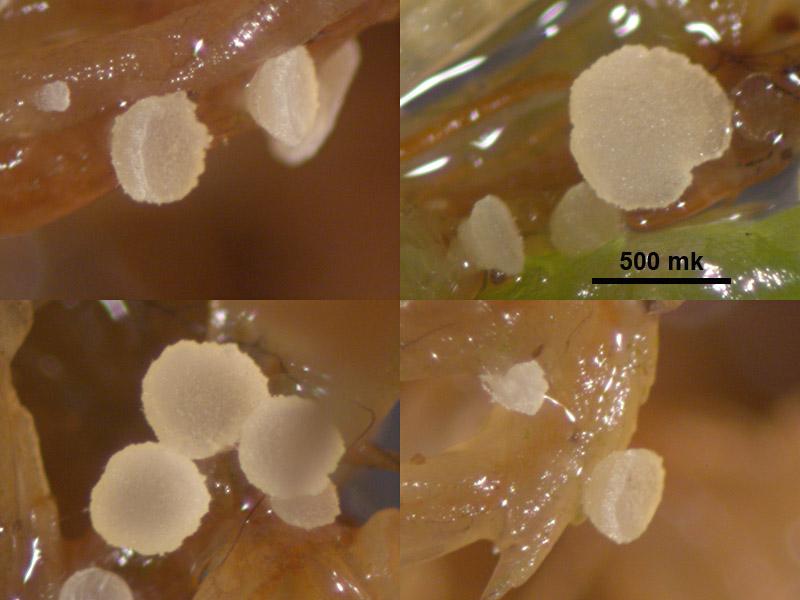
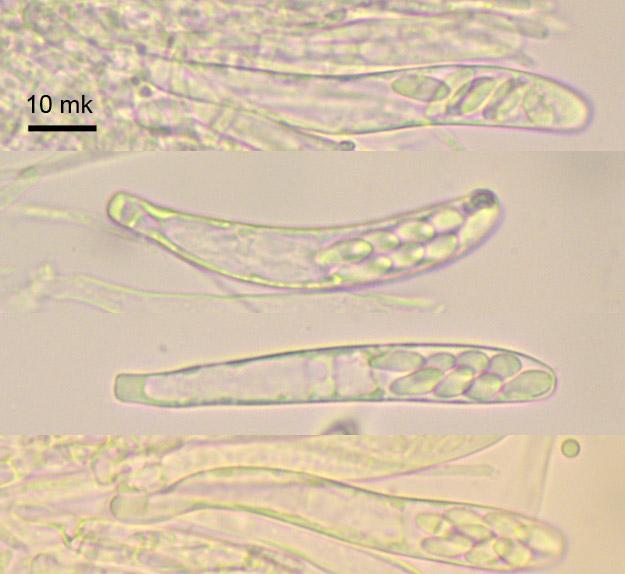
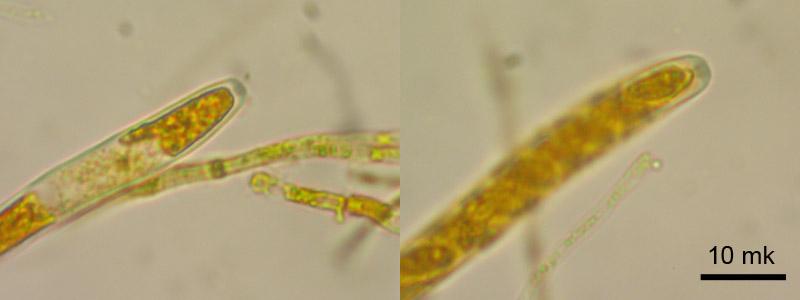
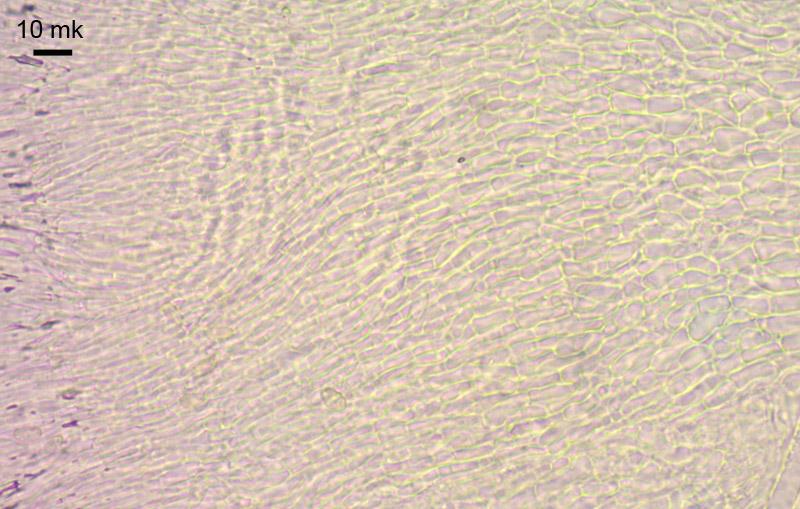
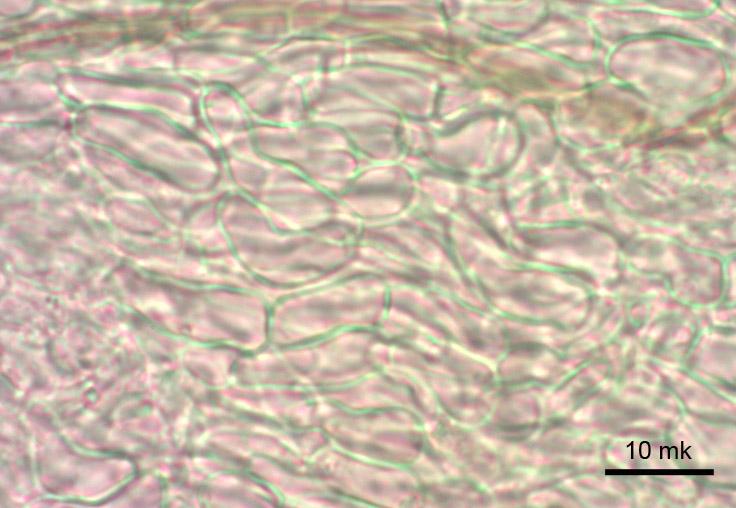
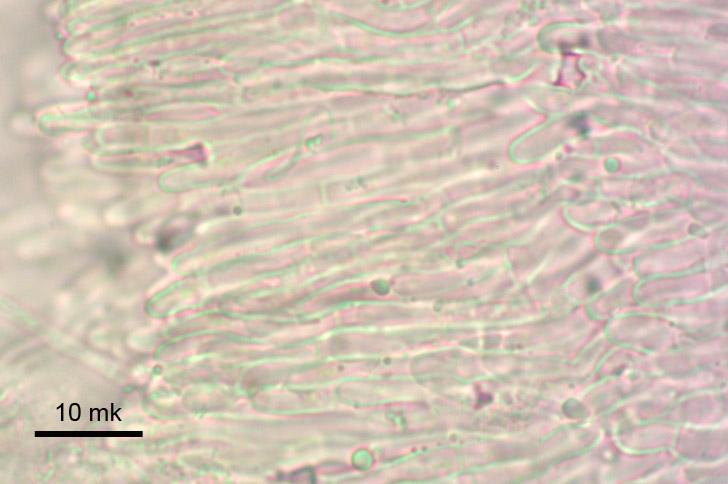
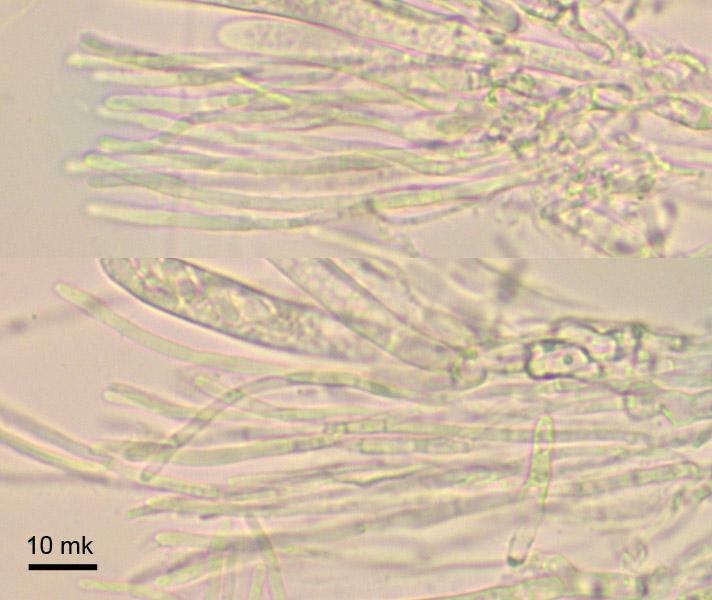
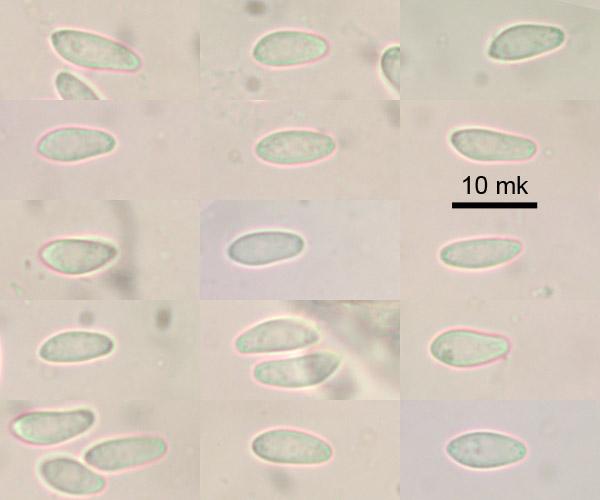

Zotto
I have found recently a close-matching description which means that this collection could belong to Hymenoscyphus ericae. Though the species is ericoid mycorrhizal with members of Ericaceae and it was described from roots of Ledum groenlandicum; i wonder if my substrate (S. fuscum surface) could be permeated by L. palustre roots; or probably the apothecia do not need to be on root surfface at all (mycelium could be)?
The descirption was in the paper:
Hambleton S., Huhtinen S., Currah R.S. Hymenoscyphus ericae: a new record from western Canada // Mycological Research. 1999. 103. 11. 1391–1397.
See attached Pdf with updated description and micro-pictures.
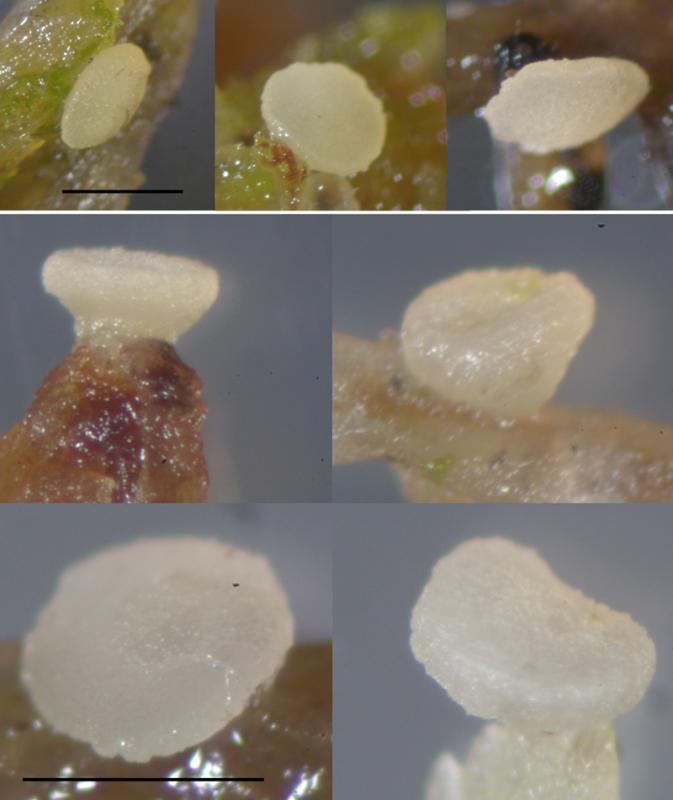
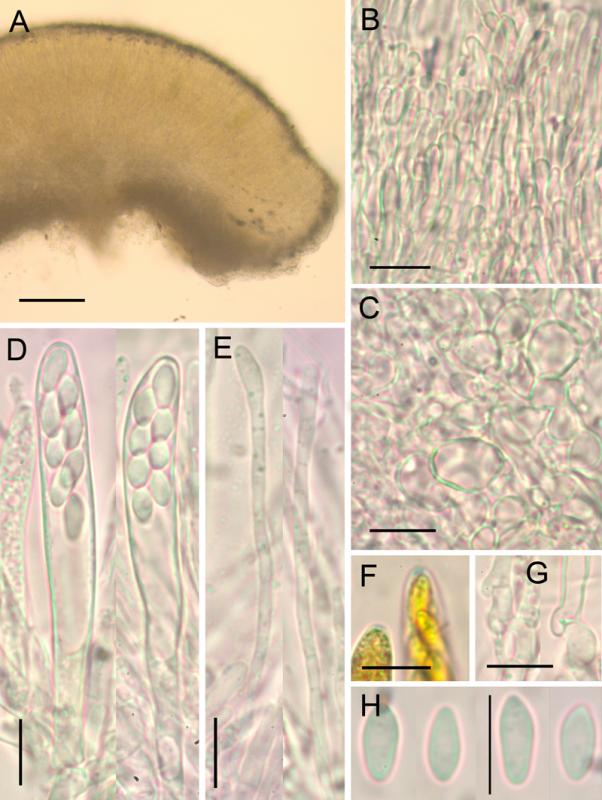
 -4516-cf-Hymenoscyphus-ericae-0001.pdf
yes, you are indeed right, also with the simple-septate ascus bases which look like croziers but which are in fact basal protuberances that do not fuse with their basal cells.
There is evidence that Rhizoscyphus ericae inhabits a variety of substrates including bryophytes, and that it belongs in Hyaloscypha rather than in Pezoloma where I have placed it. The similarity to Pezoloma is indeed striking, but genetics tell against a close relationship.
Maybe Brian will comment this posting also.
Zotto

Yes, I think you're exactly right. I was going to email you about it when you originally posted this since I'm writing a paper about this species, but things have been hectic recently. I'm glad you found another collection!
Rhizoscyphus ericae is an extremely common ericoid mycorrhizal fungi, but also forms symbioses with a couple of other host types, including bryophytes (typically liverworts). It has been reported from a couple of mosses in the Antarctic (Chorisodontium aciphyllum and Sanionia uncinata), but there's no data as to whether it is a true symbiont of these species.
It's a very interesting find (and excellent images!). Your collection is one of very few reports of this species as a teleomorph, and I think the first report (from DNA or as a teleomorph) from Sphagnum, although it is typically associated with Sphagnum/bog habitats. I think your collection is also the first report from Russia, although I would expect it to be very common there as well.
The type strain of Rhizoscyphus ericae is definitely placed in the core Hyaloscypha clade, and shares many ecological similarities with other members of this group. There are some issues regarding morphological variation in this species that have led to it going by a couple of different synonyms, but I'll email you about these privately.
Cheers,
Brian