
28-07-2011 18:31
 Alex Akulov
Dear FriendsToday I made the pdf file of Velenovsk
28-04-2026 20:07
 Lothar Krieglsteiner
... on twig in the air at standing Ceratonia siliq
04-05-2026 18:13
 Stephen Martin Mifsud
ID request for what seems to be a true aquatic fun
04-05-2026 16:39
Stephen Martin Mifsud
ID request: This specimen was collected in Malta o
04-05-2026 09:50
 Castillo Joseba
Me mandan el material seco de Galicia,(España) re
02-05-2026 12:42
Alain BRISSARDBonjour à tousJeuidi 30 avril dernier on m'a remi
02-05-2026 13:06
Pauline. PennaBonjour Please can someone help me with this id
01-05-2026 22:45
 Thierry Blondelle
Bonjour à tous, Une récolte sur bouse séchée d
14-04-2026 05:32
Ethan CrensonHi all, A few weeks back a friend pointed out som
Coordinates: N60,891131° E68,688733°, 18.06.2014.
Apothecia smallish, sessile, translucent, grayigh when in water, site single or several nearby on both leaf sides, up to 200 mk in diameter.
Excipulum from prismatic to ellipsoid cells, hyaline, cells with thickened walls, near 12 x 6 mk at base, narrower at edge (4 mk), end cells at edge smooth, cylindrical; asci clavate, with badly recognized crozier, with euamyloid small ring, 33-46.5 x 5.4-6.6 mk; paraphyses filiform, rarely branched, about 1 mk broad; spores fusiform, 7.7 (5.6-8.7) x 1.7 (1.6-1.9) mk (n=11).
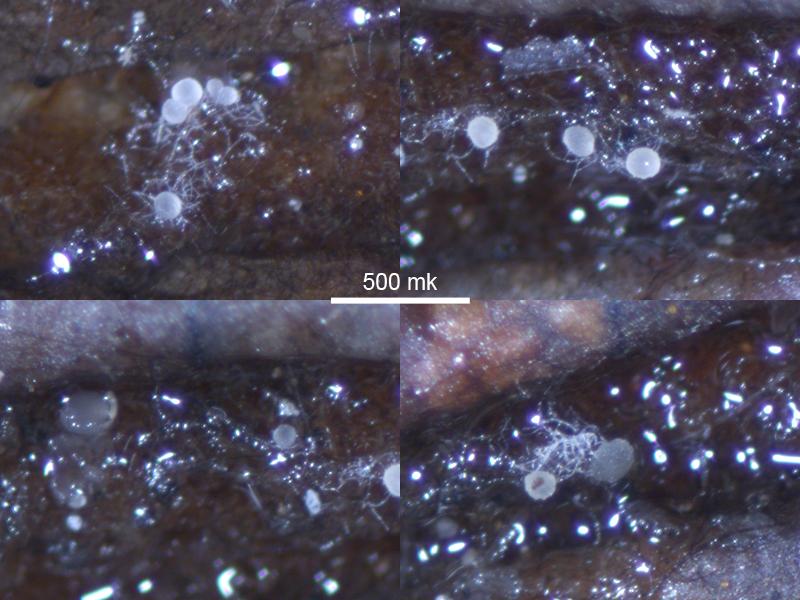
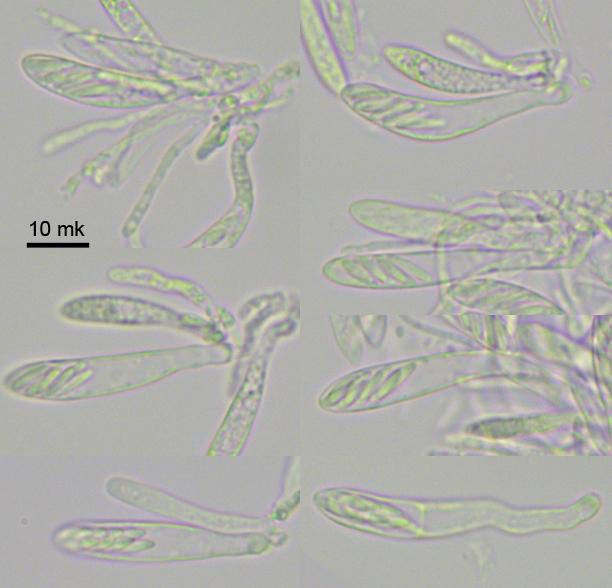
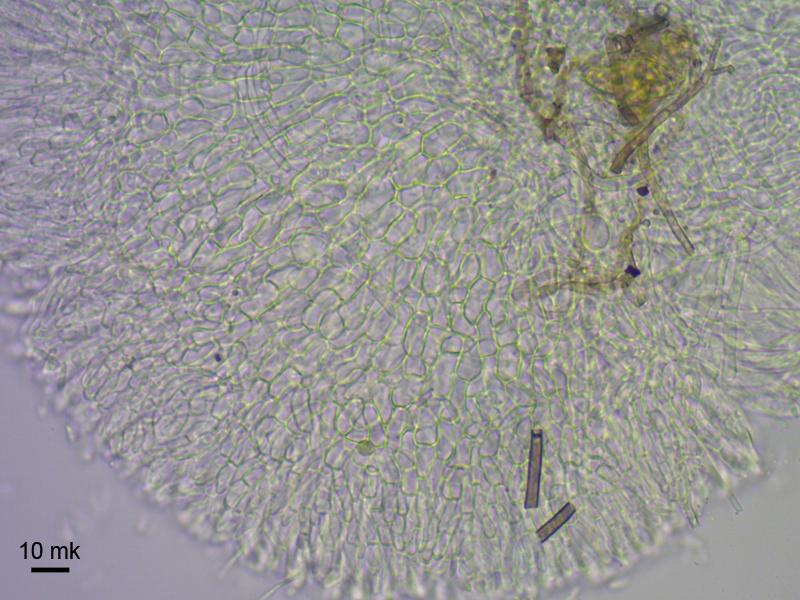
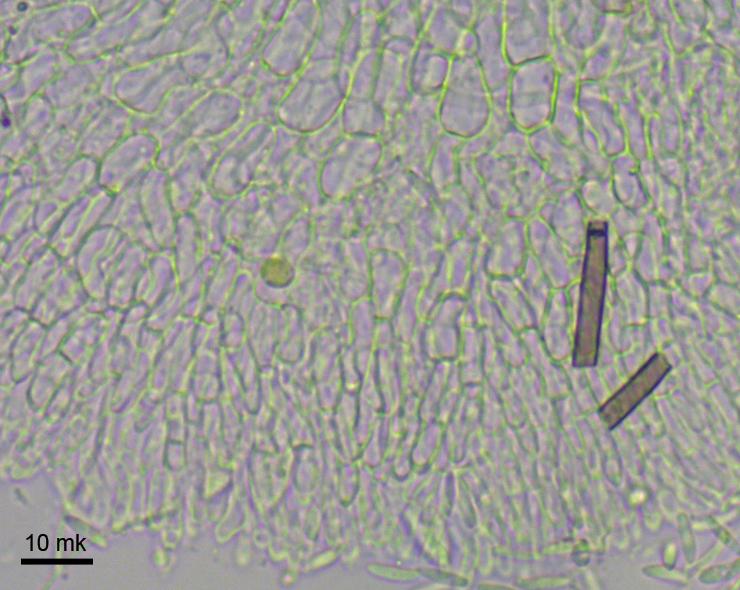
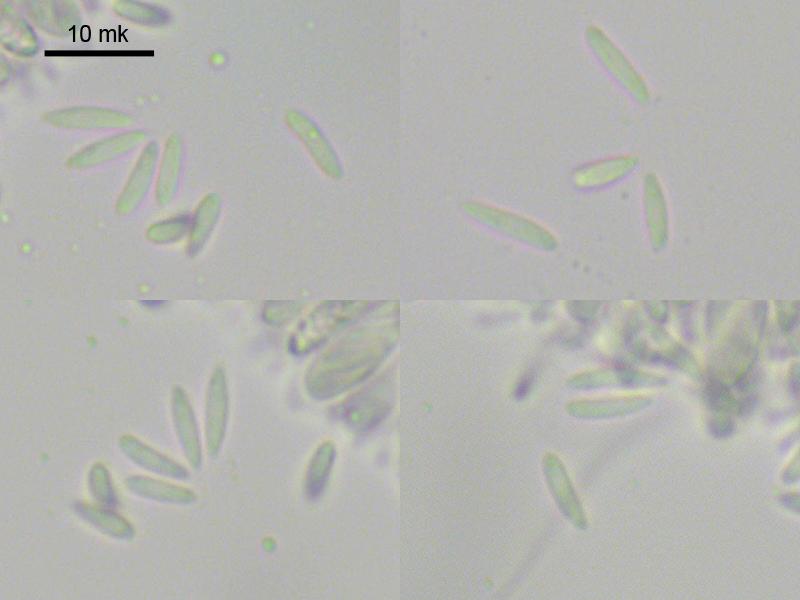
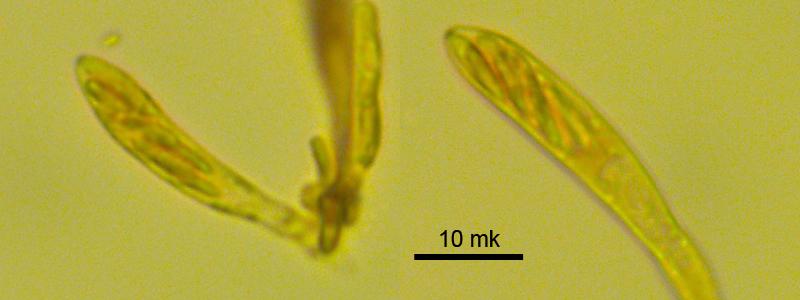

I assume something between Cistella, Hyaloscypha and Olla.
I was reminded a bit of my "Pezizella chapmanii" in my Olla folder, a fungus found on Picea bark.
Zotto
Apothecia sessile, whitish, translucent, up to 500 mk broad, hymenium surface minutely powdery (probably since incrustation of paraphyses).
Excipulum at base from textura globosa, at flanks and edge from prismatica to porrecta, cells with thickened walles; end cells ("hairs") at the edge cylindrical, obtuse, 10-20 mk long, 3-4 mk broad, without incrustations; asci clavate, with barely seen crozier, 53-68 x 8-11.5 mk; paraphyses cylindrical, with obtuse tip, with pale vacuoles, in upper part with minor incrustation or mucous sheath, near 2 mk broad; spores cylindrical, 12.3 (10.6-14.6) x 2.9 (2.7-3.2) mk (n=34).
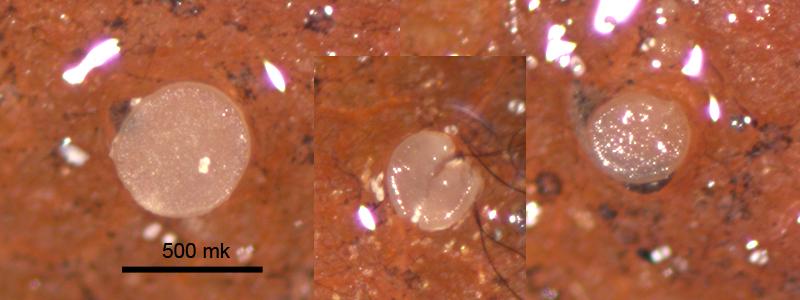
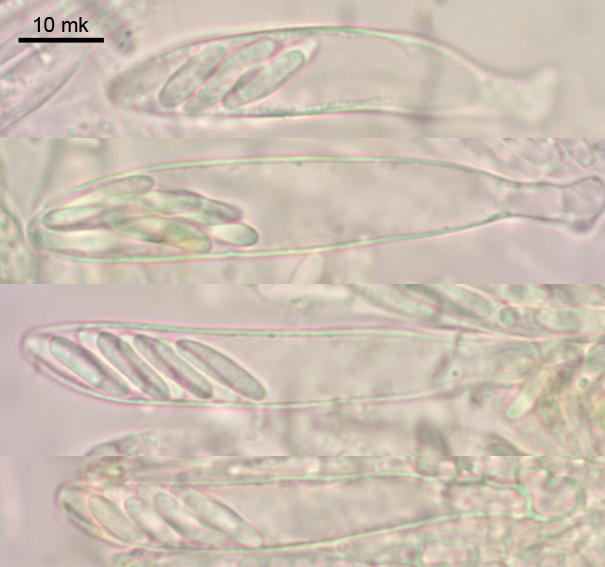
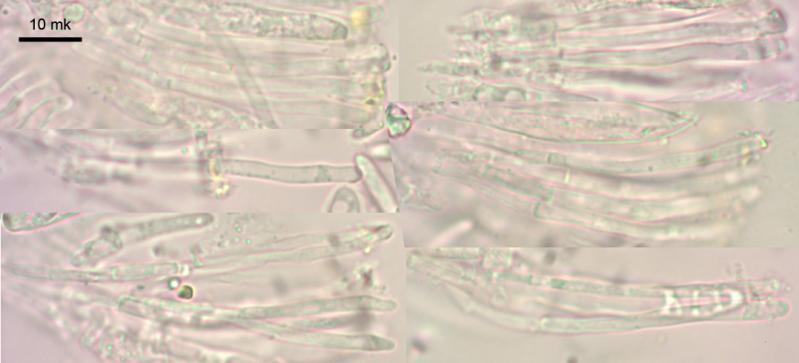
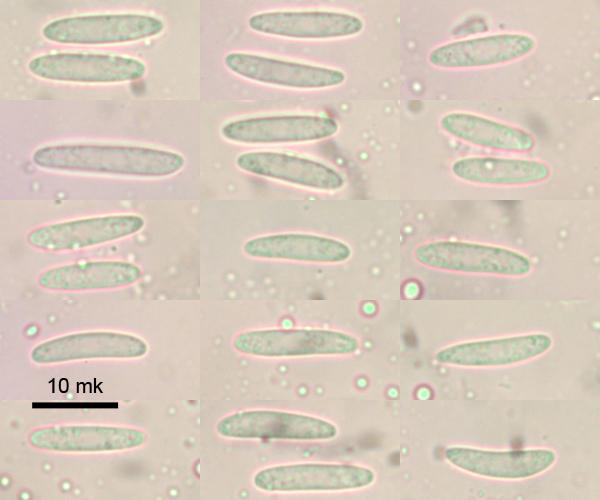
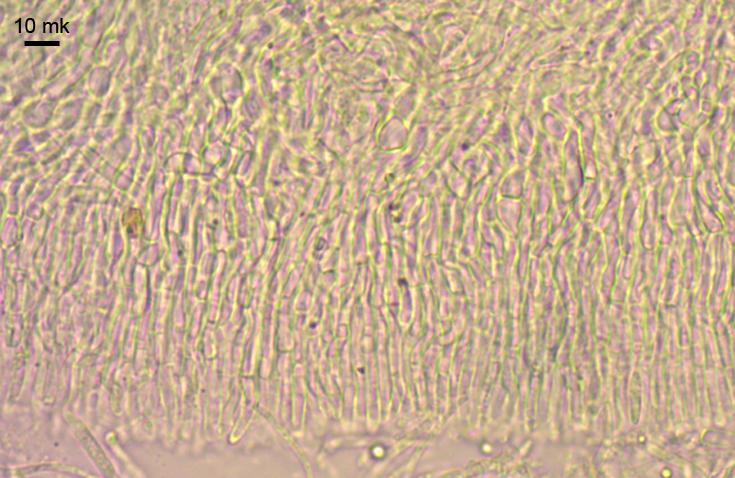
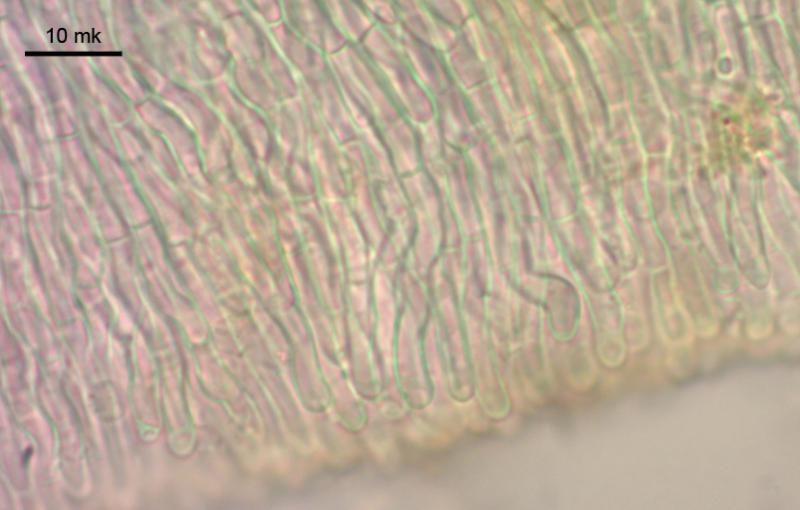
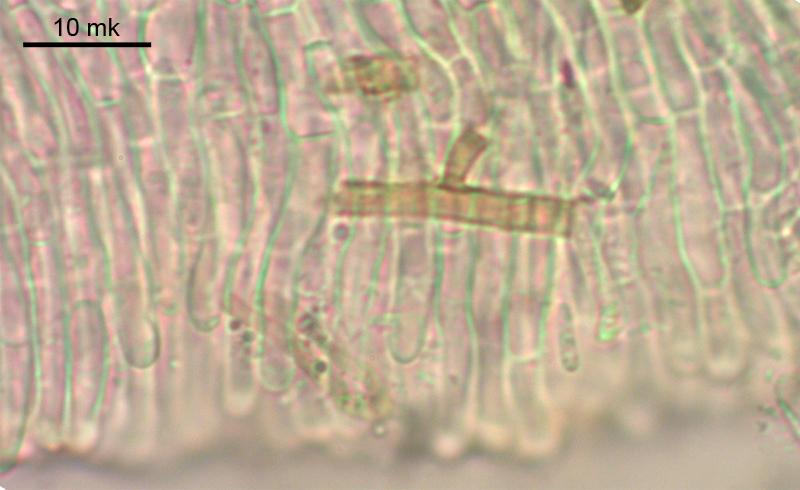
The texture reminds me a bit for a Durella, but only the margin.
Zotto
YKY shows euamyloid reaction.