
04-05-2026 18:13
 Stephen Martin Mifsud
ID request for what seems to be a true aquatic fun
04-05-2026 16:39
Stephen Martin Mifsud
ID request: This specimen was collected in Malta o
28-07-2011 18:31
 Alex Akulov
Dear FriendsToday I made the pdf file of Velenovsk
28-04-2026 20:07
 Lothar Krieglsteiner
... on twig in the air at standing Ceratonia siliq
04-05-2026 09:50
 Castillo Joseba
Me mandan el material seco de Galicia,(España) re
02-05-2026 12:42
Alain BRISSARDBonjour à tousJeuidi 30 avril dernier on m'a remi
02-05-2026 13:06
Pauline. PennaBonjour Please can someone help me with this id
01-05-2026 22:45
 Thierry Blondelle
Bonjour à tous, Une récolte sur bouse séchée d
14-04-2026 05:32
Ethan CrensonHi all, A few weeks back a friend pointed out som
 Found on deer dung.
Fruitbody; yellow; consisting of a thick layer in which the hairs originate covering a circular ascus; number of asci 1-2. The layer can be peeled off and only the ascus remains
Hairs: 190-241x7-7.5 um; non-septated; bulbous base; thickwalled 2-2.5 um and pointed top.
102.5-109.5 um; non-septated; bulbous base; thickwalled 2-2.5 um and rounded top.
Asci: Circular: 177-246.5 um; > 1000 spores; no thick wall.
Spores: oval; 10-10.5x7.5-8 um
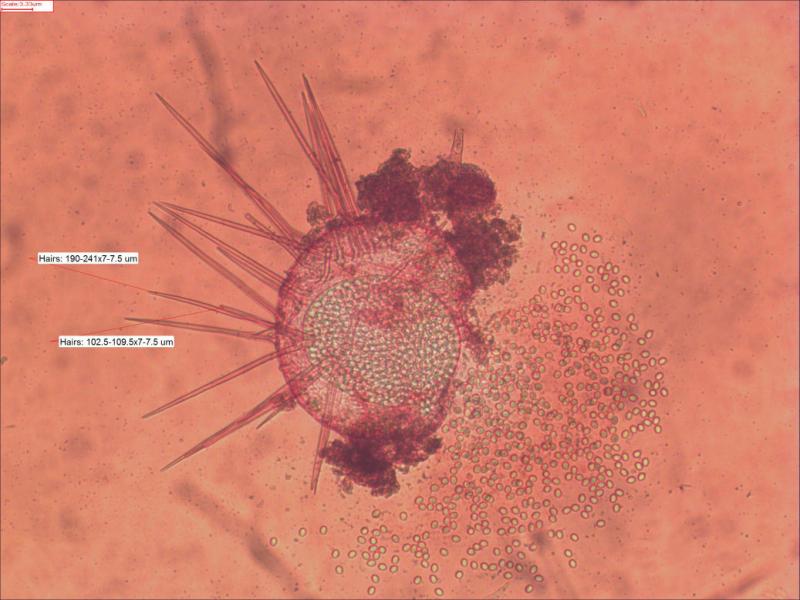
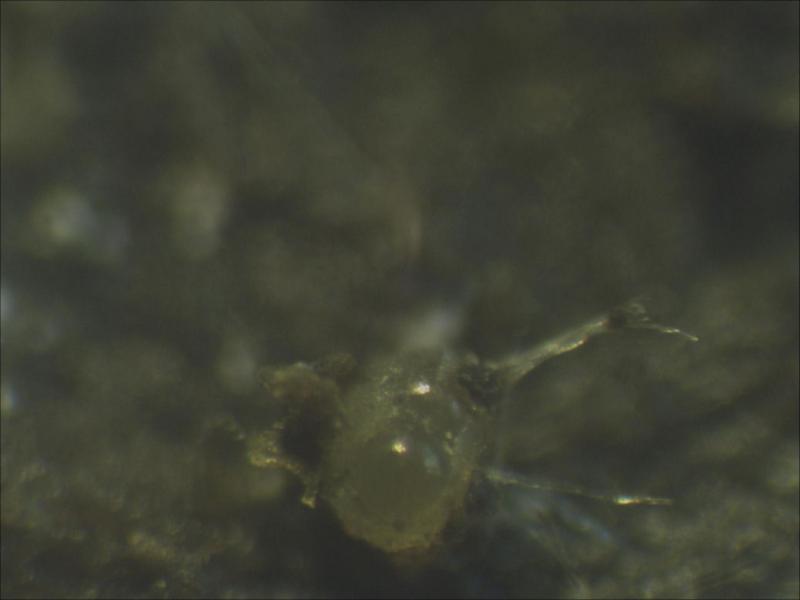
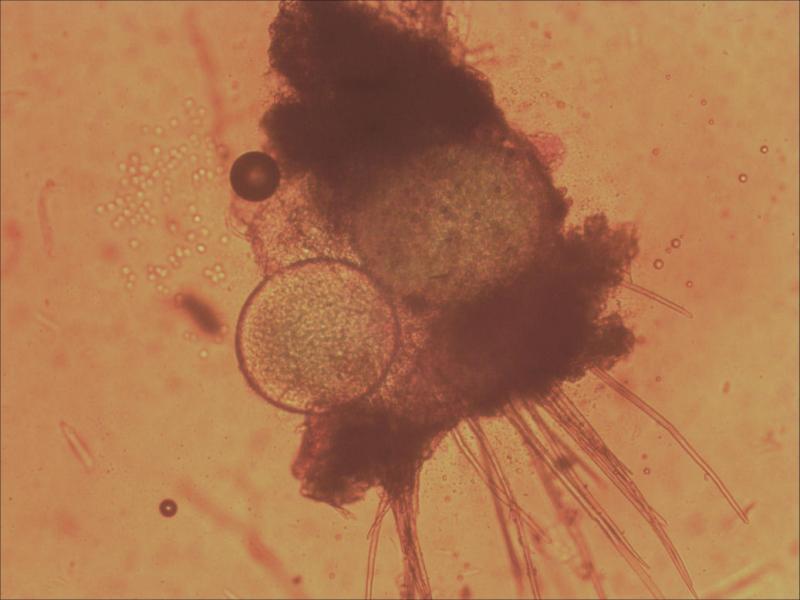
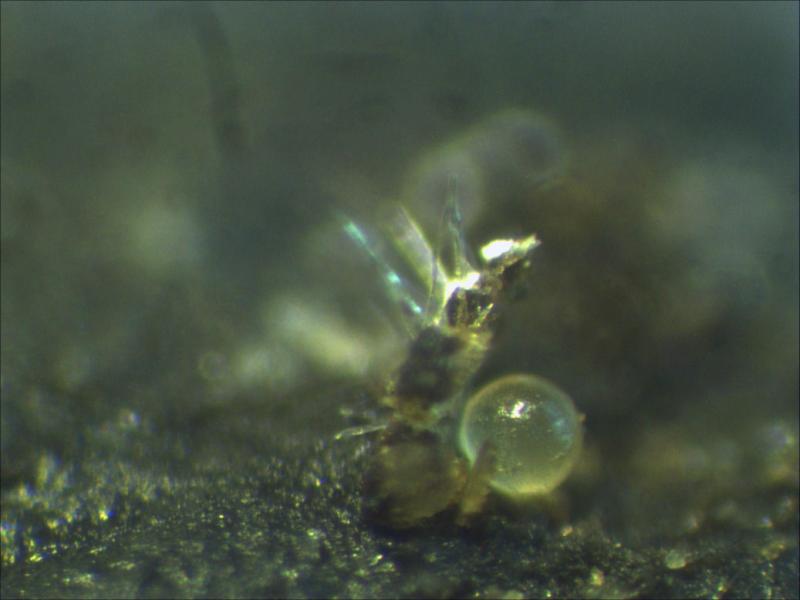
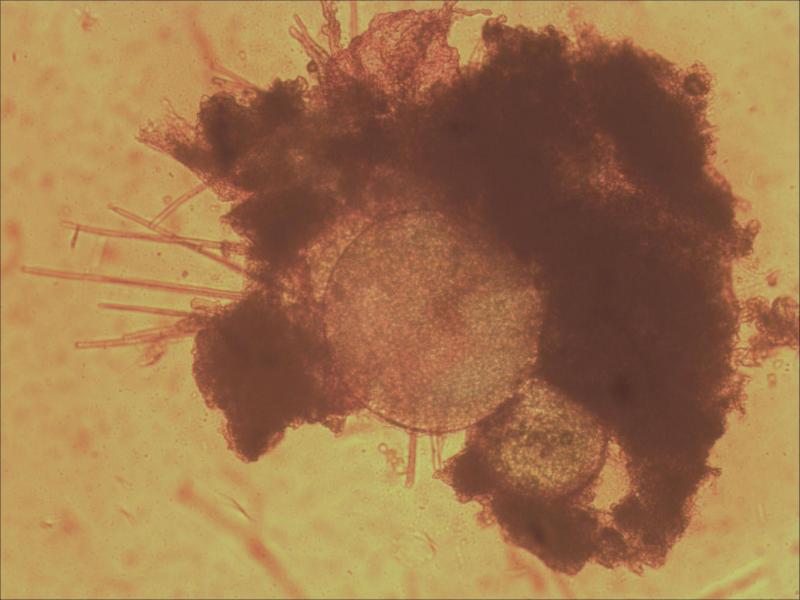
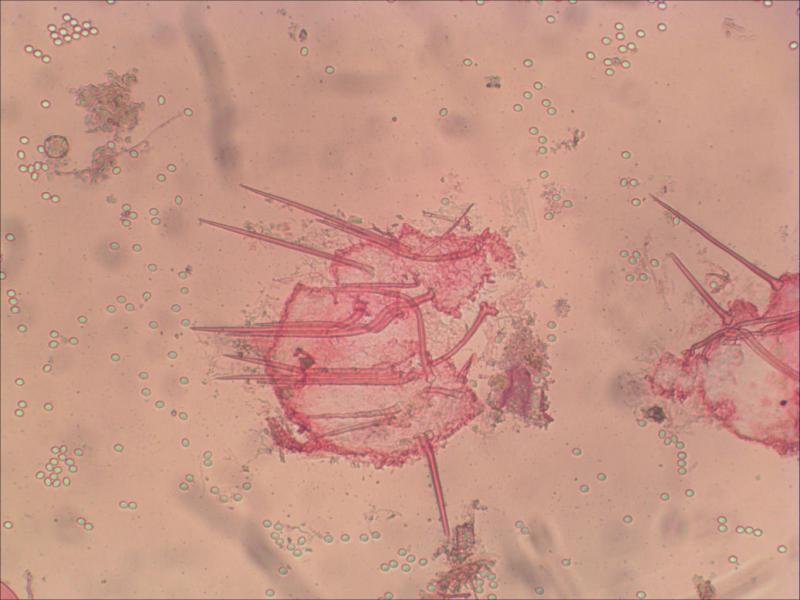
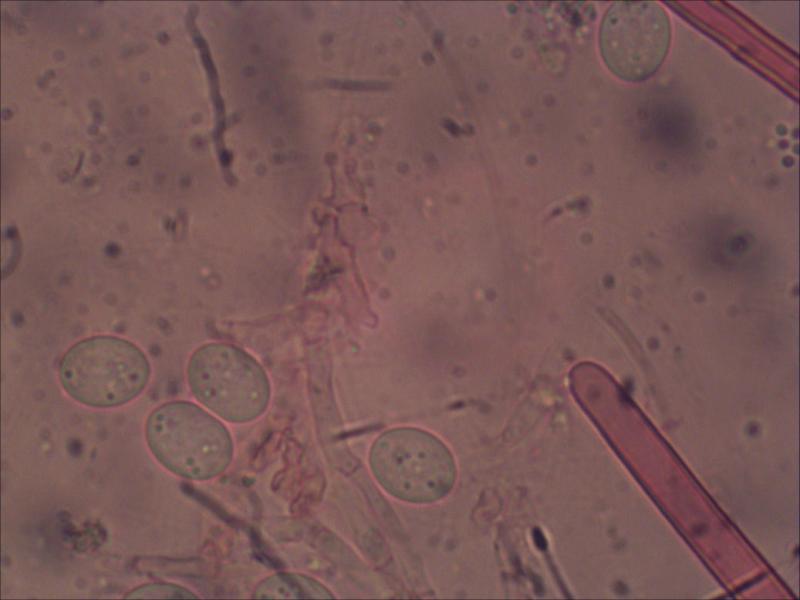
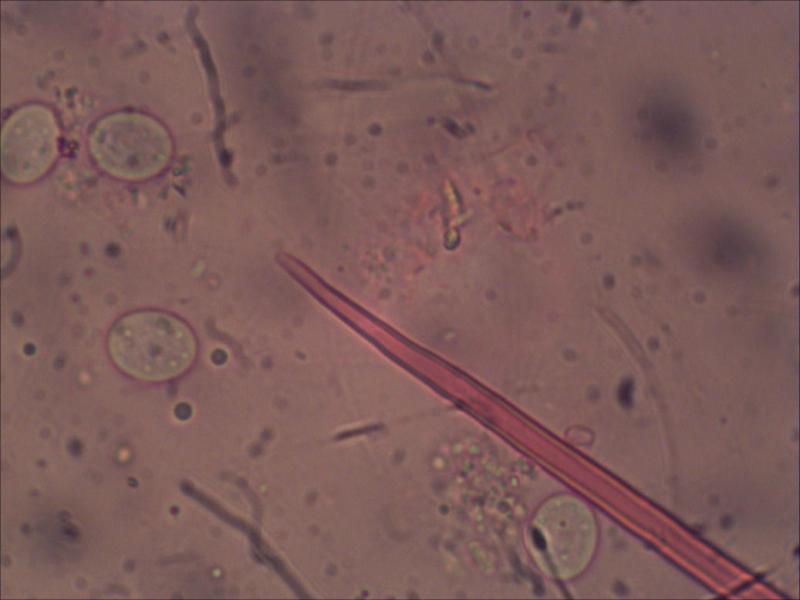
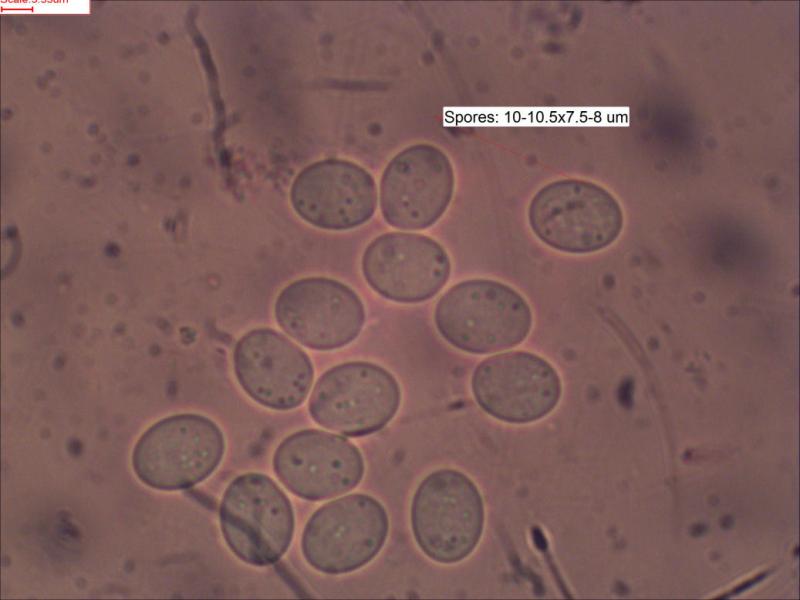
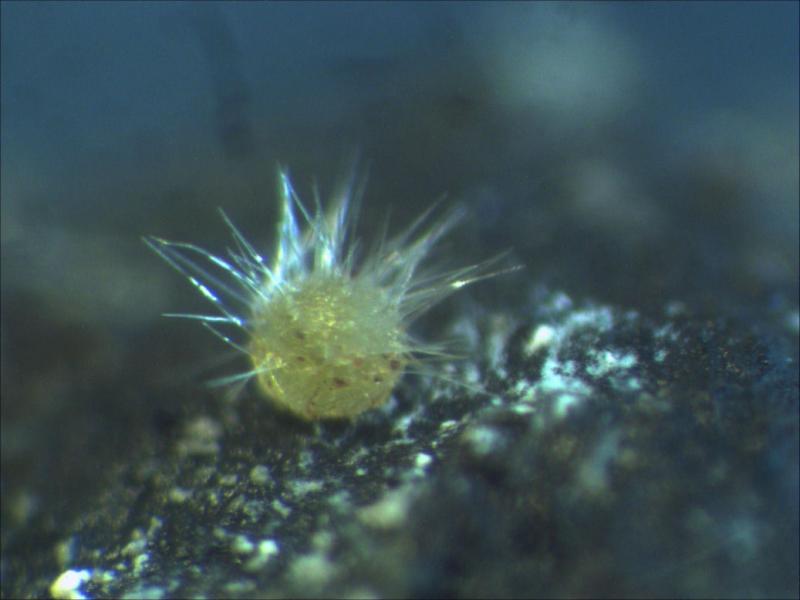

this is Trichobolus zukalii, a common coprophil fungus with only 1 polyspore ascus.
regards,
björn

yes, it's Tr. zukalii, immature.
Greetings Peter.
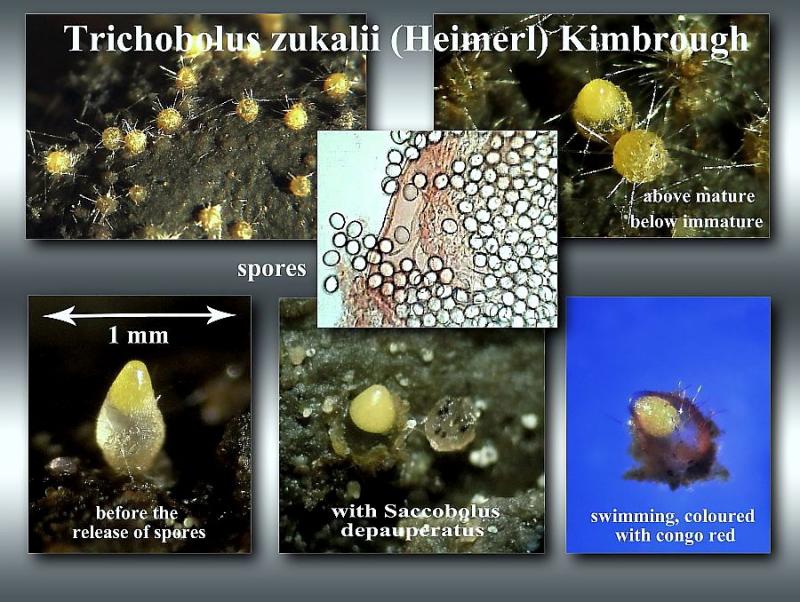
Reading Doveri spore measurements of this species are smaller and hairs are non-septated, they do match T. sphaerosporus but than again hairs are non-septated. And as you can see on the 3rd and 5th photo it holds two asci as well.
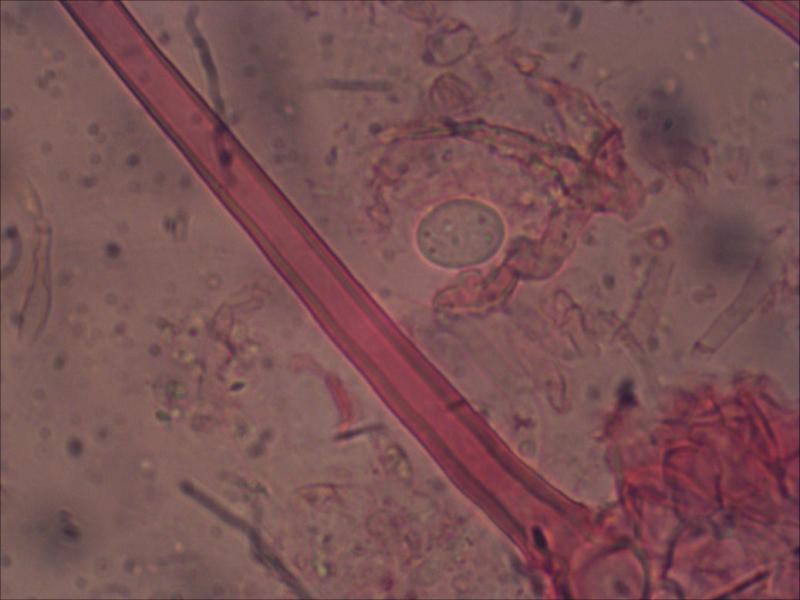
in my opinion are the ascomata of your collection not mature. Therefore the difference in the size of spores. DOVERI wright, that setulae "usually septat", more in the rip too, and the second asci are probably a young ascomata.
Greetings Peter.
OK Peter vielen dank
Joop