
28-07-2011 18:31
 Alex Akulov
Dear FriendsToday I made the pdf file of Velenovsk
28-04-2026 20:07
 Lothar Krieglsteiner
... on twig in the air at standing Ceratonia siliq
04-05-2026 18:13
 Stephen Martin Mifsud
ID request for what seems to be a true aquatic fun
04-05-2026 16:39
Stephen Martin Mifsud
ID request: This specimen was collected in Malta o
04-05-2026 09:50
 Castillo Joseba
Me mandan el material seco de Galicia,(España) re
02-05-2026 12:42
Alain BRISSARDBonjour à tousJeuidi 30 avril dernier on m'a remi
02-05-2026 13:06
Pauline. PennaBonjour Please can someone help me with this id
01-05-2026 22:45
 Thierry Blondelle
Bonjour à tous, Une récolte sur bouse séchée d
14-04-2026 05:32
Ethan CrensonHi all, A few weeks back a friend pointed out som
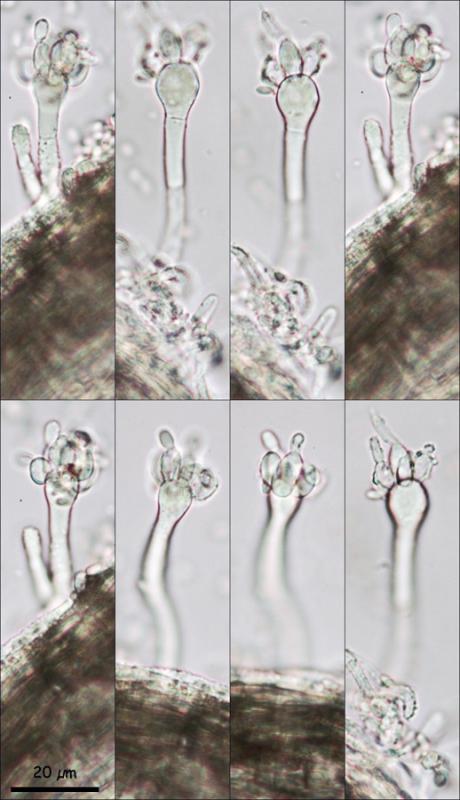
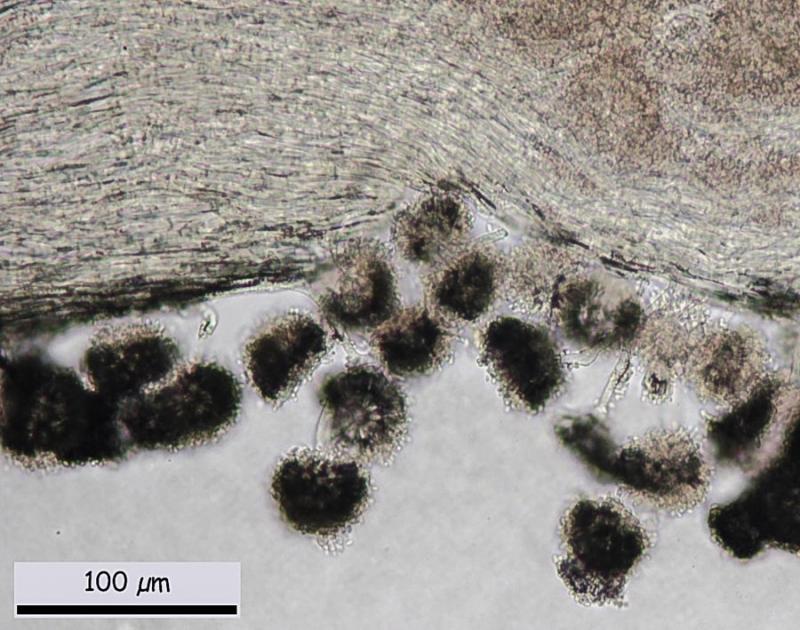
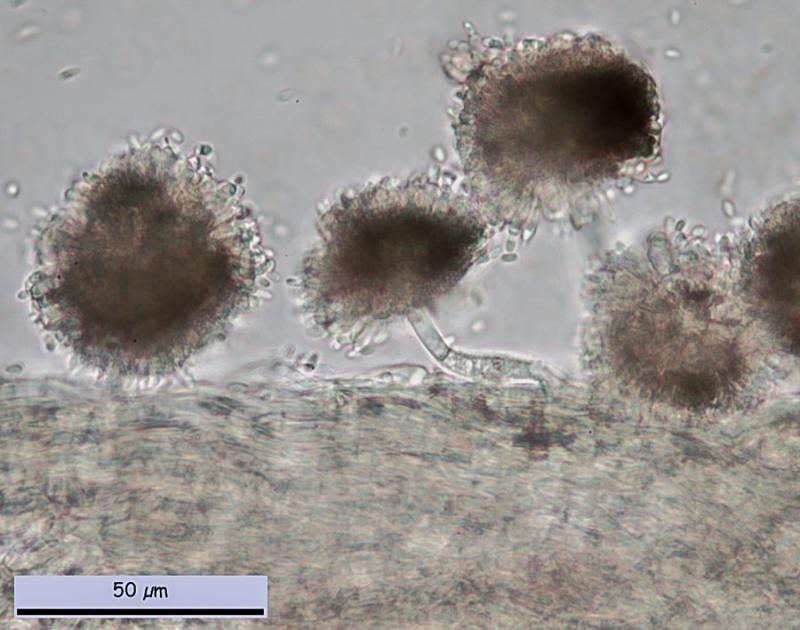
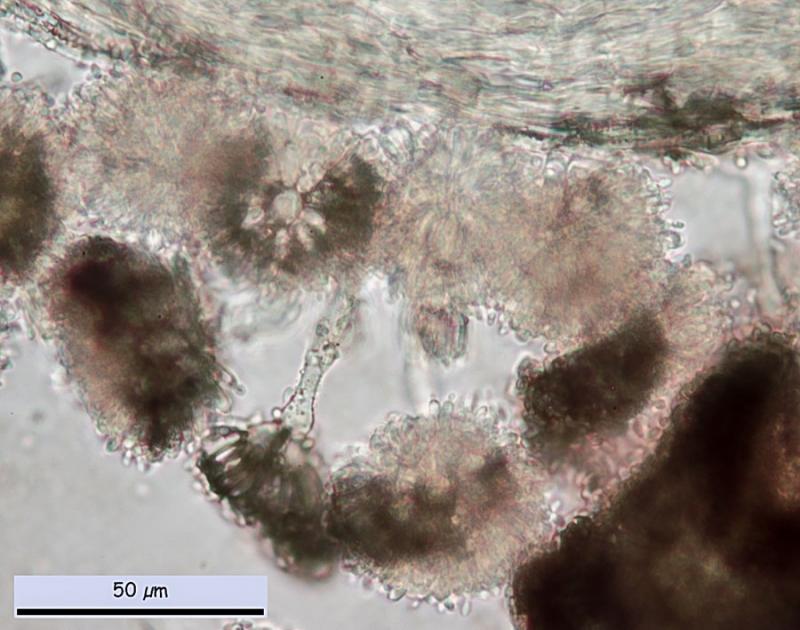
Gibellula arachnophila f pleiopus?
Miguel Ángel Ribes,
13-02-2014 00:42
 Hi again
I think this is more interesting.
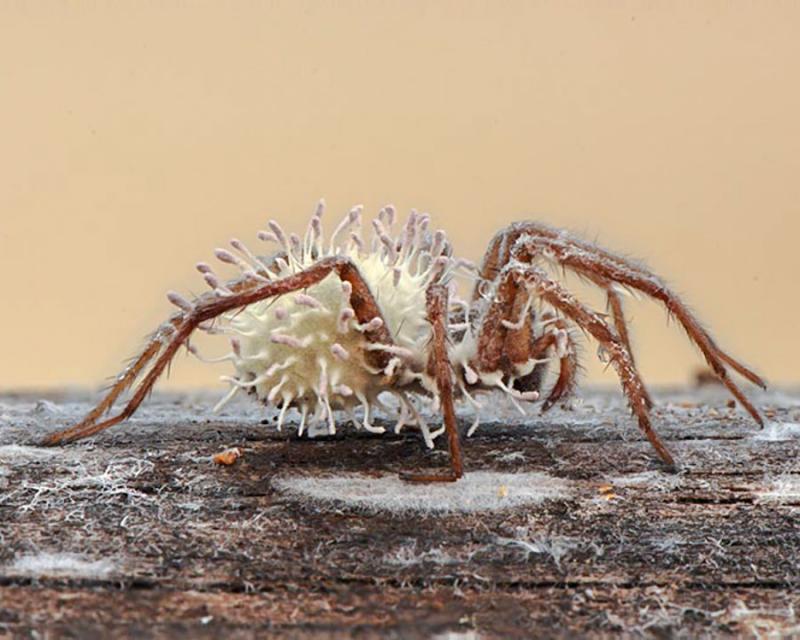
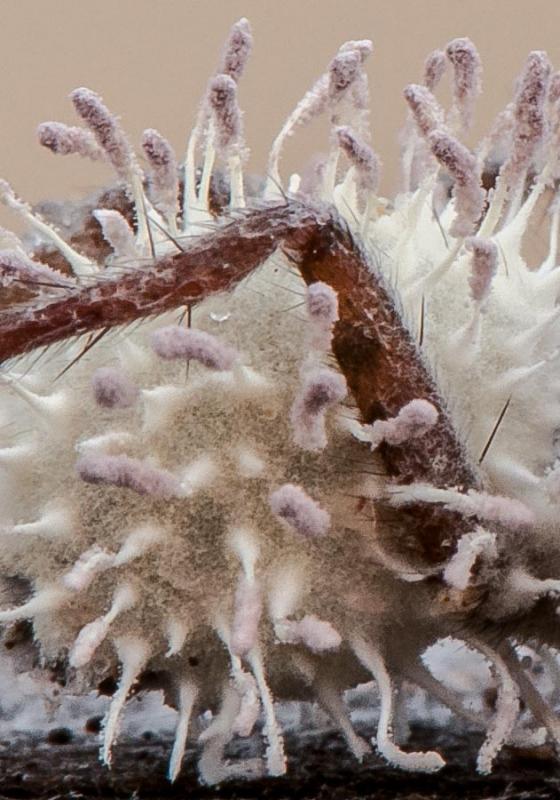
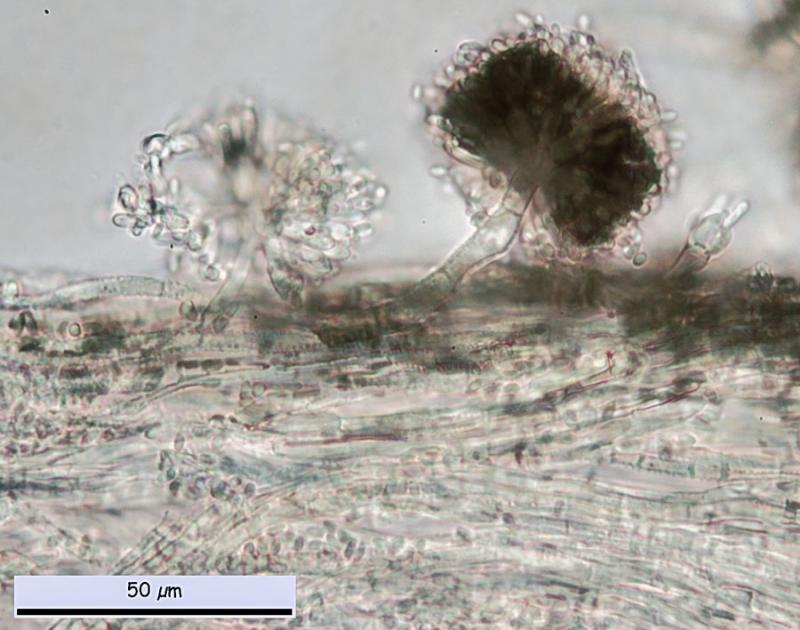
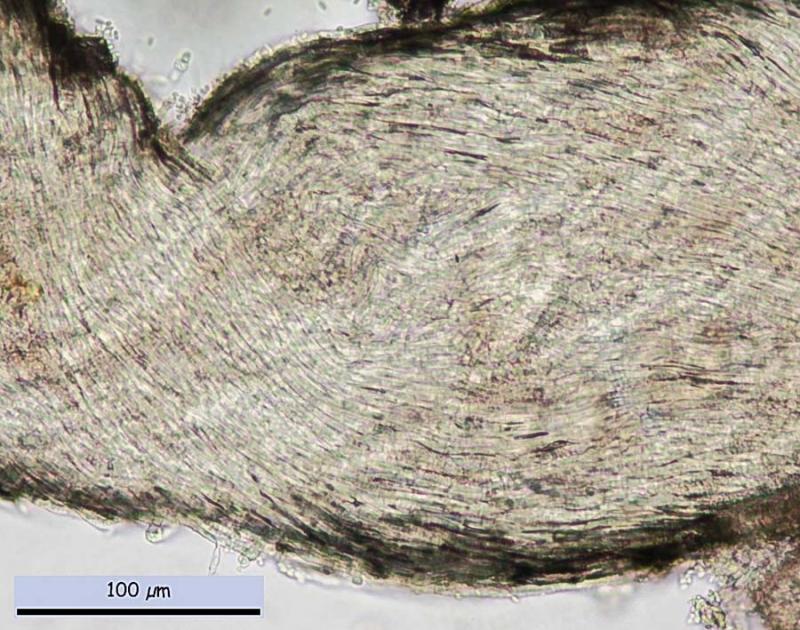
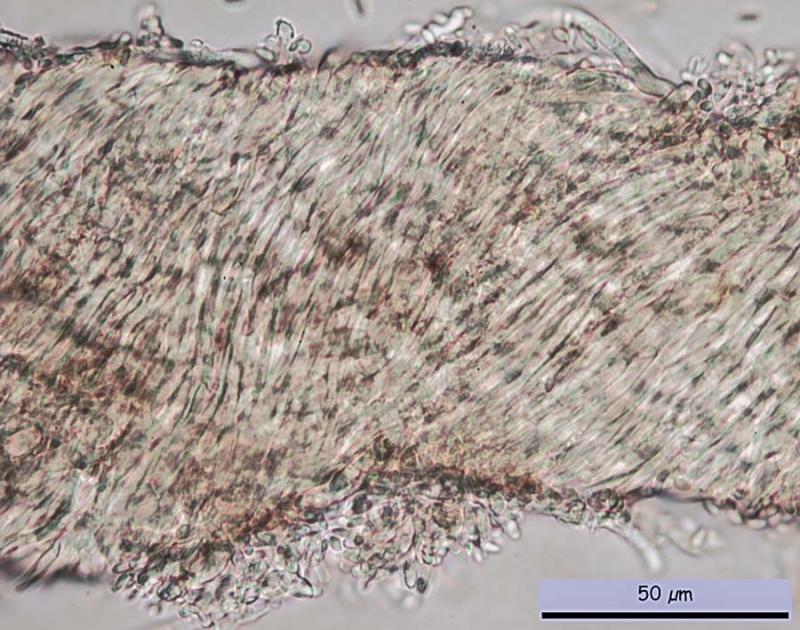
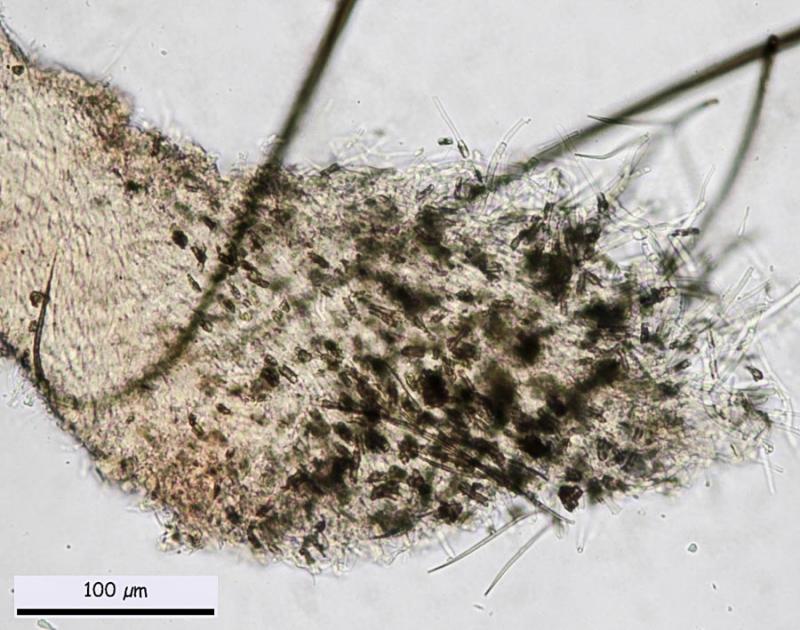
On a spider, 2,5-3 mm tall, light pink synemmata.
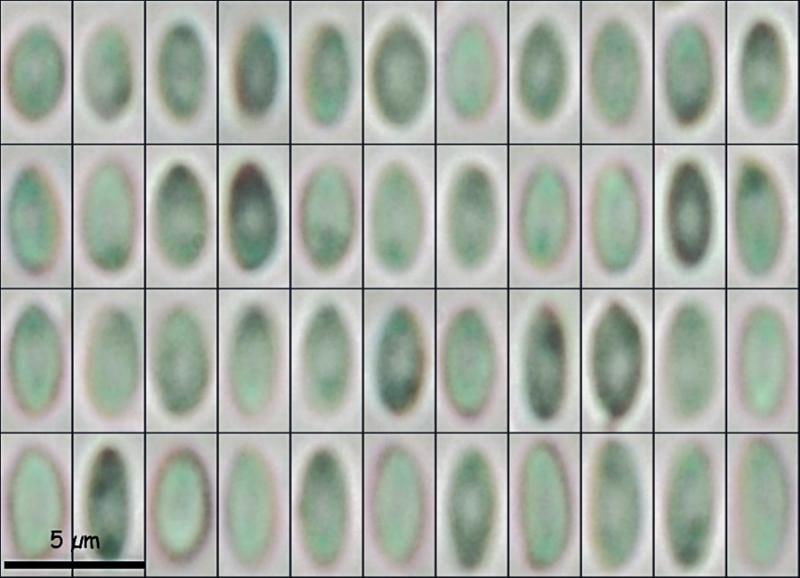
Conidiospores:
(3.48) 3.87 - 4.52 (4.98) x (1.65) 1.89 - 2.20 (2.41) µm
Q = (1.61) 1.86 - 2.30 (2.58) ; N = 46
Me = 4.18 x 2.03 µm ; Qe = 2.07
Thanks in advance
Miguel Á. Ribes
Nicolas VAN VOOREN,
13-02-2014 07:35

Re : Gibellula arachnophila f pleiopus?
Hi Miguel.
I think your collection matches Gibellula pulchra. The conidiophores of G. leiopus are very short and the conidia are a little bit more longer (4-5 µm).
I'm going to send to you a paper of A. Kubátová about G. leiopus.
I think your collection matches Gibellula pulchra. The conidiophores of G. leiopus are very short and the conidia are a little bit more longer (4-5 µm).
I'm going to send to you a paper of A. Kubátová about G. leiopus.
Miguel Ángel Ribes,
13-02-2014 09:17
Re : Gibellula arachnophila f pleiopus?
Hi Nicolas
It looks like G. pulchra, more than G. leiopus, but I am not capable to distinguish both species . I have found more papers and pictures about G. pulchra in the internet, wich requires a more careful reading.
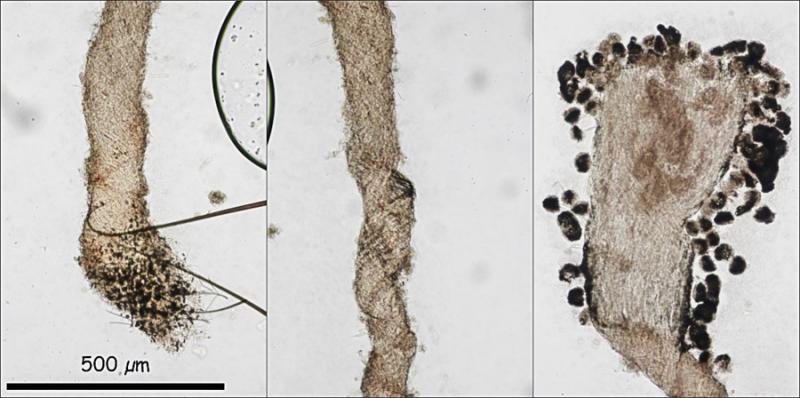
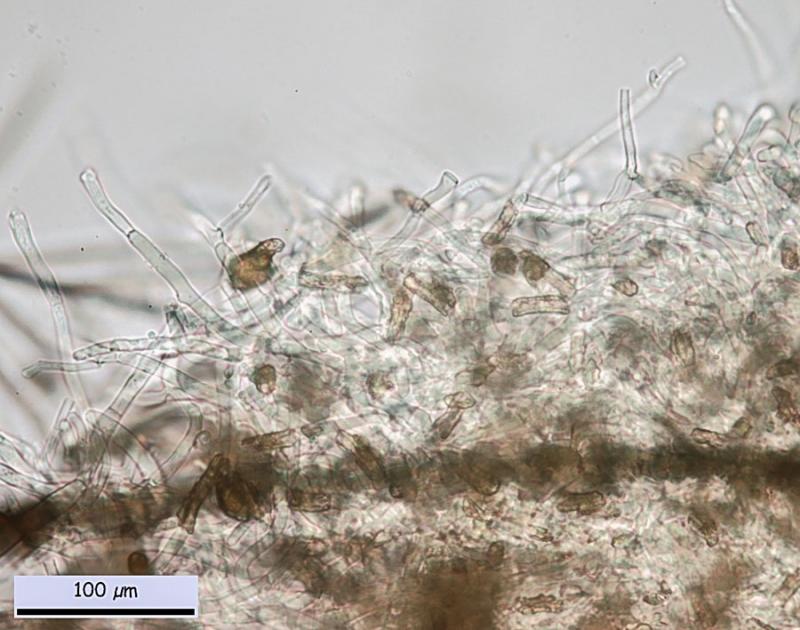
But, what is the picture nº 5, which was present mainly in the stem, while conidiophores (pictures 6-9) where present mainly in the cap?
Thanks about the paper.
Miguel Á. Ribes
It looks like G. pulchra, more than G. leiopus, but I am not capable to distinguish both species . I have found more papers and pictures about G. pulchra in the internet, wich requires a more careful reading.
But, what is the picture nº 5, which was present mainly in the stem, while conidiophores (pictures 6-9) where present mainly in the cap?
Thanks about the paper.
Miguel Á. Ribes
Nicolas VAN VOOREN,
13-02-2014 15:08
Re : Gibellula arachnophila f pleiopus?
Conidiophores can be present on the stem, this is what is shown on the 5th picture.
Miguel Ángel Ribes,
13-02-2014 22:12
Re : Gibellula arachnophila f pleiopus?
Ooops, I thought conidiophores were pictures 6-9 ( like in G. pulchra), and picture 5 are ¿? another type of conidiophores, more similar to G. pleiopus ones.