14-05-2026 05:36
Ethan CrensonHi all, I haven't paid much attention to Lachnu
11-05-2026 12:32
 Bernard CLESSE
Pourriez-vous m'aider à identifier cette héloti
13-05-2026 15:26
 François Freléchoux
Bonjour,Voici une récolte faite il y a quelques j
12-05-2026 15:41
 Nicolas VAN VOOREN
Dear Ascolovers, especially interested in Pezizale
13-05-2026 12:05
 Thierry Blondelle
Bonjour à tous,J'aimerais avoir confirmation de c
10-05-2026 23:17
 Andreas Gminder
Hello,today we found in a moist steep decidous for
28-04-2026 20:07
 Lothar Krieglsteiner
... on twig in the air at standing Ceratonia siliq
27-04-2026 20:52
Lothar Krieglsteiner
Found on hanging tiwg of Olea europaea in dried-ou
11-05-2026 20:22
Lothar Krieglsteiner
on attached twig of standing Ficus caricaquite uns
Anthracobia sp.
Vasileios Kaounas,
22-01-2014 18:48
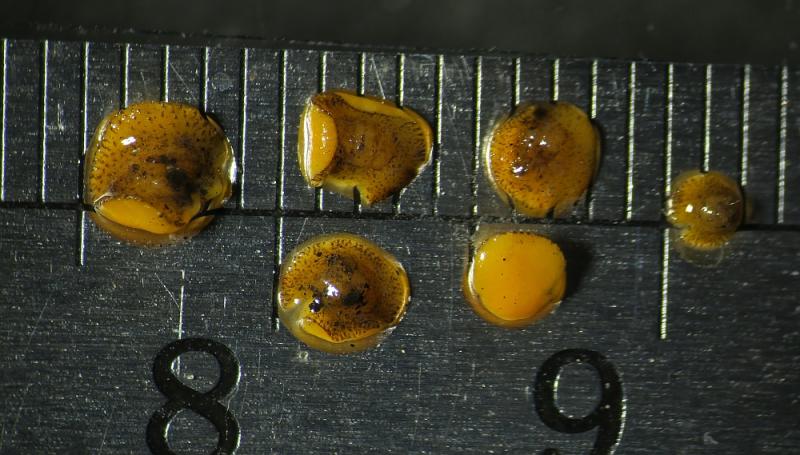
 Found in Attica Greece, 22-01-14, in sandy soil, burnt spot in the seaside forest with Pinus halepensis, Pinus pinea, Pistacia lentiscus. Ascocarp dimensions 1 mm.
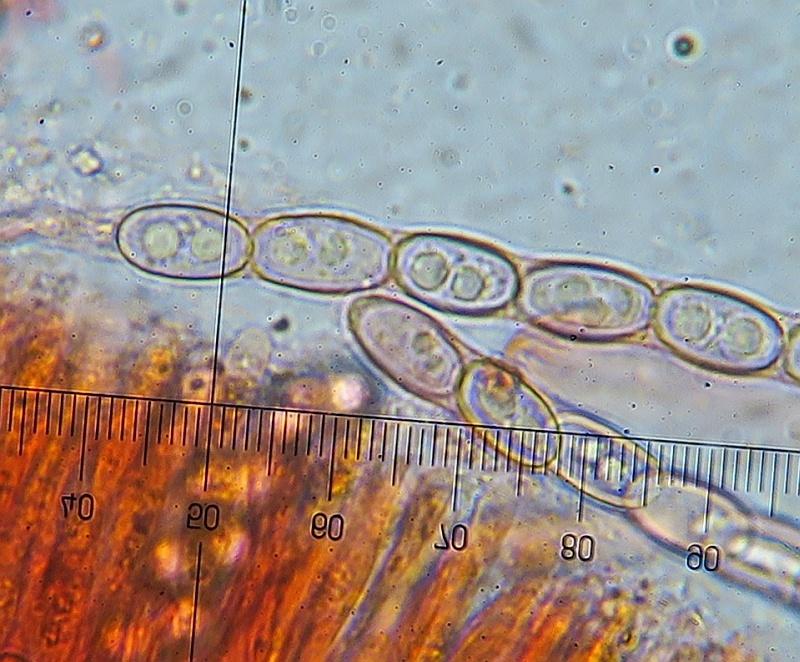
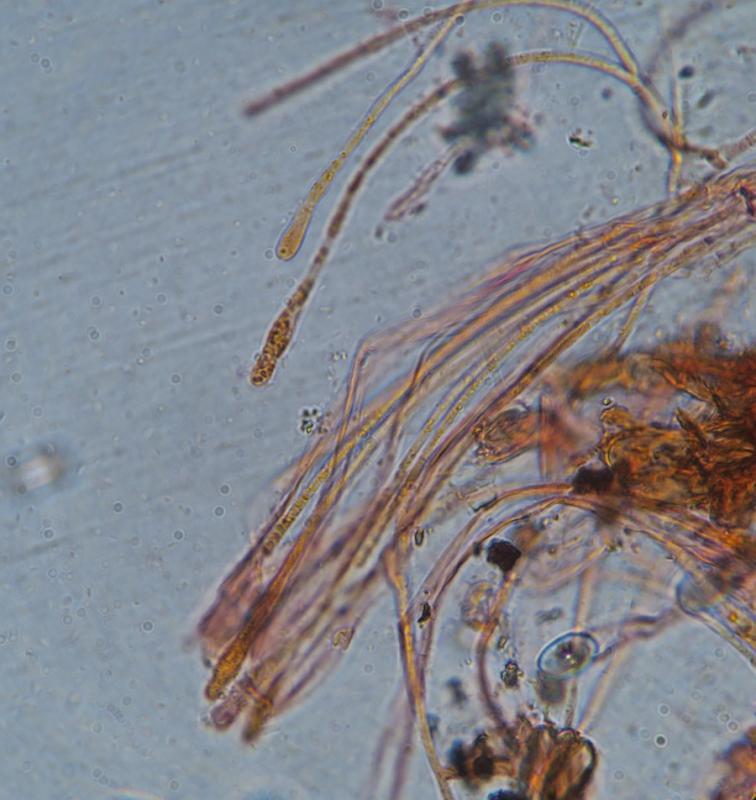
Asci dimensions 190-215 x 11-14,5 ?m. Ascospores dimensions 12,5-18,5 x 9,5-10,5 ?m. Width paraphyses 7,5-9,5 ?m.
 chelymenia-0001.pdf
Enrique Rubio,
22-01-2014 18:55

Re : Cheilymenia ???
It's an Anthracobia species, typical of burnt ground
DirkW,
22-01-2014 19:08

Re : Cheilymenia ???
salut vasileios, as enrique said, its anthracobia: a. macrcoystis, a. nitita or a. melanoma. most important are the hairs, which are missing. can you show the hairs too?
best
dirk
best
dirk
Vasileios Kaounas,
22-01-2014 19:17
Re : Cheilymenia ???
Thank you, will look again, because I did not see hairs.
DirkW,
22-01-2014 19:22
Re : Cheilymenia ???
the hairs are very unconspicious! perhaps under 80 and very pale.
Vasileios Kaounas,
23-01-2014 10:33
Re : Anthracobia sp.
I tried, but I did not see hairs.....
Vasileios Kaounas,
28-02-2014 15:56
Re : Anthracobia sp.
I found it again in the same place, i put Melzer and the asci were not amyloidi, but maybe made the paraphyses ? Hair again I dont saw.
Enrique Rubio,
28-02-2014 16:57
Re : Anthracobia sp.
The inconspicuous roundish hairs belong to Anthracobia macrocystis or A. nitida, but I don't know well the differences between these two species. The greenish reaction of the paraphyses in iodine are typical for their content in carotenoid pigments.
Vasileios Kaounas,
28-02-2014 17:21
Re : Anthracobia sp.
Thanks Enrique.
macrocystis = Asci cylindrical, 165-190 x 11-15 ?m, 8-spored, operculate, not bluing in iodine. Asco-spores uniseriate, smooth, biguttulate, elliptical to narrowly ellipti¬cal, (16)17-20 x 7.5-9.0 ?m,
nitida = Asci cylindrical, 170-210 x 9-12 ?m, 8-spored, operculate, not bluing in iodine. Ascospores uniseriate, uninucleate, smooth, biguttulate, elliptical, 16-19 x (6)7-9 ?m
http://ir.library.oregonstate.edu/xmlui/bitstream/handle/1957/44151/LarsenHarold1976.pdf?sequence=3
not helped these differences !!!
macrocystis = Asci cylindrical, 165-190 x 11-15 ?m, 8-spored, operculate, not bluing in iodine. Asco-spores uniseriate, smooth, biguttulate, elliptical to narrowly ellipti¬cal, (16)17-20 x 7.5-9.0 ?m,
nitida = Asci cylindrical, 170-210 x 9-12 ?m, 8-spored, operculate, not bluing in iodine. Ascospores uniseriate, uninucleate, smooth, biguttulate, elliptical, 16-19 x (6)7-9 ?m
http://ir.library.oregonstate.edu/xmlui/bitstream/handle/1957/44151/LarsenHarold1976.pdf?sequence=3
not helped these differences !!!
Stephen Martin Mifsud,
17-01-2017 06:49

Re : Anthracobia sp.
I found three populations of Anthracobia nitida but one of the populations had smaller spores then reported: 14-16um long, more or less the same as reported by Vasileios Kaounas ( the poster of this post) from Greece. I guess it still qualifies as A. nitida.
In the work of Larsen Harold (1976) this population would classify as Anthrocobia taxonomic species A if you follow the keys on page 42-44/92 (and gosh - that thesie was produced with a type-writer!)
Myself, I have problems to distinguish (from literature) nitida and macrocystis (just tiny differences in hair length and spores, which intersect anyway), but I think I have spotted a third difference (from Larsen Harold descriptions of both spp.) where A. nitida has a more pronounced brown-spotted clothing on the lower surface of the excipulum from that of A. macrocystis (where from the description they are lighter or restricted to the margin). See my image below
What do you think please?
In the work of Larsen Harold (1976) this population would classify as Anthrocobia taxonomic species A if you follow the keys on page 42-44/92 (and gosh - that thesie was produced with a type-writer!)
Myself, I have problems to distinguish (from literature) nitida and macrocystis (just tiny differences in hair length and spores, which intersect anyway), but I think I have spotted a third difference (from Larsen Harold descriptions of both spp.) where A. nitida has a more pronounced brown-spotted clothing on the lower surface of the excipulum from that of A. macrocystis (where from the description they are lighter or restricted to the margin). See my image below
What do you think please?