
09-04-2026 15:25
Jac GelderblomOn bare soil between mosses Ifound an asco I deter
09-04-2026 13:55
Thomas Læssøehttps://svampe.databasen.org/observations/10589176
09-04-2026 10:12
Thomas Læssøehttps://svampe.databasen.org/observations/10587061
08-04-2026 20:33
 Vasileios Kaounas
Found 07-04-26, in Abies cephalonica. Diameter 1,
08-04-2026 10:39
FRANCIS FOUCHIERBonjour , je recherche en pdf cet article: KORF R

06-04-2026 21:36
 Viktorie Halasu
Hello, could anyone please send me the article wi
06-04-2026 19:40
 David Gibbs
Help with this one much appreciated, on rotting Fa
I found this ascomycete on sheep dung.
Apothecia were all immature. Size up to 300um diameter.
The appearance and size of the spores do I think might be Ascobolus inmersus in an immature state.
Is that correct?
Thanks in advance.
Greetings.
Susana (Spain)
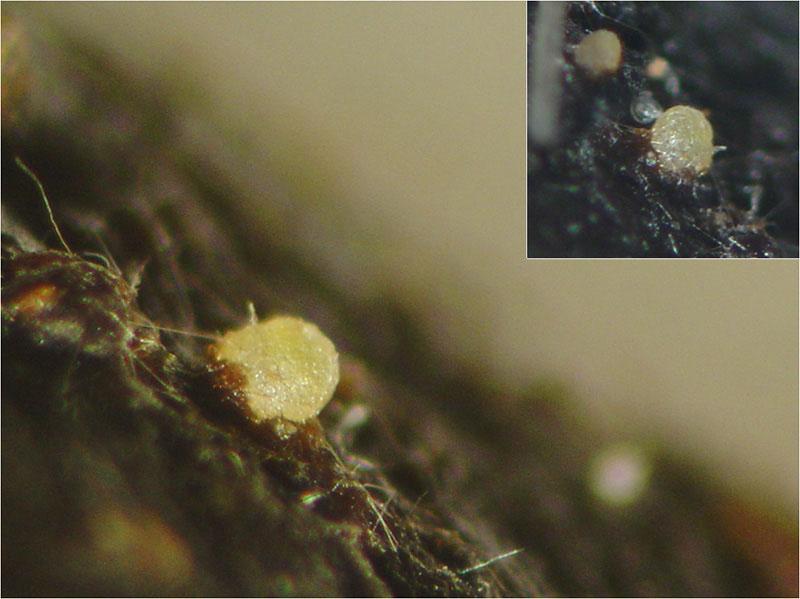
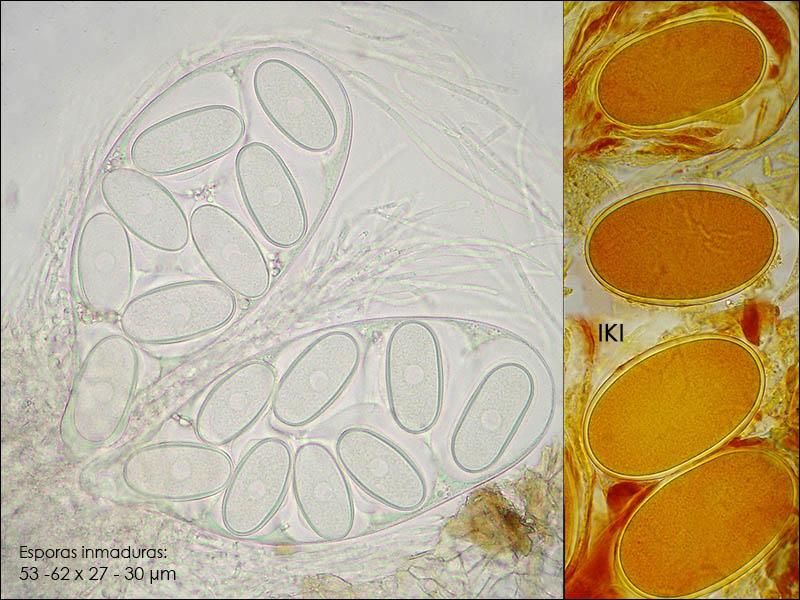
Sans pouvoir l'affirmer, je pense en effet qu'il peut s'agir d'Ascobolus immersus Pers. En effet, chez cette espèce, mais elle n'est pas unique, l'hyménium se développe d'abord dans un espace clos (= cléistohyménium partiel) et forme ensuite une apothécie, soit avec un hyménium libre ou exposé. Un autre élément pouvant faire penser à A. immersus, est la grandeur des ascopores à ce stade d'immaturité. Le développement de cette espèce peut être totalement ou plus ou moins immergé sous la forme de cléistothèce, mais permettant aux asques d'émerger à maturité,
Cordialement
René
Merci beaucoup pour vos impressions.
Cordialement
Susana

Hola Garcia,
In my opinion you are right. The photo's I send you show asci with mature and immature spores. These asci normally carry 8 spores but sometime they only show 4 spores visible and 4 are not always good visible because they did not reach maturity, you often see this with A. immersus. The thick wall of the spores is always visible with young immature spores. Also visible are the cracks in mature spores.
But like René said you have to wait until the spores reach maturity to have a clearer picture.
Atentamente,
Joop
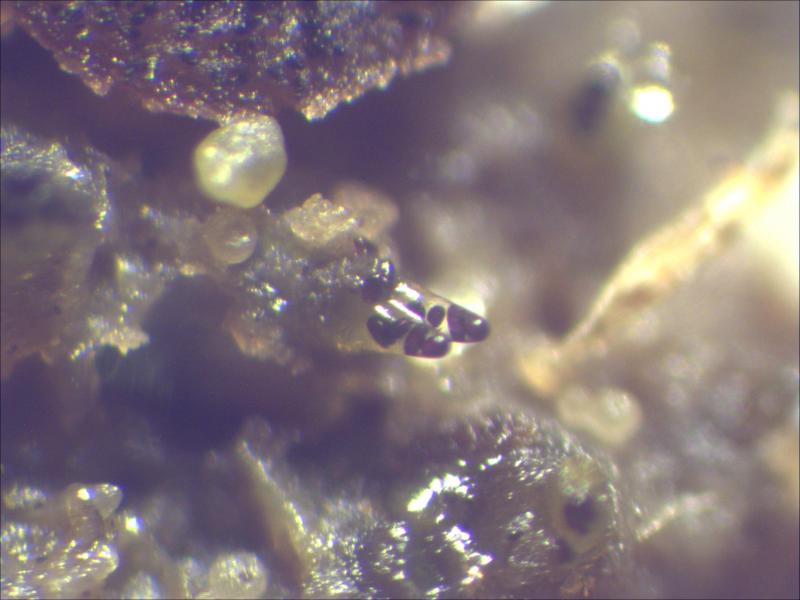
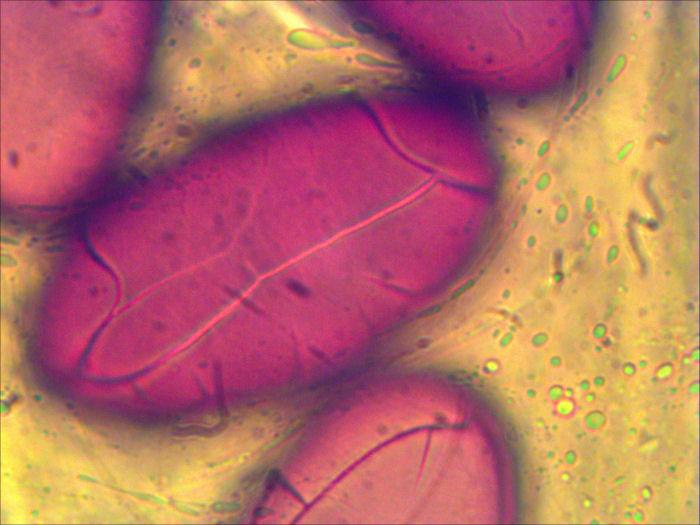
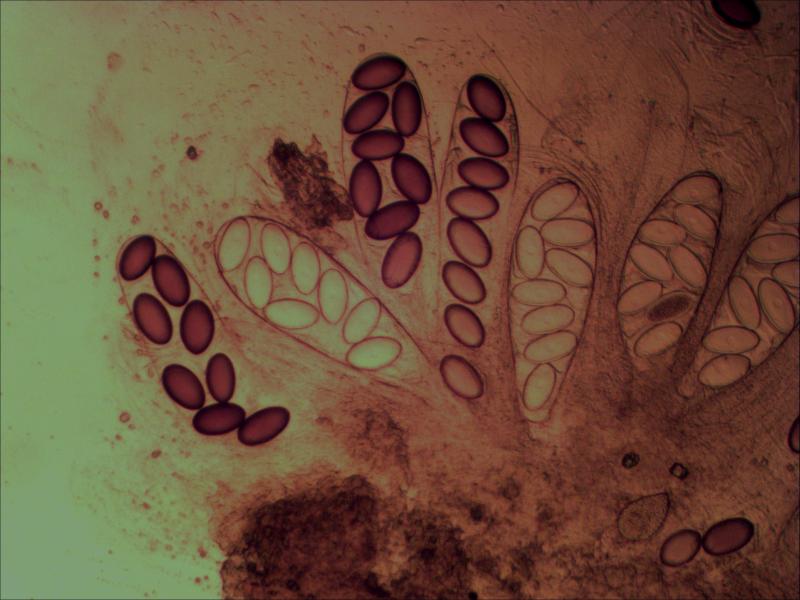
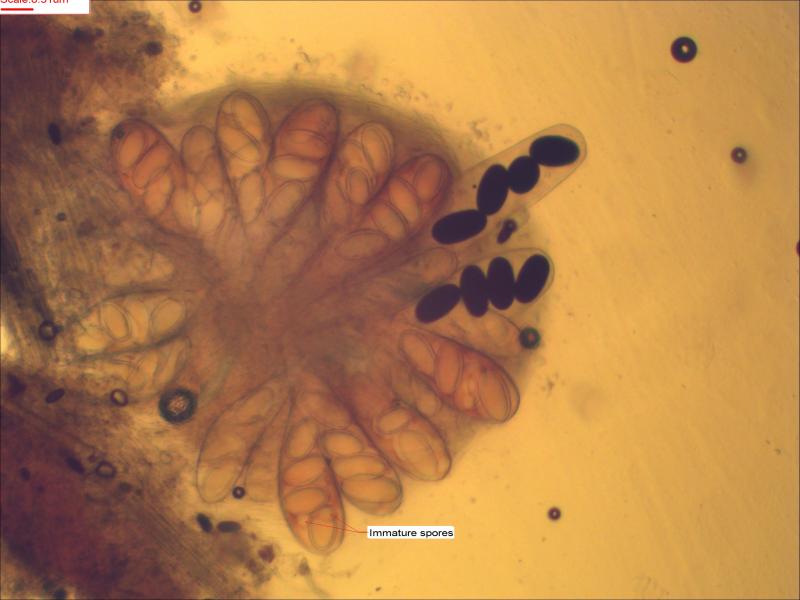
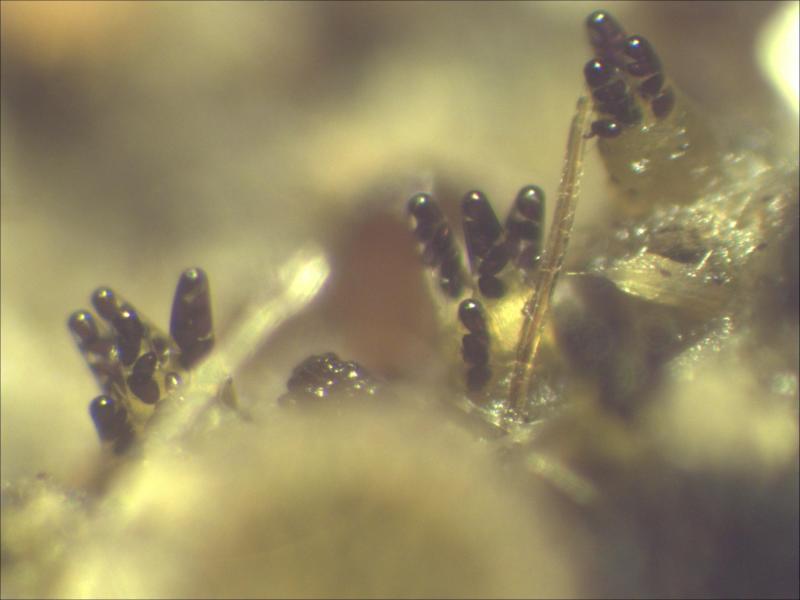
As I keep the sample, I will wait to reach maturity.
I guess the mature spores confirmed the determination.
Thanks, greetings
Susana