
09-04-2026 15:25
Jac GelderblomOn bare soil between mosses Ifound an asco I deter
09-04-2026 13:55
Thomas Læssøehttps://svampe.databasen.org/observations/10589176
09-04-2026 10:12
Thomas Læssøehttps://svampe.databasen.org/observations/10587061
08-04-2026 20:33
 Vasileios Kaounas
Found 07-04-26, in Abies cephalonica. Diameter 1,
08-04-2026 10:39
FRANCIS FOUCHIERBonjour , je recherche en pdf cet article: KORF R

06-04-2026 21:36
 Viktorie Halasu
Hello, could anyone please send me the article wi
06-04-2026 19:40
 David Gibbs
Help with this one much appreciated, on rotting Fa
I would like to have your opinion to this Hyaloscypha(?) species. Could it be H. fuckelii ssp. fuckelii?
Substrate: Deciduous wood, probably Fraxinus
Macroscopic description:
Apothecia mostly 0.6-0.8 mm in diameter. Color whiteish translucent to somewhat yellowish/ochre. Margin with conspicuous hairs.
Microscopic description:
Asci 35-45 x 6-7 µm, pleurorhynch, pore amyloid. Paraphyses filiform with 2-2.5 µm diameter and sometimes slightly broder at apex. Spores variable in size and shape, mostly ellipsoid with two small drops, 6-9 x 2-2.5. Hairs straight or slightly sinuous, I measured up to 90 µm in length, basal cells slightly brownish (see photos).
Thank you for any help
Stefan
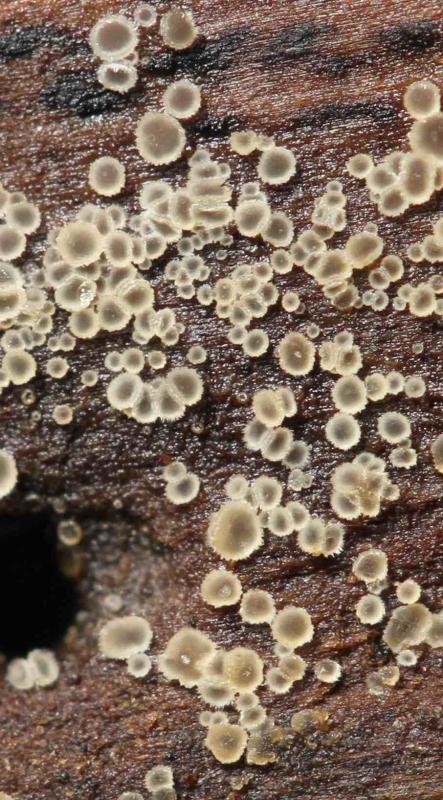
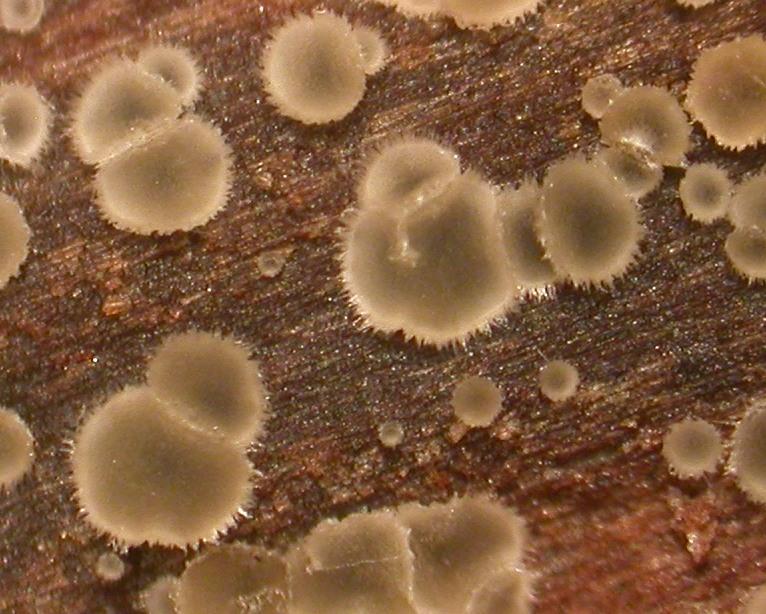
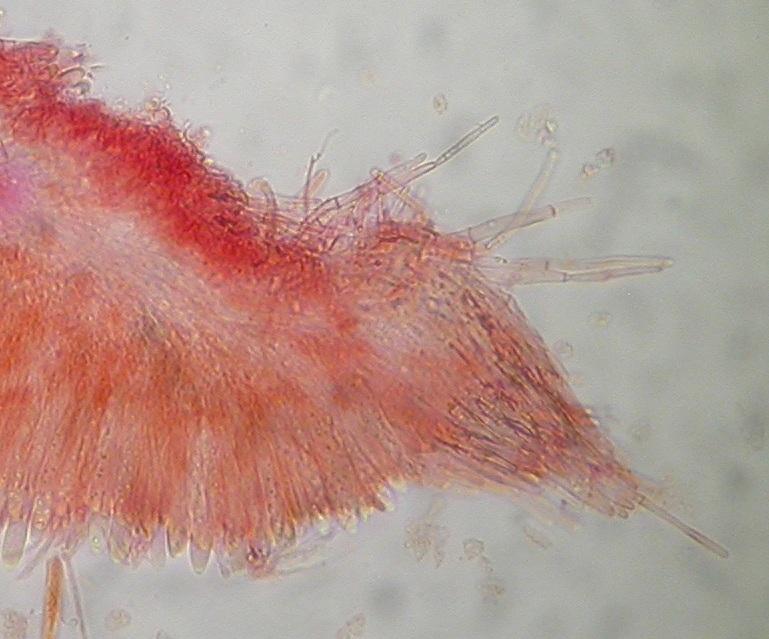
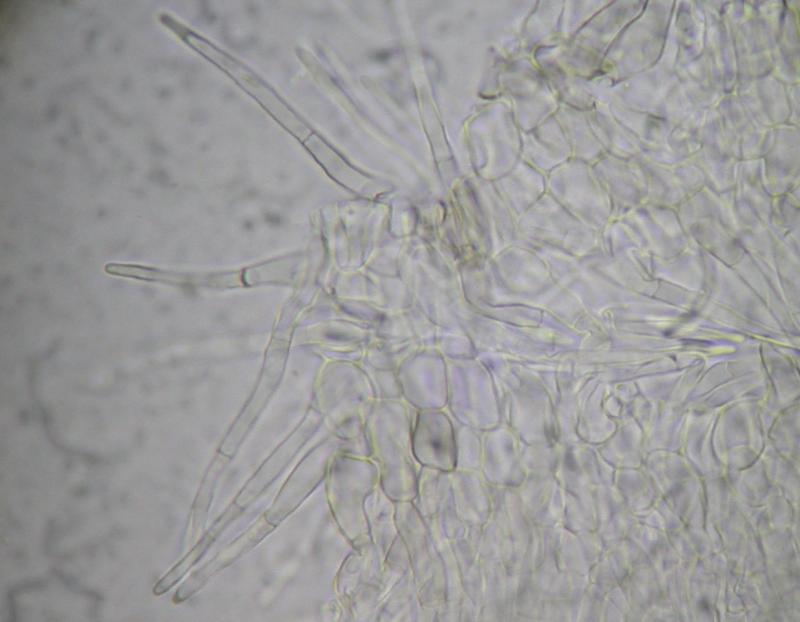
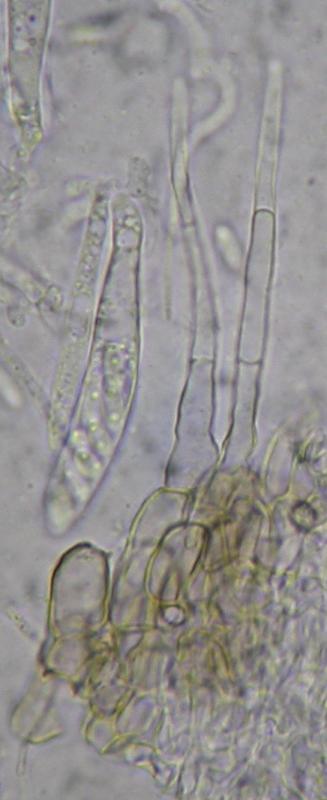
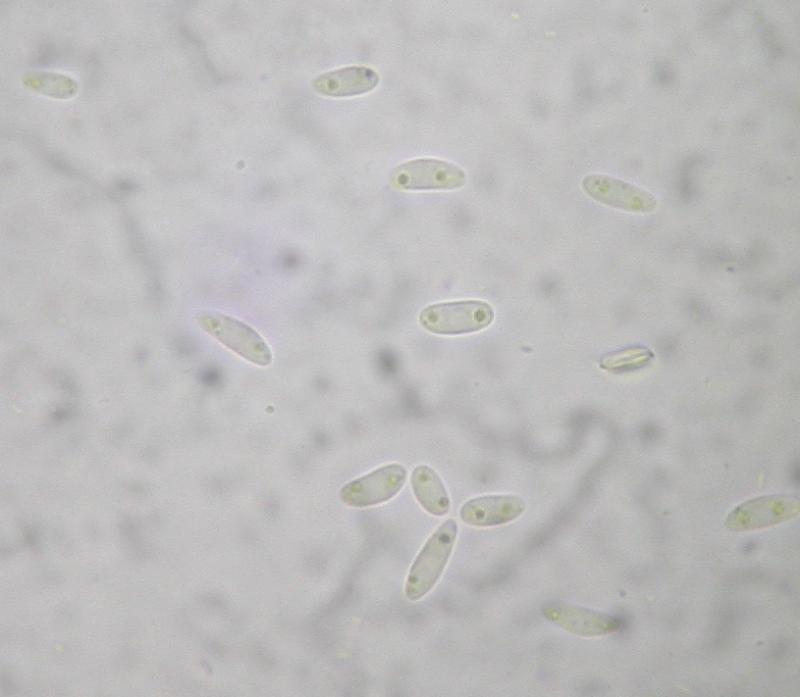

that is Protounguicularia barbata (= Olla transiens).
The partially present glassy tips of the hairs are typical, also the spores and their droplets. The asci should be simple-septae but with basal protuberances.
Zotto
Thanks a lot for your identification! Is this glassy tip the only character to separate Olla/Protounguicularia from Hyaloscypha species?
Stefan
Maybe it is genetically clearly different. I thought the species should belong in Olla, but that was also not the best idea, the differences are too great...
Zotto
Stefan