03-05-2026 10:57
 Castillo Joseba
Me mandan el material seco de Galicia (España) re
02-05-2026 12:42
Alain BRISSARDBonjour à tousJeuidi 30 avril dernier on m'a remi
02-05-2026 13:06
Pauline. PennaBonjour Please can someone help me with this id
01-05-2026 22:45
 Thierry Blondelle
Bonjour à tous, Une récolte sur bouse séchée d
28-04-2026 20:07
 Lothar Krieglsteiner
... on twig in the air at standing Ceratonia siliq
14-04-2026 05:32
Ethan CrensonHi all, A few weeks back a friend pointed out som
28-04-2026 20:33
Vitus SchäfftleinHello, I found Trochila ilicina on Ilex aquifoliu
30-04-2026 10:28
Rot BojanHello, by appearance I would say that I am dealing
Appendages and sheaths
Jac Gelderblom,
23-08-2013 13:29
The keys of Shoemaker on Ophiobolus and Phaeosphaeria make use of "appendages" (Ophiobolus) and "sheaths" (Phaeosphaeria) for sporefeatures. I usually make my mounts in water and the I never see appendages nor sheaths. Should I use other reagentia to see them?
Who can give me advise in this matter?
Greetings
Jac Gelderblom
Francisco Calaça,
23-08-2013 13:53

Re : Appendages and sheaths
Hello Jac,
usually, only the direct mounting in water, it's difficult to see the pageants gelatinous ("appendages" and "sheaths"). I, usually, use some reagents that facilitate the visualization, cuz they're hyaline, microscopy common is really complicated. I use the congo red (works with Podospora species), is reasonably good. Another option is the indian ink. Sometimes lactophenol is good.
Stay fine,
Francisco Calaça.
usually, only the direct mounting in water, it's difficult to see the pageants gelatinous ("appendages" and "sheaths"). I, usually, use some reagents that facilitate the visualization, cuz they're hyaline, microscopy common is really complicated. I use the congo red (works with Podospora species), is reasonably good. Another option is the indian ink. Sometimes lactophenol is good.
Stay fine,
Francisco Calaça.
Yannick Mourgues,
23-08-2013 13:55

Re : Appendages and sheaths
To see gel sheaths, I use Indian Ink.
Y
Y
Joop van der Lee,
23-08-2013 19:31

Re : Appendages and sheaths
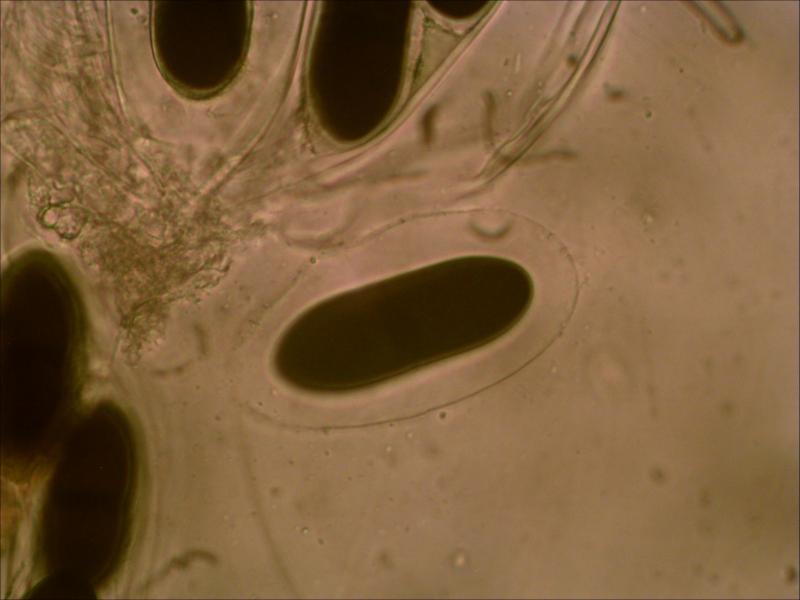
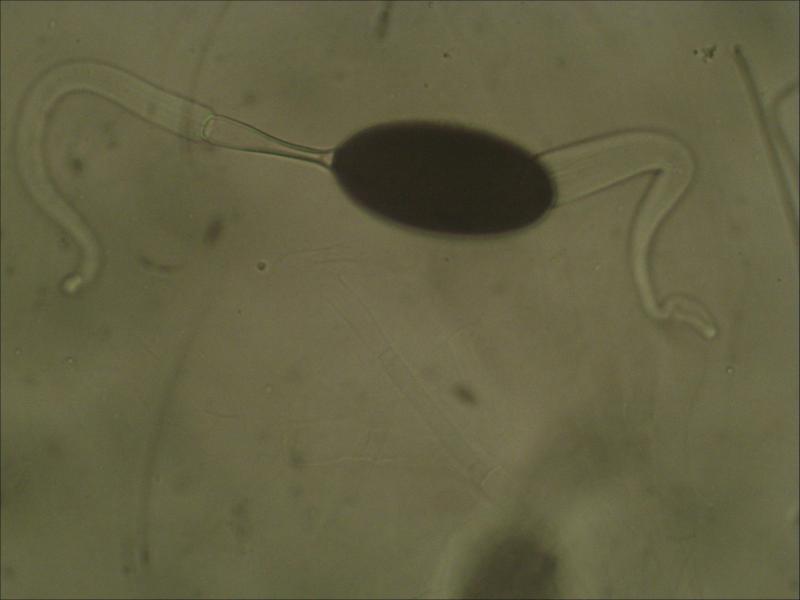
Most of the time appendages break off easily when spores are mature. When examening these species in water I do not use much pressure on the deck glass so it gives you the opportunity to look at young spores still in the ascus where appendages are still connected. When you are lucky you might also see them on mature spores but be carefull not to put too much pressure on the deck glass.
Jac Gelderblom,
27-08-2013 15:21
Re : Appendages and sheaths
Dear friends
Thanks for your advices.
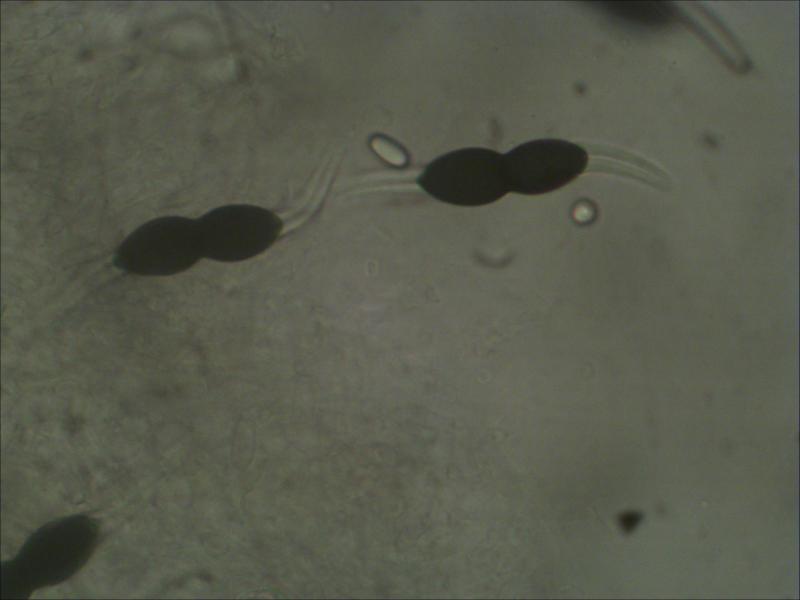
I made mounts of Ophiobolus niesslii in water and indian ink and the and the caps at the end of the spores ware clearly visible in indian ink.
Greetings
Jac
Thanks for your advices.
I made mounts of Ophiobolus niesslii in water and indian ink and the and the caps at the end of the spores ware clearly visible in indian ink.
Greetings
Jac