28-04-2026 20:07
 Lothar Krieglsteiner
... on twig in the air at standing Ceratonia siliq
04-05-2026 18:13
 Stephen Martin Mifsud
ID request for what seems to be a true aquatic fun
04-05-2026 16:39
Stephen Martin Mifsud
ID request: This specimen was collected in Malta o
04-05-2026 09:50
 Castillo Joseba
Me mandan el material seco de Galicia,(España) re
02-05-2026 12:42
Alain BRISSARDBonjour à tousJeuidi 30 avril dernier on m'a remi
02-05-2026 13:06
Pauline. PennaBonjour Please can someone help me with this id
01-05-2026 22:45
 Thierry Blondelle
Bonjour à tous, Une récolte sur bouse séchée d
14-04-2026 05:32
Ethan CrensonHi all, A few weeks back a friend pointed out som
28-04-2026 20:33
Vitus SchäfftleinHello, I found Trochila ilicina on Ilex aquifoliu
Mitrula paludosa (another) from Spain
Luis Ballester,
13-08-2013 19:53
 Hello everyone.
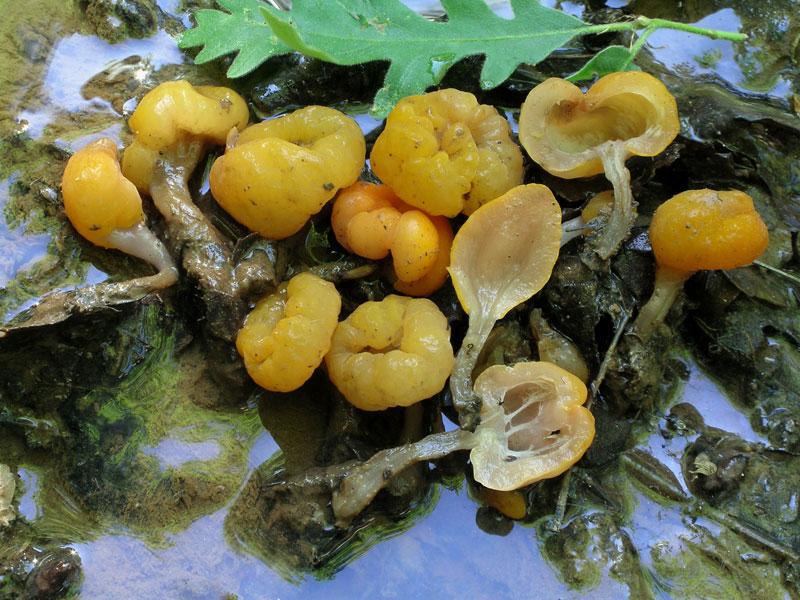
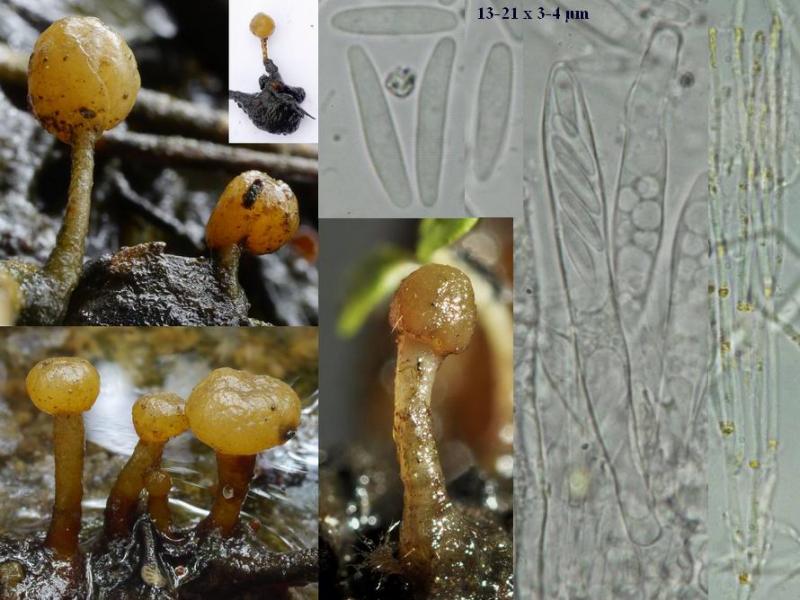
Here is another collection of Mitrula from Spain, specifically from La Rioja. In this case the collection consisted of a large number of specimens (about 300), all large and wider than usual. The specimens reached 25 mm width in the clavula and 40x5 mm in the stipe.
Ecology was on Quercus pyrenaica leaves, inside a water stream in the mountains.
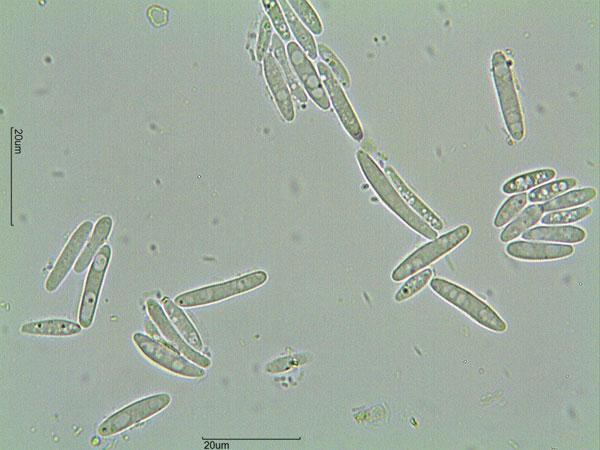
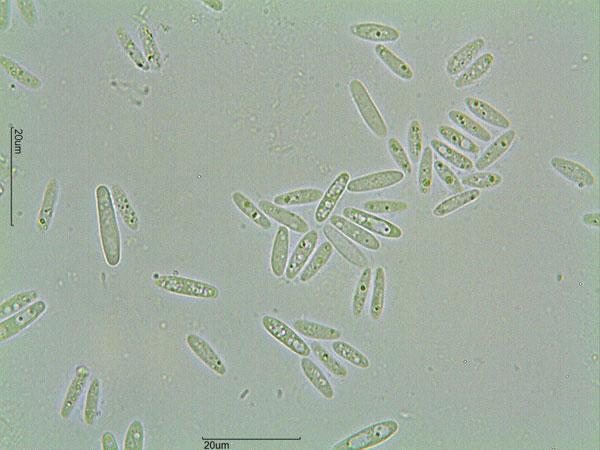
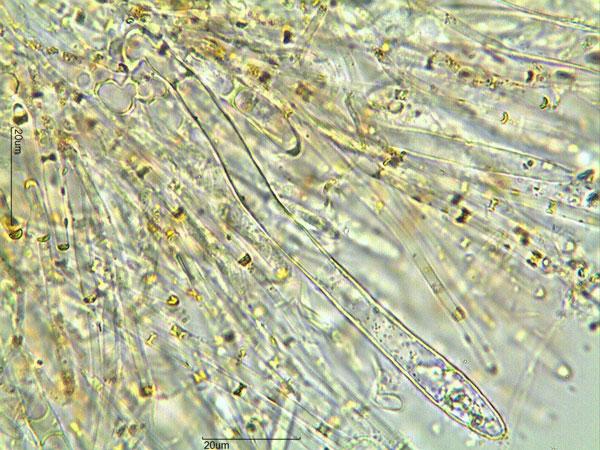
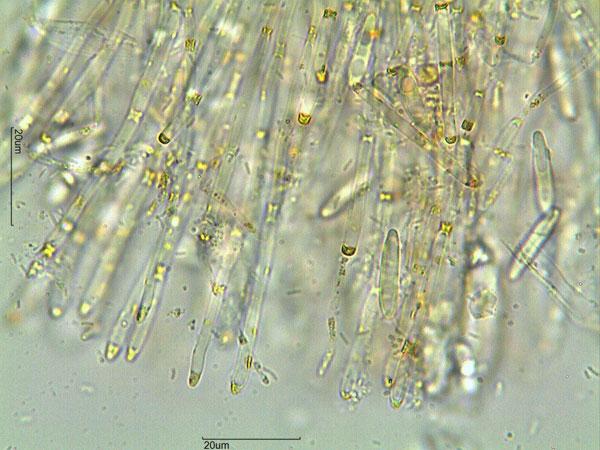
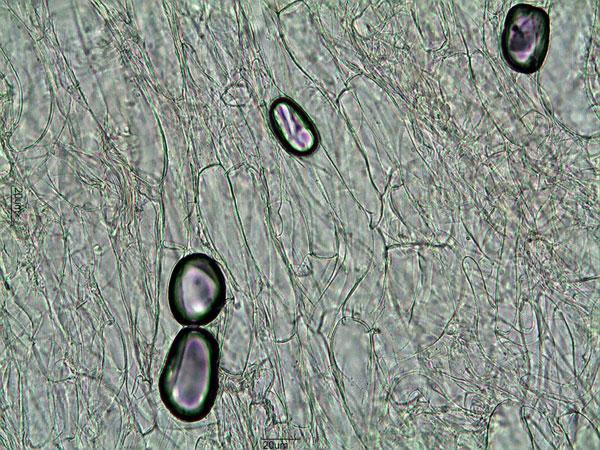
The microscopy pictures are of my friend Ruben Martinez and are made only with water. The paraphyses have that curious yellow coloration seen in the photos and sporal measures we have found are 13-24 x 2.7 to 4 µm.
I consulted the works of Redhead and Zheng & alter and from known species we go to Mitrula paludosa. I wonder if all Mitrula we have in Europe are M. paludosa
Hans-Otto Baral,
13-08-2013 20:18

Re : Mitrula paludosa (another) from Spain
Hi Luis
this reminds me of a find by Jens Petersen from Denmark, on Alnus cones but also twigs in a swamp, with very similar spores and paraphyses. The yellow carotenoid pigment is in droplets between long empty vacuoles.
In your photo I think I see a crozier.
Boudier Pl. 427bis has a var. aurantiaca with just this shape.
Zotto
this reminds me of a find by Jens Petersen from Denmark, on Alnus cones but also twigs in a swamp, with very similar spores and paraphyses. The yellow carotenoid pigment is in droplets between long empty vacuoles.
In your photo I think I see a crozier.
Boudier Pl. 427bis has a var. aurantiaca with just this shape.
Zotto
Luis Ballester,
14-08-2013 10:58
Re : Mitrula paludosa (another) from Spain
Thanks Zotto.
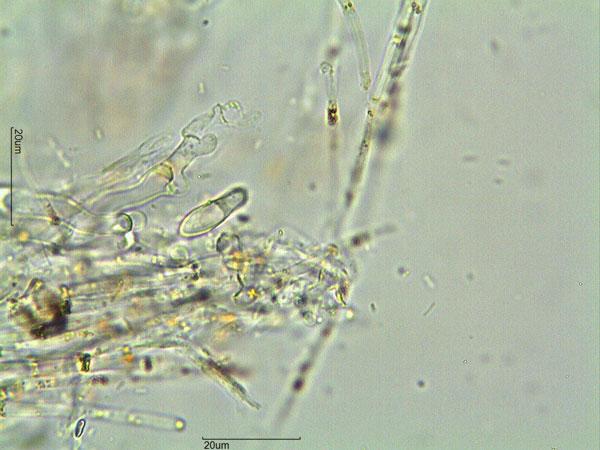
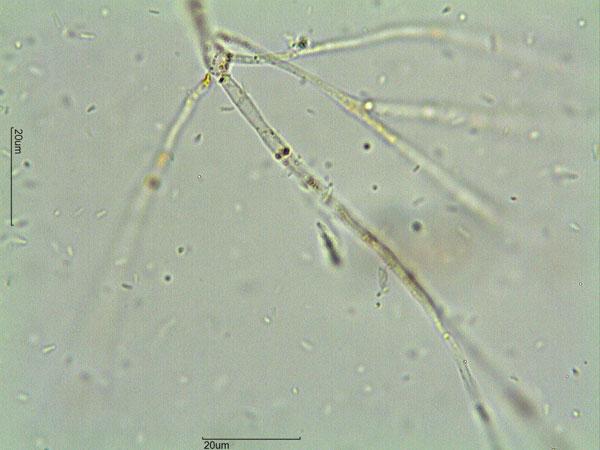
Two more photos of the micro
Two more photos of the micro
Hans-Otto Baral,
14-08-2013 11:01
Re : Mitrula paludosa (another) from Spain
yes, clearly with croziers.
Possibly all these variants are only paludosa.
Possibly all these variants are only paludosa.
Luis Ballester,
14-08-2013 20:39
Re : Mitrula paludosa (another) from Spain
OK Zotto, thanks.
That was my (not very skilled) opinion so. Mitrula paludosa.
But I think Europe is great and I am reluctant to think that each and every one of the collections of Mitrula paludosa found in Sweden, Spain and the Caucasus are genetically the same taxon.
With the knowledge we now have, I think they are all (yes) M. paludosa, but I think when someone makes a study in depth considering the macroscopic, microscopy, ecology and DNA, we will have surprises.
Again very grateful for your comments and looking forward to the future ...
That was my (not very skilled) opinion so. Mitrula paludosa.
But I think Europe is great and I am reluctant to think that each and every one of the collections of Mitrula paludosa found in Sweden, Spain and the Caucasus are genetically the same taxon.
With the knowledge we now have, I think they are all (yes) M. paludosa, but I think when someone makes a study in depth considering the macroscopic, microscopy, ecology and DNA, we will have surprises.
Again very grateful for your comments and looking forward to the future ...
Hans-Otto Baral,
14-08-2013 21:10
Re : Mitrula paludosa (another) from Spain
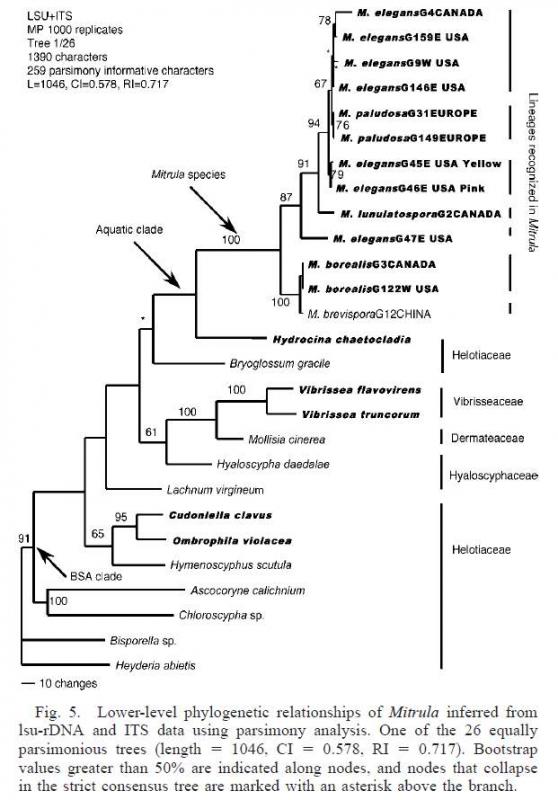
Yes, if someone makes good microscopy. But molecular results are available, and there are five taxa in Mitrula:
It seems that M. elegans and paludosa are the same. M. brevispora has spores only 5-10 µm. For the others I dod not look at literature.
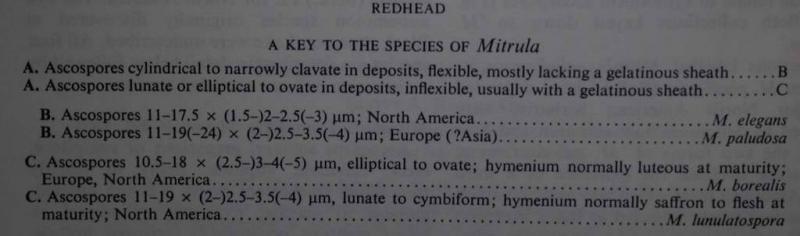
Here a key to Mitrula by Redhead 1977. The distinction in spore width seems disputable. Interesting the feature of a spore sheath. What flexible spores are I did not understand.
It seems that M. elegans and paludosa are the same. M. brevispora has spores only 5-10 µm. For the others I dod not look at literature.
Here a key to Mitrula by Redhead 1977. The distinction in spore width seems disputable. Interesting the feature of a spore sheath. What flexible spores are I did not understand.