
02-05-2026 13:06
Pauline. PennaBonjour Please can someone help me with this id
02-05-2026 12:42
Alain BRISSARDBonjour à tousJeuidi 30 avril dernier on m'a remi
01-05-2026 22:45
 Thierry Blondelle
Bonjour à tous, Une récolte sur bouse séchée d
28-04-2026 20:07
 Lothar Krieglsteiner
... on twig in the air at standing Ceratonia siliq
14-04-2026 05:32
Ethan CrensonHi all, A few weeks back a friend pointed out som
28-04-2026 20:33
Vitus SchäfftleinHello, I found Trochila ilicina on Ilex aquifoliu

30-04-2026 10:28
Rot BojanHello, by appearance I would say that I am dealing
27-04-2026 18:48
Tony MoverleyCollected 23rd April 2026, Norfolk, EnglandSwarms
27-04-2026 20:52
Lothar Krieglsteiner
Found on hanging tiwg of Olea europaea in dried-ou
Anthostomella (?) on Berberis
Enrique Rubio,
04-07-2013 14:02
 Dear friends
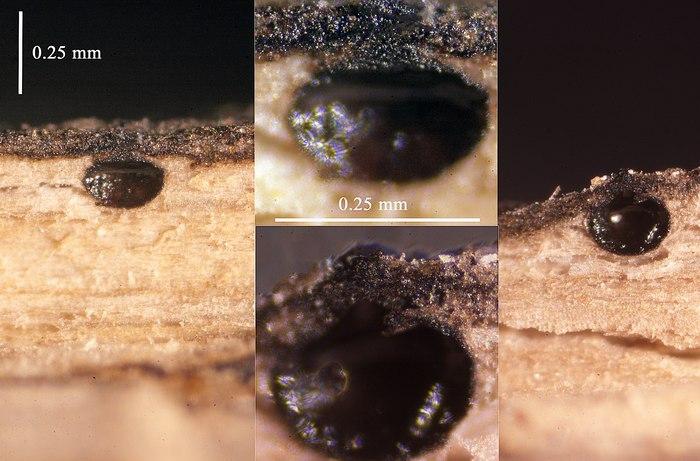
Under a melanized, epidermial blackish tissue with inconspicuous perithecial mounds, we have collected these inmersed, isolated. not really stromatic perithecia up to 0.2 mm in diameter under a clypeate structure.
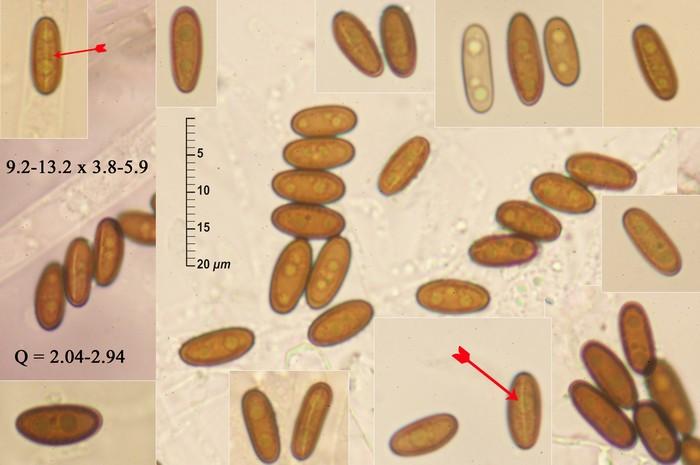
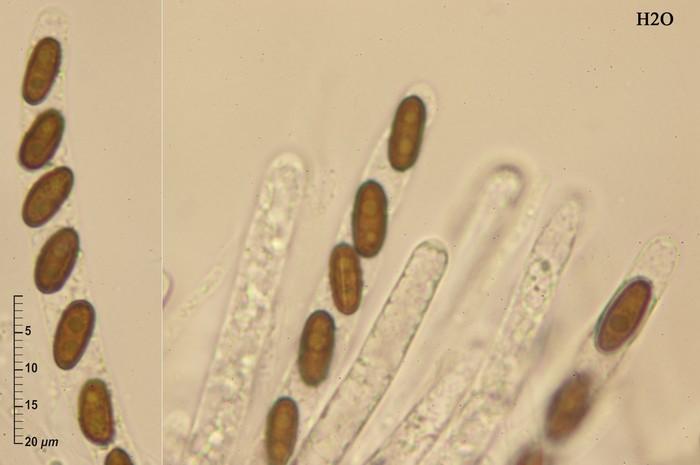
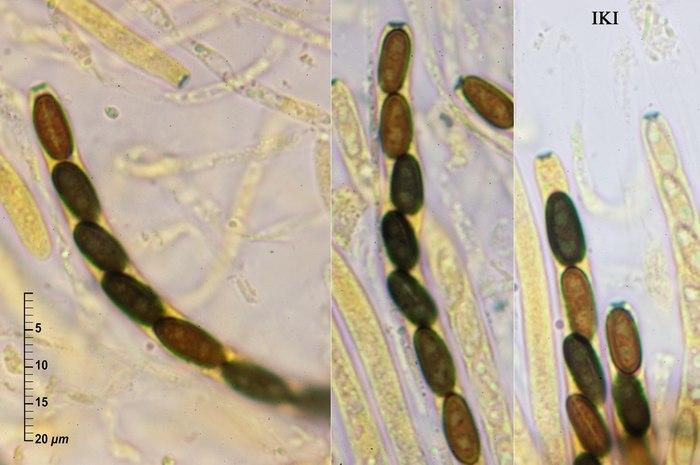
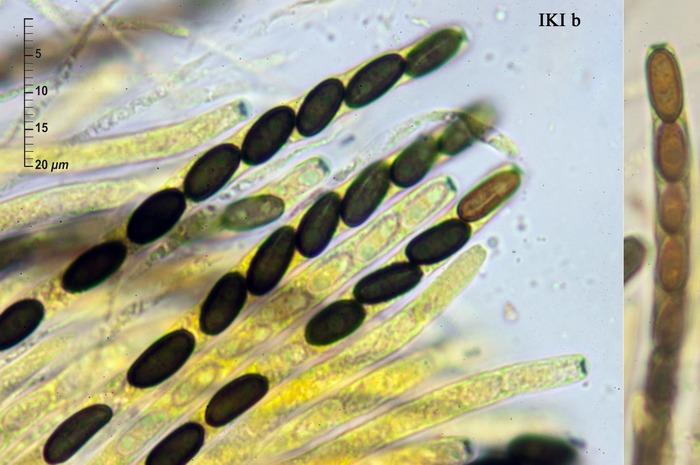
The long cylindrical 8-spored asci have an appical apparatus IKI bb and the brownish (at maturity) ascospores have a germ-slit full spore lenght and they have not visible appendages.
The fungus was on still attached branches of Berberis vulgaris at 1700 m of altitude.
With the classic keys I arrive to the genus Anthostomella. What do you think?
Thanks again
Jacques Fournier,
04-07-2013 14:26

Re : Anthostomella (?) on Berberis
Hola Enrique,
possibly Anthostomella but not a common species at first view. I checked Lu & Hyde's monograph to no avail. Could you be more specific about the clypei, are they separate or do they form a superficial pseudostroma by coalescing? Are the asci short or long pedicellate? Do ascospores have a mucilaginous sheath? something to test in India ink, just add a small drop to the edge of a water mount, it's better than to observe directly in India ink, otherwise dilute it.
Buena suerte!
Jacques
possibly Anthostomella but not a common species at first view. I checked Lu & Hyde's monograph to no avail. Could you be more specific about the clypei, are they separate or do they form a superficial pseudostroma by coalescing? Are the asci short or long pedicellate? Do ascospores have a mucilaginous sheath? something to test in India ink, just add a small drop to the edge of a water mount, it's better than to observe directly in India ink, otherwise dilute it.
Buena suerte!
Jacques
Enrique Rubio,
04-07-2013 17:49
Re : Anthostomella (?) on Berberis
Hi Jacques
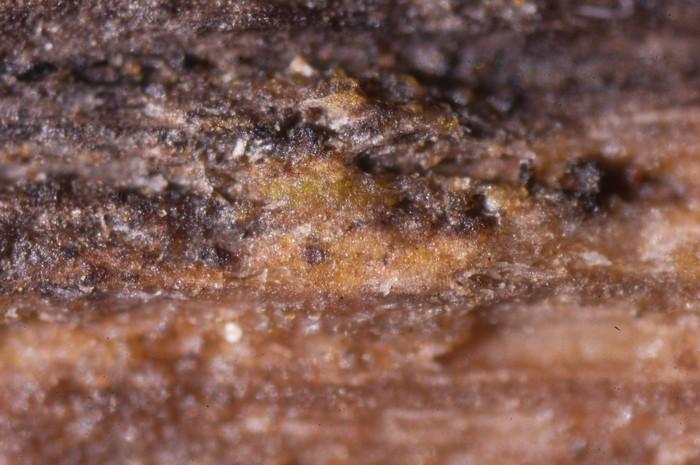
There are a superficial, thin and continuous blackish pseudostroma over the isolated perithecia, but at this level it seems to be thicker.
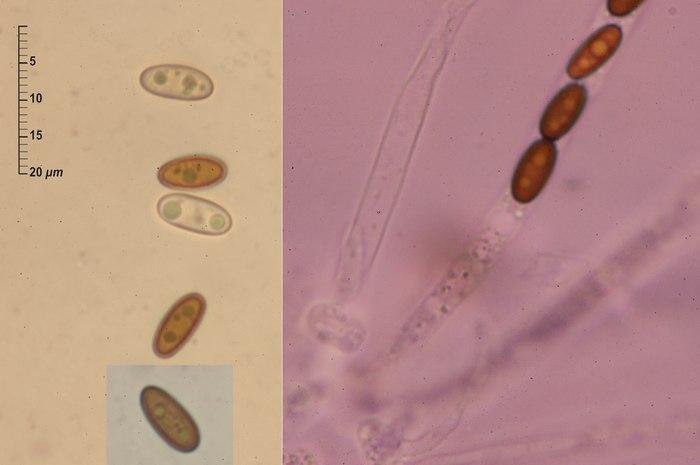
I have seen any mucilaginous sheath or appendages in china ink or nigrosine. The asci are shortly stipitate (i.e 55 microns long for the pars sporifera vs 35 for the stipes)
There are a superficial, thin and continuous blackish pseudostroma over the isolated perithecia, but at this level it seems to be thicker.
I have seen any mucilaginous sheath or appendages in china ink or nigrosine. The asci are shortly stipitate (i.e 55 microns long for the pars sporifera vs 35 for the stipes)
Jacques Fournier,
04-07-2013 18:20
Re : Anthostomella (?) on Berberis
thanks for the information, after checking the key in the monograph I failed to find a match. Anyway the continuous pseudostroma is not typical of Anthostomella. It rather recalls the fungi placed in Lopadostoma subgenus Anthostomopsis Rappaz (1995), as do the ellipsoid-equilateral ascospores. There are only three species in that subgenus, one L. flavoviride has ascospores that might fit but the peudostroma is said to be green black. Is that the case?
Tell me if you don't have Rappaz paper.
Cheers,
Jacques
Tell me if you don't have Rappaz paper.
Cheers,
Jacques
Enrique Rubio,
04-07-2013 18:51
Re : Anthostomella (?) on Berberis
Hi Jacques
Yes. I have Rappaz's papier. Maybe you are right because some little areas of the pseudostroma have faintly yellowish/greenish hues but only at the surface.
Yes. I have Rappaz's papier. Maybe you are right because some little areas of the pseudostroma have faintly yellowish/greenish hues but only at the surface.
Enrique Rubio,
04-07-2013 18:54
Re : Anthostomella (?) on Berberis
Can you see them in the image?
Jacques Fournier,
04-07-2013 19:06
Re : Anthostomella (?) on Berberis
hum, not striking! I would not advise you to use this name, maybe someone will have a better idea.
Cheers,
Jacques
Cheers,
Jacques
Enrique Rubio,
04-07-2013 19:22
Re : Anthostomella (?) on Berberis
Of course! They are not so conspicuous!
Thanks, Jacques
Thanks, Jacques