
06-05-2026 11:25
 Castillo Joseba
Me mandan el material seco de Galicia (España) re
28-04-2026 20:07
 Lothar Krieglsteiner
... on twig in the air at standing Ceratonia siliq
05-05-2026 22:40
Gernot FriebesHi,I believe this is a Plagiostoma growing on a Sa
04-05-2026 18:13
 Stephen Martin Mifsud
ID request for what seems to be a true aquatic fun
04-05-2026 16:39
Stephen Martin Mifsud
ID request: This specimen was collected in Malta o
28-07-2011 18:31
 Alex Akulov
Dear FriendsToday I made the pdf file of Velenovsk
04-05-2026 09:50
Castillo Joseba
Me mandan el material seco de Galicia,(España) re
02-05-2026 12:42
Alain BRISSARDBonjour à tousJeuidi 30 avril dernier on m'a remi
02-05-2026 13:06
Pauline. PennaBonjour Please can someone help me with this id
 Dear Forum,
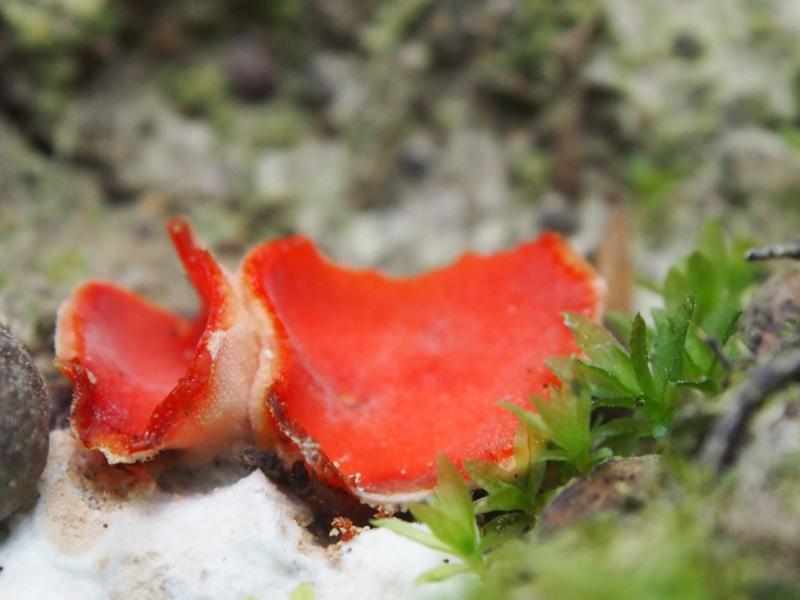
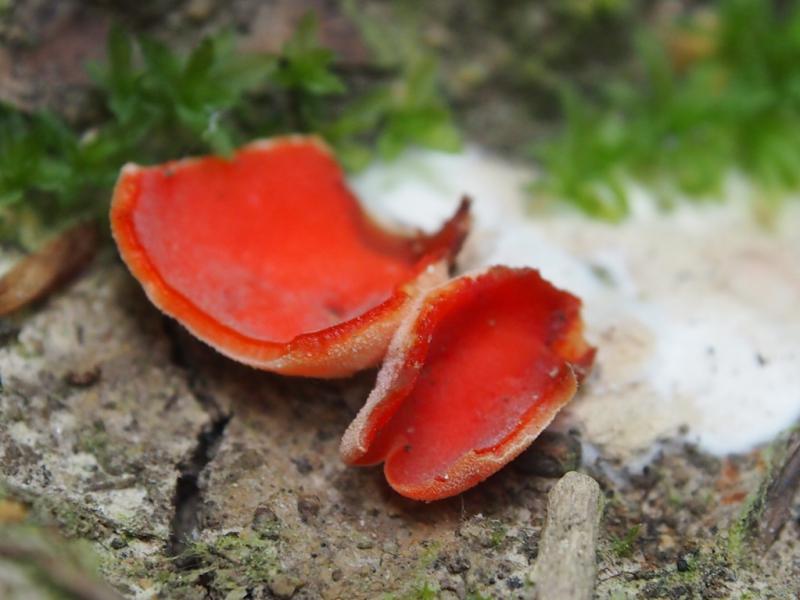
 Yesterday I have been found this specie on the mossy ground.
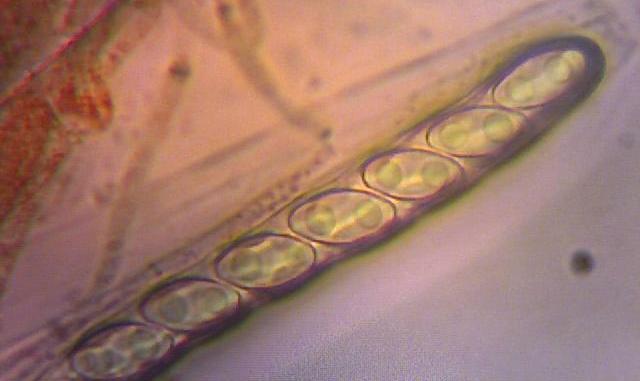
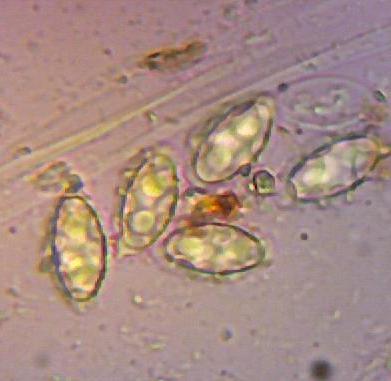
They are small, 10-12 mm diametres. Fruitbody is red, an unusually tough and thick. Spores are 13(14) – 7 (8) micros, with 2 drops oils.
With Lugol is J+. I think this specie is a Peziza.
Any idea?
Thank you, best regards
Edit
?
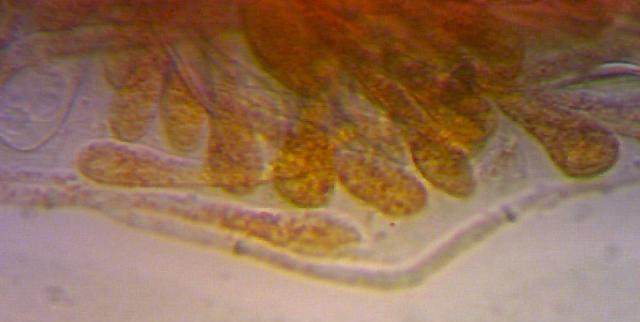

Now I'm learning the Lugol reaction, unfortunately I was wrong.
I'll try again.
Thank you for your suggestions.
Edit

I would also consider Aleuria aurantia. Try to check if you find marginal hairs (present in Melastiza) or not. And quicker: if you check the asci base it should not have croziers if it is Aleuria aurantia while Melastiza cornubiensis (=chateri) has croziers.
Raúl
I made a test again. I could not find marginal hairs.
I read now J. Breitenbach/Champignons de Suisse: „.... Paraphyses á contenu granuleux orangé teinté en vert par l'iode"
I thought this is the J + :-((
I apologize.
After they confirmed the Aleuria aurantia?
Thank you both for your help.
Edit
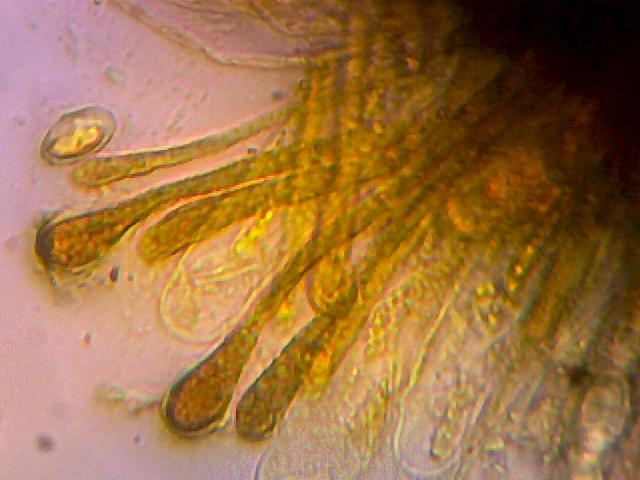
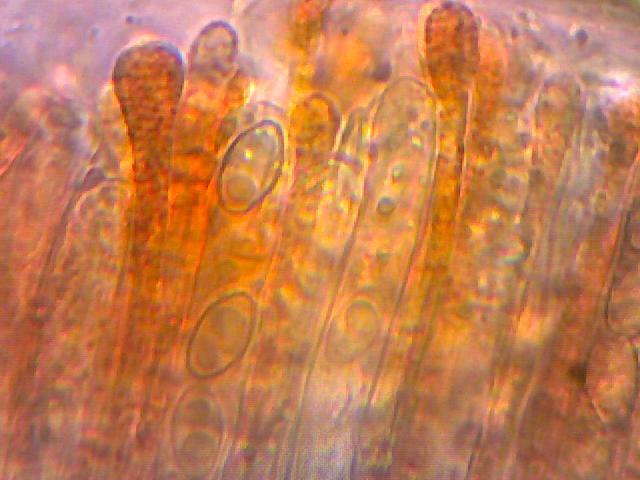
If you didn´t see the hairs, then ok for Aleuria aurantia, but notice that they are not very much evident, not pointed nor protuding. Here you have a couple of links where you can see the hairs of Melastiza:
http://www.actafungorum.org/actaforum/viewtopic.php?t=2662
http://www.actafungorum.org/actaforum/viewtopic.php?p=12471#p12471
Raúl
Thanks for the links, all the information is useful to me.
Unfortunately, my fungi aren't typical, edges of the snails eaten.
This fungus was a good learning.
Cheers
Edit