16-03-2011 14:31
roman vargas albertoHi. I would like some opinion about this Peziza
14-05-2026 05:36
Ethan CrensonHi all, I haven't paid much attention to Lachnu
10-05-2026 23:17
 Andreas Gminder
Hello,today we found in a moist steep decidous for
11-05-2026 12:32
 Bernard CLESSE
Pourriez-vous m'aider à identifier cette héloti
13-05-2026 15:26
 François Freléchoux
Bonjour,Voici une récolte faite il y a quelques j
12-05-2026 15:41
 Nicolas VAN VOOREN
Dear Ascolovers, especially interested in Pezizale
13-05-2026 12:05
 Thierry Blondelle
Bonjour à tous,J'aimerais avoir confirmation de c
28-04-2026 20:07
 Lothar Krieglsteiner
... on twig in the air at standing Ceratonia siliq
27-04-2026 20:52
Lothar Krieglsteiner
Found on hanging tiwg of Olea europaea in dried-ou
11-05-2026 20:22
Lothar Krieglsteiner
on attached twig of standing Ficus caricaquite uns
gnomonioid asco on Quercus Ilex
Chris Yeates,
17-06-2013 14:56
 Bonjour tous
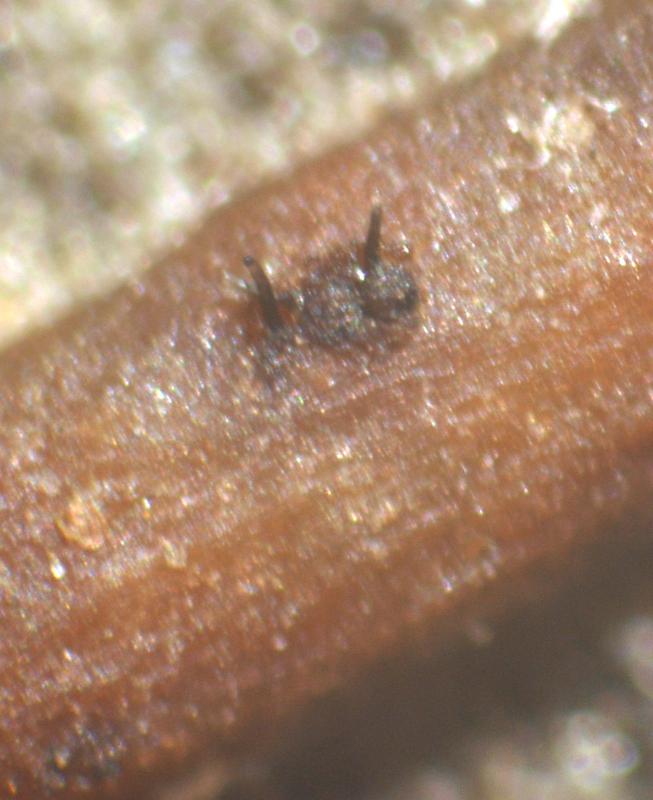
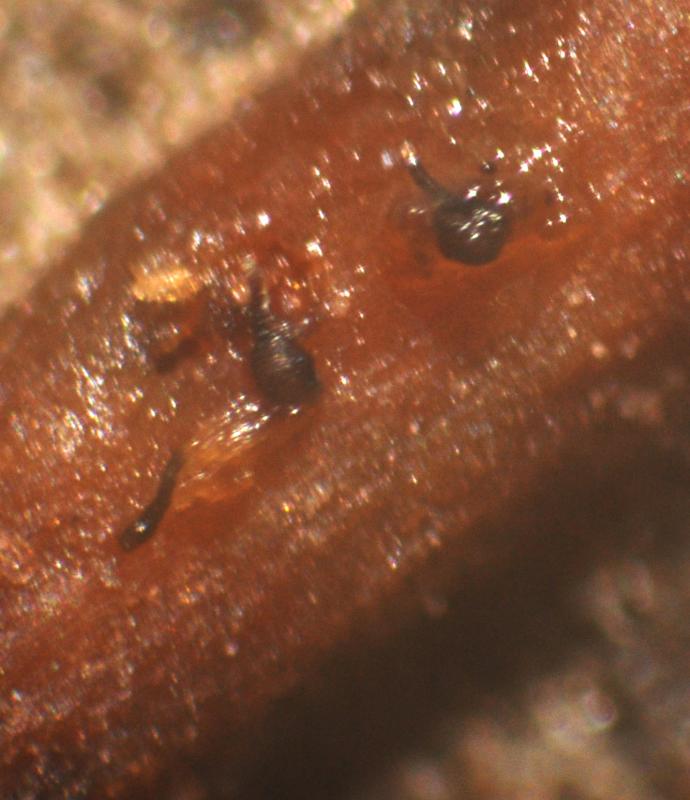
this fungus appeared on incubated fallen leaves of Quercus ilex, collected beneath a mature tree in Scarborough on the North Yorkshire coast (where the tree is of course non-native).
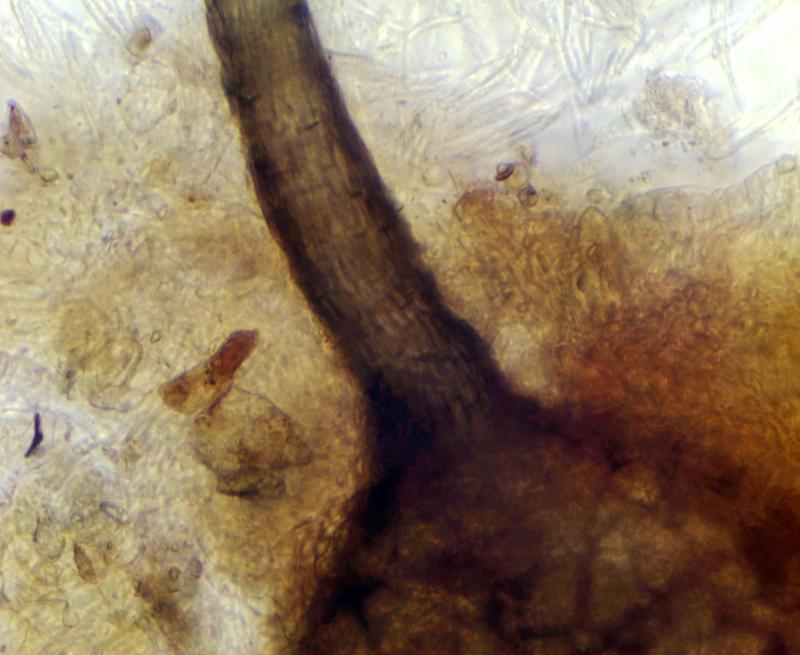
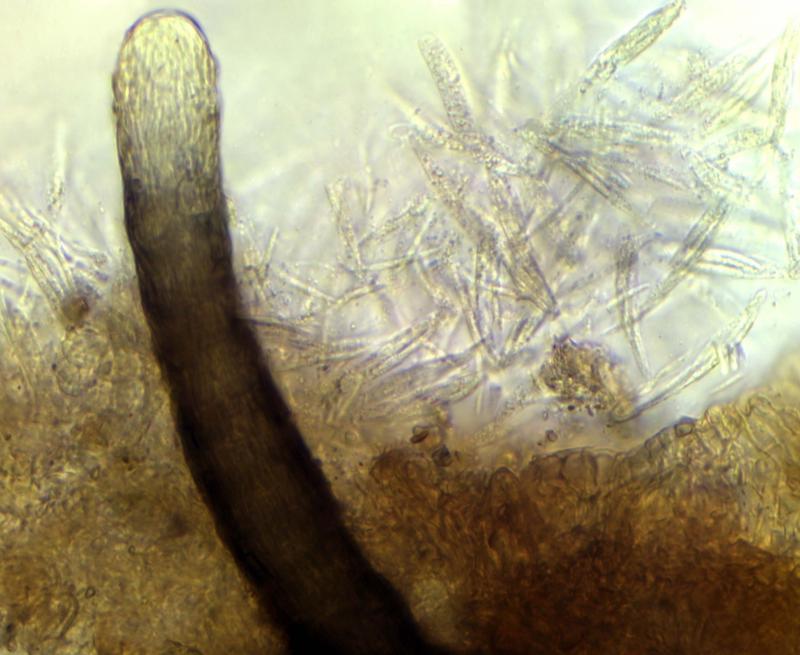
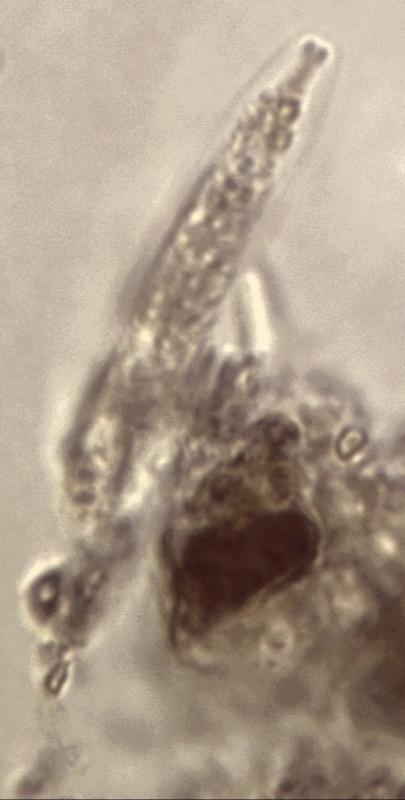
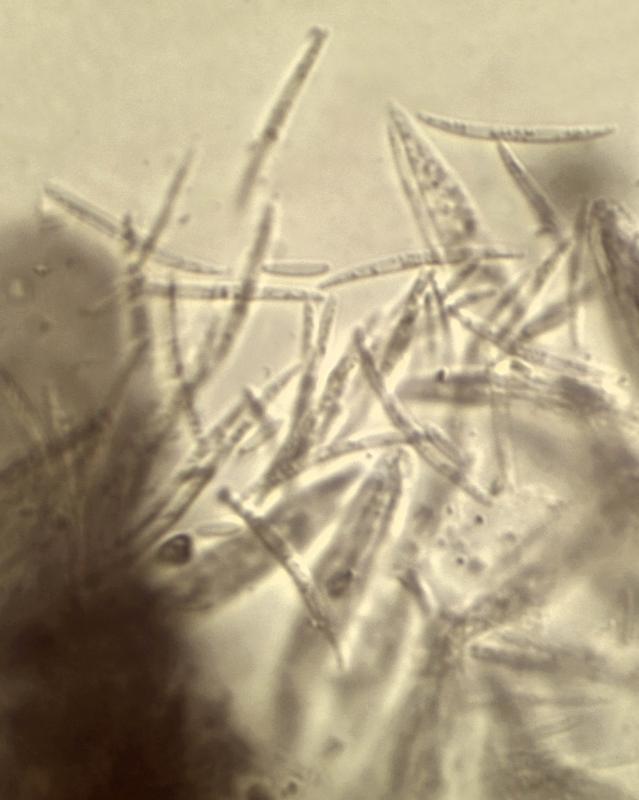
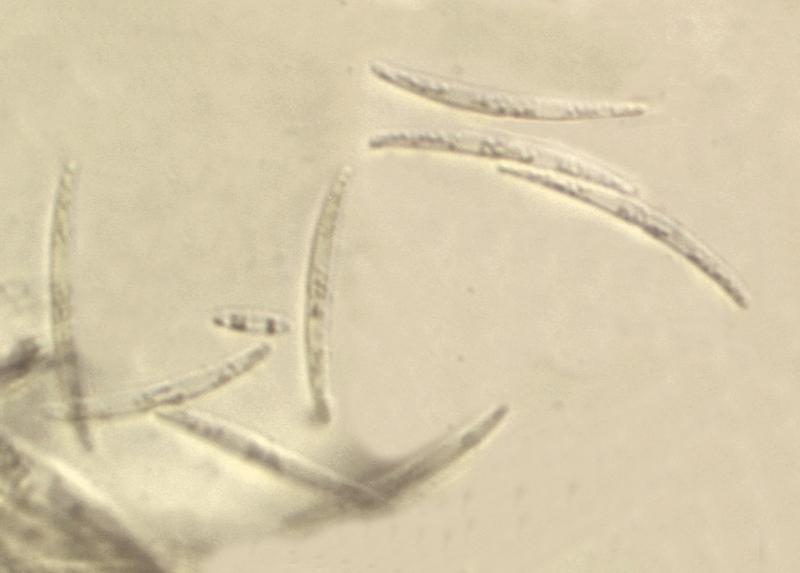
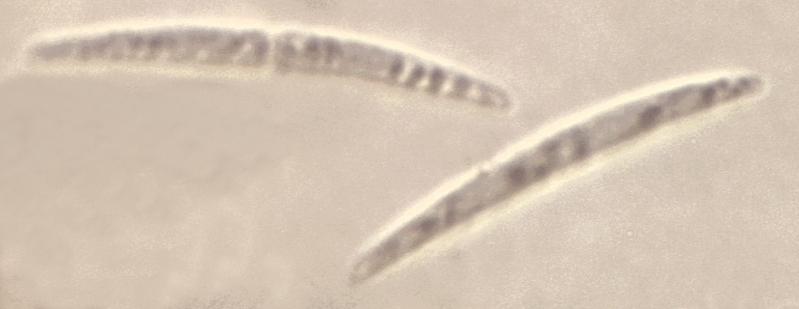
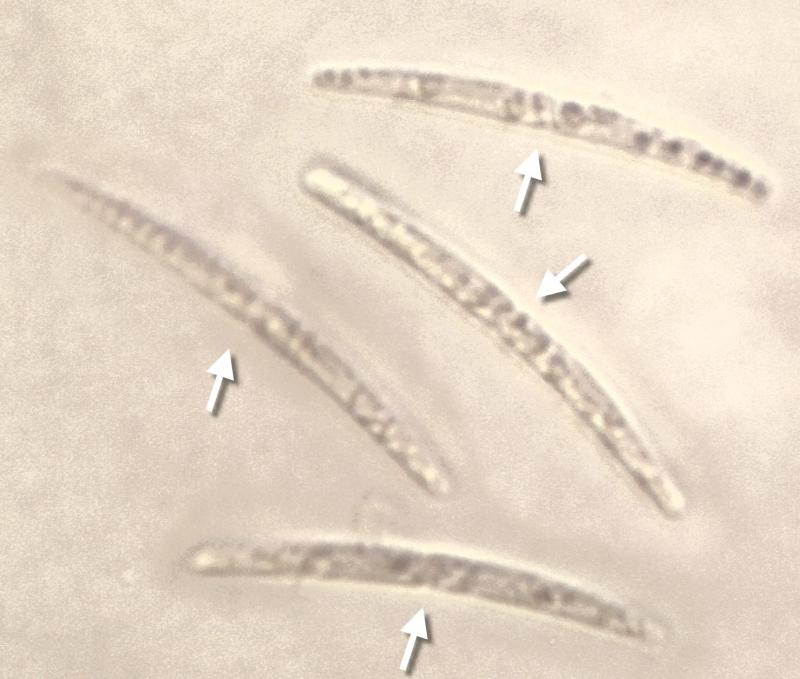
Non-stromatic, with a medium-length, centrally-positioned neck, occurring over the lower surfaces of the leaves, most obvious where appearing on the main vein. The main distinctive feature is the long, narrowly falcate ascospores -
22.3-26.7 x (2)2.2-2.6µm, fasciculate in the asci, and with an often difficult-to-observe central septum.
Reference to Barr (Mycol Mem. 7) produces only one species on Quercus with ascospore dimensions comparable with the current species - Pleuroceras lirellaeformis - but that genus has lateral beaks and the ascospores of that species are described as "broadest above, tapering to pointed base", whereas this fungus has symmetrically falcate spores.
any suggestions would be very welcome
amitiés
Chris