
11-05-2026 12:32
 Bernard CLESSE
Pourriez-vous m'aider à identifier cette héloti
13-05-2026 15:26
 François Freléchoux
Bonjour,Voici une récolte faite il y a quelques j
12-05-2026 15:41
 Nicolas VAN VOOREN
Dear Ascolovers, especially interested in Pezizale
13-05-2026 12:05
 Thierry Blondelle
Bonjour à tous,J'aimerais avoir confirmation de c
10-05-2026 23:17
 Andreas Gminder
Hello,today we found in a moist steep decidous for
28-04-2026 20:07
 Lothar Krieglsteiner
... on twig in the air at standing Ceratonia siliq
27-04-2026 20:52
Lothar Krieglsteiner
Found on hanging tiwg of Olea europaea in dried-ou
11-05-2026 20:22
Lothar Krieglsteiner
on attached twig of standing Ficus caricaquite uns
29-04-2026 10:44
Lothar Krieglsteiner
growing at moist, drying-out soil at the side of a
En Thapsia
Salvador Tello,
25-03-2013 19:36
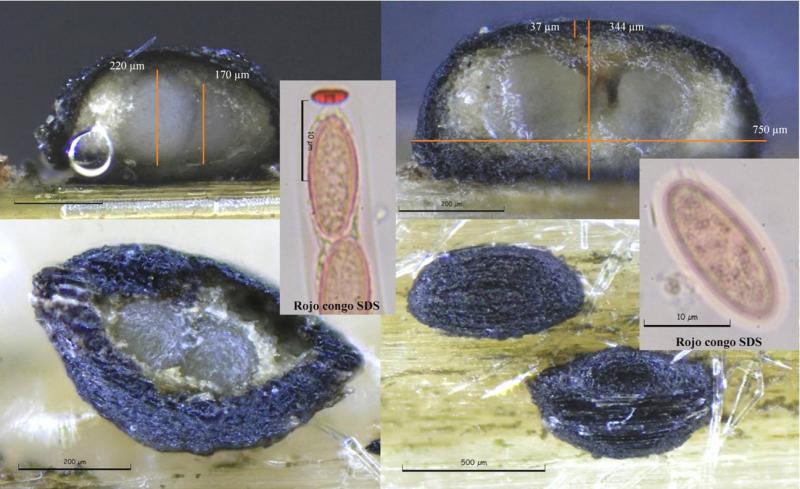
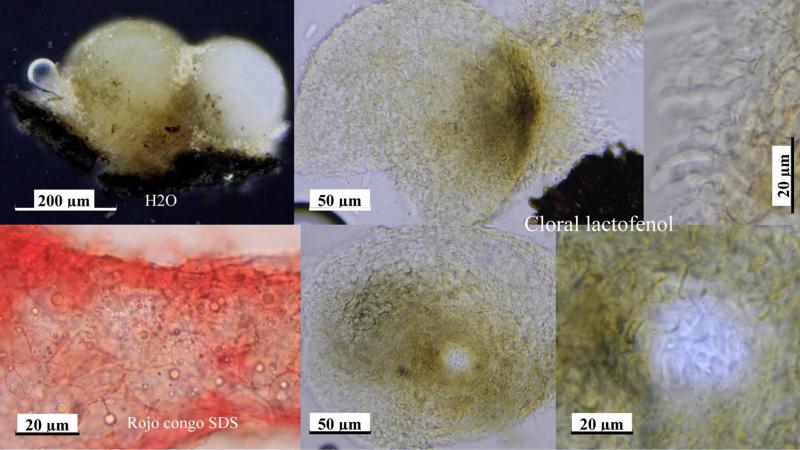
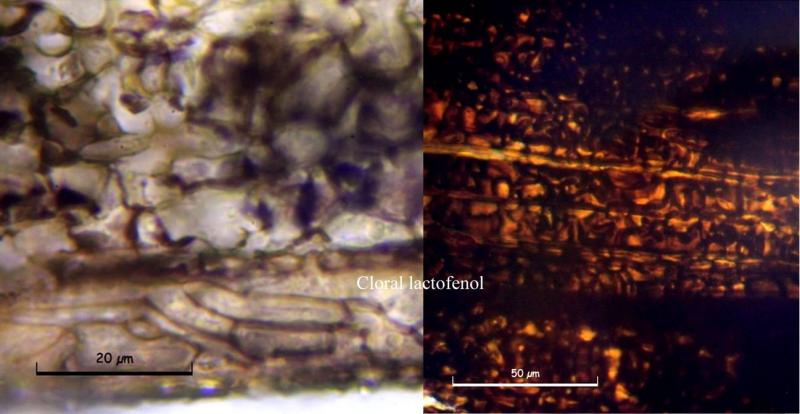
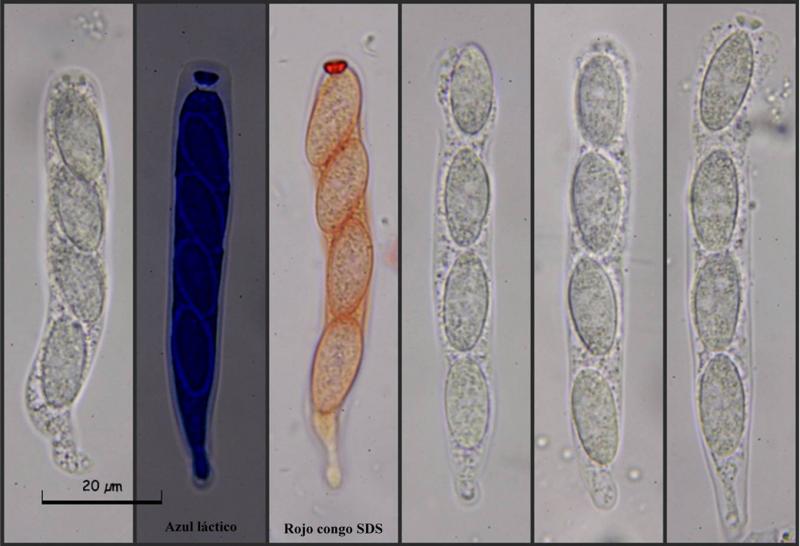
Este hongo crece en tallos secos de Thapsia villosa, mide (535,61) 598,90 - 708,04 (768,80) x (303,26) 320,20 - 362,18 (409,77) µm y y unas 350 µm de altura. Tiene una capa exterior oscura de unas 35 a 40 µm de grosor y en el interior alberga dos peritecios de entre160 a 280 µm de diámetro, que están llenos de ascas tetraspóricas de (61,06) 62,30 - 77,70 (87,79) x (9,34) 9,98 - 12,16 (12,79) µm, no amiloides, con un aparato apical que se tiñe fuertemente con rojo congo.
Las esporas miden (14,92) 15,40 - 18,02 (18,35) x (6,18) 6,71 - 7,40 (8,25) µm y están ornamentadas con un débil punteado, difícil de apreciar.
Las ascas, con el aparato apical que se tiñe con el rojo congo me recuerda a los Diaporthales, pero no tengo claves para tratar de identificarlo.
¿Alguien tiene claves para esto, o tiene alguna idea de cual puede ser este hongo?.
Muchas Gracias.
Saludos.
Salvador.
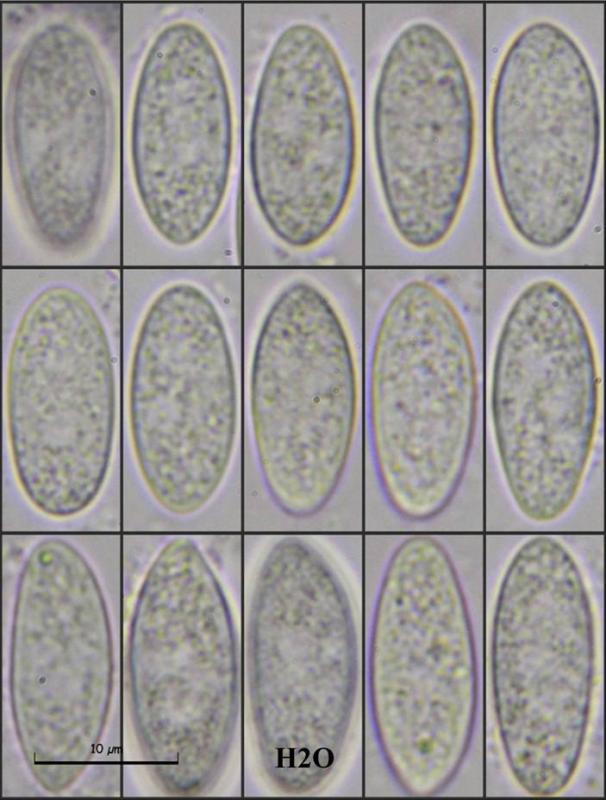
Raúl Tena Lahoz,
25-03-2013 20:09

Re : En Thapsia
Espera a más opiniones, pero los ascos recuerdan a Annulusmagnus triseptatus.
Saludos,
Raúl
Saludos,
Raúl
Salvador Tello,
25-03-2013 20:34
Re : En Thapsia
Si, solo que con 4 esporas, sin septos y no vive bajo el agua.
Gracias Raúl, sigo esperando.
Saludos.
Salvador.
Gracias Raúl, sigo esperando.
Saludos.
Salvador.
Björn Wergen,
25-03-2013 22:10

Re : En Thapsia
Hi,
I cannot read spanish well but do you recognized a thin sheath around the spores?
However, I always think about a member of Wuestneia when I am looking at the pictures.
regards,
björn
I cannot read spanish well but do you recognized a thin sheath around the spores?
However, I always think about a member of Wuestneia when I am looking at the pictures.
regards,
björn
Salvador Tello,
25-03-2013 23:31
Re : En Thapsia
Hola björn.
Gracias por tu respuesta y por tu esfuerzo en entender mi idioma.
Yo no he visto que las esporas tengan una funda delgada alrededor. Miraré la opción que me das.
Gracias.
Saludos.
Salvador.
Gracias por tu respuesta y por tu esfuerzo en entender mi idioma.
Yo no he visto que las esporas tengan una funda delgada alrededor. Miraré la opción que me das.
Gracias.
Saludos.
Salvador.
Jaklitsch Walter,
26-03-2013 14:56
Re : En Thapsia
shortly a few words:
Diaporthales: I agree
The sclerotial/clypeate stroma is typical of Mazzantia, but I do not know any species which matches this one.
Other similar genera: Diaporthopsis, Clypeoporthella: C. kriegeriana has the same spore size, but has 8-spored asci and occurs on Lysimachia.
Similar spores have other genera, too; including Wuestneia, ..., but they differ in stroma features.
I think that either the fungus is somewhere hidden in old literature or it is new.
Regards, Walter
Diaporthales: I agree
The sclerotial/clypeate stroma is typical of Mazzantia, but I do not know any species which matches this one.
Other similar genera: Diaporthopsis, Clypeoporthella: C. kriegeriana has the same spore size, but has 8-spored asci and occurs on Lysimachia.
Similar spores have other genera, too; including Wuestneia, ..., but they differ in stroma features.
I think that either the fungus is somewhere hidden in old literature or it is new.
Regards, Walter
Salvador Tello,
26-03-2013 22:25
Re : En Thapsia
Gracias Walter.
Buscaré por Mazzantia y estudiaré el hongo lo mejor que pueda.
Saludos.
Salvador.
Buscaré por Mazzantia y estudiaré el hongo lo mejor que pueda.
Saludos.
Salvador.