22-04-2026 20:54
 Enrique Rubio
Hi to everybody.This Pyrenopeziza grew in moist le
24-04-2026 03:16
 David Chapados
Found while looking at something else from wood in
22-04-2026 01:06
 Richard VALERI
Bonjour à tous.Je vous présente cette Nectria s.
22-04-2026 20:17
 Marian Jagers
Is anyone familiar with the Hyphomycetes genus Pse

Protoventuria andromedae
Nina Filippova,
12-03-2013 20:38
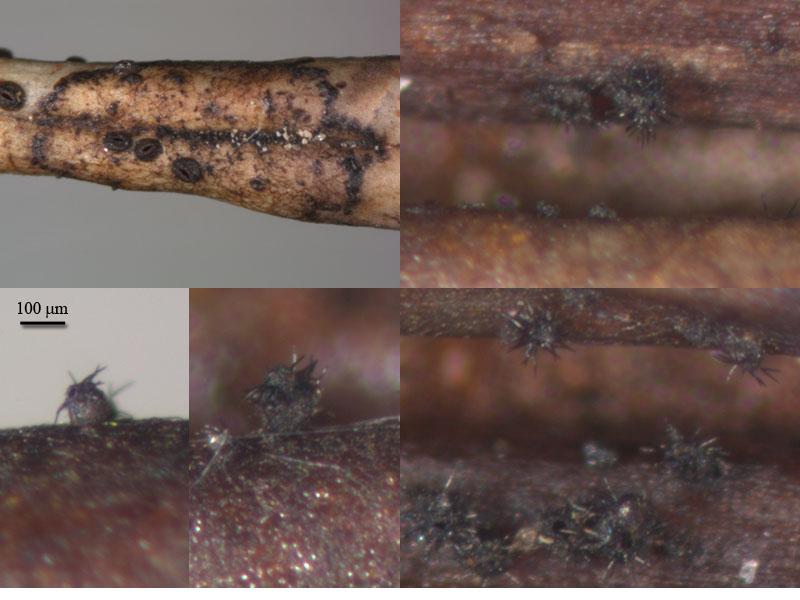
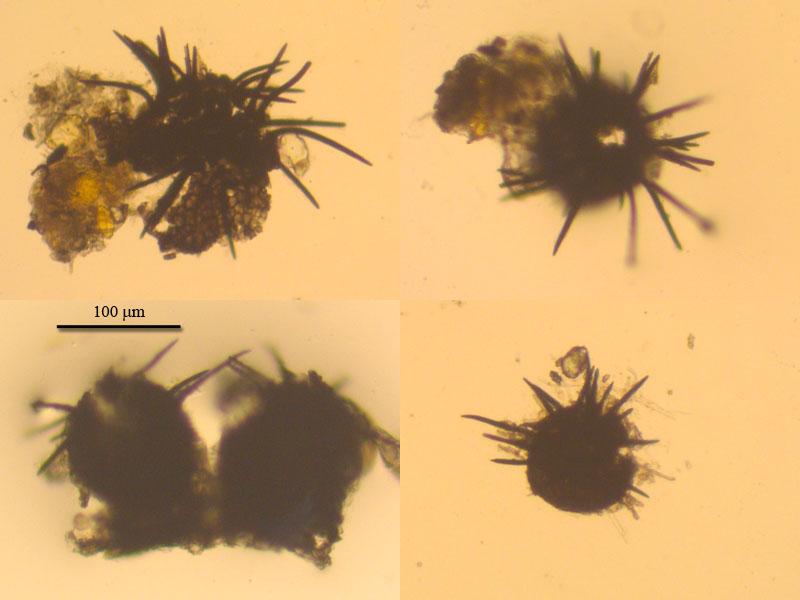
Perithecia spherical, superficial, in circular groups (with dark underlying layer) or scattered at the leaf surface; about 150 mk in diameter, without prominent tip, upper part covered by many setes.
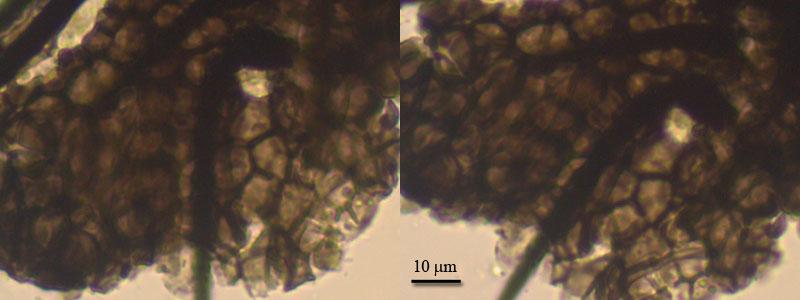
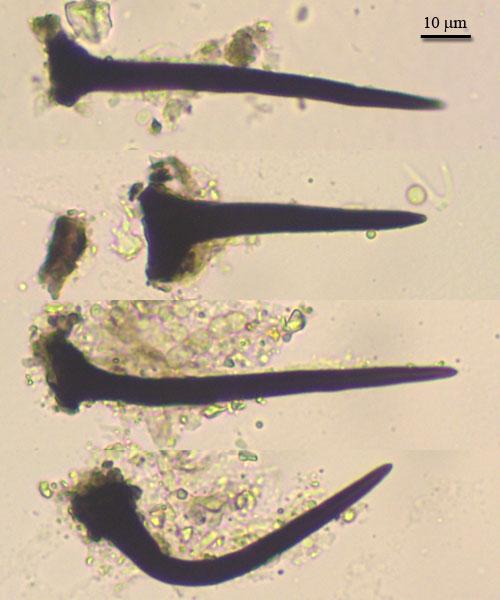
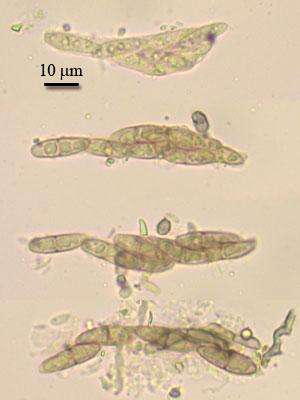
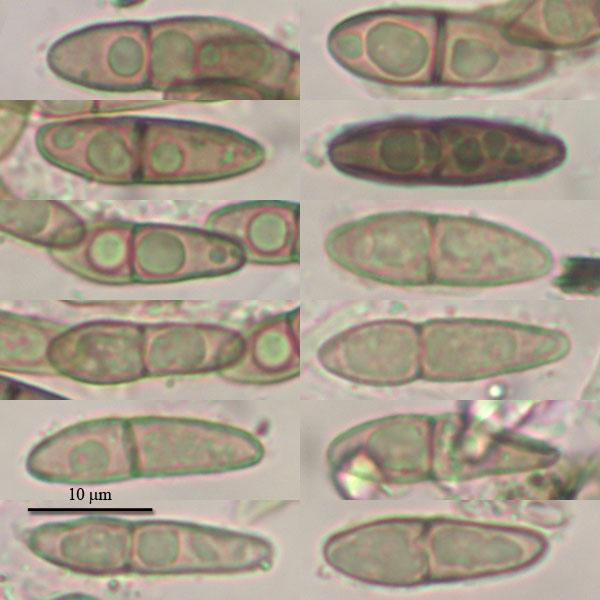
Longest perisetes up to 100 mk long, simple, 10 mk broad at base, slightly curved at base or straight; excipulum from angular brown cells, near 10 in diameter; asci rarely observed (overmature specimen), about 50 x 10; spores 2-celled, brown, cells equal or upper cell shorter, guttulate, 18,7 (16-21) x 5,6 (4,9-6,4) (N=16, spores overgrown and larger then normal probably).