

05-05-2026 22:40
Gernot FriebesHi,I believe this is a Plagiostoma growing on a Sa
06-05-2026 11:25
 Castillo Joseba
Me mandan el material seco de Galicia (España) re
06-05-2026 17:23
Thomas Læssøehttps://svampe.databasen.org/observations/10594257
28-04-2026 20:07
 Lothar Krieglsteiner
... on twig in the air at standing Ceratonia siliq
04-05-2026 18:13
 Stephen Martin Mifsud
ID request for what seems to be a true aquatic fun
04-05-2026 16:39
Stephen Martin Mifsud
ID request: This specimen was collected in Malta o
28-07-2011 18:31
 Alex Akulov
Dear FriendsToday I made the pdf file of Velenovsk
04-05-2026 09:50
Castillo Joseba
Me mandan el material seco de Galicia,(España) re
Helotiaceous fungus on male cones of Pinus radiata
Enrique Rubio,
04-03-2013 17:41
 Hi to all
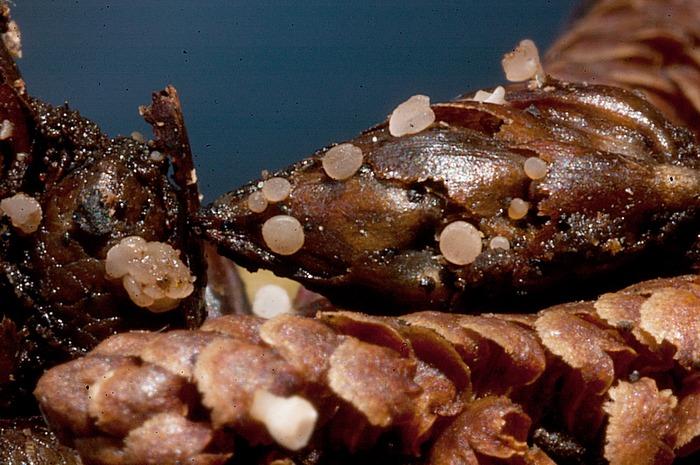
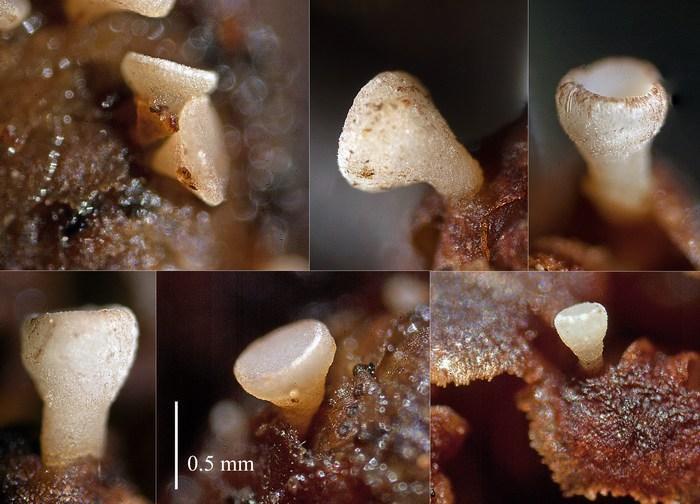
Last week-end we have collected these small, gregarious, pale witish or amber (when old), subturbinate or shortly stipitate up to 1mm high and 0.7 mm broad ascomata growing on male cones of Pinus radiata lying on the wet ground. It seems to have any blackened stromatized zones at their insertion on the host.
The hymenium is never convex but it is plane to slightly concave.
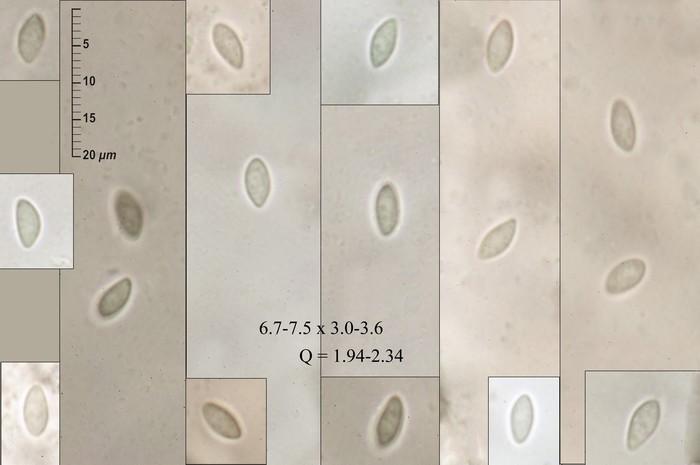
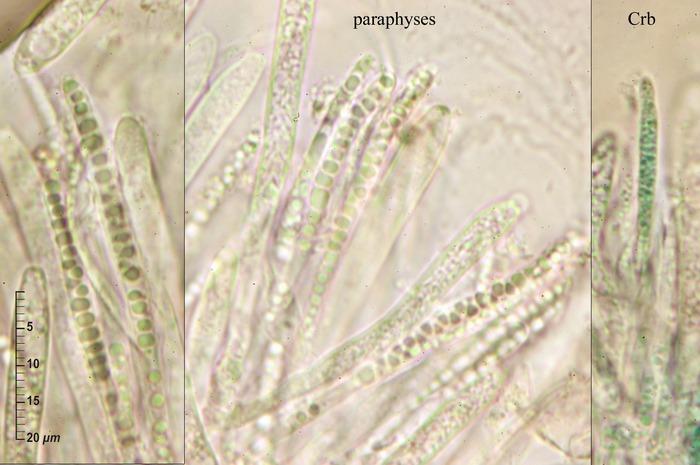
The ascospores are smooth, broadly fusiform and they seem to have 1 nucleus.
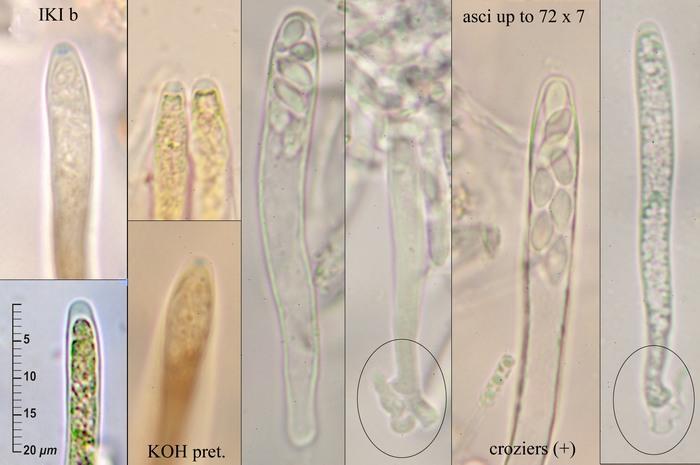
Asci with croziers, 8-spored, with an apical apparatus weakly euamyloid, very difficult to observe and I don't know their type (Sclerotinia-type, Hymenoscyphus-type?) .. Living paraphyses with many rounded Vb's, hyaline to yellowish.
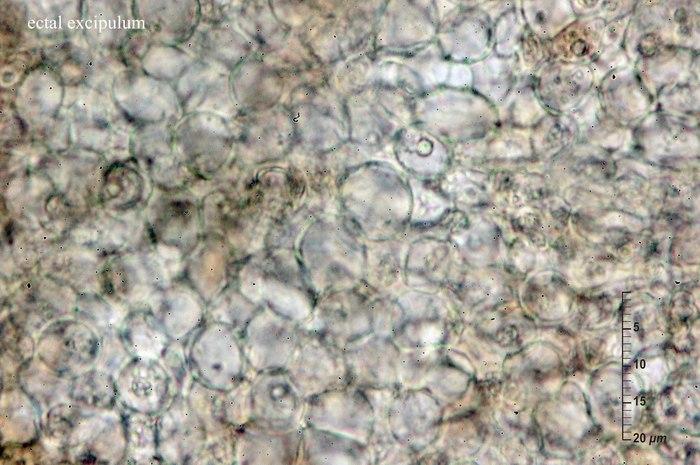
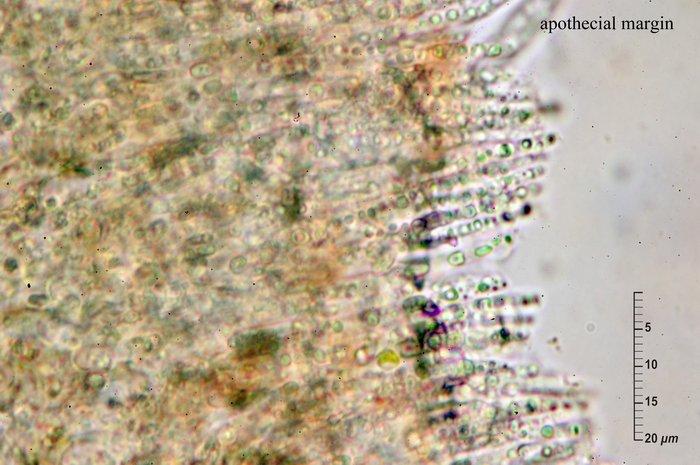
Ectal excipulum is built by roundish to vesicular cells in a tetura globulosa-subangularis. No hairs in the apothecial margin; only cilyndrical to subclabvate elements with the same Vb's.
I think perhaps this fungus belongs to the Sclerotiniaceae or Helotiaceae. I'm not sure...
Many thanks for help me
Enrique
Raúl Tena Lahoz,
04-03-2013 17:54

Re : Helotiaceous fungus on male cones of Pinus radiata
RRRRAVA/RAVUSsALUDOS
Enrique Rubio,
04-03-2013 17:55
Re : Helotiaceous fungus on male cones of Pinus radiata
¿Coomoorrr?
Enrique Rubio,
04-03-2013 18:15
Re : Helotiaceous fungus on male cones of Pinus radiata
Creo adivinar lo que has dicho: Hymenoscyphus ravus ¿verdad?
Michel Hairaud,
04-03-2013 18:42

Re : Helotiaceous fungus on male cones of Pinus radiata
Bonjour amis d'Espagne ,
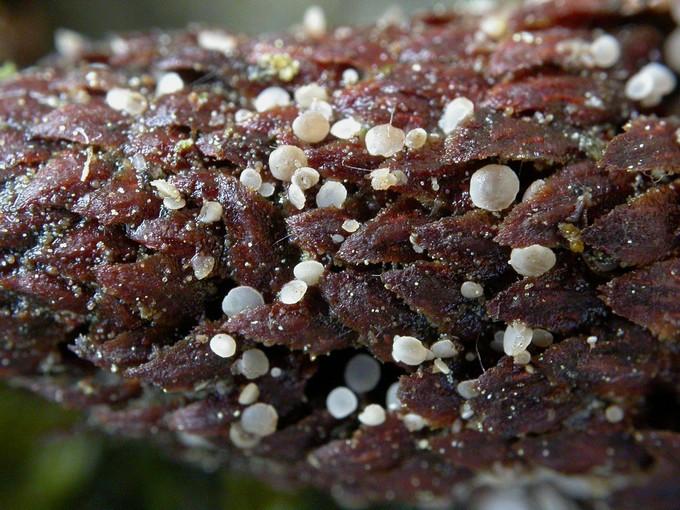
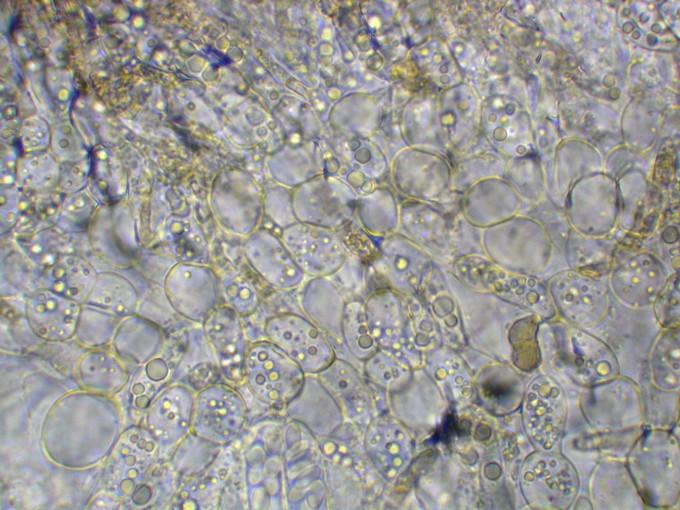
Yes Enrique, the EE is noticeable with the raher globose cells and cylindrical 1-2 septate protuberances with high vacuoles content . I also noticed it on Pinus needles with Desmazierella acicola and ond Cedrus buds (see attached pic) .
Au plaisir de se retrouver bientôt en Asturies
Michel
Yes Enrique, the EE is noticeable with the raher globose cells and cylindrical 1-2 septate protuberances with high vacuoles content . I also noticed it on Pinus needles with Desmazierella acicola and ond Cedrus buds (see attached pic) .
Au plaisir de se retrouver bientôt en Asturies
Michel
Enrique Rubio,
04-03-2013 18:48
Re : Helotiaceous fungus on male cones of Pinus radiata
OK., MIchel
J'avais tes belles photos de cette espéce.
A bientot a Somiedo
Enrique
J'avais tes belles photos de cette espéce.
A bientot a Somiedo
Enrique
Raúl Tena Lahoz,
04-03-2013 23:50
Re : Helotiaceous fungus on male cones of Pinus radiata
Perdón Enrique... mi móvil, no sé que pasaba pero no podía ver lo que estaba escribiendo. Sí me refería a Hymenoscyphus ravus.
Salut Michel!
Raúl
Salut Michel!
Raúl
Jean-Paul Priou,
06-03-2013 23:10

Re : Helotiaceous fungus on male cones of Pinus radiata
Hi all, H ravus is very common on dead bud of pinus pinaster during spring in my country more 20 collections.
Enrique was right to doubt between Sclerotiniaceae and Helotiacea, Svreck described this taxon on Hymenocyphus ravus and.........Ciboria rava !
Amitiés à tous
JPP
Enrique was right to doubt between Sclerotiniaceae and Helotiacea, Svreck described this taxon on Hymenocyphus ravus and.........Ciboria rava !
Amitiés à tous
JPP
Enrique Rubio,
07-03-2013 13:21
Re : Helotiaceous fungus on male cones of Pinus radiata
Many thanks Jean Paul. You are right because I was thinking in a Ciboria species.
Amicalement
Enrique
Amicalement
Enrique