
11-05-2026 12:32
 Bernard CLESSE
Pourriez-vous m'aider à identifier cette héloti
13-05-2026 15:26
 François Freléchoux
Bonjour,Voici une récolte faite il y a quelques j
12-05-2026 15:41
 Nicolas VAN VOOREN
Dear Ascolovers, especially interested in Pezizale
13-05-2026 12:05
 Thierry Blondelle
Bonjour à tous,J'aimerais avoir confirmation de c
10-05-2026 23:17
 Andreas Gminder
Hello,today we found in a moist steep decidous for
28-04-2026 20:07
 Lothar Krieglsteiner
... on twig in the air at standing Ceratonia siliq
27-04-2026 20:52
Lothar Krieglsteiner
Found on hanging tiwg of Olea europaea in dried-ou
11-05-2026 20:22
Lothar Krieglsteiner
on attached twig of standing Ficus caricaquite uns
29-04-2026 10:44
Lothar Krieglsteiner
growing at moist, drying-out soil at the side of a
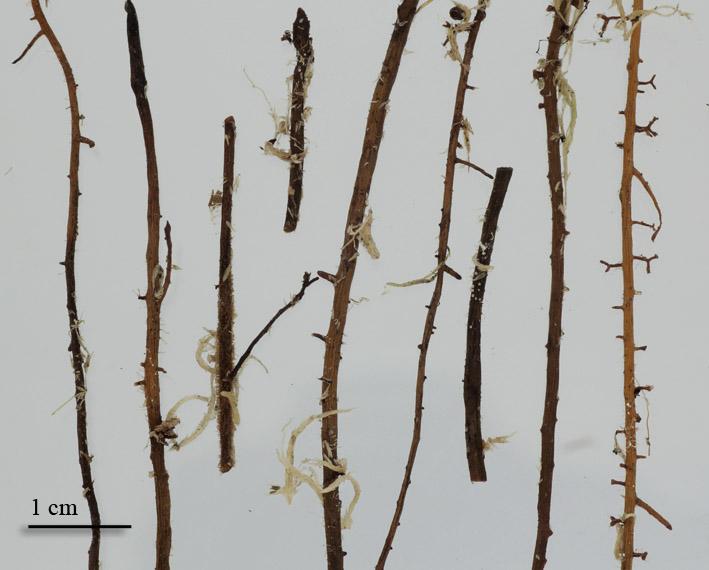
It was collected twice in bog, from roots and stolons of Rubus chamaemorus (from roots of unknown plant in origial description), 19.08.2009 (only pictures), 24.06.2012 (studied specimen), N61,054422° E69,456725°.
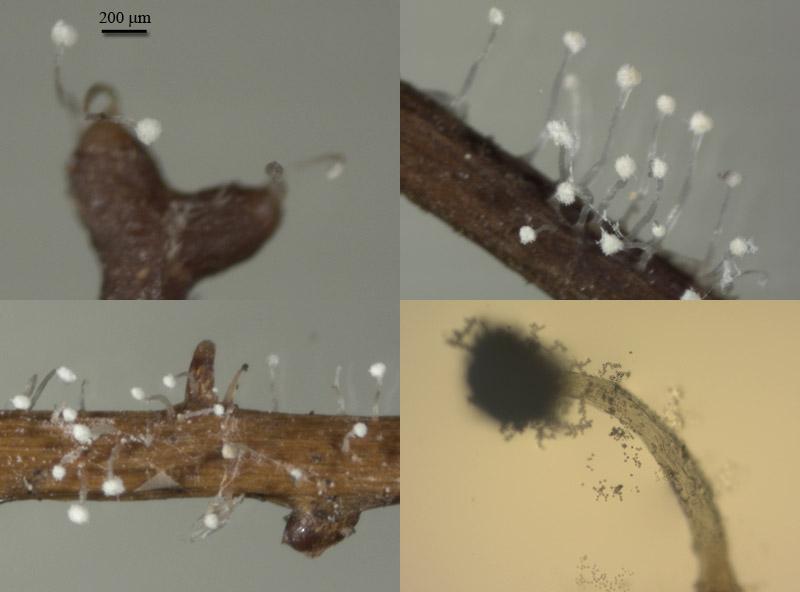
Frb capitate, from hyaline filiform stem and pure white spherical capitula (mazaedium), growing in clusters or scattered, up to 1,5 mm high, head about 200 mk in diam, stem to 80 mk thick.
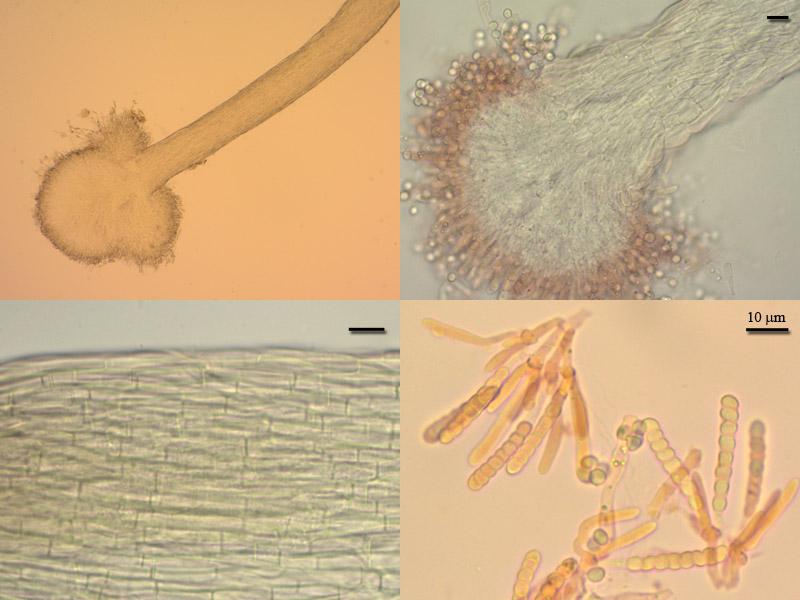
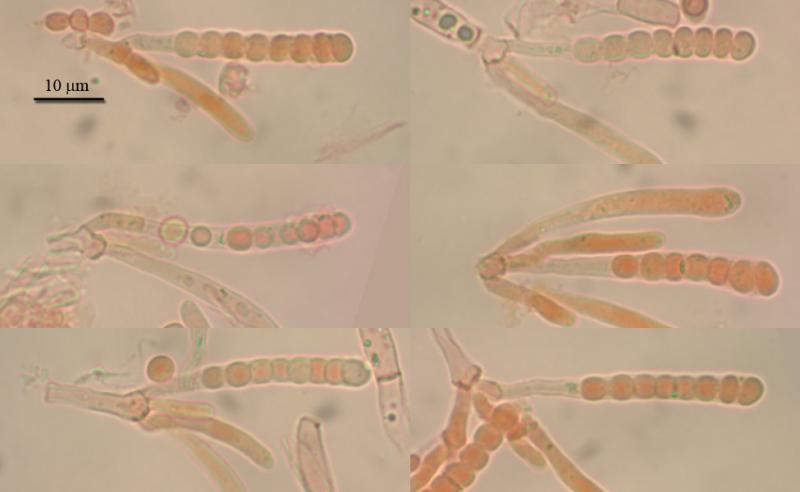
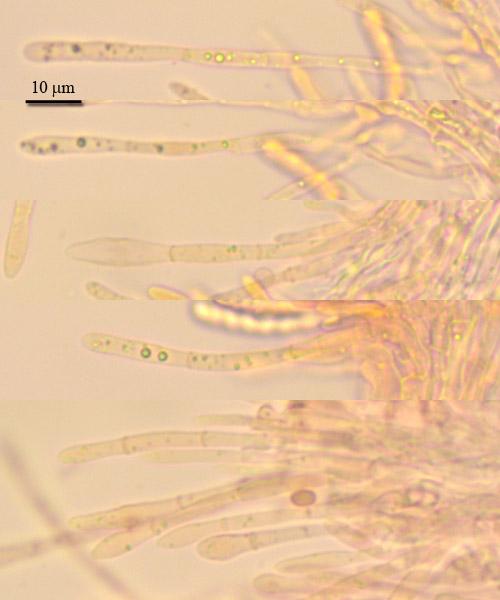
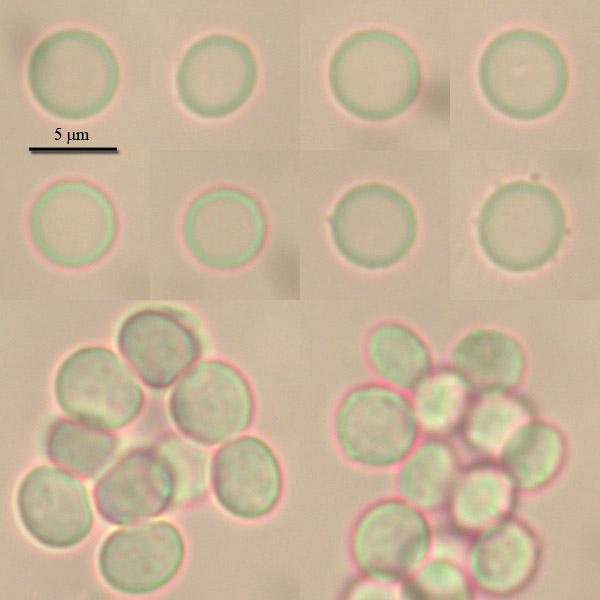
Stem from textura porrecta, hyaline or yellowish at the base in some specimens; hyphae at base about 5 broad, cells on average 50 mk long, becoming some shorter and thinner in upper part; upper part of stem crowned with hymenium without other structures, some short paraphysoid elements may be present (seen when hymenium washed away); asci cylindrical, clampless, inamyloid, with thin wall (some moniliform from protruding spores), 33-44 x 4-5,2; paraphyses cylindrical or with clavate end segment, segmented, slightly to highly exceeding the hymenium, with several round oil guttules (not torquose), 47-74 x 3-4,4; spores globose (lenticular?) 4,7 (4,1-5,1) (N=25, in tapped mount).

Zotto

Peter
--of course a theory. I somewhere read that Roesleria even belongs in the Helotiaceae, but cannot find that. However, a BLAST in GenBank actually suggests a helotialean relationship.
Zotto
Nobody is perfect. Auch unser hochgeschätzter Zotto nicht ;-)
Gruß Peter
ich denke die Familie Roesleriaceae macht Sinn, und sie scheint in den Helotiales zu stehen. Was in der Outline alles an unklaren Zugehörigkeiten steht, ist durchaus nicht alles so unklar. Die Autoren der Liste wissen es halt oft nicht genauer.
Zotto