14-04-2026 21:52
Gernot FriebesHi,found on dead leaves of Carex elata. Conidia: 4
14-04-2026 20:31
Gernot FriebesHi,can this be Psilachnum lateritioalbum on Phragm
14-04-2026 05:32
Ethan CrensonHi all, A few weeks back a friend pointed out som
12-04-2026 17:56
 Hardware Tony
Found on dead stems in February earlier this year
12-04-2026 15:52
Gernot FriebesHi,I'm looking for help with this anamorph collect
12-04-2026 12:22
 William Slosse
In a dune grassland in Oostduinkerke (Belgium), on
11-04-2026 15:45
 Zuzana Sochorová (Egertová)
Please, could anyone send me this paper?Moyne G.,
11-04-2026 13:34
Artem PtukhaHello, I am seeking assistance with the identific

11-04-2026 10:19
 Michel Hairaud
Chers amis d'Ascofrance , voici une très bonne no
There are several other Lophodermium's from ericaceous hosts, which identification doesn't get clear results so far. They from leaves of Andromeda polifolia, Ledum palustre, Chamaedaphne calyculata and Oxycoccus palustris. I checked SMML db for the hosts, it showed next records: for Ledum (diff. species) Lophodermium maculare, L. orbiculare, L. sphaeroides; for Chamaedaphne - L. maculare, orbiculare; plus Minter (Fungi of Ukraine, Rhytismatales) reports for Andromeda polifolia - L. intermissum; for Ledum - L. sphaeroides.
I studied a monograph for the genus by Tehon (1935), but he omitted several of those substrate-selected species since the types difficult to study (intermissum, sphaerioides, as well as oxycocci are excluded from this monograph).
Following the key, then, all my specimens go to Lophodermina (hysterothecia subcuticular). Specimens collected from Ledum, Andromeda, and Oxycoccus leaves were identified as L. melaleucum. But spores in mine are shorter. I assume, all these specimens collected from different hosts are one species; but i noticed also differences in paraphyses shape in Ledum collections. The type description of L. intermissum (from Andromeda) also fits with these collections. L. orbiculare has larger spore size. Good description of L. sphaeroides i was not able to find.
Collection from Chamaedaphne goes to L. autumnalis (reported in monograph for Abies). Beside host, construction of labile also differ; but my specimens were underdeveloped and observations could not be done completely. It is clear that it is another species (with much larger spores and asci comparatively with previous), and it was collected only from Chamaedaphne.
The last specimen turned to be Coccomyces, and description of C. duplicarioides (Sherwood, 1980) matches it well (also from Andromeda host).
There they will be posted, for the case if someone may help/be interested in further processing. Probably, i am missing also recent related monographs. Fresh collecting will be help too, i think, as these were not always in full size and color.
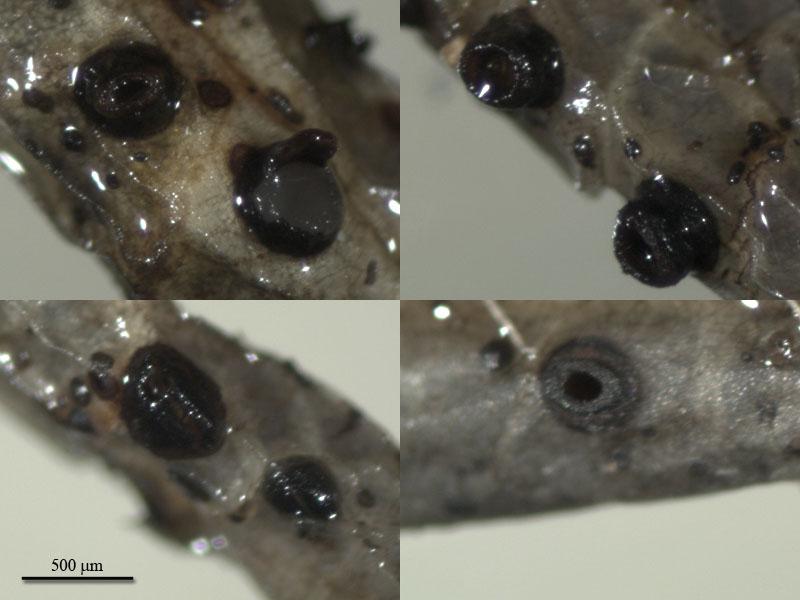
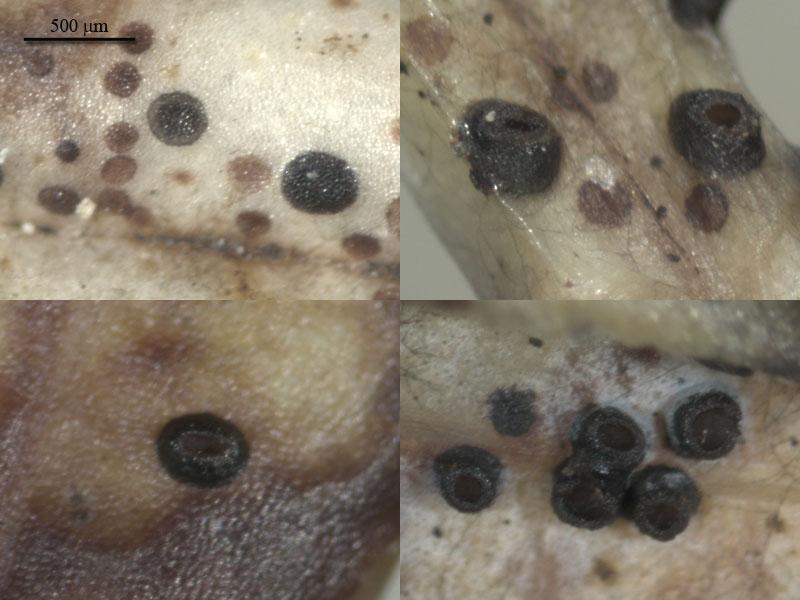
Lophodermium cf. melaleucum or intermissium
On upper and lower sides of dead leaves of Andromeda, Ledum, Oxycoccus.
Collection from Andromeda:
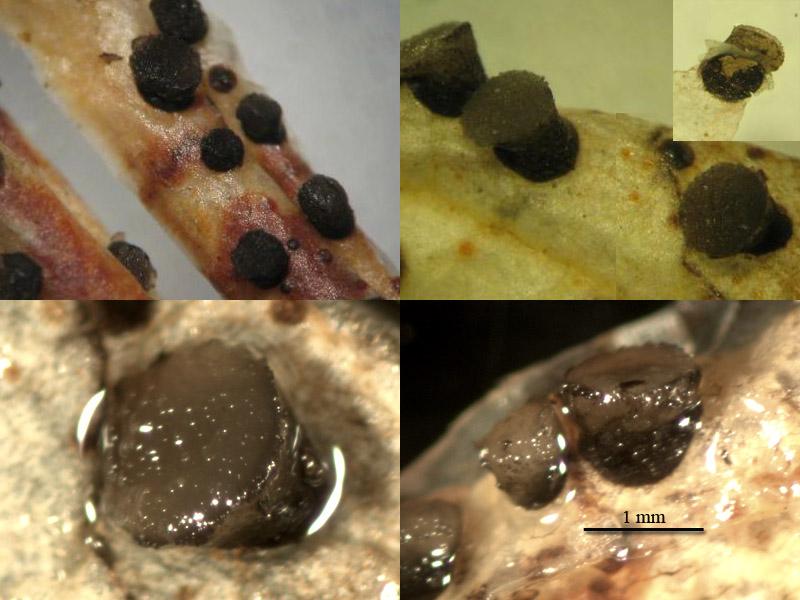
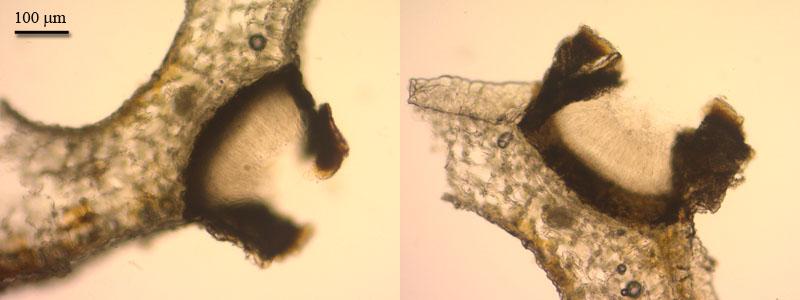
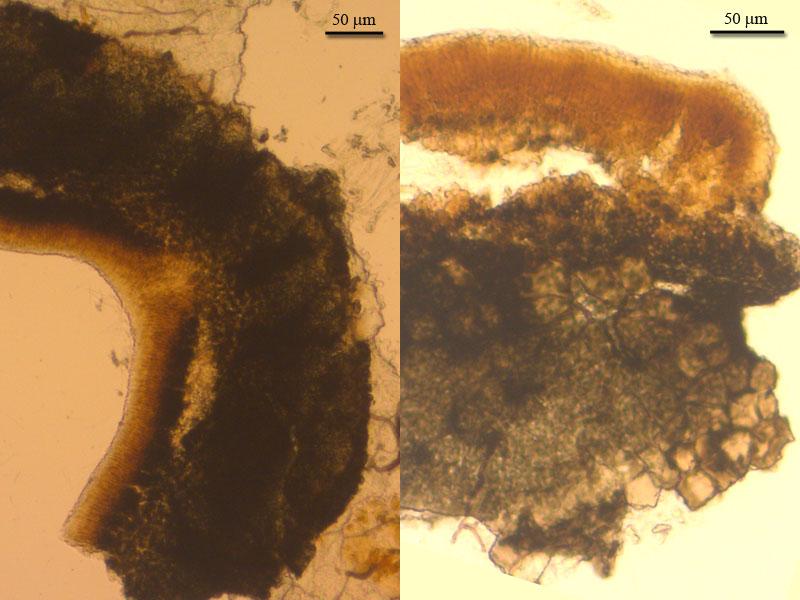
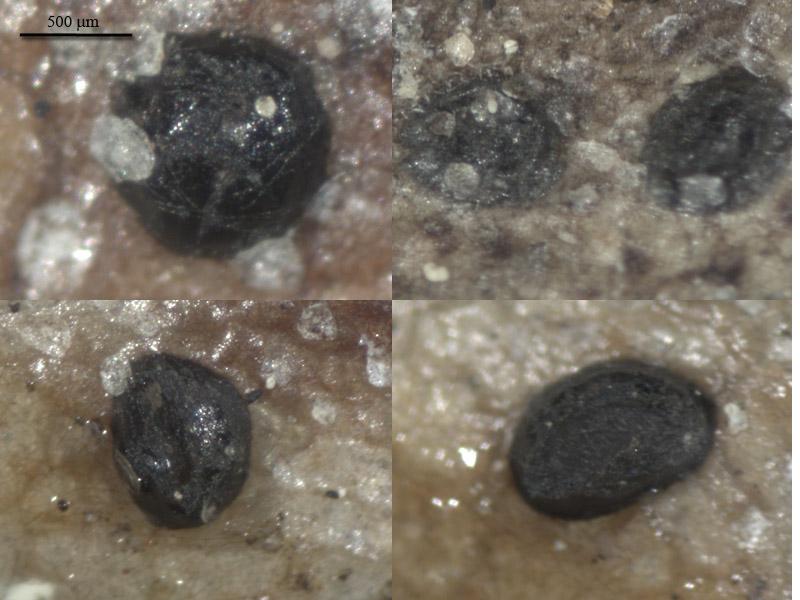
Hysterothecia ellipsoid to circular, up to 0,6 mm, subcuticular, margin elevated (up to 200 mk high), operculum ellipsoid to circular, edge with yellowish (or hyaline, probably underdeveloped), hymenium gray (once yellowish), outer surface black.
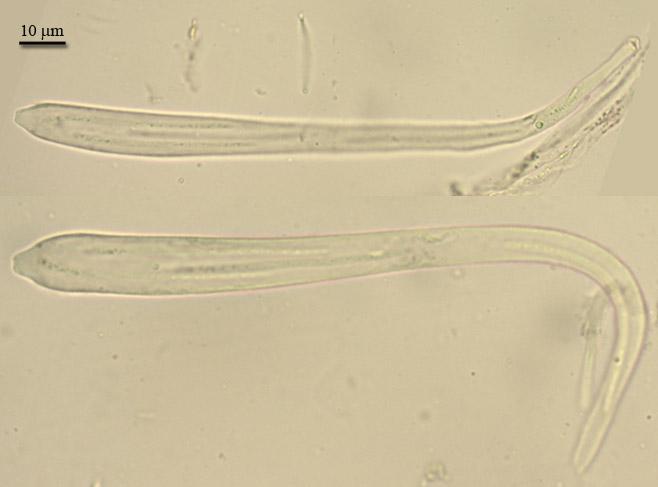
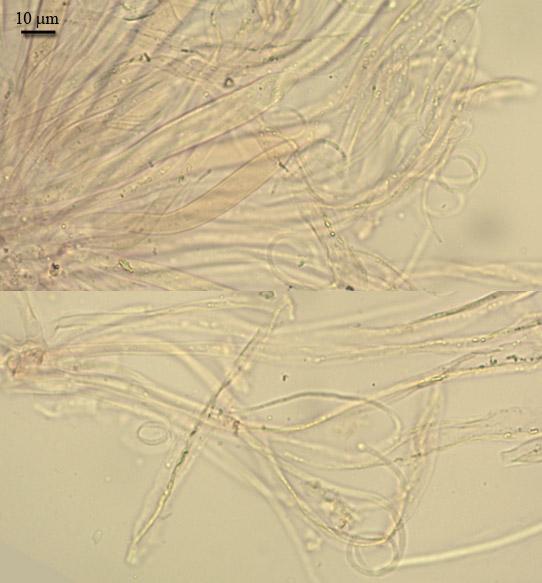
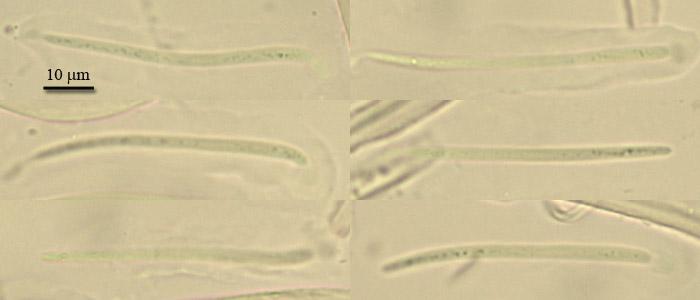
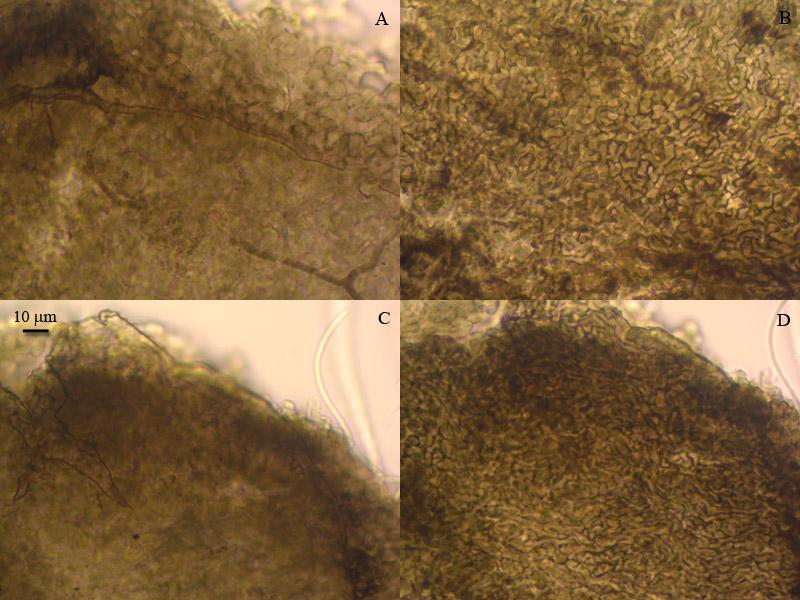
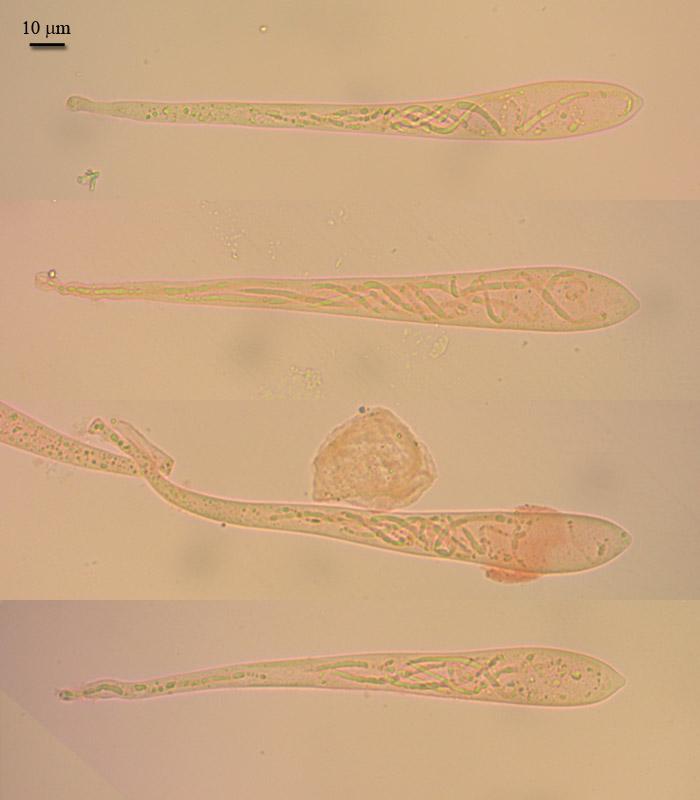
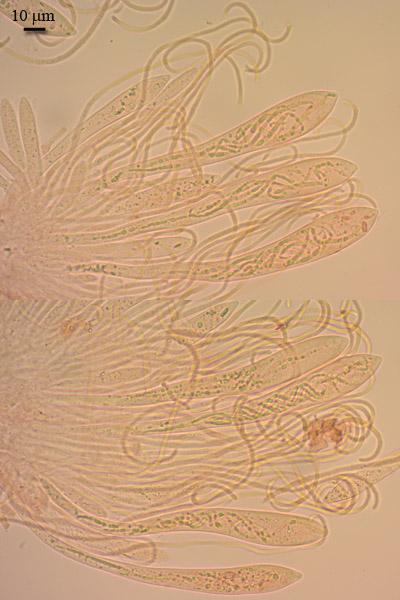
Flanks from textura epidermoidea; pallisade layer well developed, light yellowish-brown, from prismatic arranged in columns cells (glued together), up to 5-6 cells in each column (30 x 5 mk); asci clavate, clamped, inamyloid, 79-88 x 6,4-10,2; paraphyses filiform, larger at base (2,5), about 1,5 mk otherwise, with many small guttules, circinate at upper part; spores needle-shaped, 24 (21,5-26) x 1,3 (1,1-1,5) (N=12).
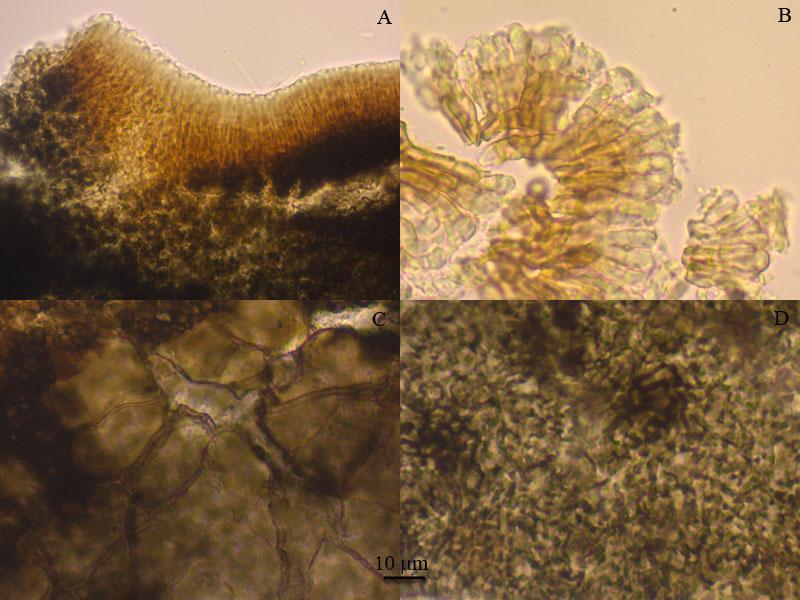
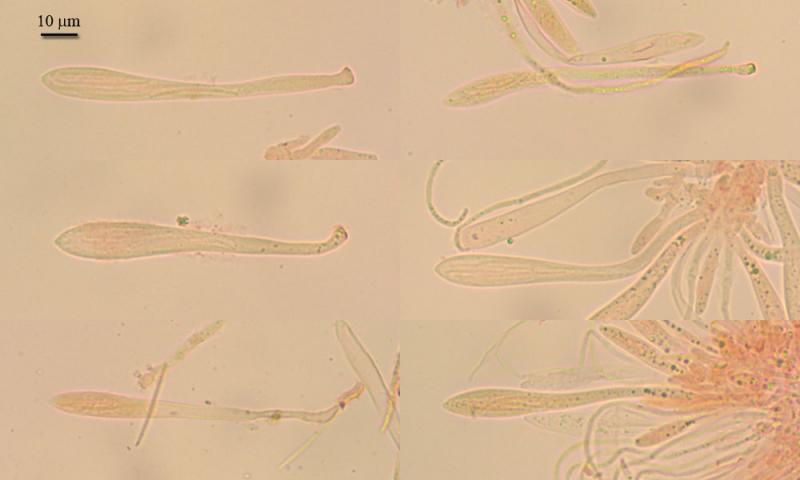
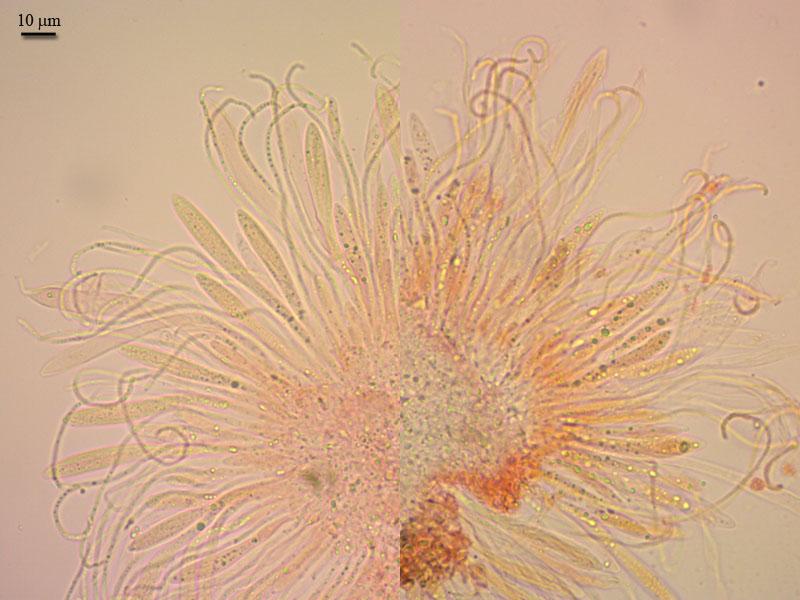
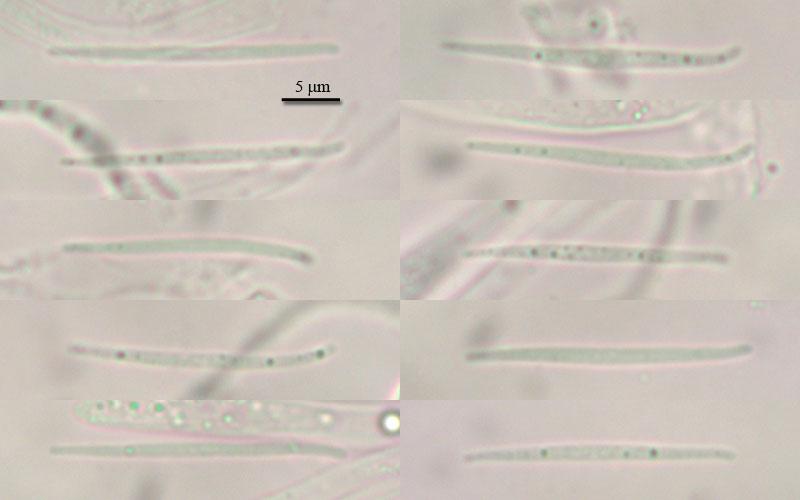
On upper and lower sides of dead leaves of Chamaedaphne calyculata.
Hysterothecia circular to ellipsoid, 0,5 (1 mm) in diam or by long axis, subcuticular, concave, splitting longitudinally or radially with 3-4 lobes, flanks black, edge of labile the same color (obviously the specimens underdeveloped, though asci with spores present).
Flanks from textura epidermoidea, underlayed with thick layer of near globose cells; palisade layer of labile not depeloped, edge made from the same cells of inner tissue; excipulum at base of receptacle from textura porrecta/epidermoidea, radially arranged; asci 157-182 x 13,5-20, clavate, with conical tip and in some pronounced pore site, inamyloid, clamped; paraphyses filiform, circinate in upper part, 2 mk broad; spores needle-shaped, stright, 73-92 x 2-2,5 (N=6), apparently larger since those measured were forced to release and may be underdeveloped.?
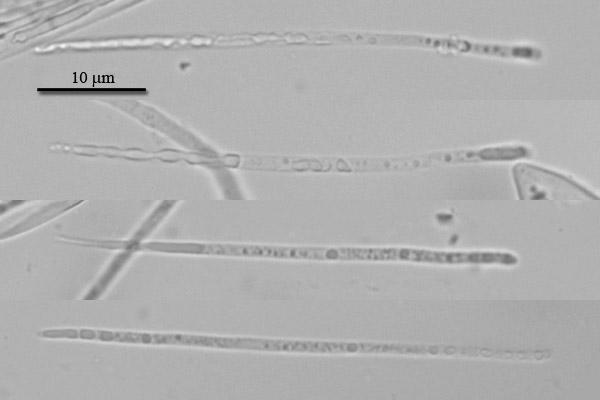
On upper side of dead leaves of Andromeda polifolia, fruiting in late summer, was observed once in wet bog hollow. Only in pictures (collection specimen absent).
Hysterothecia circular, to 1,5 mm in diam, subcuticular, elevated under the surface (to 0,8 mm high) to become cylindrical or expanded in upper part, side surface black to grayish, edge weak dentate, hymenium surface gray.
Excipulum not stdied; asci clavate, long-stalked, with conical tip and pronounced pore site, about 190 x 15; paraphyses filifor, circinate, up to 3 mk broad; spores needle-shaped, with obtuse and acute ends, embedded in thick gelatinose sheath, about 56 x 3.?