
03-05-2026 10:57
 Castillo Joseba
Me mandan el material seco de Galicia (España) re
02-05-2026 12:42
Alain BRISSARDBonjour à tousJeuidi 30 avril dernier on m'a remi
02-05-2026 13:06
Pauline. PennaBonjour Please can someone help me with this id
01-05-2026 22:45
 Thierry Blondelle
Bonjour à tous, Une récolte sur bouse séchée d
28-04-2026 20:07
 Lothar Krieglsteiner
... on twig in the air at standing Ceratonia siliq
14-04-2026 05:32
Ethan CrensonHi all, A few weeks back a friend pointed out som
28-04-2026 20:33
Vitus SchäfftleinHello, I found Trochila ilicina on Ilex aquifoliu
30-04-2026 10:28
Rot BojanHello, by appearance I would say that I am dealing
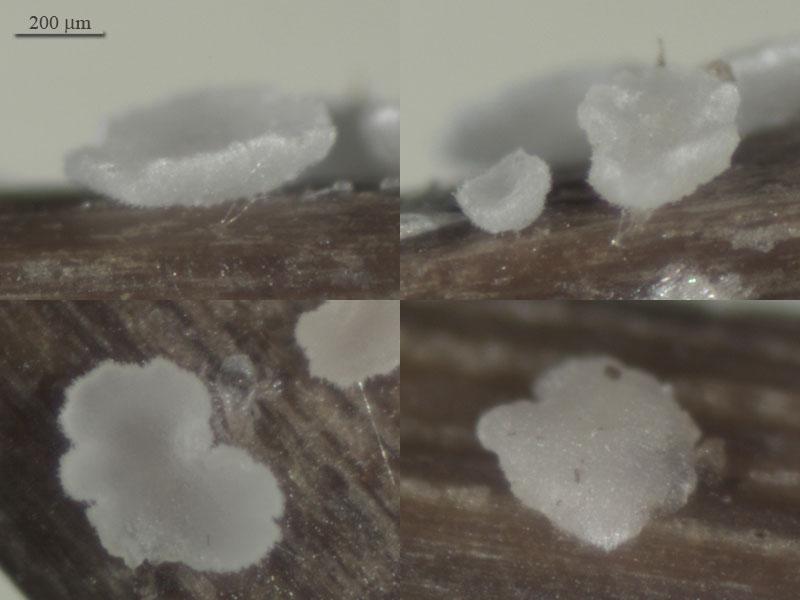
Apothecia discoid, sessile, 200-600 mk, whitish, circular to irregular with wavy edge when old, hymenium convex to concave when old, outer surface and edge covered by small hairs (pubescent).
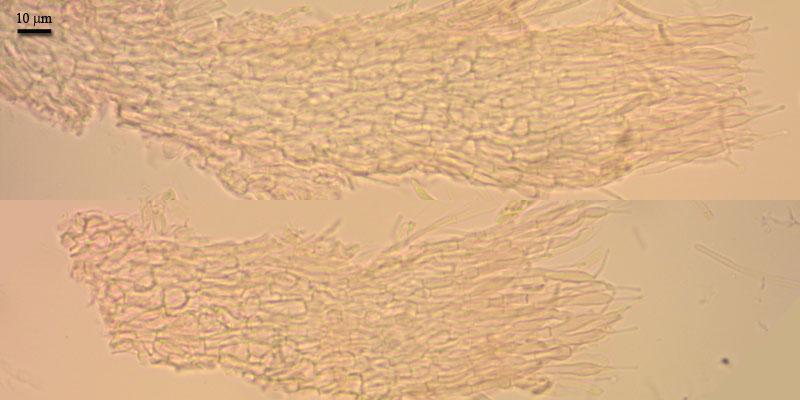
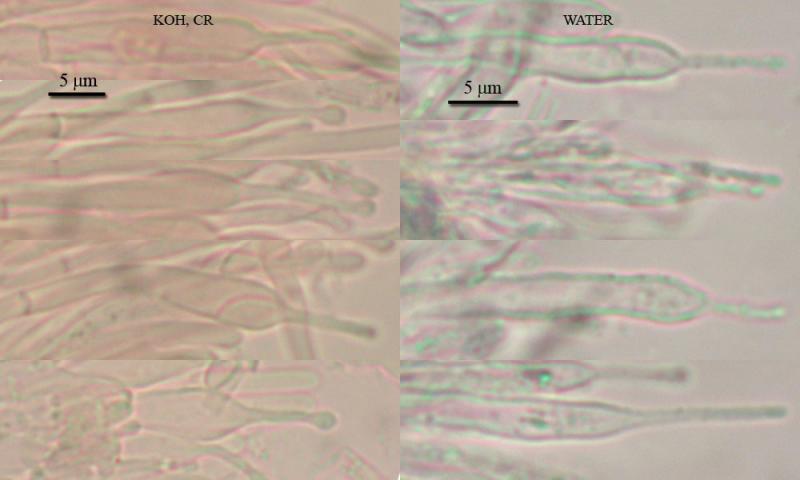
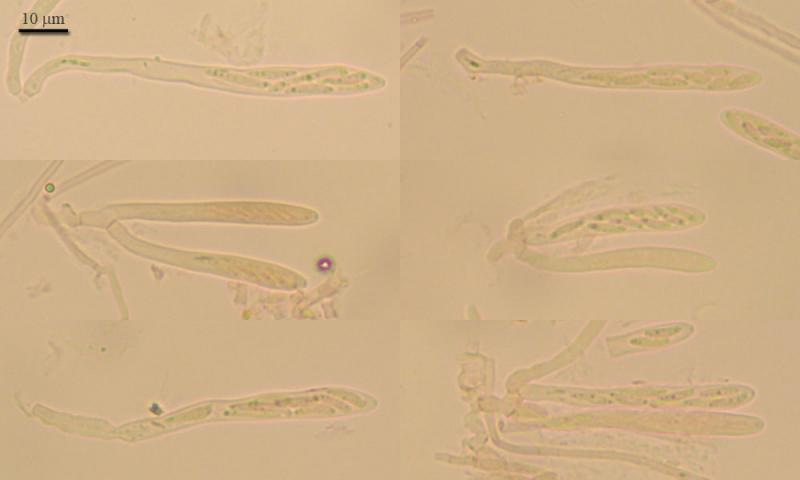
Excipulum from textura prismatica, cells quite thick-walled, about 10 x 5 mk in the middle of receptacle, shorter to the edge; hairs lageniform, with cylindrical base narrowing abtuptly to filiform upper part, tips in some slightly tibiiform, 19-28 (lenght) x 3-5 (base) x 0,7-1,1 (top), with slight incrustation (in water), hairs densely cover the edge and scarsly at outer surface below; asci cylindrical, some enlarged to obtuse-conical tip, clampless, pore euamyloid, 54,5 (38-74) x 5,8 (5,3-6,6); paraphyses cylindrical, branched at base, 2-3 segmented in base part, 2 mk broad; spores narrow-elliptic, rarely 1-septate, 7,9 (7,2-8,7) x 1,8 (1,6-2,1) (Q=4,3; N=16).
N61,065408° E69,455652° (04.08.2012)
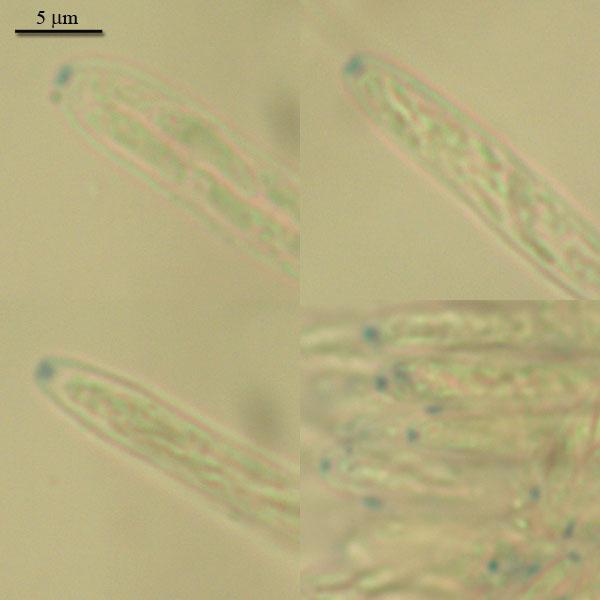
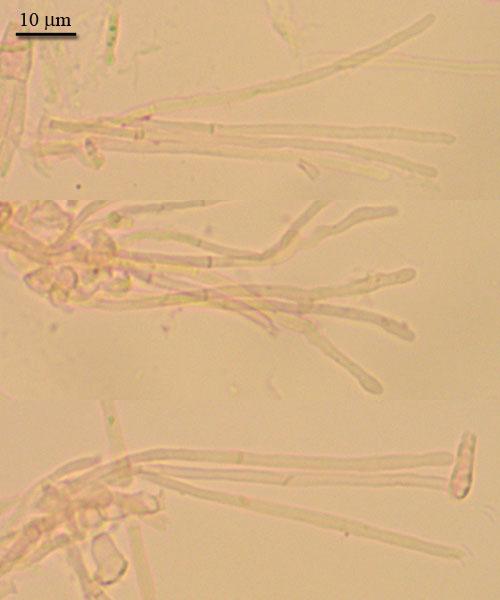
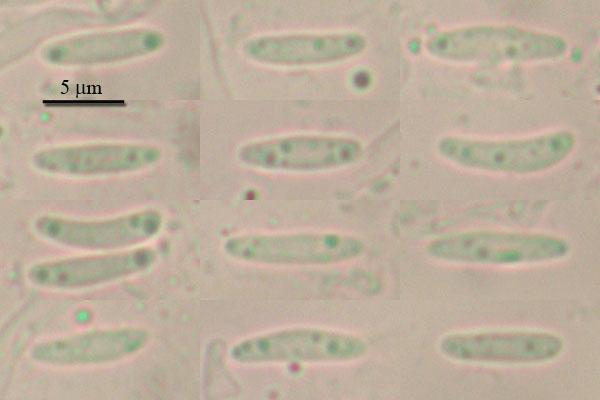

although I do not know this species, I fully agree. I know H. secalina var. secalina on Eriophorum: here are the asci with croziers, but the narrow spores and strongly lageniform hairs are the same.
Zotto