
11-05-2026 12:32
 Bernard CLESSE
Pourriez-vous m'aider à identifier cette héloti
13-05-2026 15:26
 François Freléchoux
Bonjour,Voici une récolte faite il y a quelques j
12-05-2026 15:41
 Nicolas VAN VOOREN
Dear Ascolovers, especially interested in Pezizale
13-05-2026 12:05
 Thierry Blondelle
Bonjour à tous,J'aimerais avoir confirmation de c
10-05-2026 23:17
 Andreas Gminder
Hello,today we found in a moist steep decidous for
28-04-2026 20:07
 Lothar Krieglsteiner
... on twig in the air at standing Ceratonia siliq
27-04-2026 20:52
Lothar Krieglsteiner
Found on hanging tiwg of Olea europaea in dried-ou
11-05-2026 20:22
Lothar Krieglsteiner
on attached twig of standing Ficus caricaquite uns
29-04-2026 10:44
Lothar Krieglsteiner
growing at moist, drying-out soil at the side of a
have collected some data to Gorgoniceps discussion there (http://www.ascofrance.com/search_forum/10583?).
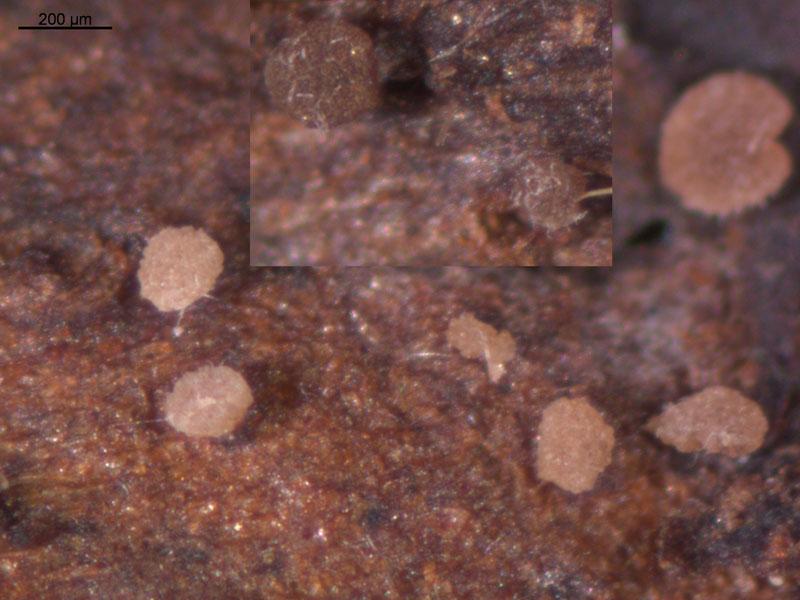
I have two specimens which could be named G. aridula and G. viridula by spore septation, but other characters not clear. There was not green pigment in tissues, no difference in spore and asci size. The substrate of my two specimens was different (pine bark and pine wood), but what i've named G. aridula was from bark, and G. viridula on wood. There was significant difference in color of exsiccata (dry apothecia), they were grayish color in a specimen from wood (named G. viridula) and much darker, reddish-brown in a sample from bark (though alive both were the same grayish color).
So, there are descriptions and pictures of them separately below:
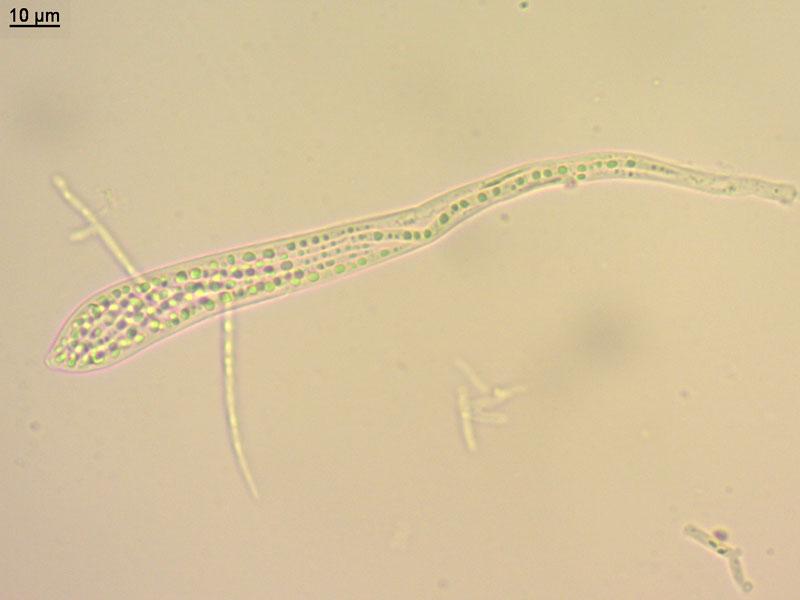
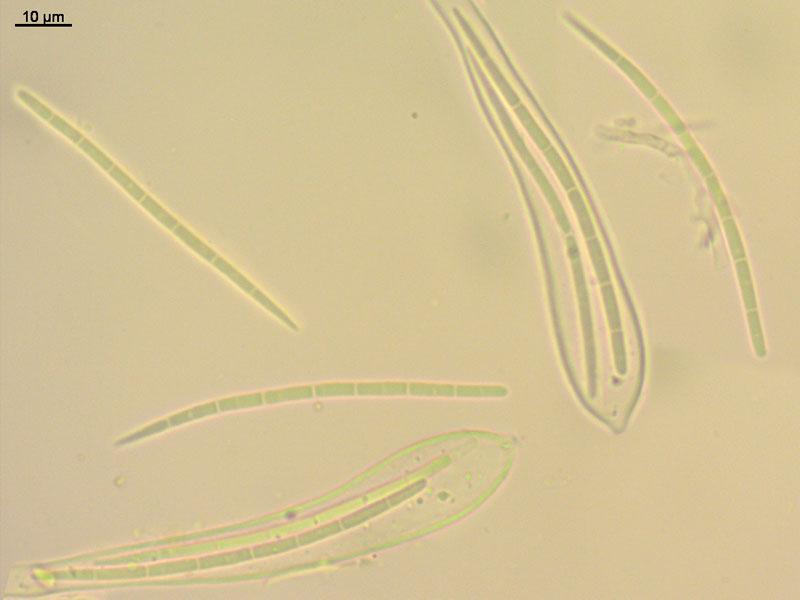
Gorgoniceps cf. viridula
Collected from pine wood (Pinus sylvestris) at bog, 07.09.2012, N61,066591° E69,457326°.
Apothecia 300-500 mk wide, 200 mk high, turbinate, gray, with outer surface the same gray or brownish in different specimens, hymenium minutely rough, with some adherent released spores (dry exsiccate light gray with slight green tinge).
Excipulum from textura porrecta, hyaline or dark brown in different specimens, hyphae thick-walled, 3-3,5 mk broad; asci clavate, clamped, 126,7 (113-152) x 13,4 (12,2-14,6), with amyloid pore; spores filiform, 7-septated, with acute base end and obtuse upper end, some with buds arising at both ends, 72,5 (65-82)x 2,4 (1,8-2,8) (20 stright spores, spore septation was checked in three apothecia).
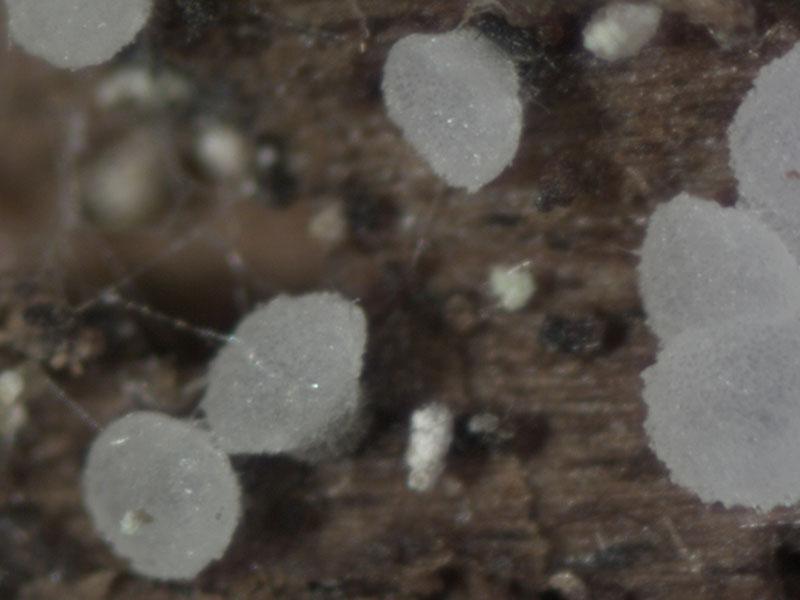
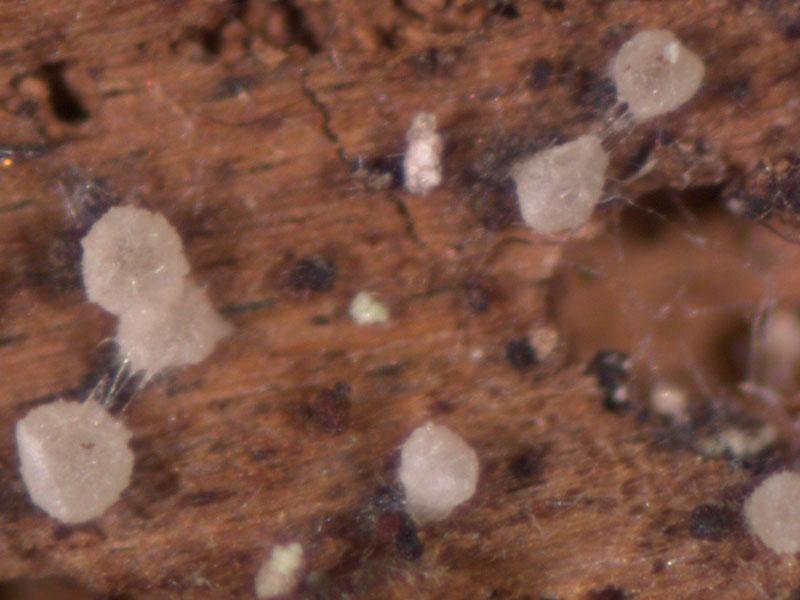
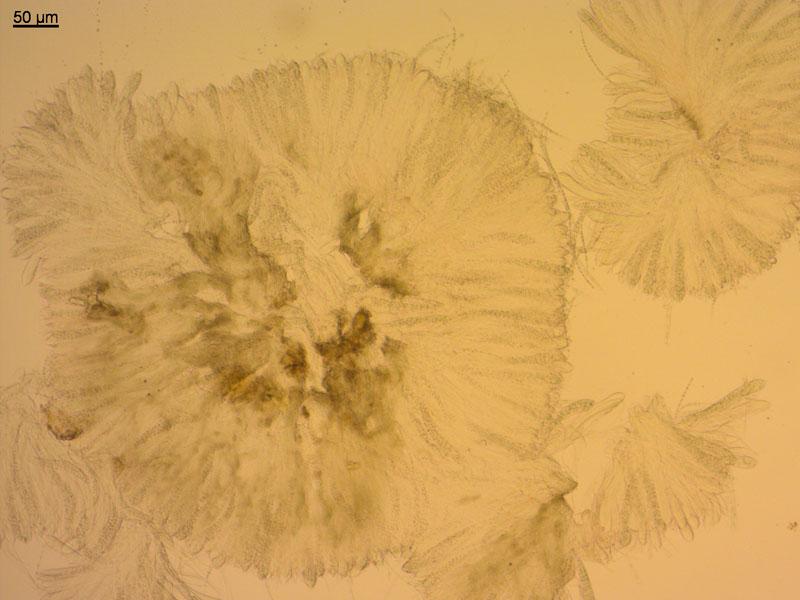
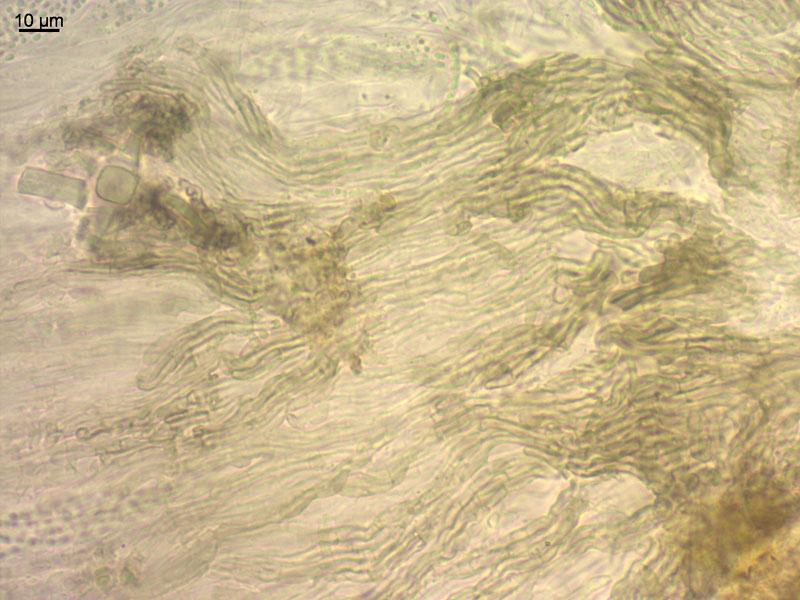
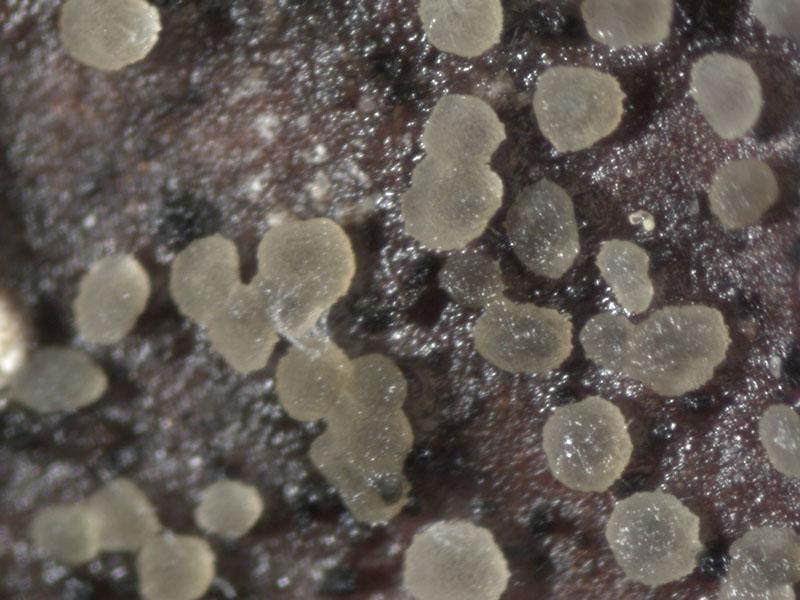
Collected from pine bark (Pinus sylvestris) at bog, 09.09.2012, N60,893086° E68,677082°.
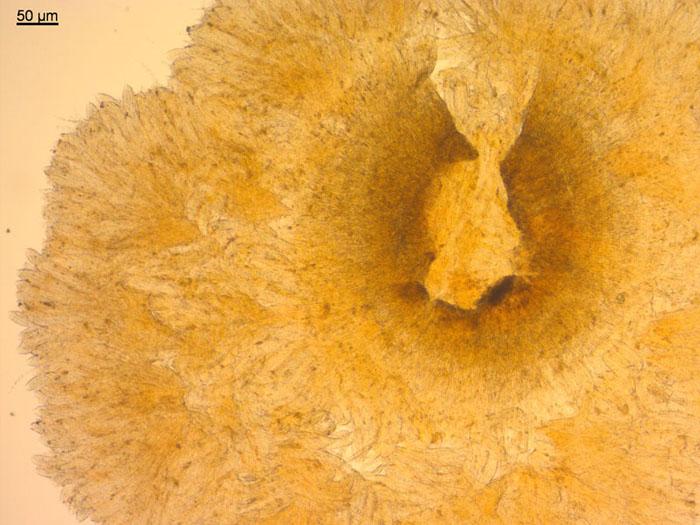
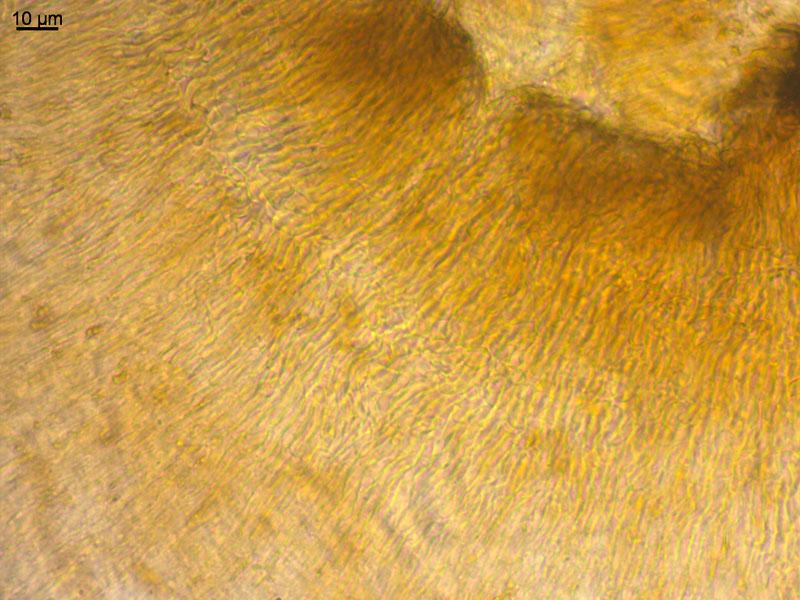
Apothecia 350-500 mk in diam, turbinate, pustulate, yellowish-gray when fresh, becoming orangish on drying (dry exsiccate orangish, to reddish-brown).
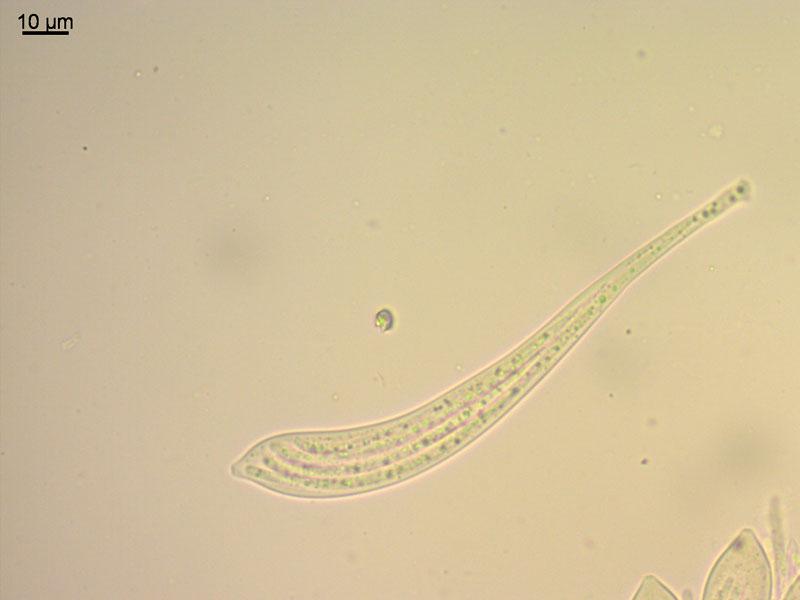
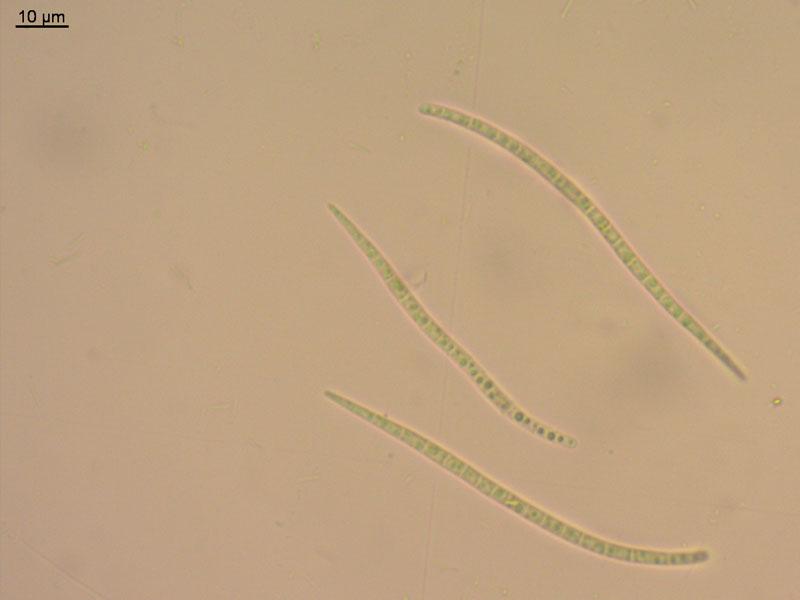
Excipulum from textura porrecta, brown at base, hyaline to margine, with yellow substance (KOH) somewhere in tissue, hyphae thick-walled, 2,5-3,5 mk broad; asci clavate, clamped, with amyloid pore, 130 (114-146) x 14 (11-15,6); spores filiform, spores filiform, many-septated, with acute base end and obtuse upper end, budding abundantly from all cells, 72 (61,1-82,4) x 2,7 (2,1-3,3) (20 stright spores, spore septation was checked in three apothecia); paraphyses the same length as asci, slightly enlarged to the tip, erregularly curved, branched.
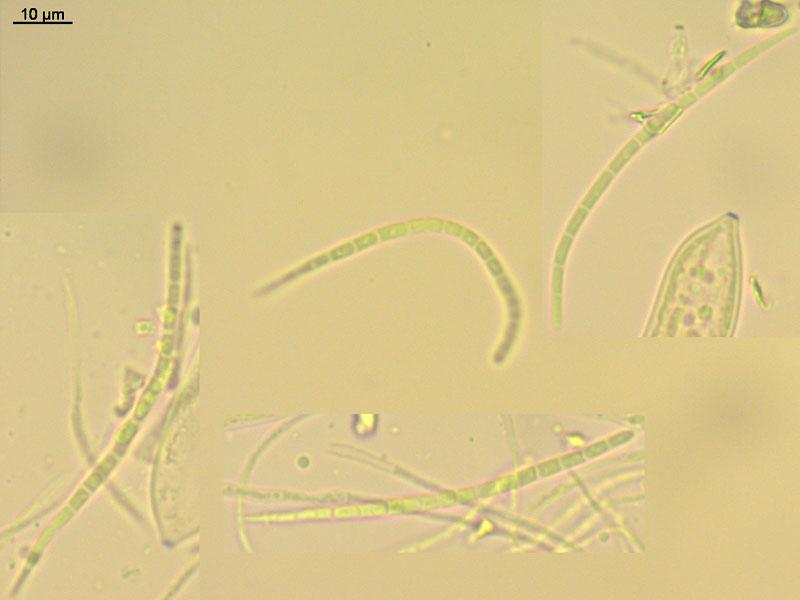

I hope once to see photos of living viridula, whether there are further differences to aridula.
Did you finde more than 7 septa for aridula in the literature?
Zotto
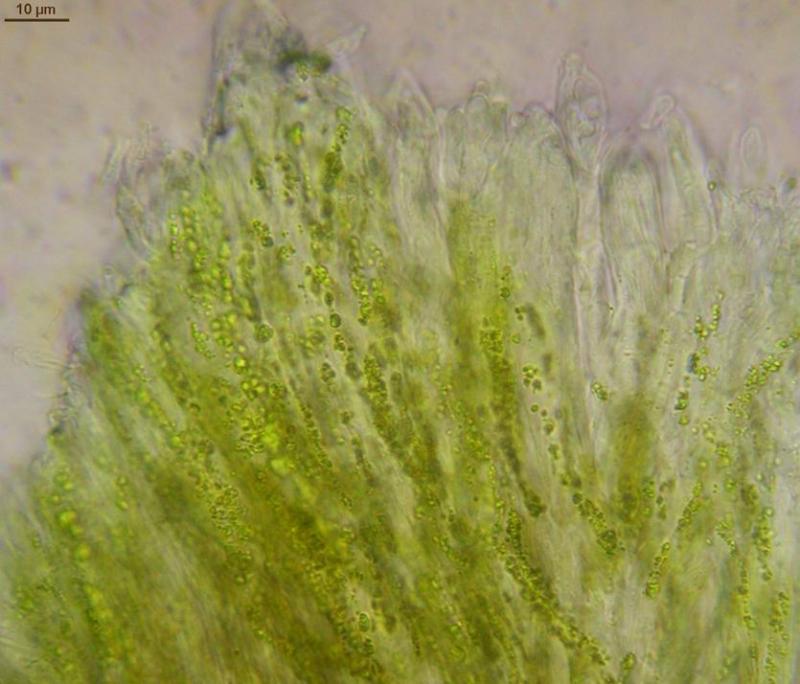
right, there are 13-17 septa (but occasionally 8). I read only the paper of Huhtinen, Iturriaga (1987) and they say "the spores of G. aridula are longer and consequently have more septa than occur in G. viridula".