
26-05-2026 22:44
Ethan CrensonHi all, I think I have Incrucipulum capitatum her
26-05-2026 21:25
Dirk GerstnerHello everyone, I'm completely stumped by this li
22-05-2026 14:44
 Lothar Krieglsteiner
in unripe condition citrine yellow, then soon fadi
25-05-2026 16:44
François BartholomeeusenHi forum members,During an excursion organised by
23-05-2026 11:44
 Charles Grapinet
Hello, I am having trouble identifying this copro
25-05-2026 16:35
 Bernard CLESSE
Bonjour à toutes et tous,J'ai trouvé récemment,
22-05-2026 13:29
Gernot FriebesHi,I am curious to hear your opinion on this mater
23-05-2026 18:57
Sylvie Le GoffBonjour à tousRécolté sur une branchette de Sal
22-05-2026 21:35
Steve ClementsBonjour, I expected this find on old wood on our
 Dear Friends,
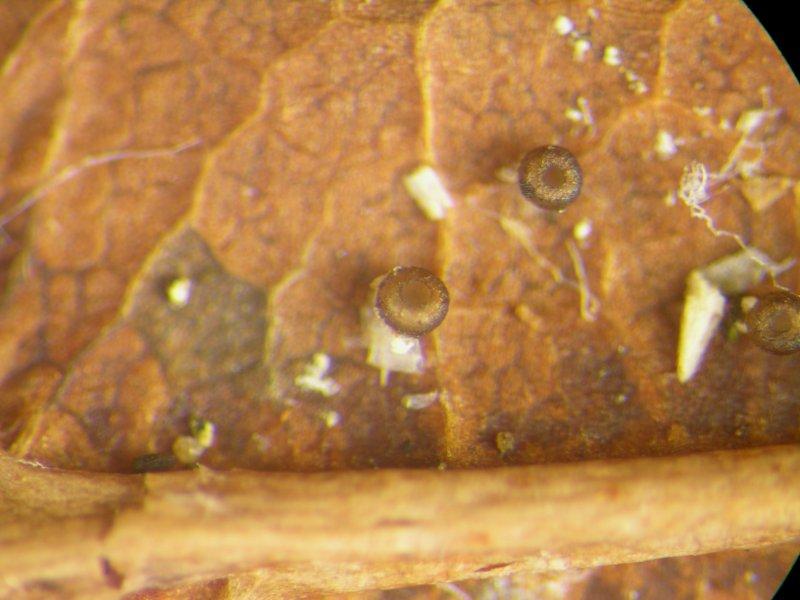
I am finding a discomycete inhabiting overwintered leaves of Spiraea alba in New Brunswick. It also occurs on leaves of Alnus incana in the same locality. I first saw it in April when it was immature, and now, on June 2 it has mature asci and ascospores. It is abundant and easily found.
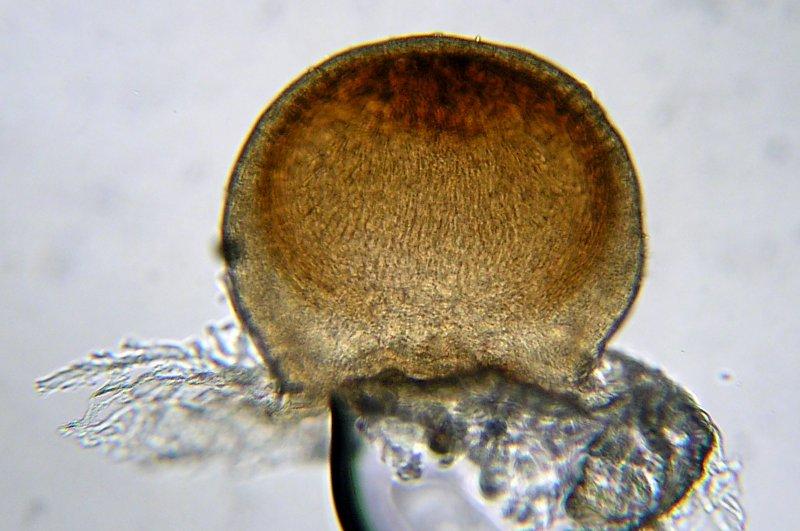
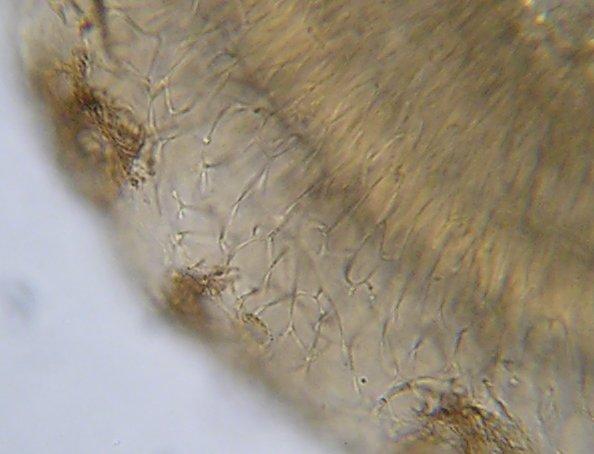
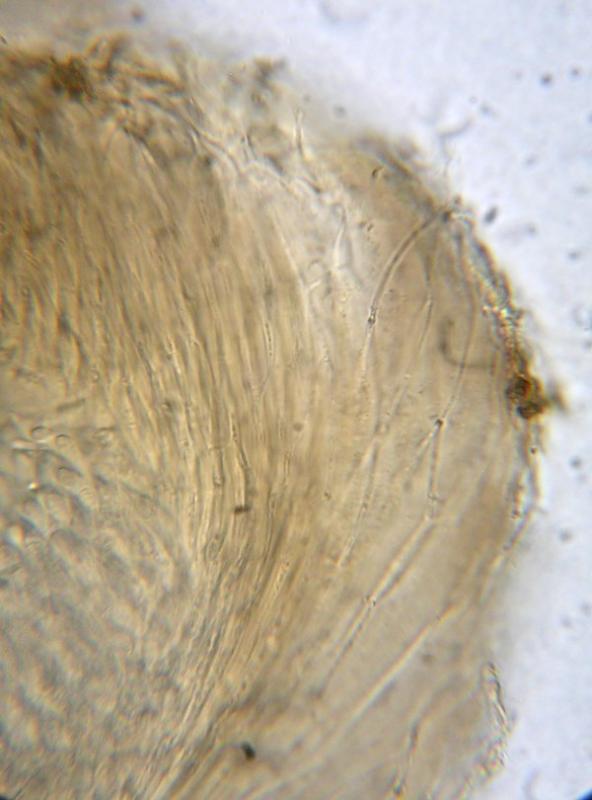
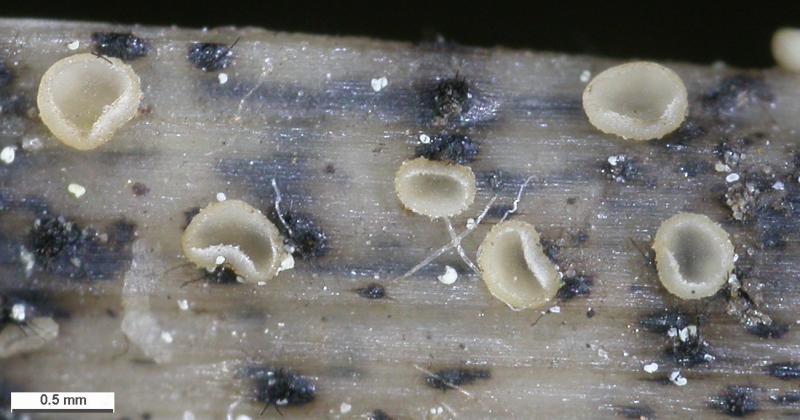
The apothecia are attached to the leaf by a thin basal film and are nearly spherical at first. Later they open at the top and become more urn-shaped. The excipulum is made up of two layers, 1) a thick outer gelatinous layer composed of loosely interwoven hyphae (it looks like jelly fungus tissues) and 2) an inner layer of brown parallel hyphae. Asci are cylindrical and have a blue pore in Lugol's solution. The ascospores are clavate and about 5.5-7.1 X 1.7-1.9 µm. The paraphyses are lanceolate and strongly septate.
I have not had any success in identifying this one. The paraphyses look like they belong with the Hyaloscyphaceae, but there are no excipular hairs. Any suggestions?
Dave
?
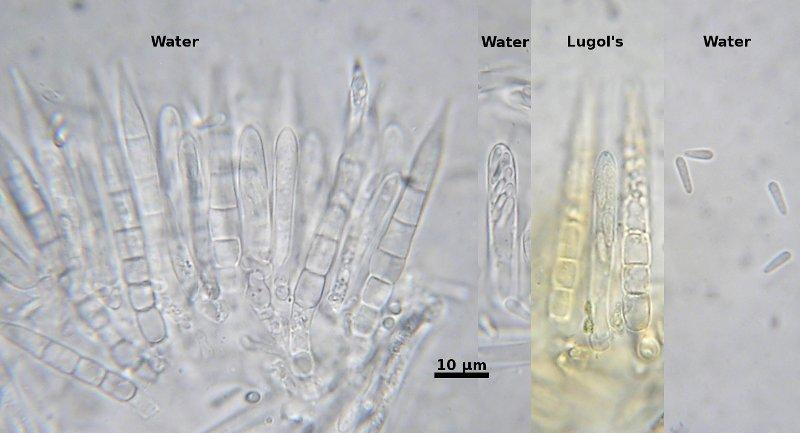

Spores and paraphyses remind of Hysterostegiella, but there are too many septa, and VBs (vacuoles) are missing in them. Excipulum and superficial growth forbid that genus.
The excipulum reminds me of Gelatinopsis, but here no such paraphyses are known to me.
Do you also have mages of finds on Alnus leaves? The apothecia are never stalked? The inner part of the excipulum seems to be a t. porrecta?
Zotto
Thanks for your comments on my discomycete. I have collected some more leaves of both Spiraea and Alnus incana and put them in a moist chamber. By tomorrow morning I should have more material and and answer to your question about stiptitate ascomata on Alnus.
Dave
I have examined many more leaves for this gelatinous discomycetes but have failed to find it on Alnus incana as I originally claimed. On the other hand, it is on most leaves of Spiraea alba; very common. The apothecia have no stipes and are rather round. They are attached to the substrate by a hyaline membranous tissue.
There is a species Pezizella lanceolatoparaphysatum Rehm described from Spiraea in New York State and transferred by Seaver to Helotium. The description is not entirely explicit but the apothecia are described as globose-closed at first, the ascospores clavate and the paraphyses lanceolate and prominent. Have you ever seen material of this species?
Dave

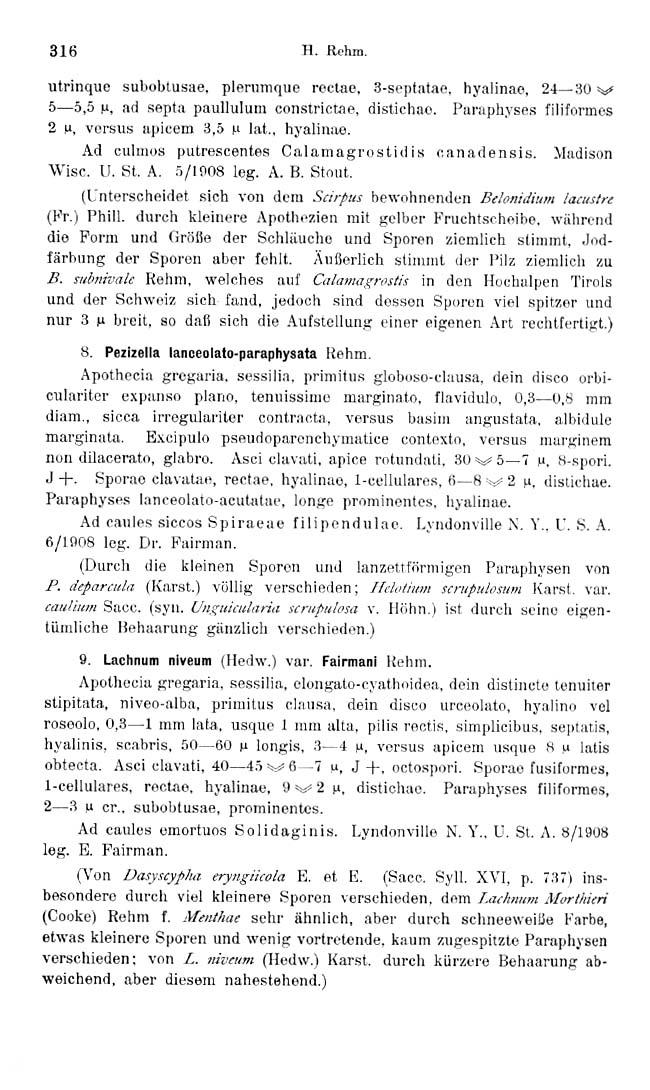 rehm-pezizella-lanceolatoparaphysata-0001.jpg
Thank you for the original description by Rehm. It seems that Seaver did not add anything new in his book. It only has an English translation of Rehm's description. It is the closest match I have yet found for my material, but it is not precise enough to be sure.
Dave
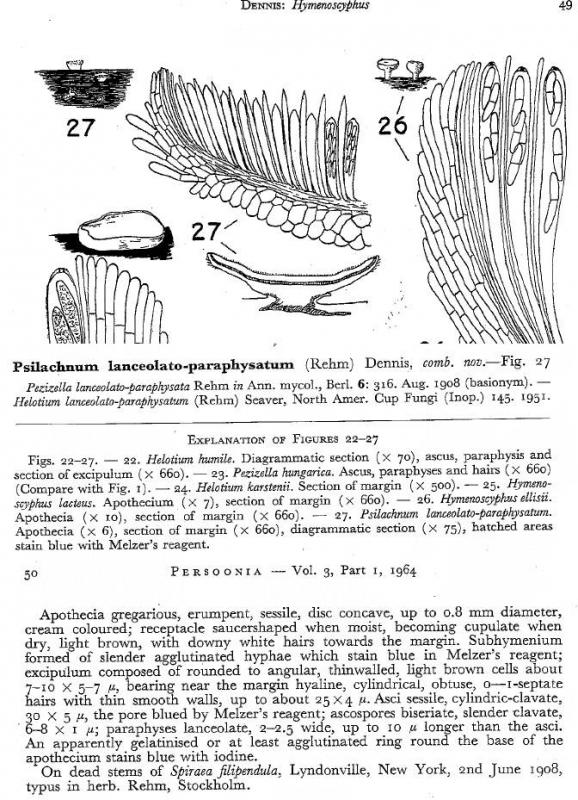
this species was redescribed by Dennis (1964: 48) from the type. There you see that the excipulum is without any gel layer.
I know this fungus quite well. It usually grows in association with a black hyphomycete, always on herbaceous stems. The spores are larger and contain several oil drops. The medula reacts blue in iodine.
Zotto
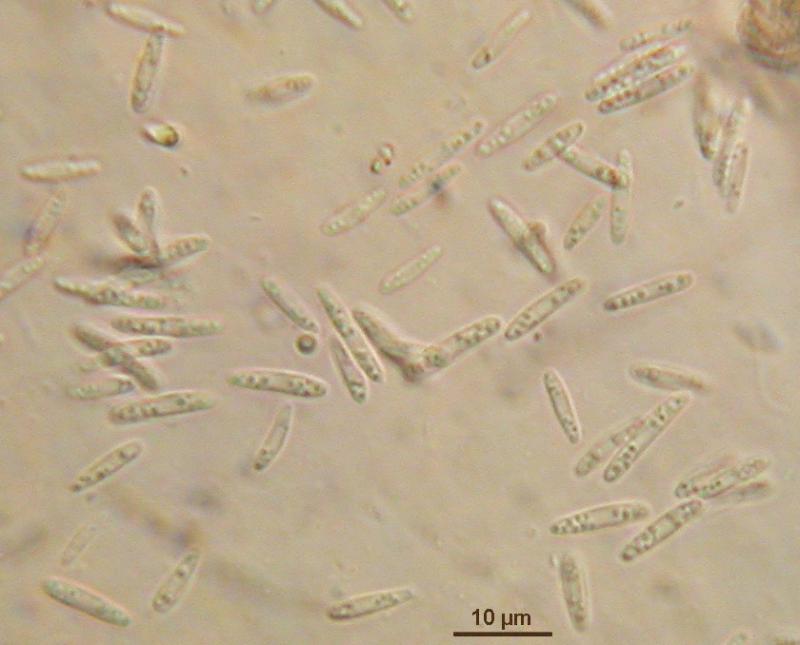
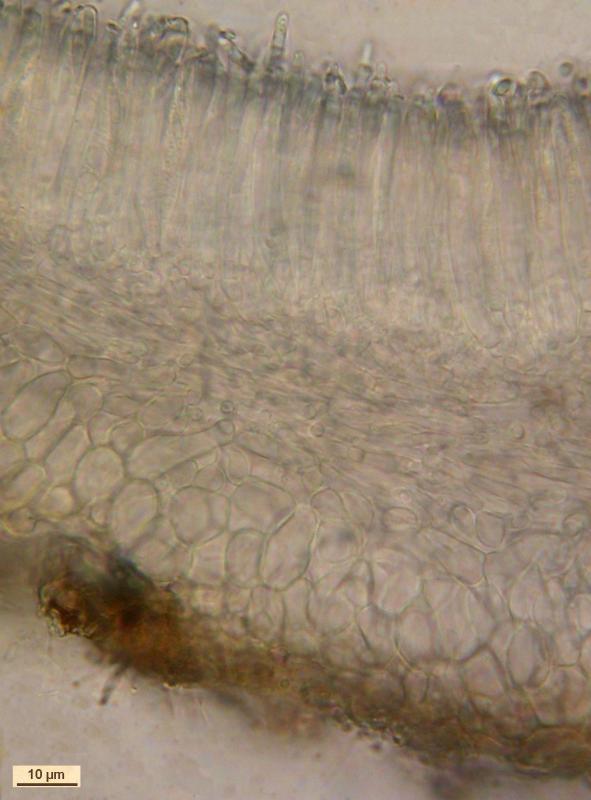
Thanks Zotto.
Dave