
14-04-2026 21:52
Gernot FriebesHi,found on dead leaves of Carex elata. Conidia: 4
14-04-2026 20:31
Gernot FriebesHi,can this be Psilachnum lateritioalbum on Phragm
14-04-2026 05:32
Ethan CrensonHi all, A few weeks back a friend pointed out som
12-04-2026 17:56
 Hardware Tony
Found on dead stems in February earlier this year
12-04-2026 15:52
Gernot FriebesHi,I'm looking for help with this anamorph collect
12-04-2026 12:22
 William Slosse
In a dune grassland in Oostduinkerke (Belgium), on
11-04-2026 15:45
 Zuzana Sochorová (Egertová)
Please, could anyone send me this paper?Moyne G.,
11-04-2026 13:34
Artem PtukhaHello, I am seeking assistance with the identific

11-04-2026 10:19
 Michel Hairaud
Chers amis d'Ascofrance , voici une très bonne no

Dear friends!
This specimen was collected on a small branch of Acer platanoides.
Spores are 12,7-14,6*8,9-10 un, with 1 or less often2 large oil drops. Asci amyloid.
Other microstructures are shown on photos.
I have never seen any species of Velutarina, that's why ask for your opinion about a specimen.
With best regards,
Irina
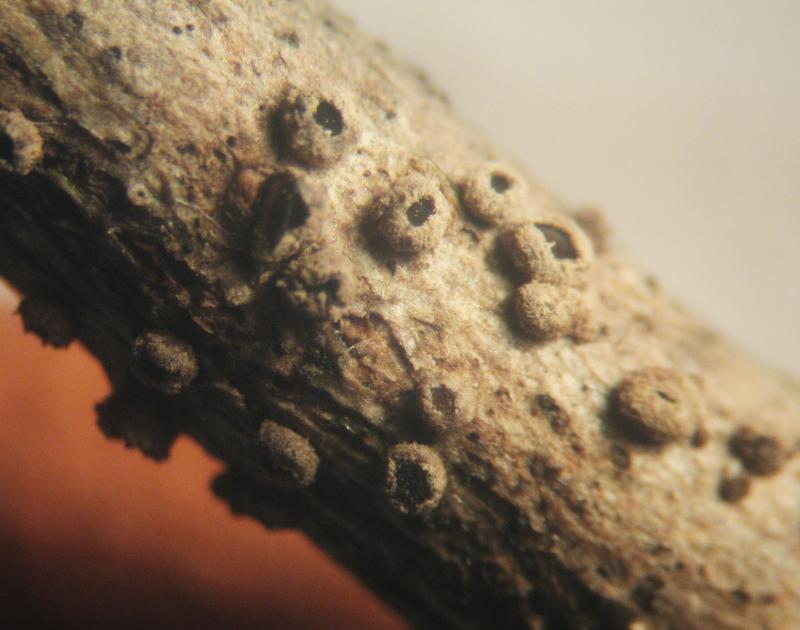
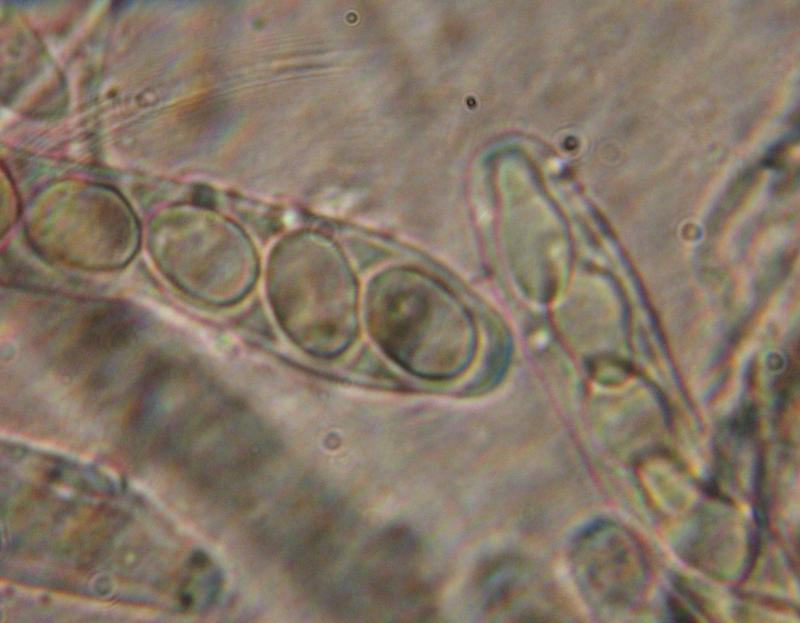
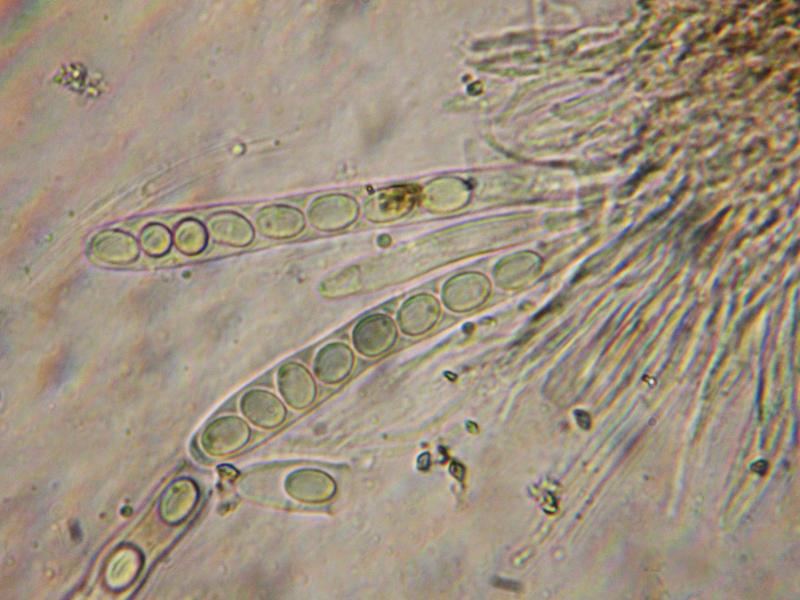
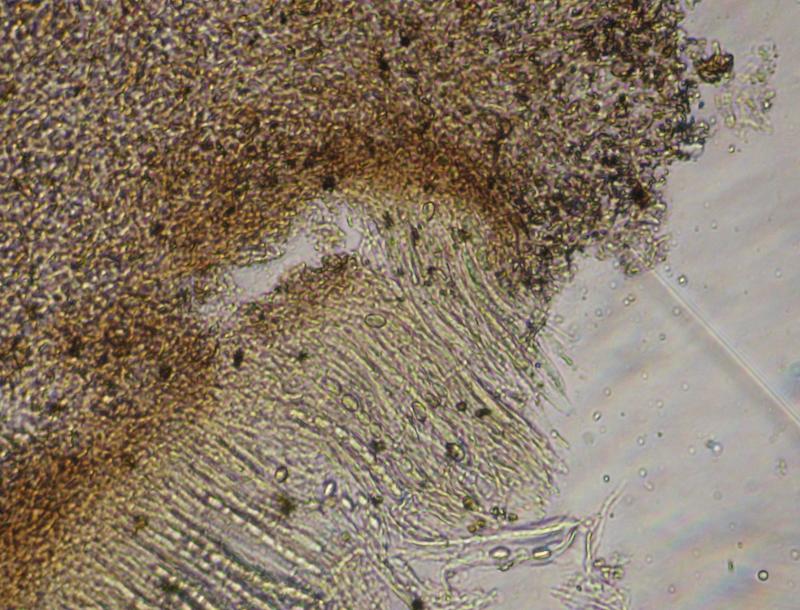
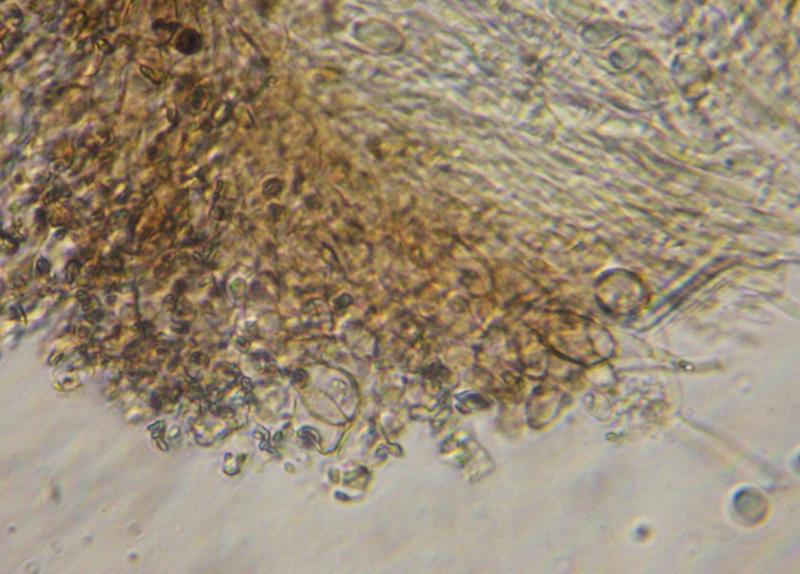
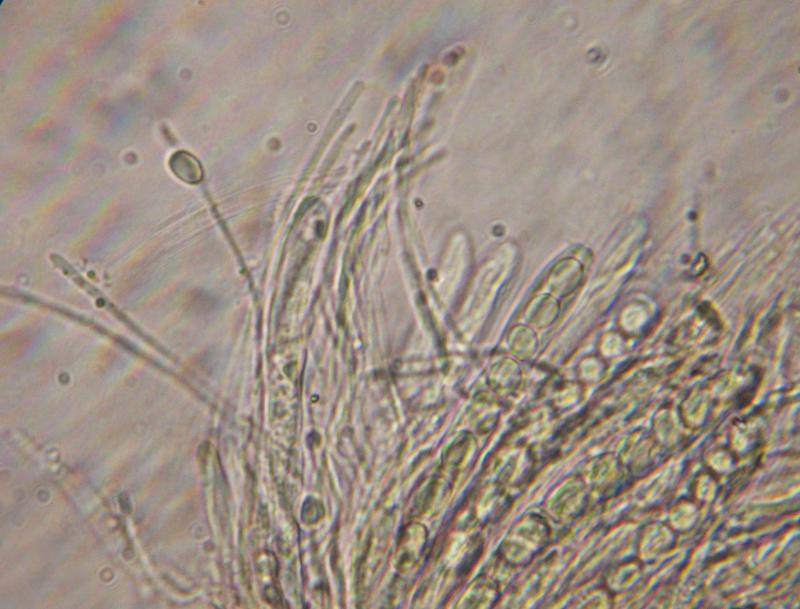

Yes, this really looks like V. rufo-olivacea. Everything seems to fit in, only I cannot help the feeling that your ascospores are looking eguttulate in microphots. Luckily, you did clearly write that spores are uni- or bi-guttulate as they suppose to be ;-)
Cheers,
Neven

Zotto
Thank you!
Spores within asci were non-guttulate, but when free, they are clearly 1-2 guttulate. Maybe free spores are just mature enough.
Irina
The oil drops develop quite early. It is not rare that asci and even spores are dead, even when freshly collecting a species. You can make the test: add KOH and you will see the oil drops much more distinct, also in the asci.
Zotto
Zotto,
This specimen is dry (and possibly dead) at least for 3 weeks, but today I made a preparation and clearly saw 1-2 guttulate spores.
Irina
Yes, I made all the preparations in water.
Irina
In a new water mount I see guttulate spores both free and within asci (photo)
Maybe, this fruitbody is still living?
Irina
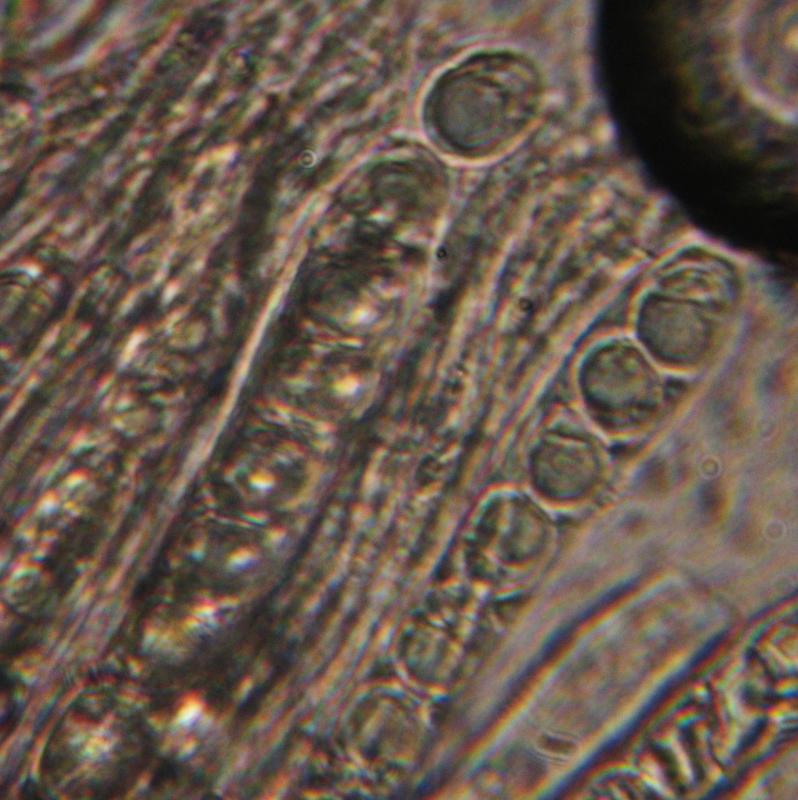
Velutarina grows on attached twigs and may survive some weeks or more in the dry state. But the long drought in November was probably stressy for these fungi.
My collections made in november/december in 1999 and 2009 in the same large area of flood Quercus robur dominated forest (Eastern Croatia) arrived in lab predominantly in dead state. It was long drought that occured in those autumns! Consequently, the asci were all dead but spores prevailed in living state. It is interesting that there were only hyaline living spores released from asci in some apos, but I remember that some contained almost only darkened warted ones outside asci!
Also, Irina, I think the hymenial colour is readily indicative when apothecia are just found in situ. If apothecia are full of life it will have more greenish-olivaceous hymenia (because of the green vacuoles in living paraphyse tips), while in predominantly dead apothecia, hymenia will be more ochraceous or even greyish...
So, you see - vital taxonomy is not so difficult and jet so joyful, powerful and useful when handling with species :-)
Neven
Neven, I fully agree about vital taxonomy:) And yes, green vacuoles were absent in all of the fruitbodies I examined.
Irina