
11-05-2026 12:32
 Bernard CLESSE
Pourriez-vous m'aider à identifier cette héloti
13-05-2026 15:26
 François Freléchoux
Bonjour,Voici une récolte faite il y a quelques j
12-05-2026 15:41
 Nicolas VAN VOOREN
Dear Ascolovers, especially interested in Pezizale
13-05-2026 12:05
 Thierry Blondelle
Bonjour à tous,J'aimerais avoir confirmation de c
10-05-2026 23:17
 Andreas Gminder
Hello,today we found in a moist steep decidous for
28-04-2026 20:07
 Lothar Krieglsteiner
... on twig in the air at standing Ceratonia siliq
27-04-2026 20:52
Lothar Krieglsteiner
Found on hanging tiwg of Olea europaea in dried-ou
11-05-2026 20:22
Lothar Krieglsteiner
on attached twig of standing Ficus caricaquite uns
29-04-2026 10:44
Lothar Krieglsteiner
growing at moist, drying-out soil at the side of a

Dear friends!
Do you have some idea about the genus of this tiny disco?
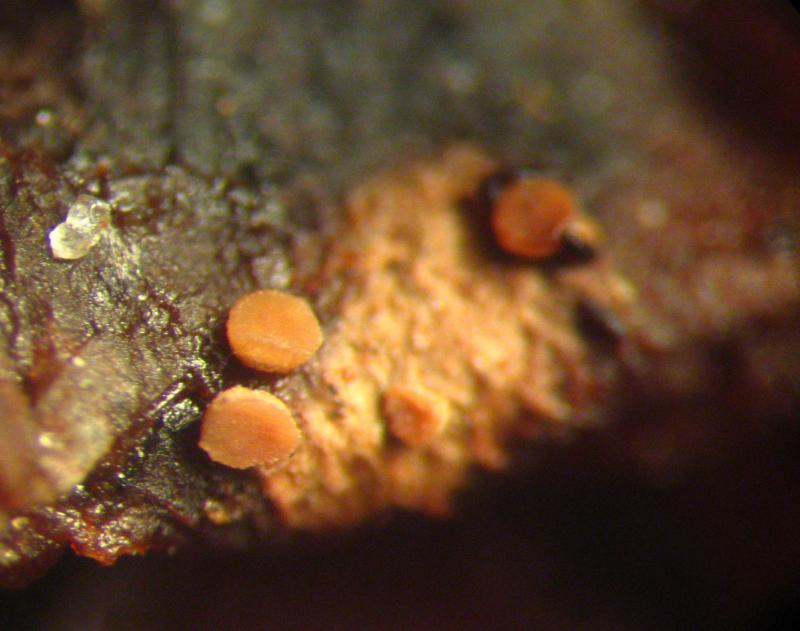
I have found it on dead leaves of Quercus robur. Fruitbodies are single, small, orange-beige, 0,2-0,5 mm in diam.
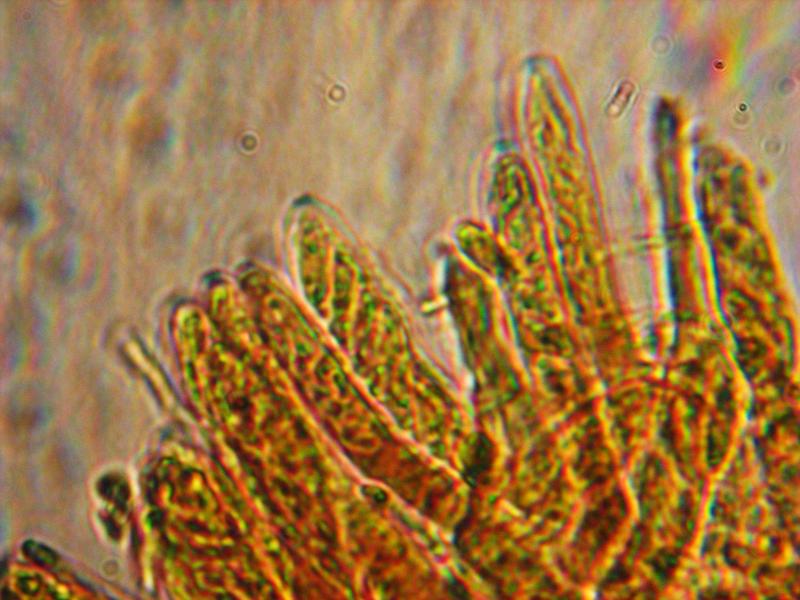
I thought about Pezicula, but apical rings are blued in IKI (colourless in MLZ)
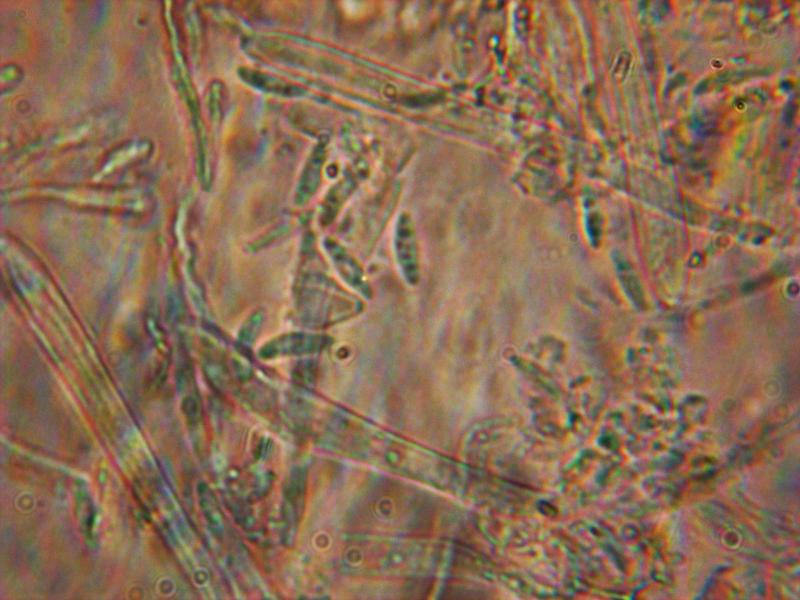
Spores are ellipsoid, 10,9-11,4*2,4-3,6 um, hyaline, with 2-3 guttules (in water, KOH).
Thank you before,
Irina

Raúl

Yes, that might be right guess....it seems to me that asci are of Calycina type reaction (although there are number of genera apart from Calycina with that type of euamyloid reaction). Perhaps a drawing of some cell types, most preferably in statu vivo (see Baral 1992 publ. in Mycotaxon, which I can send if still needed) and observation on paraphysal & excipular layer(s) structure & gelification would be sufficiently informative. Also ascogenous system type (croziers vs. simple septate) is crucial. it is not necessary to draw whole block of texture(s) or hymenia - only group of cells.
Cordially,
Neven