
22-04-2026 20:17
 Marian Jagers
Is anyone familiar with the Hyphomycetes genus Pse
22-04-2026 20:54
 Enrique Rubio
Hi to everybody.This Pyrenopeziza grew in moist le
22-04-2026 01:06
 Richard VALERI
Bonjour à tous.Je vous présente cette Nectria s.
21-04-2026 13:36
Gernot FriebesHi,I am out of ideas for this one. I collected Sal
21-04-2026 13:19
Gernot FriebesHi,this Lophodermium on Typha has ascospores measu
21-04-2026 13:05
Gernot FriebesHi,this hyphomycete feels familiar but I was not a
20-04-2026 22:00
 Malcolm Greaves
These pale yellow, hairy ascos were growing on cul
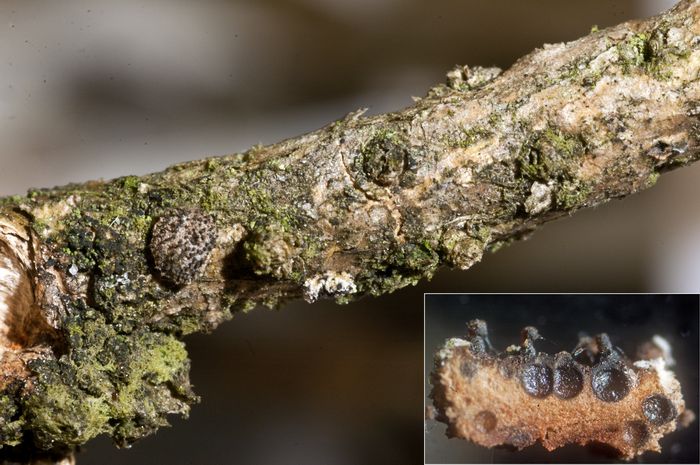
Loculoascomycete on the hymenium of Velutrina rufoolivacea
Enrique Rubio,
11-03-2011 18:28
There has been success in the determination of this pyrenomycete growing on the hymenium of Velutarina?http://www.ascofrance.com/index.php?r=forum&page=viewtopic&id=713&highlight=Velutarina#msg713
Many thanks
Enrique
Alain GARDIENNET,
11-03-2011 18:35

Re:Loculoascomycete on the hymenium of Velutrina rufoolivacea
Salut Enrique,
4 récoltes au moins sont connues, témoin cette discussion :
http://www.ascofrance.com/index.php?r=forum&page=new&cat=1
Une cinquième ?
Alain
4 récoltes au moins sont connues, témoin cette discussion :
http://www.ascofrance.com/index.php?r=forum&page=new&cat=1
Une cinquième ?
Alain
Christian Lechat,
11-03-2011 19:01

Re:Loculoascomycete on the hymenium of Velutrina rufoolivacea
Hi Enrique,
unfortunately, this species has not yet name because we were not able to cultivate it, so we have no molecular data. If you have a new collection, I would be glad to try a culture.
Christian
unfortunately, this species has not yet name because we were not able to cultivate it, so we have no molecular data. If you have a new collection, I would be glad to try a culture.
Christian
Enrique Rubio,
11-03-2011 19:10
Re:Loculoascomycete on the hymenium of Velutrina rufoolivacea
OK. Alain and Christian. We have only the teleomorph that grows on Velutarina on Ulex europaeus.
I will send you one of the only two ascoma that we have collected.
Enrique
I will send you one of the only two ascoma that we have collected.
Enrique
Enrique Rubio,
11-03-2011 19:10
Re:Loculoascomycete on the hymenium of Velutrina rufoolivacea
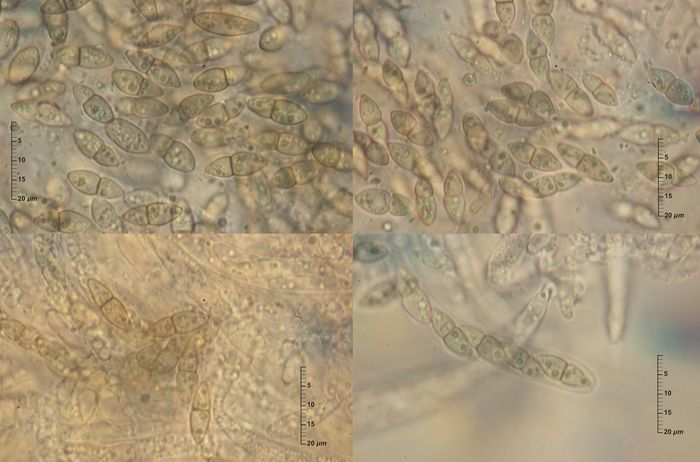
Micro
Gernot Friebes,
11-03-2011 19:20
Re:Loculoascomycete on the hymenium of Velutrina rufoolivacea
Hi,
now that I read of this species again, I wonder if it might be related to the fungicolous genus Immotthia. The basic characters like habitat (on fungi), two-celled, coloured spores, bitunicate asci, present pseudoparaphyses and occurrence of both pycnidial anamorph and telemorph on the substrate would fit quite well. What do you think?
Best wishes,
Gernot
now that I read of this species again, I wonder if it might be related to the fungicolous genus Immotthia. The basic characters like habitat (on fungi), two-celled, coloured spores, bitunicate asci, present pseudoparaphyses and occurrence of both pycnidial anamorph and telemorph on the substrate would fit quite well. What do you think?
Best wishes,
Gernot