
12-04-2026 17:56
 Hardware Tony
Found on dead stems in February earlier this year
12-04-2026 15:52
Gernot FriebesHi,I'm looking for help with this anamorph collect
12-04-2026 12:22
 William Slosse
In a dune grassland in Oostduinkerke (Belgium), on
11-04-2026 15:45
 Zuzana Sochorová (Egertová)
Please, could anyone send me this paper?Moyne G.,
11-04-2026 13:34
Artem PtukhaHello, I am seeking assistance with the identific

11-04-2026 10:19
 Michel Hairaud
Chers amis d'Ascofrance , voici une très bonne no
11-04-2026 10:10
Michel Hairaud
Dear Ascofrance members, here is some very good ne
10-04-2026 23:22
Gernot FriebesHi,ascospores are 1- to 3-septate, approximately
10-04-2026 15:51
William Slosse
Hello everyone, On 08/04/26, I found a growth sit
Pezicula sp?
Miguel Ángel Ribes,
03-03-2011 01:15
 Buenas noches
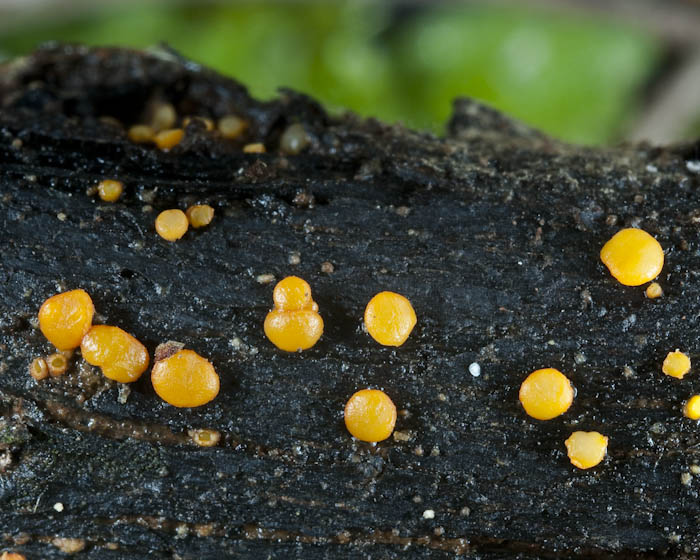
Esta pequeña especie naranja de 1-2 mm crecía sobre madera de planifolio en bosque de laurisilva, subgloboso-urceolado de joven y turbinado con el himenio convexo de adulto, de consistencia firme.
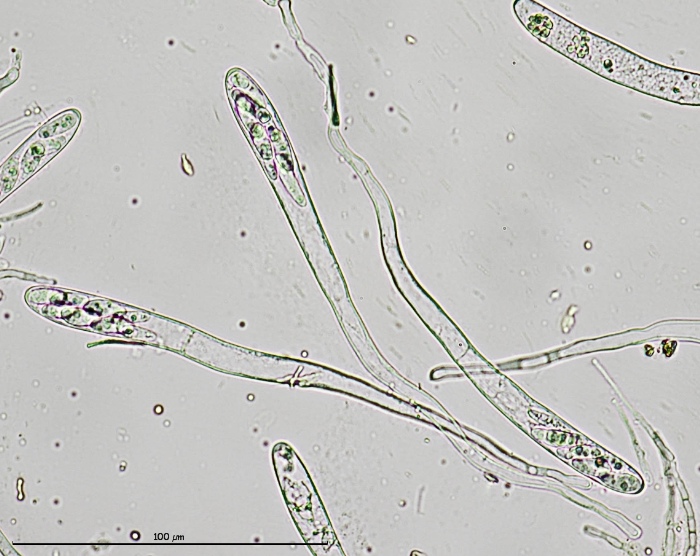
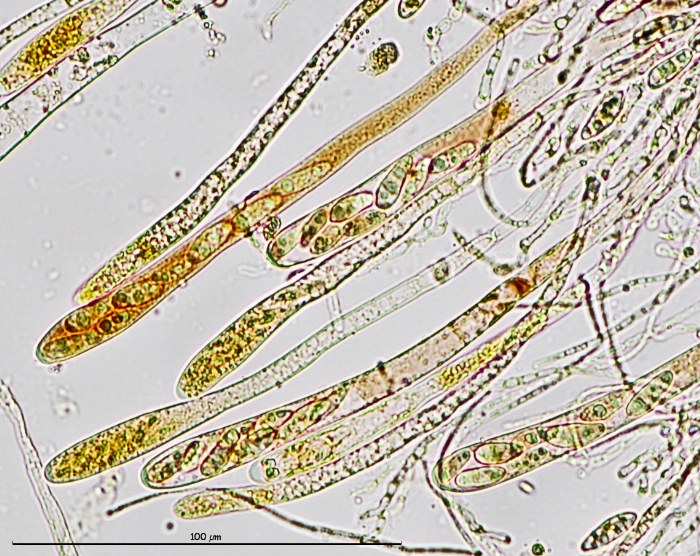
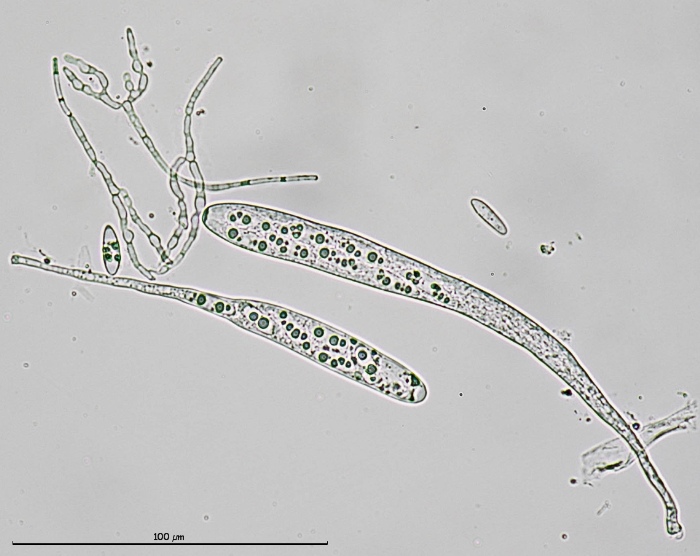
Ascas con croziers, biseriadas, con la base muy estrecha y larga, IKI ¿creo que no azul?, de (149) 159.1 - 203.7 (218.1) x (9.9) 10.7 - 12.3 (14.3) µm; N = 20; Me = 186.5 x 11.5 µm, en agua, a 600x, a partir de material fresco.
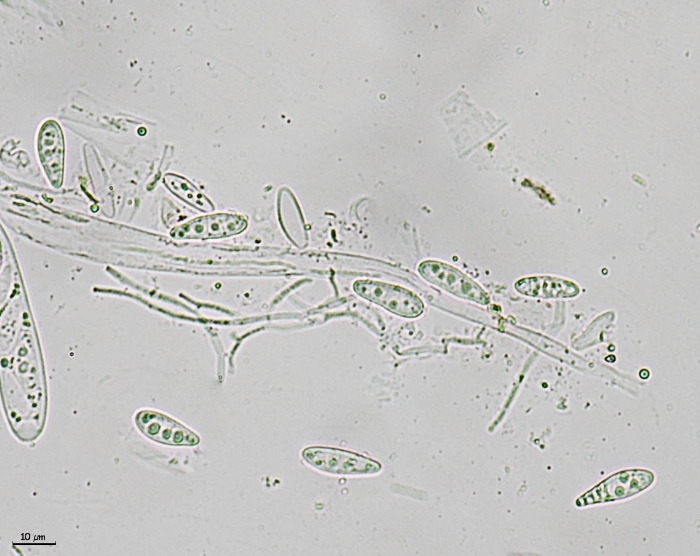
Esporas en forma de pipa, muy pocas veces con 1-2 septos y varias gútulas medianas, de (14.1) 14.9 - 18.2 (19) x (4.2) 4.7 - 6 (6.3) µm; Q = (2.5) 2.7 - 3.4 (4) ; N = 36; Me = 16.4 x 5.4 µm ; Qe = 3.1
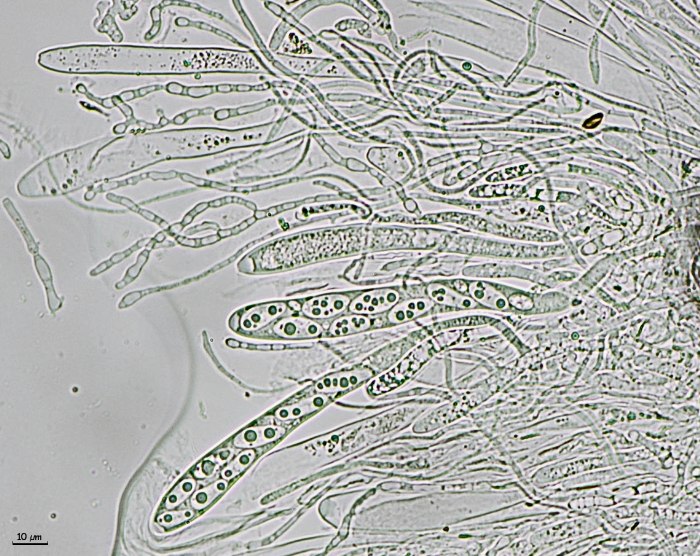
Paráfisis muy particulares, muy ramificadas, multiseptadas, moniliformes e irregulares en toda su longitud.
Muchas gracias por vuestra ayuda,
________________________
Good night
This small orange species 1-2 mm was growing on planifolium wood in laurel forest, subglobose-urceolate when young and turbinate with convex hymenium in adults, flesh firm.
Asci with croziers, biseriate, with very narrow and long base, IKI ¿I think not blue?, (149) 159.1 - 203.7 (218.1) x (9.9) 10.7 - 12.3 (14.3) microns, N = 20, Me = 186.5 x 11.5 microns, in water, 600x, from fresh material.
Pipe-shaped spores, rarely with 1-2 septa and several medium-size guttules, from (14.1) 14.9 - 18.2 (19) x (4.2) 4.7 - 6 (6.3) microns, Q = (2.5) 2.7 - 3.4 (4), N = 36, Me = 16.4 x 5.4 microns, Qe = 3.1
Paraphyses very curios, highly branched, multiseptate, moniliform and irregular along its length.
Thank you very much for your help
Miguel Á. Ribes
Miguel Ángel Ribes,
03-03-2011 01:15
Re:Pezicula sp?
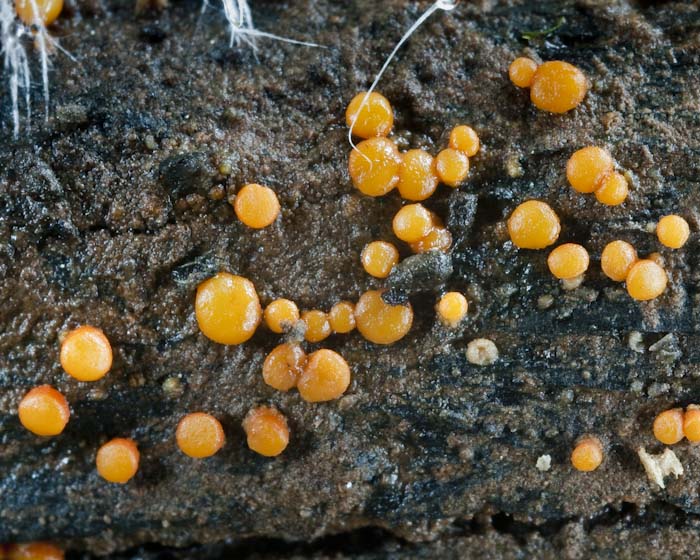
Another macro more developed.
Miguel Ángel Ribes,
03-03-2011 01:18
Re:Pezicula sp?
Asci in water.
Miguel Ángel Ribes,
03-03-2011 01:19
Re:Pezicula sp?
Asci in IKI ¿blue / not blue?
Miguel Ángel Ribes,
03-03-2011 01:20
Re:Pezicula sp?
Spores.
Miguel Ángel Ribes,
03-03-2011 01:20
Re:Pezicula sp?
Paraphysis.
Miguel Ángel Ribes,
03-03-2011 01:21
Re:Pezicula sp?
More paraphysis,
Miguel Ángel Ribes,
03-03-2011 01:22
Re:Pezicula sp?
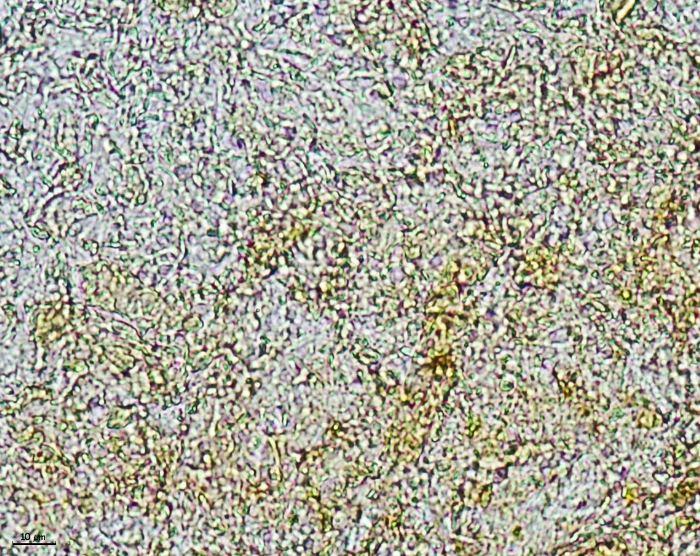
And finally medular excipulum.
Thank you and good night,
Miguel Á. Ribes
Thank you and good night,
Miguel Á. Ribes
Hans-Otto Baral,
03-03-2011 09:37

Re:Pezicula sp?
Dear Miguel
congratulations! This is
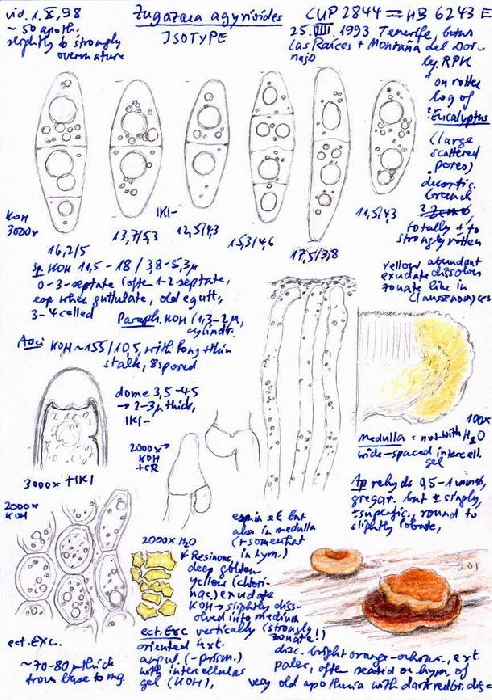
Zugazaea agyrioides Korf, Iturr. & Lizoň, in Iturriaga, Korf & Lizoň, Mycologia 90(4): 697 (1998)
I revised type material, see here.
Could you provide us with a crop of an ascus apex in IKI to better see the reaction?
Zotto
congratulations! This is
Zugazaea agyrioides Korf, Iturr. & Lizoň, in Iturriaga, Korf & Lizoň, Mycologia 90(4): 697 (1998)
I revised type material, see here.
Could you provide us with a crop of an ascus apex in IKI to better see the reaction?
Zotto
Miguel Ángel Ribes,
03-03-2011 23:13
Re:Pezicula sp?
Dear Zotto
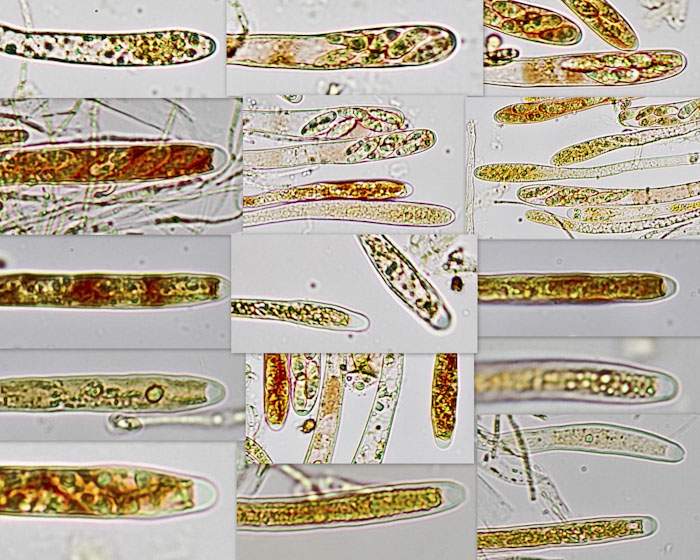
Here is an asci apex collage.
I have been reading the paper of Prof. Korf and your plate and I think the paraphysis in this collection are slightly different, much more moniliform. Is it not important?
In this album you could see all my micro photos, there are many "normal" paraphysis, but also many other moniliform-deformed, at least at the apex.
https://picasaweb.google.com/miguelangel.ribes/ZugazaeaAgyrioides28111066?authkey=Gv1sRgCO2X_NPbhorimQE&feat=directlink
Thank you very much,
Miguel Á. Ribes
Here is an asci apex collage.
I have been reading the paper of Prof. Korf and your plate and I think the paraphysis in this collection are slightly different, much more moniliform. Is it not important?
In this album you could see all my micro photos, there are many "normal" paraphysis, but also many other moniliform-deformed, at least at the apex.
https://picasaweb.google.com/miguelangel.ribes/ZugazaeaAgyrioides28111066?authkey=Gv1sRgCO2X_NPbhorimQE&feat=directlink
Thank you very much,
Miguel Á. Ribes
Hans-Otto Baral,
03-03-2011 23:24
Re:Pezicula sp?
Dear Miguel
many thanks for these nice photos. About branching of paraphyses I often saw high variation, f.ex..in Orbilia or Vibrissea etc.
I downloaded a lot of your photos, but i regret the micros are in low resolution (700 x 556). If you have higher I would like them at least in double.
Zotto
many thanks for these nice photos. About branching of paraphyses I often saw high variation, f.ex..in Orbilia or Vibrissea etc.
I downloaded a lot of your photos, but i regret the micros are in low resolution (700 x 556). If you have higher I would like them at least in double.
Zotto
Miguel Ángel Ribes,
04-03-2011 00:18
Re:Pezicula sp?
I am sending to your private the photos.
Thank you again,
Miguel Á. Ribes
Thank you again,
Miguel Á. Ribes