
11-05-2026 12:32
 Bernard CLESSE
Pourriez-vous m'aider à identifier cette héloti
13-05-2026 15:26
 François Freléchoux
Bonjour,Voici une récolte faite il y a quelques j
12-05-2026 15:41
 Nicolas VAN VOOREN
Dear Ascolovers, especially interested in Pezizale
13-05-2026 12:05
 Thierry Blondelle
Bonjour à tous,J'aimerais avoir confirmation de c
10-05-2026 23:17
 Andreas Gminder
Hello,today we found in a moist steep decidous for
28-04-2026 20:07
 Lothar Krieglsteiner
... on twig in the air at standing Ceratonia siliq
27-04-2026 20:52
Lothar Krieglsteiner
Found on hanging tiwg of Olea europaea in dried-ou
11-05-2026 20:22
Lothar Krieglsteiner
on attached twig of standing Ficus caricaquite uns
29-04-2026 10:44
Lothar Krieglsteiner
growing at moist, drying-out soil at the side of a
Mycomicrothelia ?
Alain GARDIENNET,
02-12-2010 23:31
 Bonsoir,
 Je vous propose une récolte estivale que j'ai faite sur Larix.
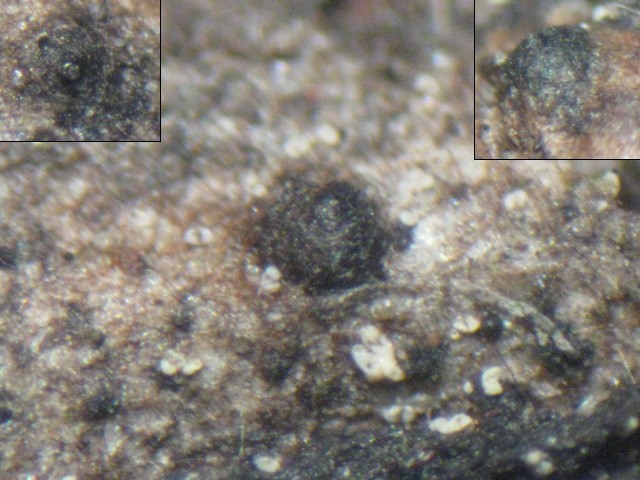
Des périthèces noirs subglobuleux immergés ou érompents de 300-400 µm de diamètre présentant un apex papillé bien visible.
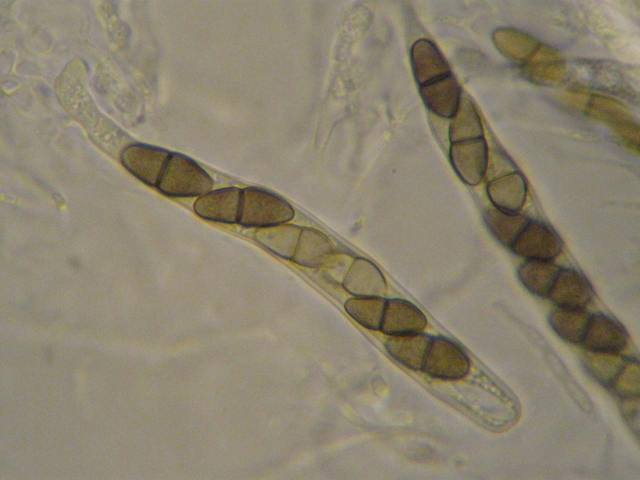
Asques bituniqués subcylindriques, base clavée, bituniqués, ascospores unisériées mesurant jusqu'à 100 x 12 µm. Pseudoparaphyses trabéculaires.
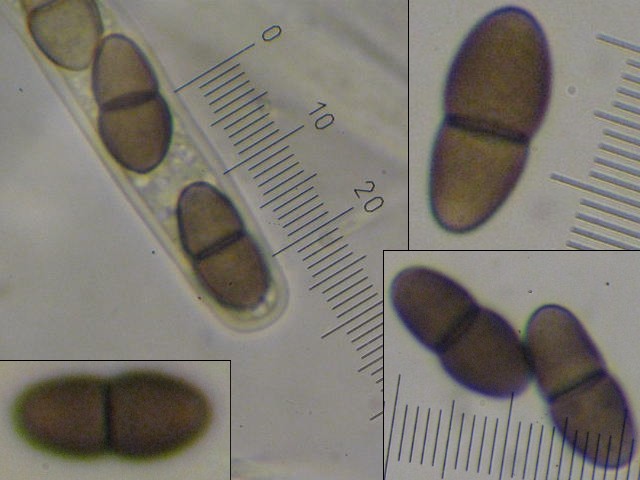
Ascospores brunes uniseptées, 15 18 x 7 µm, étranglée à la cloison, lisse de première apparente mais apparemment faiblement verruqueuses (je dirais ascospores ponctuées voir photo des spores, en bas à gauche).
Quelques photos illustrant ces données.
Alain GARDIENNET,
02-12-2010 23:32
Re:Mycomicrothelia ?
Asques
Alain GARDIENNET,
02-12-2010 23:33
Re:Mycomicrothelia ?
Ascospores.
Je pensais à une espèce du genre Mycomicrothelia (comme pachnea). Est-ce possible ?
Alain
Je pensais à une espèce du genre Mycomicrothelia (comme pachnea). Est-ce possible ?
Alain
Björn Nordén,
08-09-2017 11:29
Re : Mycomicrothelia ?
Hi,
Could it alternatively be an Arthopyrenia? Some of them also get (rather) brown spores.