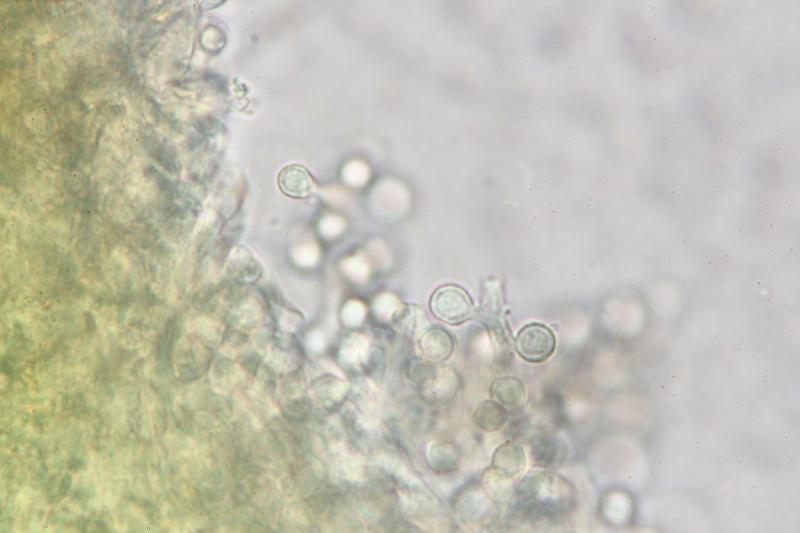
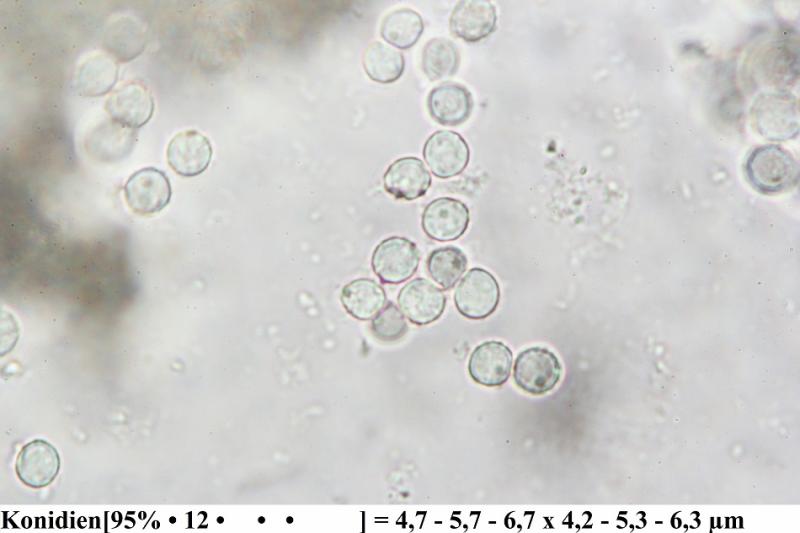
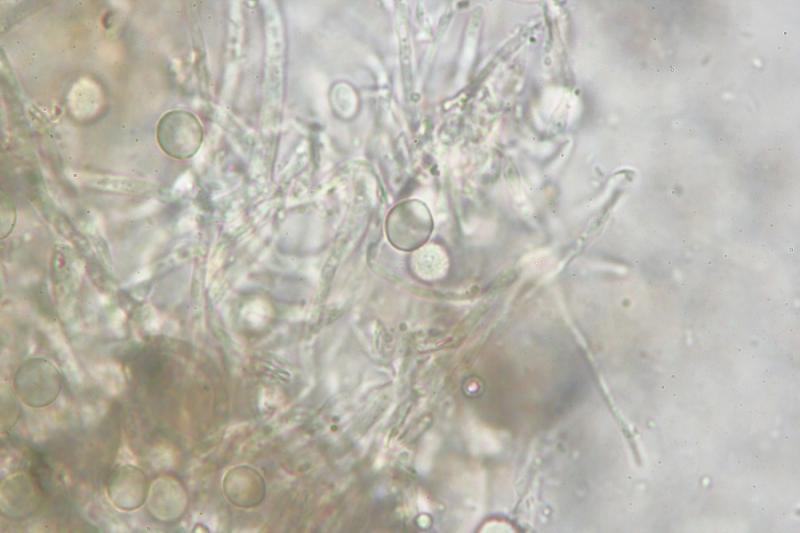
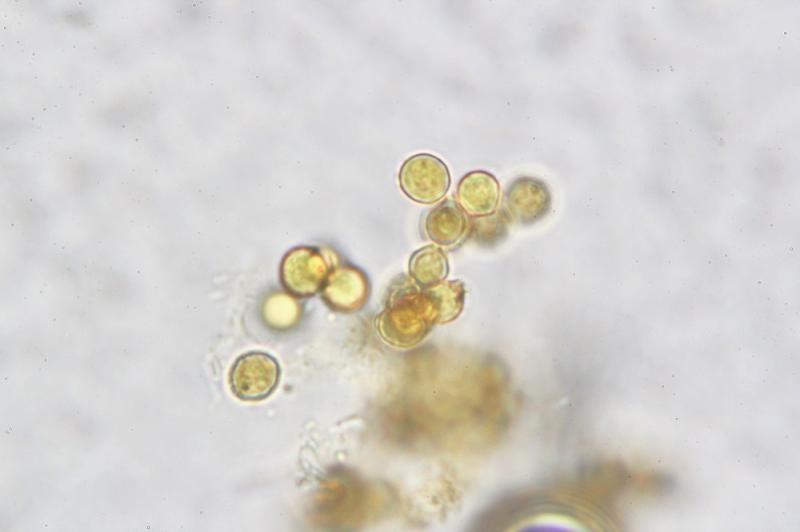
21-08-2017 01:44
Ethan CrensonIn the Green Mountains of Southern Vermont, US.
17-09-2017 12:05
Rubén Martínez-Gil
Hola a todos. Subo unas fotos de una Rutstroemia?
16-09-2017 13:15
Lothar Krieglsteiner
... collected this week on a thick Picea log in
16-09-2017 23:47
Cvenkel Miranhttp://agrozoo.net/jsp/Galery_one_image.jsp?id_gal
17-09-2017 17:27
Nicolas VAN VOOREN
Bonjour.Je vous soumets cette belle petite pézize
16-09-2017 11:57
Lothar Krieglsteiner
... collected this week by Matthias Theiß during
15-09-2017 19:59
Chris Yeates
Bonsoir tousfollowing on from a recent find of Kar
16-09-2017 13:22
Lothar Krieglsteiner
... collected twice in the last week, both times o
16-09-2017 12:59
Lothar Krieglsteiner
... collected this week, on (another) Abies log, s
16-09-2017 13:31
Lothar Krieglsteiner
... at first glance looking the same way than the
So probably another species.
Pfister (Synopsis of the Genus): 18-20 (as P. convexella)
FoS: 13-17 (as P. constellatio)
Dennis: 13-15 (as P. constellatio)
Beug: 13-18 (as P. convexella)
Seaver: 15-20 (as Lamprospora constellatio)
In Pfister's Synopsis, P. convexella and P. cinabarrina match in apothecia color, spore features (other than size) etc. P. miltina is not described in full, referring to Rifai (1968) (which I do not have). But I have seen reference to P. miltina elsewhere (Bioimages UK) which seem to align with my collection well:
Apothecia: 3-7mm diam.
Ascospores: spherical, hyaline, smooth,14-16µm diam., with central mass of small oil drops.
Asci: 8-spored, apex not blued in Melzer's Iodine, upto 250µm long, but mostly smaller.
Paraphyses: 2µm diam, slightly wider at the tips, curved at the tips, mostly unbranched, with granular orange contents which turn green in Melzer's Iodine"
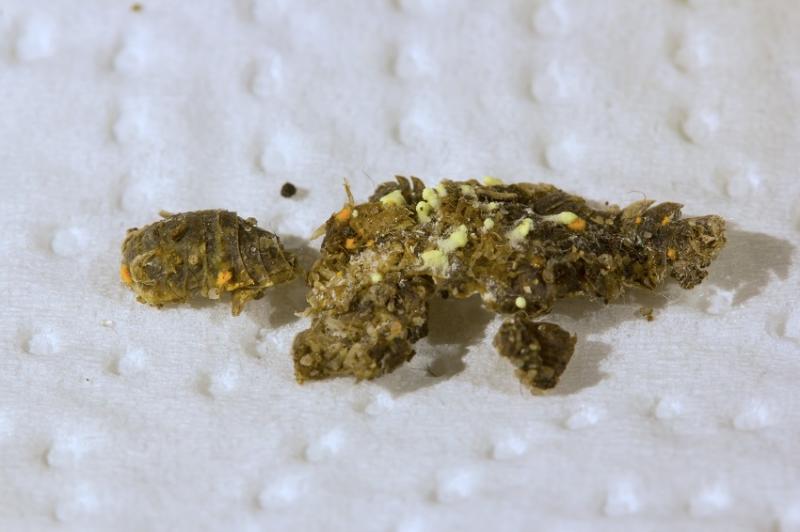
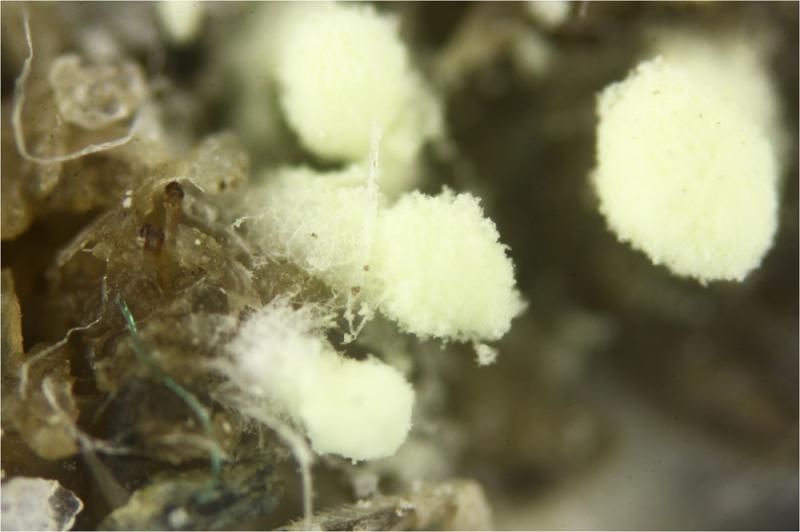
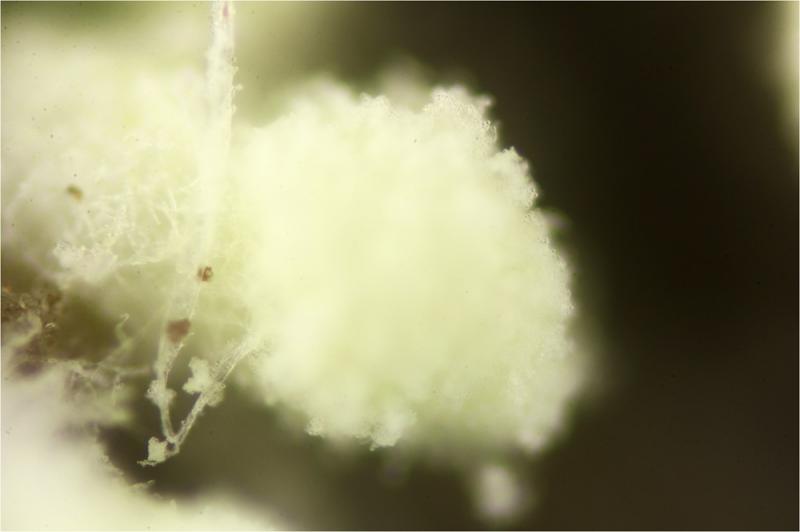
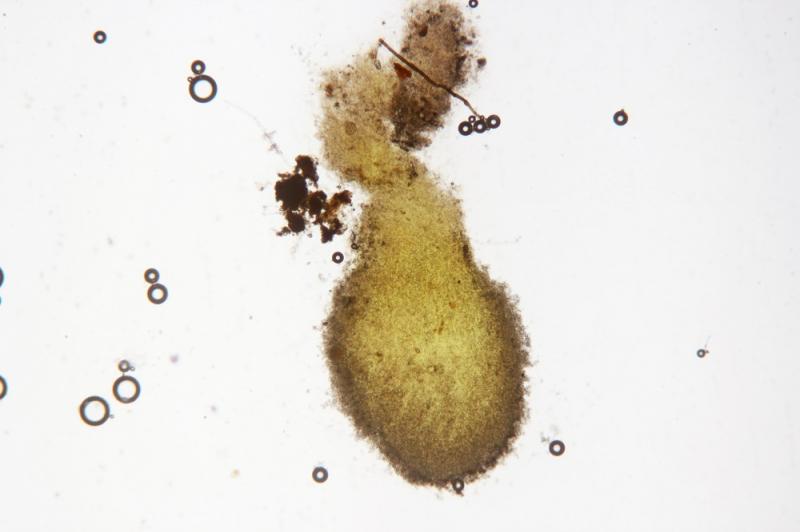
Would you say Pulvinula miltina in my case?
Thank you again,
Ethan
Is there any modern key on Pulvinula, at least for Europe?
Best regards from Lothar
I found yesterday what I believe to be the same fungus, here in Portugal. I found it on a stream margin over soil attached to debris and the mesurements are exactly like yours!
I found this document, and I think this could be P. miltina too. Since it has been found on different places over the world, it is possible that it is just rarely collected.
The document - http://www.ascofrance.com/uploads/forum_file/Pulvinula-johannis-Sydowia-60-0247-0252-0001.pdf
Regards,
Elsa
Last weeks, I studied five different collections of Pulvinula (in fresh state) and I was unenable to provide a correct name, based on the known data on this genus :-(
Best.
Nicolas