
06-05-2013 00:07
 Michel Hairaud
Bonjour, Je sollicite votre aide pour cette réco

05-05-2013 11:13
 Nicolas VAN VOOREN
Bonjour.Je cherche l'article suivant : Yao Y.J. &a
01-05-2013 23:52
 Joop van der Lee
Found on horse dung.Asci: 169.41-169.67x31.06-31.5
03-05-2013 22:59
Joop van der Lee
Found on horse dungAsci 75.40-80.55x15.74-16.04 um
02-05-2013 19:32
hannie wijersThis one is also on horsedung. Ik wanted to use th
03-05-2013 20:26
Joop van der Lee
Found on horse dungAsci 292.96-542.32x37.83-45.42
02-05-2013 19:16
hannie wijersI think this could be Sporomiella pilosa? I found
03-05-2013 04:18
 Godorova Olga
Hello, dear friends. We've found two interesting s
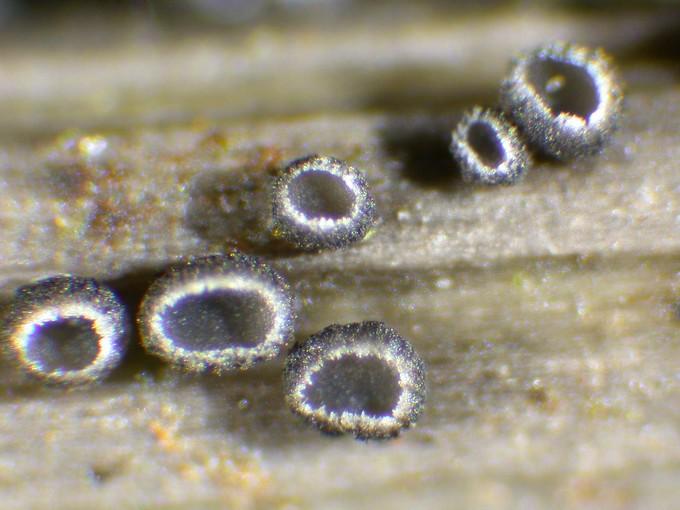
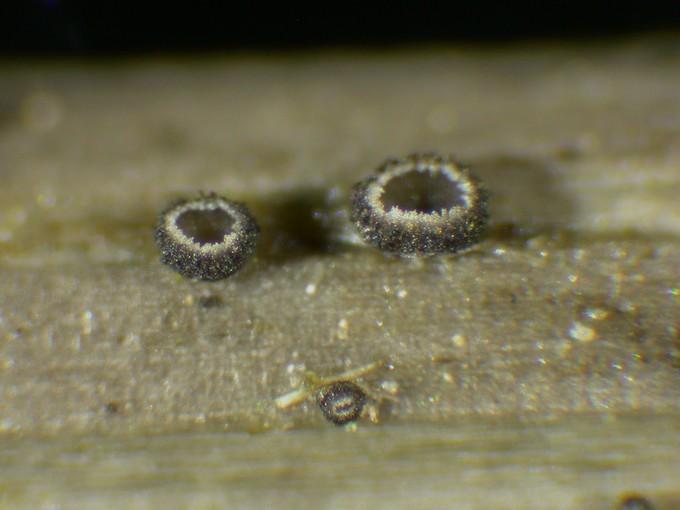
Helotiale pyrenopezizoïde sur Mercurialis
Michel Hairaud,
06-05-2013 00:07
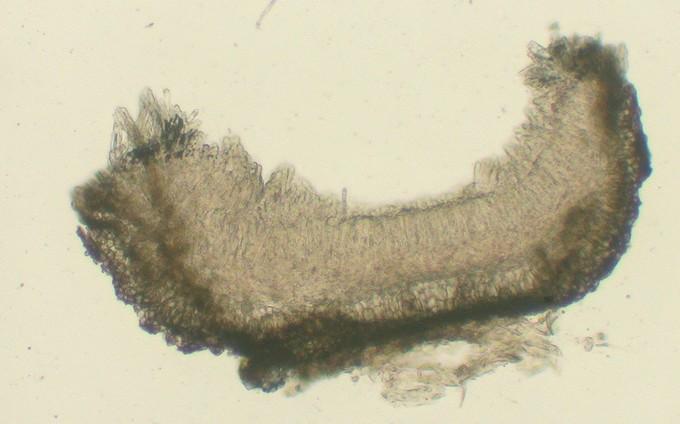
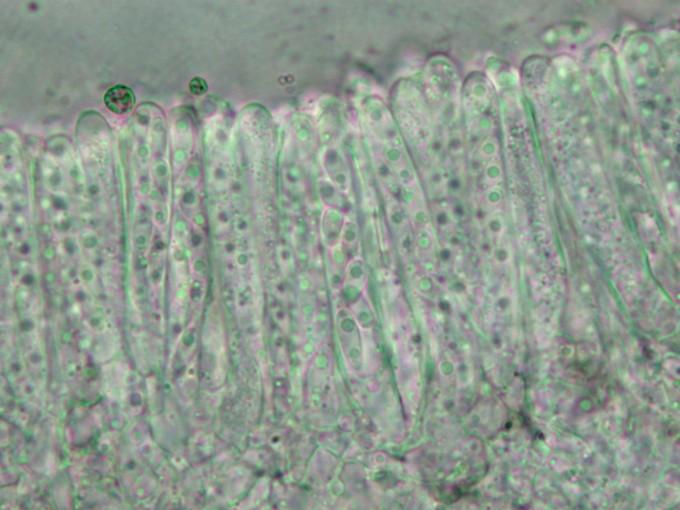
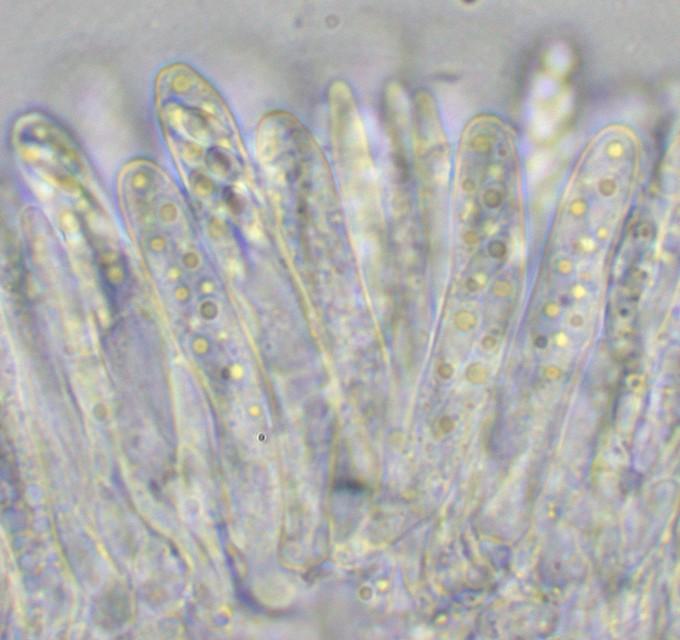
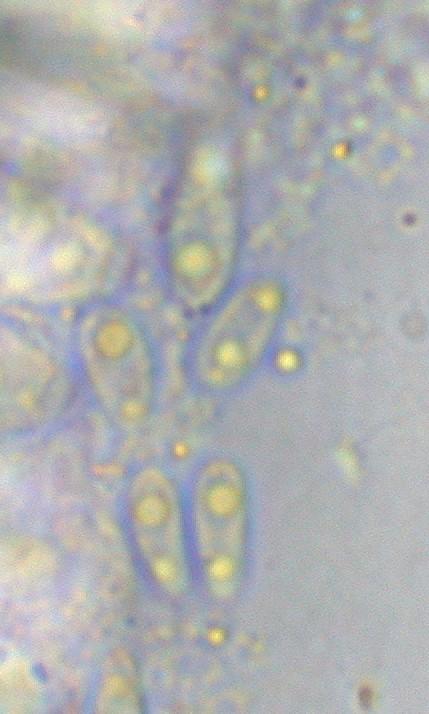
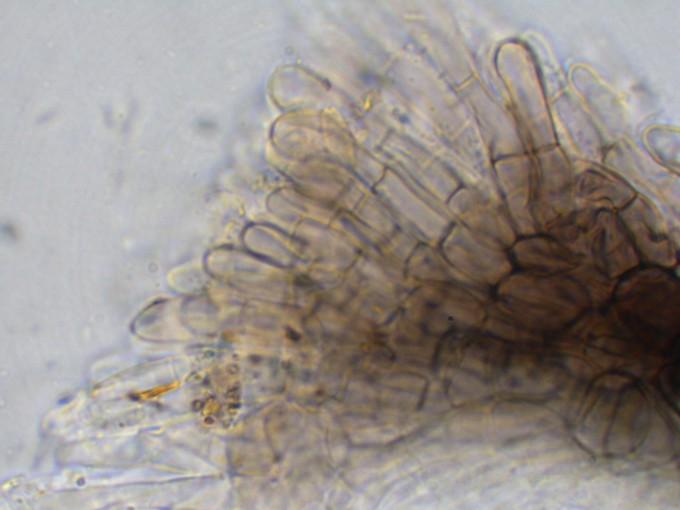
Bonjour, Je sollicite votre aide pour cette récolte faite sur tiges mortes de mercuriale , évoquant un Pyrenopeziza mais les caractères micro ne semblent pas correspondre au genre.
C'est donc une énigme .
Apothécies de 0,1 - 0,4 mm
Asques H+, IKI - , 29-35 x 6, cylindriques avec un ''talon'' souvent déjeté.
Spores biguttulées, clavées (5,2) 6,5-7,5 (9,5)
E Ectal T. globulosa angularis à paroi brun noirâtre, épais d'environ 30µm évoluant en T. prismatica vers la marge couverte de poils septés 2-3 fois, jusqu'à 45 µm x 5
Sous hymenium différent, d'aspect intricata mal défini, de même épaisseur.
Paraphyses x 2,5 -3,5, sans Vacuole réfingente homogène mais avec parfois une apparence de contenu subhuileux (?) CRB négatif, apex conique à obtus.
Pas de réaction à KOH.
Merci de votre aide
Amitiés
Michel
Hans-Otto Baral,
06-05-2013 07:04

Re : Helotiale pyrenopezizoïde sur Mercurialis
Hi Michel
please try some more apothecia until you find the right spores and asci :-)
Helicogonium trabinelloides.
Zotto
please try some more apothecia until you find the right spores and asci :-)
Helicogonium trabinelloides.
Zotto
Michel Hairaud,
06-05-2013 08:23
Re : Helotiale pyrenopezizoïde sur Mercurialis
Ah ah ! Merci Zotto !
At least ten apos have already been searched on different stems with the same totally infected hymenium by the Helicogonium .
Besides, I had also had a quick (too quick) glance at your 1999 huge paper on this odd type of fungus and did not find a specific parasitic fungus for Pyrenopeziza mercurialis
Good lesson !
Bravo encore pour ton inlassable diligence à répondre à nos multiples interrogations.
Amitiés
Michel
At least ten apos have already been searched on different stems with the same totally infected hymenium by the Helicogonium .
Besides, I had also had a quick (too quick) glance at your 1999 huge paper on this odd type of fungus and did not find a specific parasitic fungus for Pyrenopeziza mercurialis
Good lesson !
Bravo encore pour ton inlassable diligence à répondre à nos multiples interrogations.
Amitiés
Michel