
06-05-2026 17:23
Thomas Læssøehttps://svampe.databasen.org/observations/10594257
06-05-2026 11:25
 Castillo Joseba
Me mandan el material seco de Galicia (España) re
28-04-2026 20:07
 Lothar Krieglsteiner
... on twig in the air at standing Ceratonia siliq
05-05-2026 22:40
Gernot FriebesHi,I believe this is a Plagiostoma growing on a Sa
04-05-2026 18:13
 Stephen Martin Mifsud
ID request for what seems to be a true aquatic fun
04-05-2026 16:39
Stephen Martin Mifsud
ID request: This specimen was collected in Malta o
28-07-2011 18:31
 Alex Akulov
Dear FriendsToday I made the pdf file of Velenovsk
04-05-2026 09:50
Castillo Joseba
Me mandan el material seco de Galicia,(España) re
02-05-2026 12:42
Alain BRISSARDBonjour à tousJeuidi 30 avril dernier on m'a remi
I regrettably did a poor job characterizing this specimen last year, but I wonder if someone recognizes it? I believe it is in the Hemiphacidiaceae but I am unaware of a species like this on grass.
Collected in the spring from dead grass leaves (possibly Typha latifolia) in a damp environment.
The ascomata are ca. 350 um diam, erumpent, leaving a small flap of host tissue as they emerge. The asci are eumayloid, parpahyses lanceolate and exceeding the length of asci, ascospores 6-7 x 2-2.5 um.
I wish I had more images (especially vital in water), however this is basically all I have. I did manage to culture it at least.
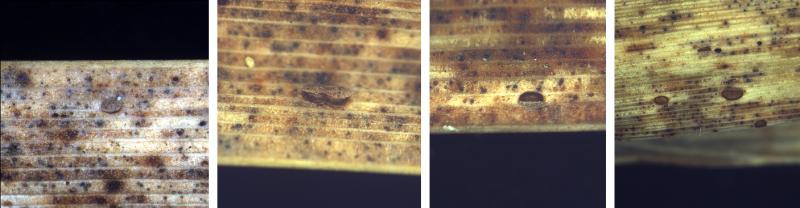
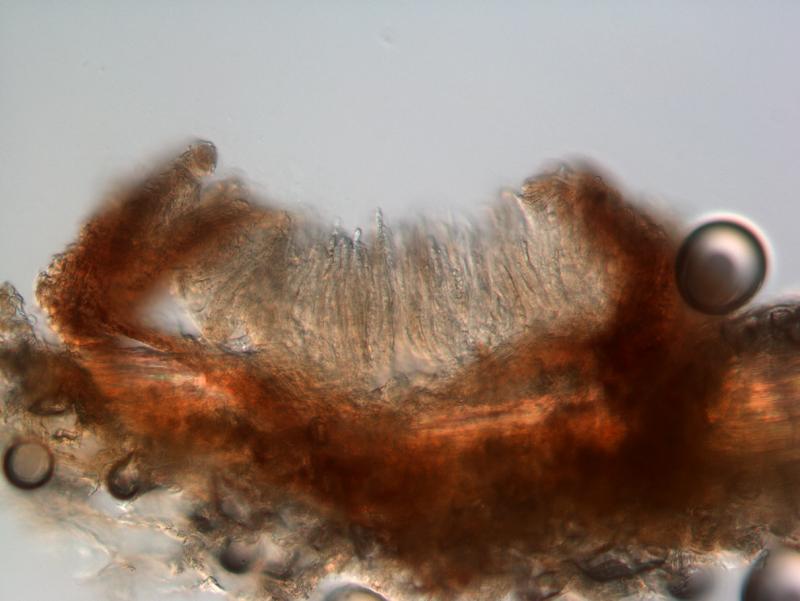
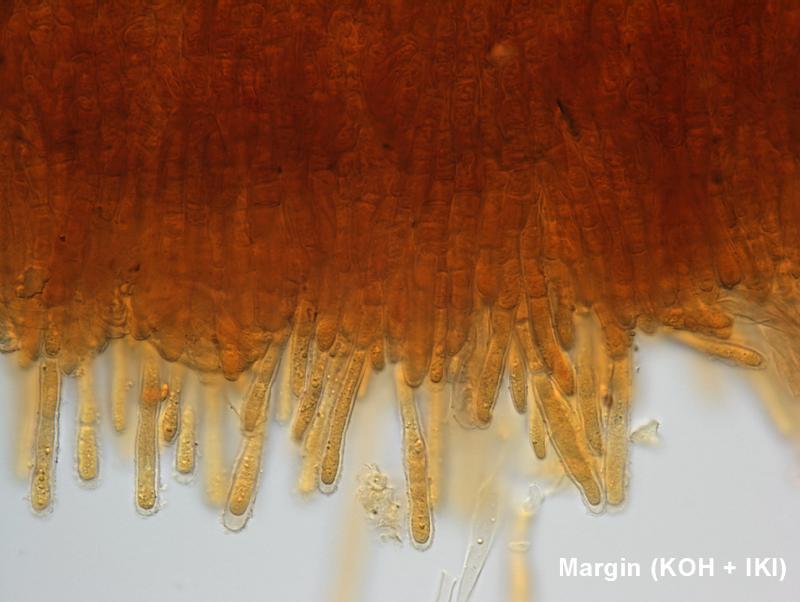
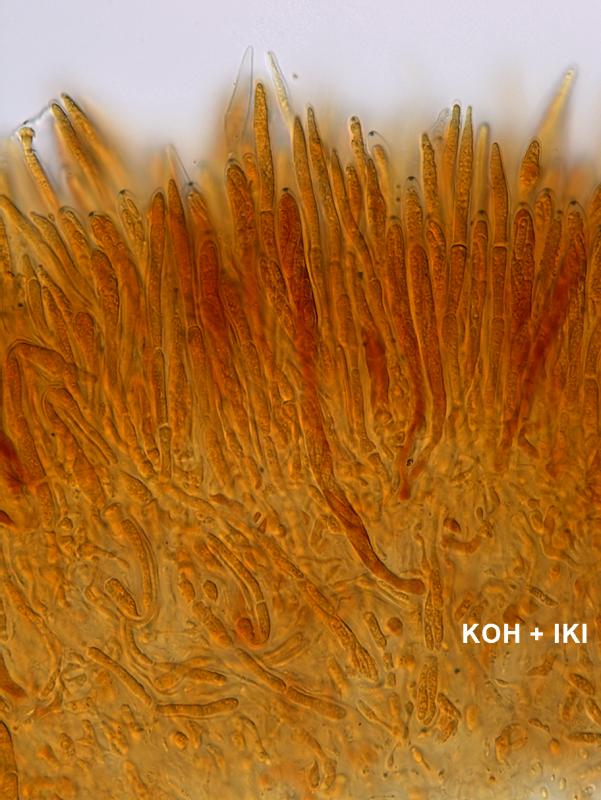
A few more images. I think I was quite taken with the asci and paraphyses in IKI/KOH that day...
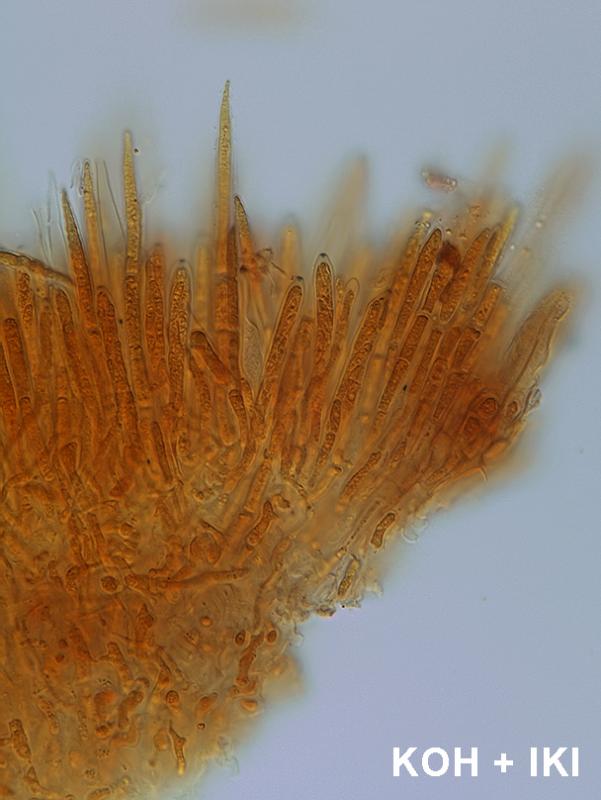
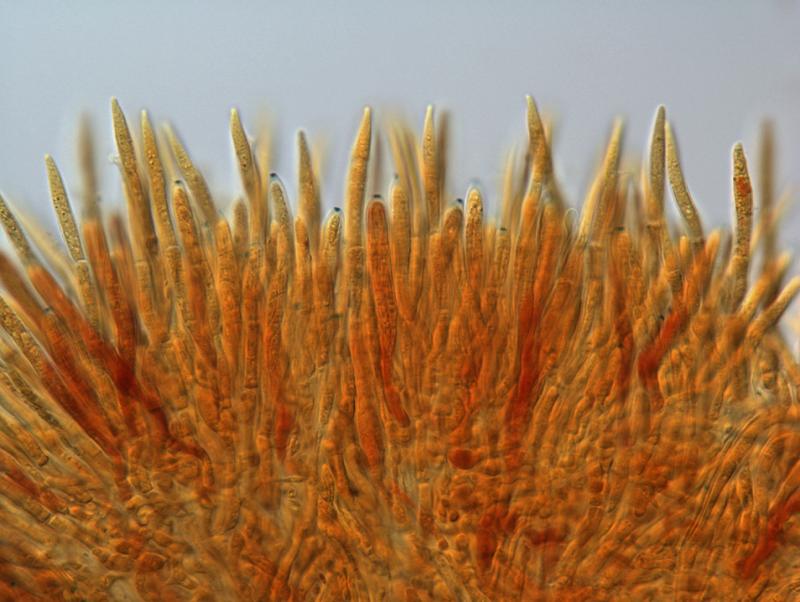
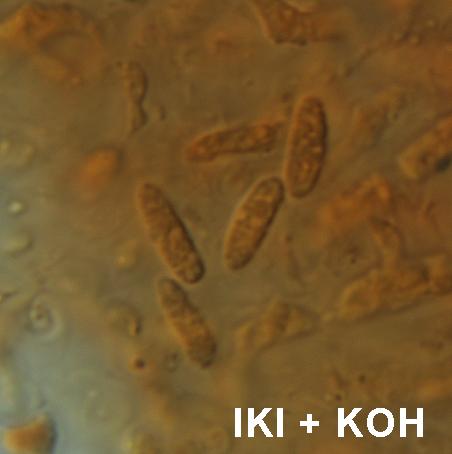
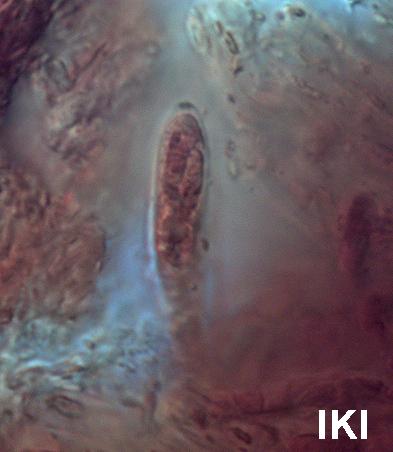

there is actually a Hysterostegiella typhae, and I believe it is this species.
Please let me know if you find anything interesting with your culture.
We have merged this family in the Cenangiaceae (see my poster on invivoveritas). For Hysterostegiella I cannot remember a single existing sequence!
Zotto
The cultures looks as if they are trying to produce ascomata, but nothing so far. I will try to sequence it in the near future and let you know the results.
Thank you very much, it is great to get a name on this one.