
12-03-2026 15:45
Åge OterhalsDear forum,I found this small discomycete on a ver
11-03-2026 16:48
 Bruno Coué
Bonjour, je serais heureux d'avoir votre avis sur
11-03-2026 17:36
 Michel Hairaud
Bonjour, Je cherche des indices pour cette réc
08-03-2026 14:05
 Thierry Blondelle
Bonjour à tous,Sur 3 récoltes supposées de H. l
11-03-2026 14:14
Gernot FriebesHi,I would like to share a collection of Scopinell

10-03-2026 18:08
 Marc Detollenaere
Dear Forum,On stems of Arctium, I found some downy
Diaporthe? on Berberis communis
Jakob Schneller,
24-09-2015 16:59

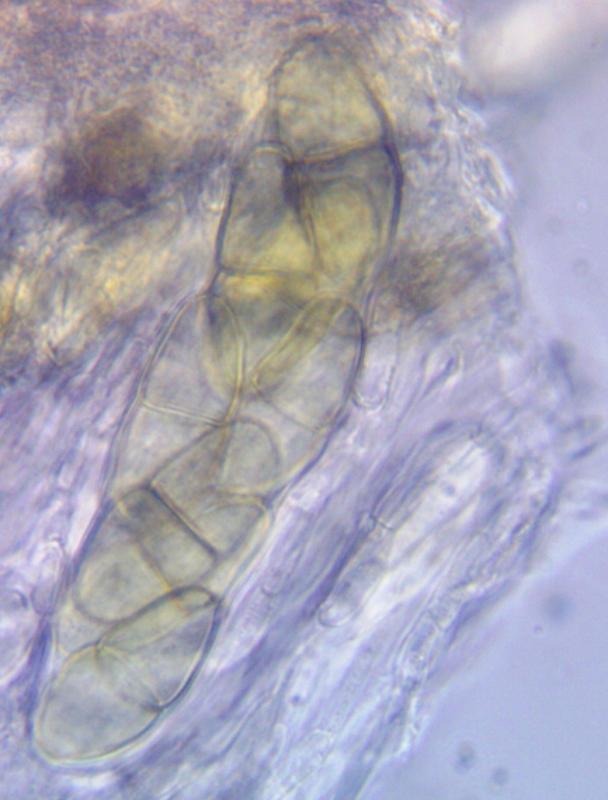
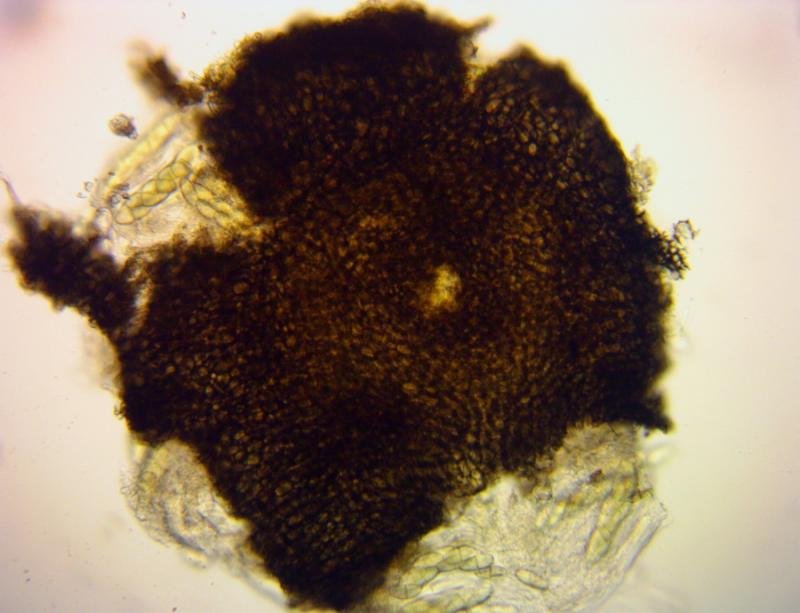
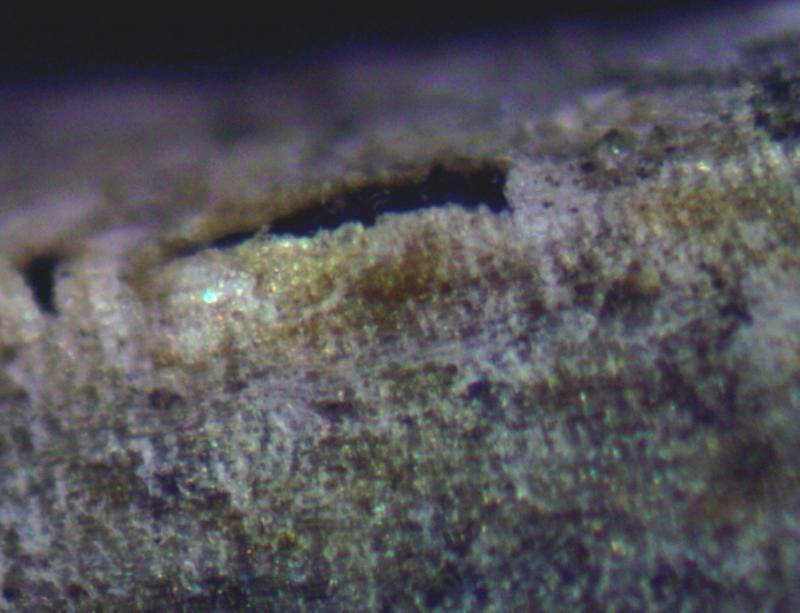
The spores are extrordinary large 36-39 um x 18.20 um. The asci 140-160 um. Pyrenocarpous,growing immersed and the opening splitting the the bark, black. on branches of Berberis
.
Stoykov Dimitar,
25-09-2015 14:11

Re : Diaporthe? on Berberis communis
Hi, Dear Jacob,
Maybe useful to try another genus. Beak of the perithecium is not seen (in genera of the Diaporthaceae and Melanconidaceae they always present).
Regards, Dimitar
Maybe useful to try another genus. Beak of the perithecium is not seen (in genera of the Diaporthaceae and Melanconidaceae they always present).
Regards, Dimitar
Stoykov Dimitar,
26-09-2015 09:10
Re : Diaporthe? on Berberis communis
I have checked, as far as possible, in Wehmeyer's monographs (about Diaporthe - 1933), and about Melanconis and allied genera (1941). The stroma of your find looks like those of Melanconidaceae , but I don't know if the spores have appendages. If present - this fungus could be attached to Prosthecium (maybe an undescribred one), but I am not familiar with Prosthecium.
In Wehmeyer's monograph (1933) there are 2 species amongst the large spored ones - Cryptodiaporthe magnispora (Acer) and C. pyrrhocystis (Alnus, Coprylus) - but the spores are not constricted at septa and are much thinner (6) 7-9 micrometers.
In Wehmeyer's monograph (1933) there are 2 species amongst the large spored ones - Cryptodiaporthe magnispora (Acer) and C. pyrrhocystis (Alnus, Coprylus) - but the spores are not constricted at septa and are much thinner (6) 7-9 micrometers.
Alain GARDIENNET,
27-09-2015 16:02

Re : Diaporthe? on Berberis communis
Bonjour,
Before searching in Diaporthales, the first question should be : are the asci bitunicate or unitunicate ?
Alain
Stoykov Dimitar,
28-09-2015 14:21
Re : Diaporthe? on Berberis communis
Yes, the right question to answer. Thank you, Alain!
Regards,
Dimitar
Regards,
Dimitar