22-05-2026 14:44
 Lothar Krieglsteiner
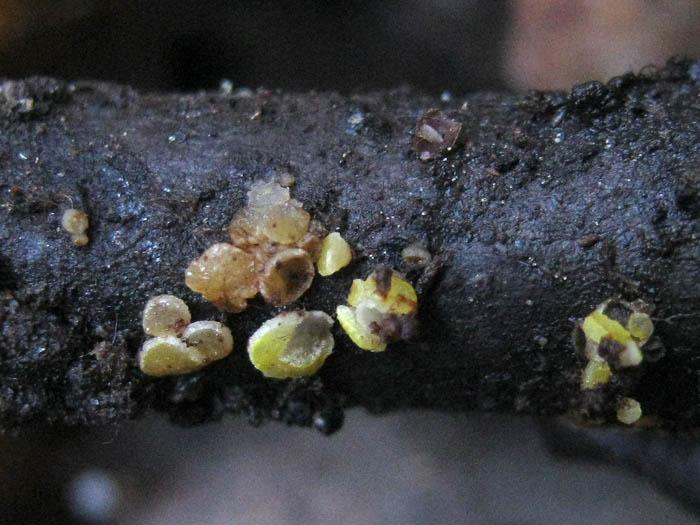
in unripe condition citrine yellow, then soon fadi
23-05-2026 11:44
 Charles Grapinet
Hello, I am having trouble identifying this copro
25-05-2026 16:44
François BartholomeeusenHi forum members,During an excursion organised by
25-05-2026 16:35
 Bernard CLESSE
Bonjour à toutes et tous,J'ai trouvé récemment,
22-05-2026 13:29
Gernot FriebesHi,I am curious to hear your opinion on this mater
23-05-2026 18:57
Sylvie Le GoffBonjour à tousRécolté sur une branchette de Sal
22-05-2026 21:35
Steve ClementsBonjour, I expected this find on old wood on our
22-05-2026 18:12
Lothar Krieglsteiner
... in moist chamber from Portugal.As the fungus s
22-05-2026 20:08
Ethan CrensonHello all, Yesterday in NYC I was visiting an e
 ¡Hola, de nuevo!
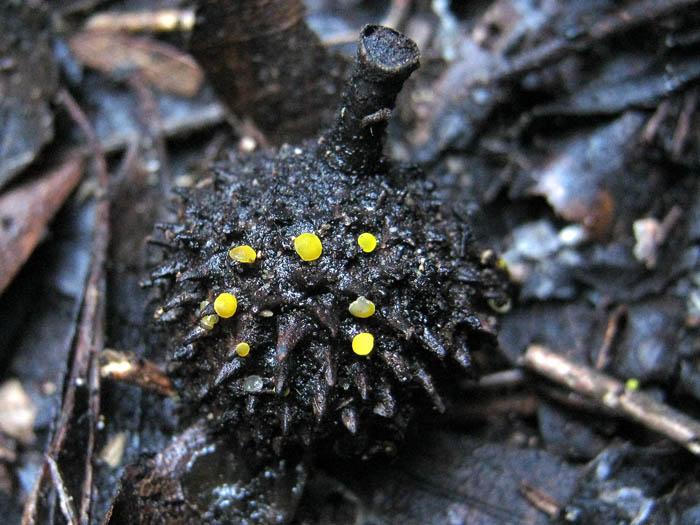
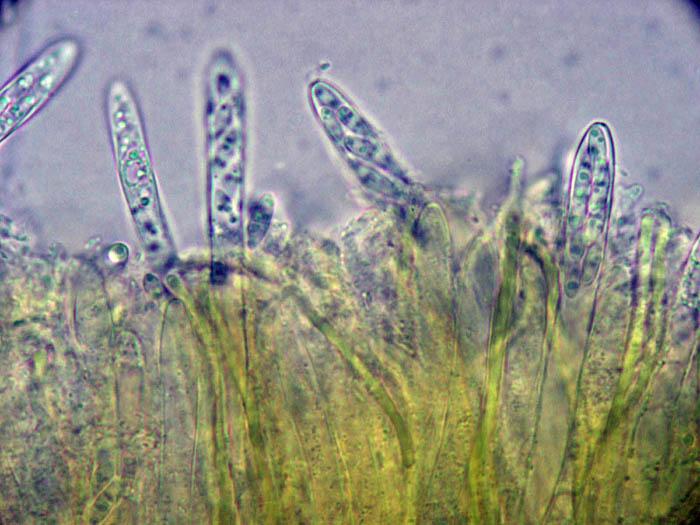
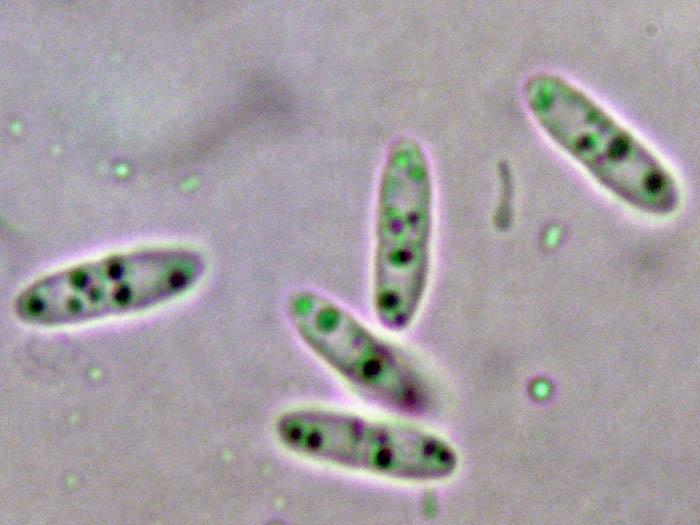
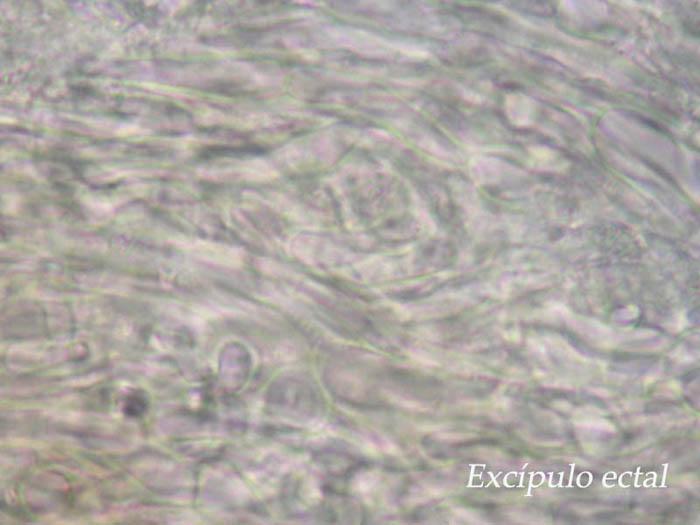
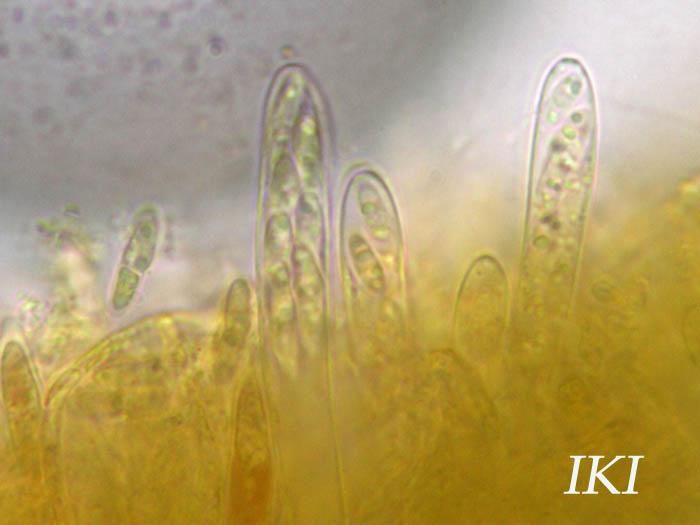
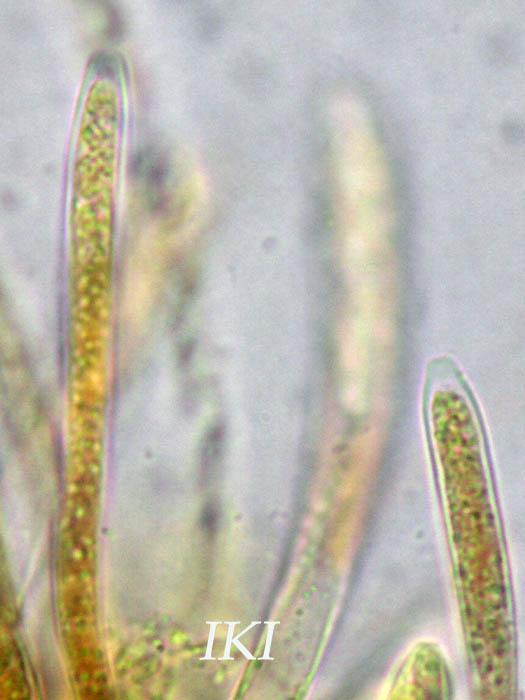
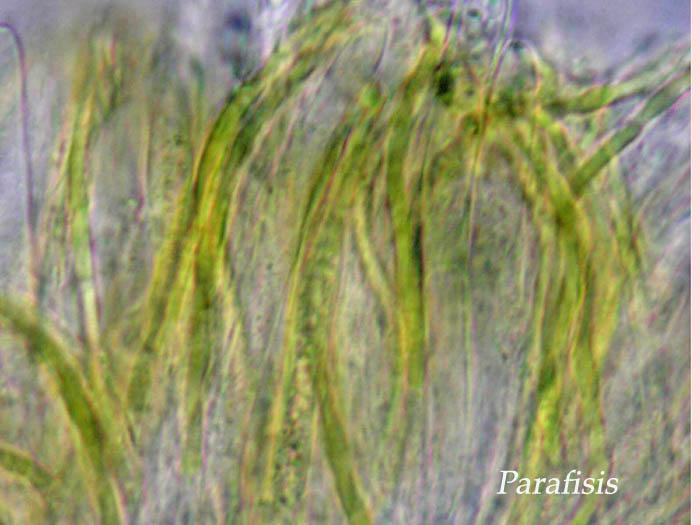
Apotecios amarillos citrinos, en parte externa de cúpula de fruto (bellota) de Quercus coccifera. Hasta 1 mm de diámetro.Ascas sin croziers, dudosa reacción amiloide; esporas con septo central y vacuolas; parafisis con pigmento citrino, uniformes; excípulo ectal con textura intrincata.
Serán recibidas con agrado, todas las sugerencias.
Gracias
Lemon yellow apothecia, partly external dome of fruit (acorn) of Quercus coccifera. Up to 1 mm in diameter. ASCI without croziers, dubious reaction amyloid; spores with central septum and vacuoles; parafisis with citrine pigment, uniform; excípulum ectal textured intrincata.
They will be received with pleasure, all the suggestions.
Thank you

Bisporella clarflava = B. sulfurina shows similarities, but is inamyloid.
Zotto
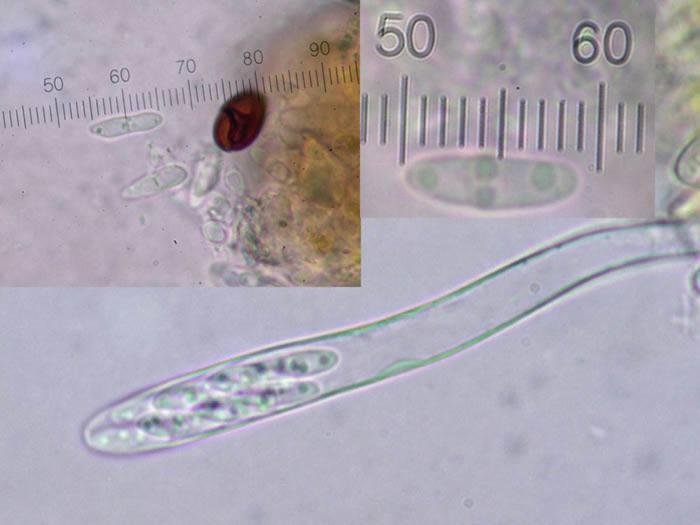
Measures spores 9-11 x 2.5-3 microns
Javier
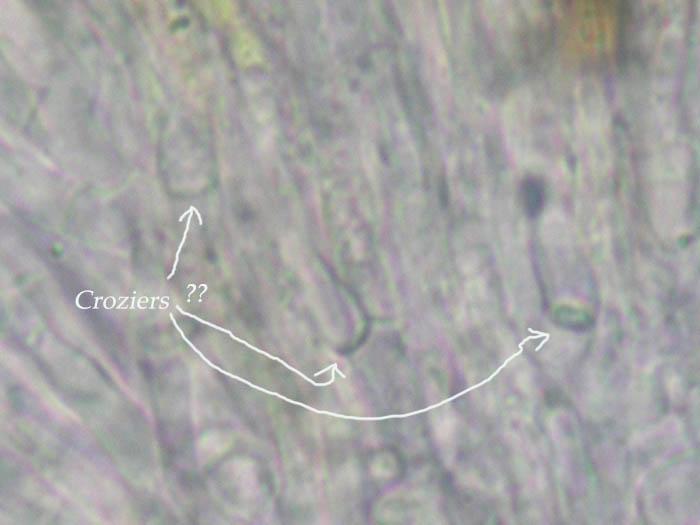
Your right ascus is inamyloid, but your left? Have you more IKI-images of asci?
Spore size fits well clatroflava.
Zotto
Bisporella claroflava is very cosmopolitan, but had not yet seen in fruit of Quercus coccifera.
Javier
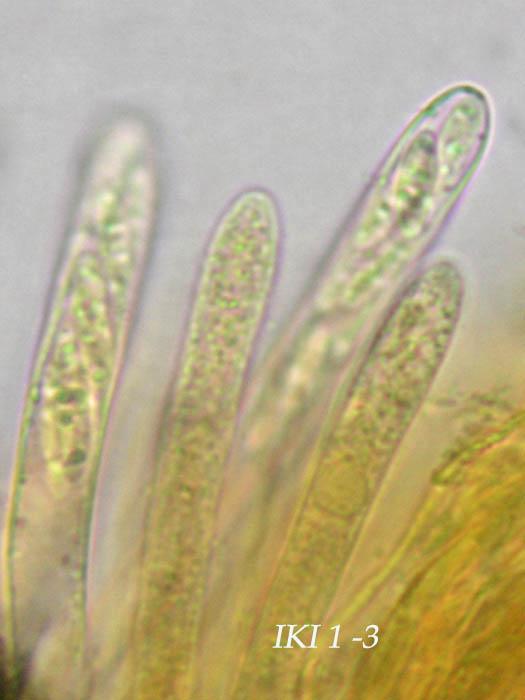
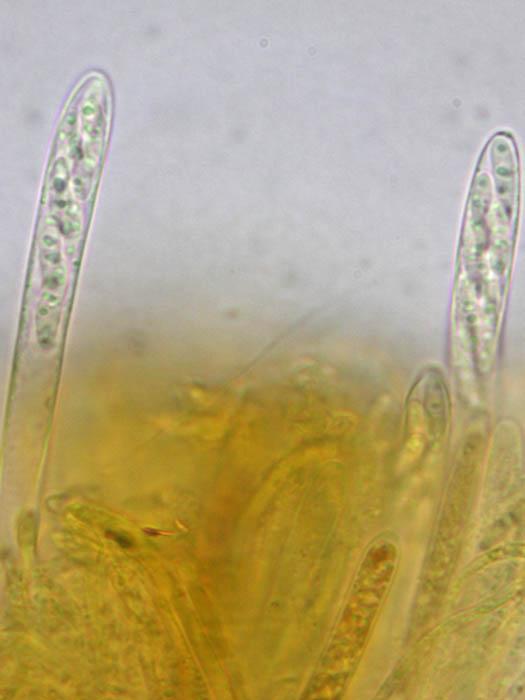

I think that it is a shadow below the ascus that gives the impression to be euamyloid.
Anyway, I have seen more or less grayish in IKI for claroflava.
Raúl
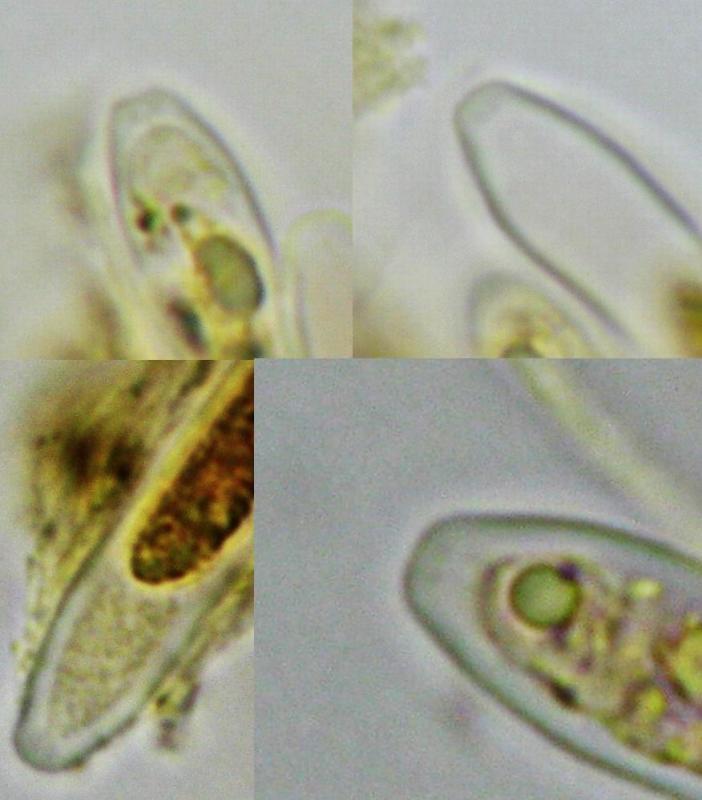
that's really good. Sometimes an amyloid ring is visible already without iodine. But that an inamyloid ring is visible is new to me! Or do you think that the greyish ring is invisible without IKI?
Zotto
Je pense qu'il s'agit de Bisporella sulfurina.
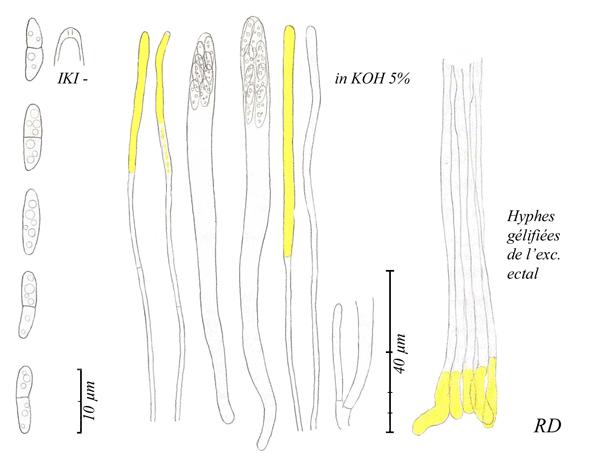
Voici mes dessins réalisés à partir d'une récolte faite dernièrement
Le contenu de la paraphyse de droite, est décoloré par le KOH
Amitiés
René
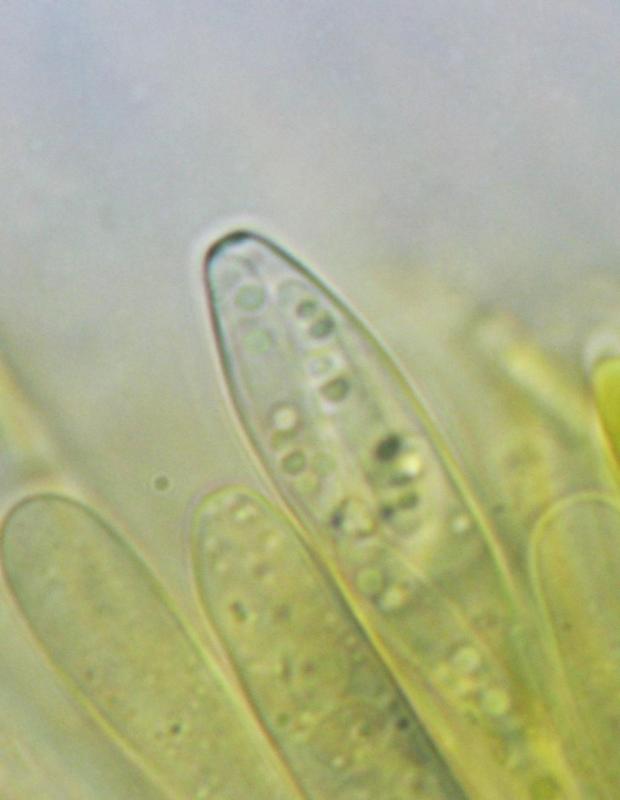
I do not know what to think... I attach a pic of the ascus fully turgescent where you can see two apical dots (more or less ;-)), but not the hole apical canal. I send you a Picasa link to your mail with the others pics.
Could you explain us why you think it is better to call it claroflava instead of sulfurina?
Merci René pour ton dessin.
Raúl
Bisporella claroflava (Grev.) Lizo? & Korf, Mycotaxon 54: 474 (1995)? et placé en synonymie avec Bisporella citrina (Batsch) Korf & S.E. Carp., Mycotaxon 1(1): 58 (1974)?.
Voir : http://www.speciesfungorum.org/Names/SynSpecies.asp?RecordID=309569?
L'espèce est donc, sur cette base, distincte de B. sulfurina.
J'espère que tu vas bien ? Je te transmets mes cordiaux et amicaux messages et je garde un très bon souvenir de notre rencontre.
René
Bisporella claroflava was thought to be a synonym of B. sulphurina by Lizon & Korf 1995, see attach.
As synonyms they list also B. discedens, and Helotium citrinicolor.
About sulphurina they write:
Korf & Zhuang (1985) expressed doubt if B. discedens can be really
distinguished from the common Bisporella sulphurina (Quél.) S. E.
Carpenter. This species seems to be really closely related to B. claro_ava
and it may be conspecific. Quélet's collections were partly destroyed
(Gilbert, 1949) and also the type specimen of Helotium sulphurinum
Quél. is missing at PC (R. Cailleux, in litt.). Until a lectotype or neotype
is chosen for Quélet's species, no conclusions can be made.?
Raul: your pic of living ascus is also in IKI? Again one could easily think this is amyloid, but it isn't. More clear results with rings are obained in dead asci, anyhow your last example shows that this is not very clear in this species.
Zotto
 Lizon-amp-Korf-1995-Bisporella-claroflava-0001.pdf
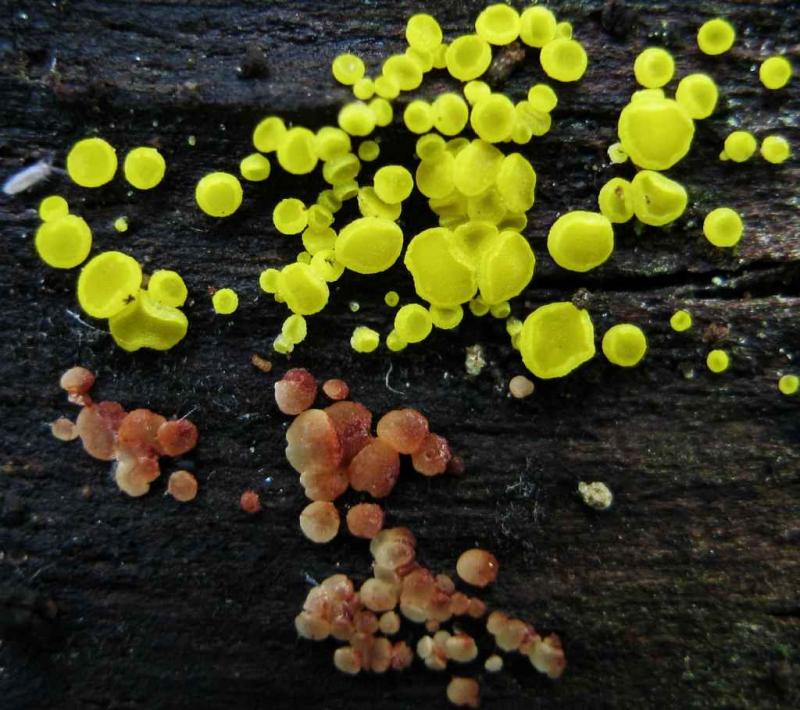
And thanks Zotto for your explanation too. My last photo is in water. Next time I do micro of this species I will focus more on apical pore. I attach the macro with its common partner on Eucalyptus: Calycina "heterospora"
Raúl
Zotto
Saludos