03-03-2017 11:27
Alan Rockefeller
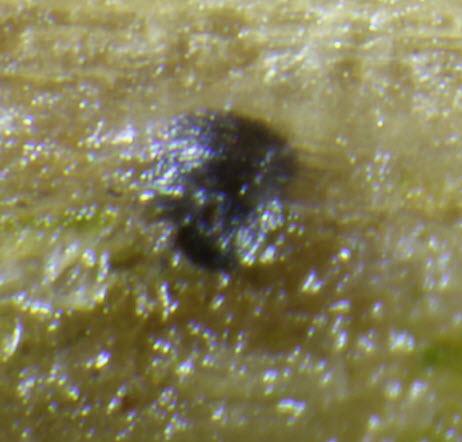
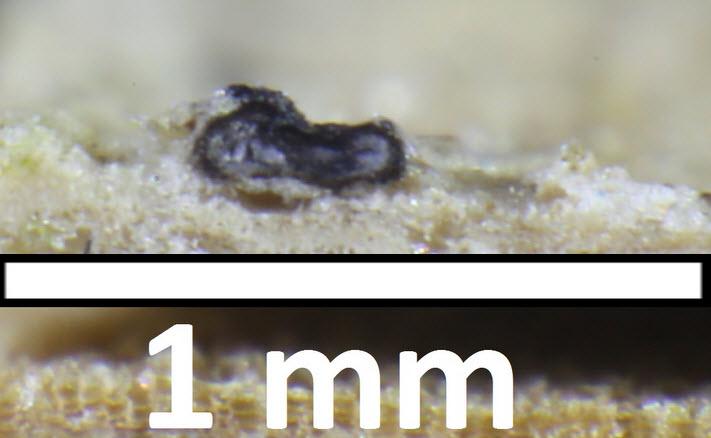
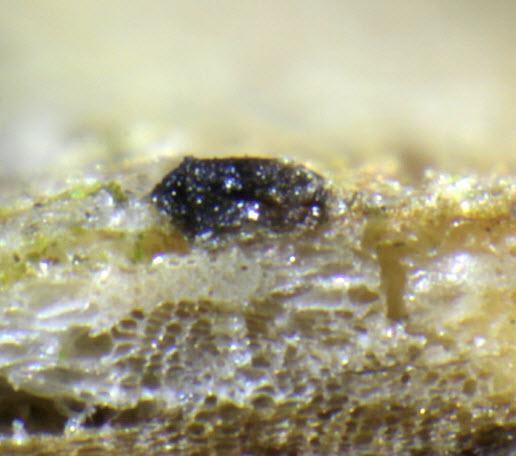
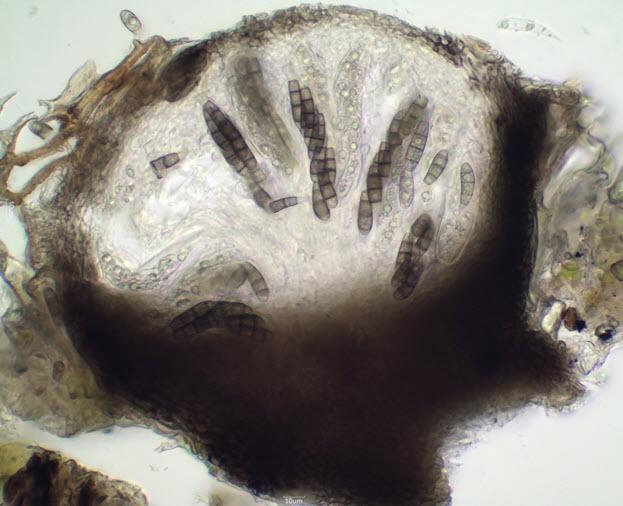
Found in Oakland, California on a well decayed Que
03-03-2017 11:58
Alan Rockefeller
What is this? Under Quercus agrifolia in Oakl
04-03-2017 20:08
William Slosse
Could this be H. leucomelaena?Found in sandy clay
09-03-2017 22:23
Viktorie Halasu
Hello forum, I'd like to ask, which of the two ge
07-03-2017 22:33
Lepista ZacariasHi everyone,These specimens were found in a public
04-03-2017 17:25
Ethan CrensonOn bare wood in Bronx, New York, US. There were
09-03-2017 15:51
Pablo Sandoval
Estimados,Me podrían dar un consejo o cual es su
06-03-2017 16:27
Pablo Sandoval
Estimados,Alguno de ustedes me podría facilitar l
09-03-2017 00:29
Can anyone confirm this as Pyrenopeziza plicata?Gr
Does anybody have any ideas what genus is it? Among the Aleuria, Neottiella, Melastiza I didn't find suitable option.Fungi growing in desert on a grassy meadow where cattle graze, in the middle of April.
Apothecia size d 13-35 mm
Asci L 179-213 µm, d 9.3-10 µm
Paraphyses septate L 202-216 µm, d 4.31-5.17 µm
Spores (10.6) 11.4 - 12.9 (13.4) × (7.6) 8 - 8.9 (9.3) µm Qe = 1.4
I think Aleuria is good (Melastiza are Aleurias with dark coloured marginal cells) - The spores with reticulum would fit in my eyes.
Neottiella are moss-parasites and look differently.
But possibly other genera must be considered that I don`t have in my mind.
What species I don`t know.
Regards Lothar
I'll try to find something among the Aleuria. The problem is that very little information about it except Aleuria aurantia.
Have you considered a Sowerbyella species?
no - I didn`t - and that was a mistake.
Thanks, Enrique!
Best regards, Lothar
ecology and phenology of your fungus remember me of a Sowerbyella species I found with French friends many years ago near Angers (France) at the end of February on a meadow with grazing cattle. Size and ornamentation of the spores would fit also - BUT: Sowerbyella species are usually stipitate! Your pictures do not show the underside of the fruitbodies - as far as I can see, they look sessile.
Our collection was later labelled "Discina parvispora" bei Ginette Trigaux and recombined into Sowerbyella by Jiri Moravec ("A new species and two new combinations in the genus Sowerbyella", Mycologia Helvetic 2(1): 93-102 (1986). Moravec writes: "Very interesting and outstanding is the winter fruiting time of the two collections of S. parvispora and the remarkable coprophilous habitat of the collection from Angers. However, also the type collection was found on a rich manured soil." (The type of "Discina parvispora" comes from the Champagne / France).
In 2006, Yao and Spooner revised the type material of Discina/Sowerbyella parvispora and synonymized the taxon with Sowerbyella radiculata.
By the way, the well known species Sowerbyella radiculata (or a closely related species) has several times been described from manured pastures (so by Dutch mycologist R.A. Maas Geesteranus), although the "true" S. radiculata normaly grows in Picea forests or mixed forests.
Best regards from Bavaria
Till
Do you have a pdf copy of Moravec's paper with the new combination?
Thanks in advance
enrirubio@asturnatura.com
I didn't know it is in Ascomycete.org
could you please check the ascus base - is it simple septate, or with two septa? And, if I see correctly, the living spores have two polar groups of smaller guttules that later coalesce?
(This too could help with finding the correct genus.)
Viktorie
I looked through all Sowerbyellas and tried to strike out unsuitable versions. Neither species is well suited.
Sowerbyella brevispora - fulvous to brown, have different spore surface.
Sowerbyella angustispora - narrow spores - sp 12-15.5 x 4.8-7 µm, Q=2.3-2.6
Sowerbyella crassisculpturata - another color, larger spores - 13.5-15 × 7.5-9 µm, and are ornamented with irregularly branched
Sowerbyella densireticulata – another color, larger spores - bright yellow, sp > 16 µm long
Sowerbyella imperialis – another color, narrow spores - yellow, 12,2-13,4 x 6,4-7,0 µm, Q = 1,8-2,0, apothecia with conifers
Sowerbyella unicolor - another color - yellow, 12-14 x 7-7,5 (Syn. of S. Imperialis ?)
Sowerbyella reguisii - larger spores - yellow-olive or orange, sp 17-22 µm long
Sowerbyella unicisa - another color - pale yellow, with pink tints
Sowerbyella fagicola - larger spores, sp 17-20 µm long, apothecia with Fagus
Sowerbyella laevispora - another color, larger spores - brown 17-20,5 × 10-13,5 µm
Sowerbyella phlyctispora - larger spores, spores 15-18 x 8.5-10 µm
Sowerbyella polaripustulata - with deciduous trees, spores spinose-echinulate
Sowerbyella radiculata var. petaloidea - another color, larger spores - yellow to ochraceous, (15-) 16-18 × 7.5-9 µm
Sowerbyella radiculata var. radiculata - another color, larger spores - yellow to ochraceous, 14.0-15.5 x 7.5-9.0 µm
Sowerbyella radiculata var. kewensis - another color, narrow spores - yellow to ochraceous 12-13 (-14) × 6.5-8 µm
Sowerbyella bauerana - synonym of S. radiculata? Yellow too?
Sowerbyella rhenana - another color, larger spores - orange-yellow, sp 17-22 µm long
Sowerbyella parvispora - another color, stipitate - greyish-yellow, 14-16.5 × 6.5-9 µm
I checked herbarium specimen, and saw no stipe (see photo).