
03-02-2014 09:08
 Joop van der Lee
Found on horse dung.Examining an unknown asco I fo
02-02-2014 20:12
 Björn Wergen
Hi friends,I have some Corylus twigs here with a d

01-02-2014 20:40
 Alex Akulov
Dear FriendsCan you help me with identification of
01-02-2014 16:39
 Yannick Mourgues
Bon, les deux autres espèces trouvées sur Rosa n
31-01-2014 13:13
Yannick Mourgues
Found on Rosa.Ostiole fendu.Spores with 6-7 septa,
01-02-2014 13:15
Alex Akulov
Dear FriendsAt first glance, sporulation of the fu
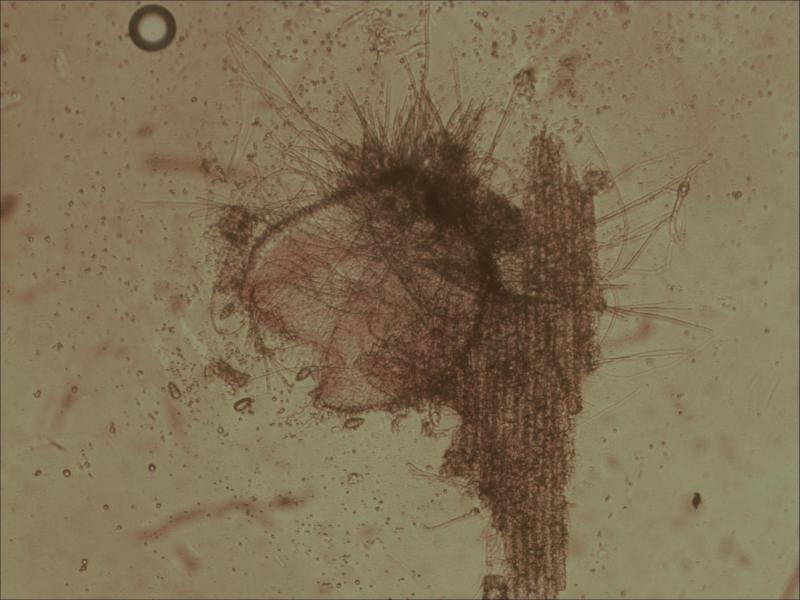
Found on horse dung.
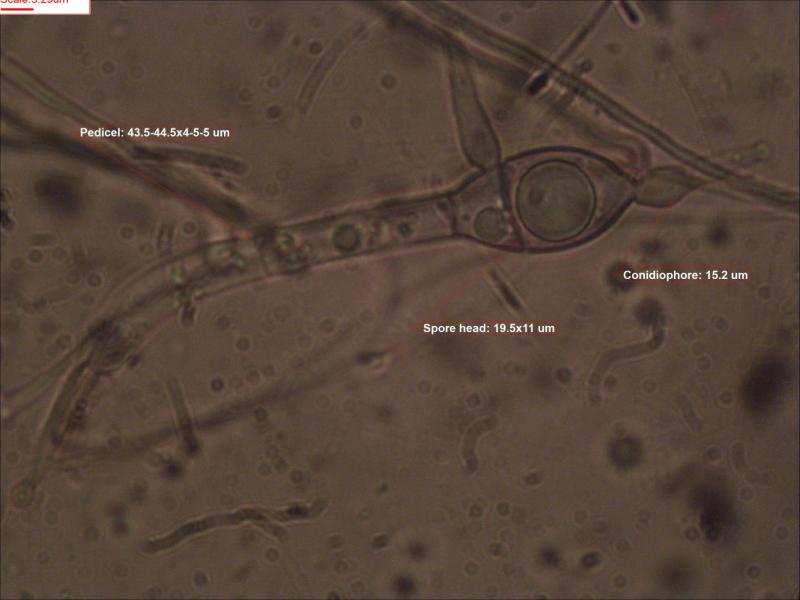
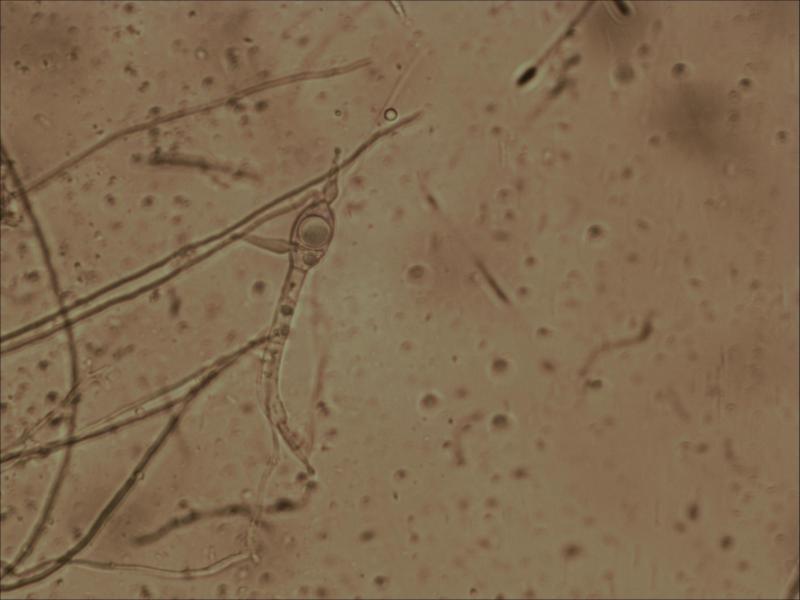
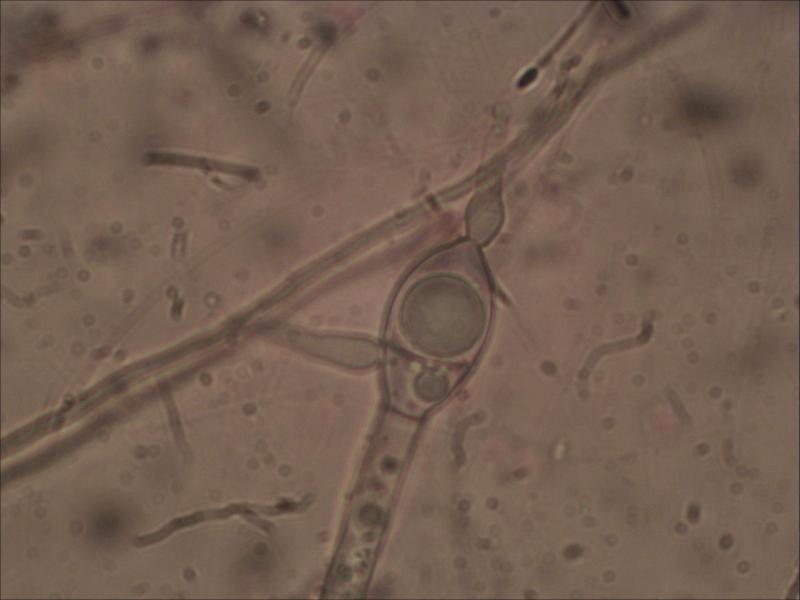
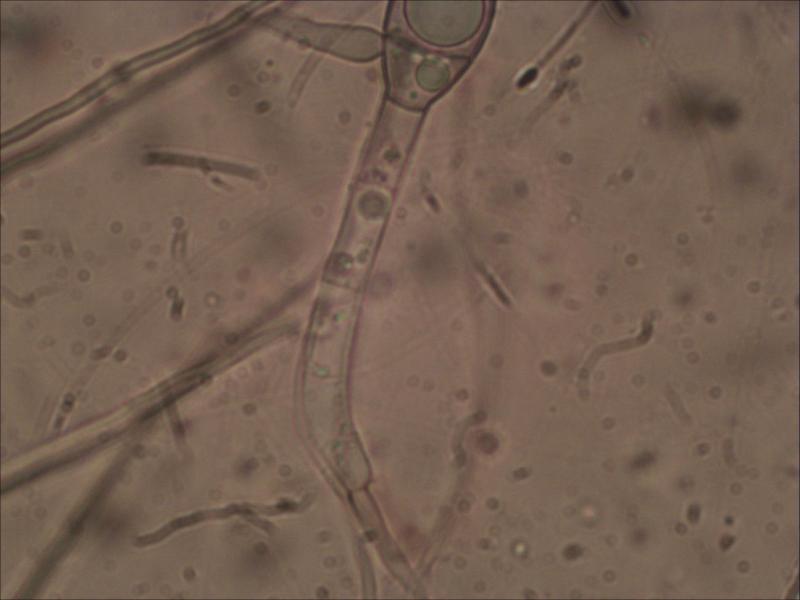
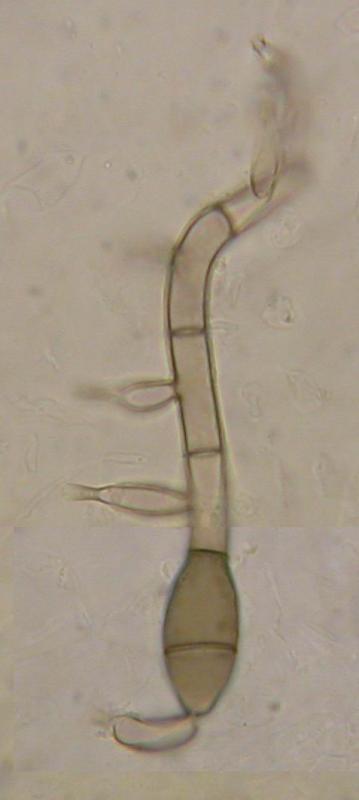
Examining an unknown asco I found these coniophores on a stray spore from an unknown Cercophora. Althoough the spore is not mature yet I have some measurements.
Spore head: 19.5x11 um; head does contain one septe.
Pedicel: 43.5-44.5x4-5.5 um; pedicel has three septa.
Conidiophore: 15.2 um
I also included a mature spore head
In Doveri I found a description of Tripterosporella pakistani whereby he refers to phialides for these extensions. Also the fruitbody compairs with what I found.
I do not know if this immature spore originates from this fruitbody, it's a bit strange to find a stray immature spore of Cercophora there.
The Cercophora fruitbodies I found in the same substrate are very much different from this one.

Zotto
Hello Zotto,
I just read an article in Doveri where they talked about phialides for these extensions in Tripterosporella pakistani
Joop

Andy
Thanks Andy.
Joop