
05-05-2026 22:40
Gernot FriebesHi,I believe this is a Plagiostoma growing on a Sa
04-05-2026 18:13
 Stephen Martin Mifsud
ID request for what seems to be a true aquatic fun
04-05-2026 16:39
Stephen Martin Mifsud
ID request: This specimen was collected in Malta o
28-07-2011 18:31
 Alex Akulov
Dear FriendsToday I made the pdf file of Velenovsk
28-04-2026 20:07
 Lothar Krieglsteiner
... on twig in the air at standing Ceratonia siliq
04-05-2026 09:50
 Castillo Joseba
Me mandan el material seco de Galicia,(España) re
02-05-2026 12:42
Alain BRISSARDBonjour à tousJeuidi 30 avril dernier on m'a remi
02-05-2026 13:06
Pauline. PennaBonjour Please can someone help me with this id
01-05-2026 22:45
 Thierry Blondelle
Bonjour à tous, Une récolte sur bouse séchée d
pyrenomycete parasitized or not?
François Bartholomeeusen,
06-05-2019 15:14
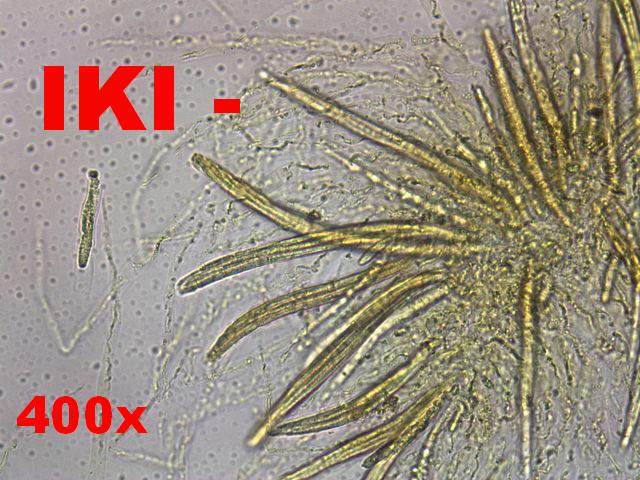
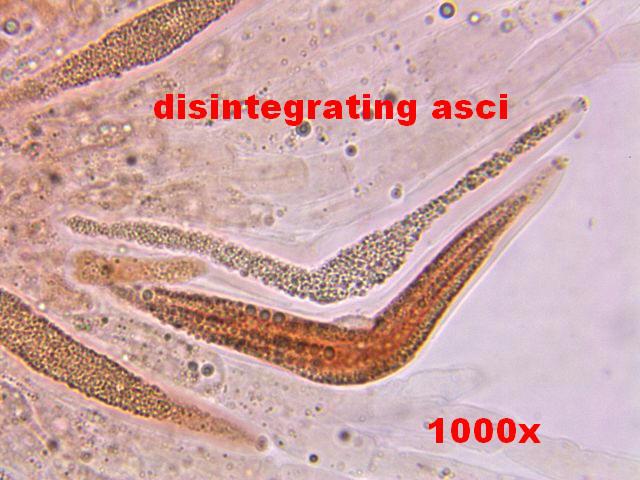
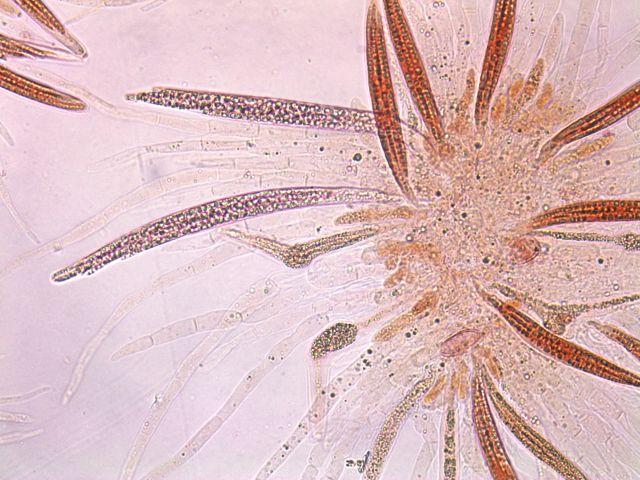
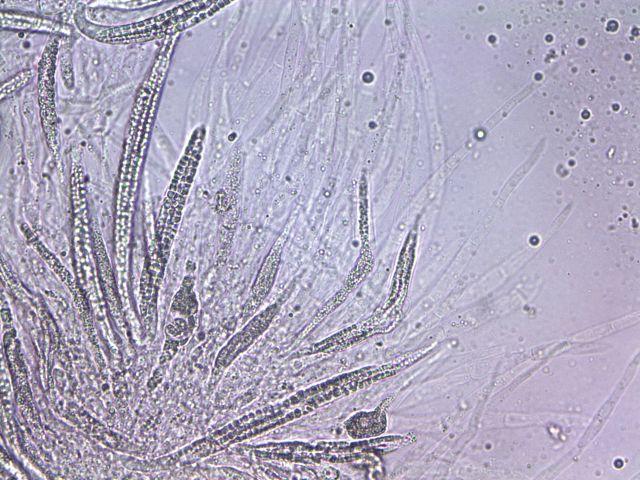
On carex (probably C. acutiformis) I found, just below the epidermis, black ellipsoid fruiting bodies with a tapering ostiole. Here and there are brown ancoring hyphen.
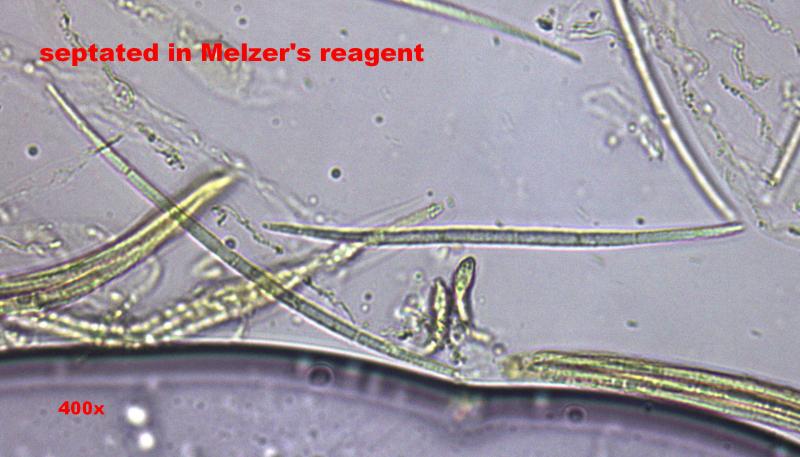
During an initial examination I found filiform spores that were unripe, in my view. After adding Melzer reagent I counted seven septa.
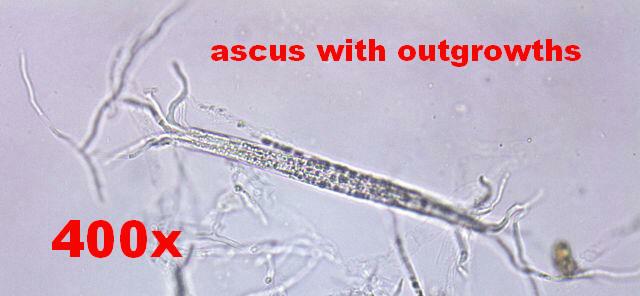
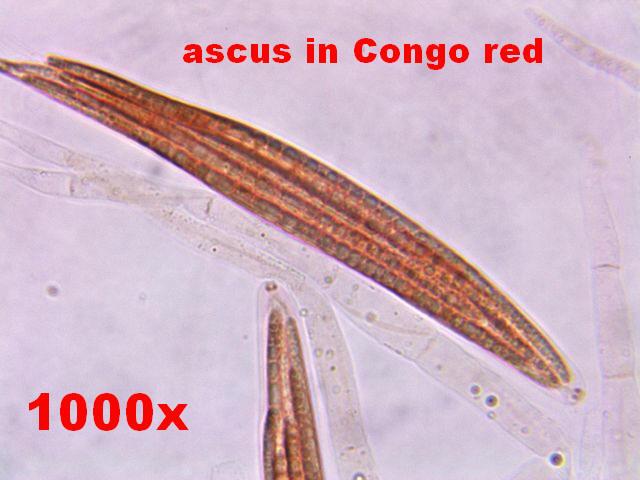
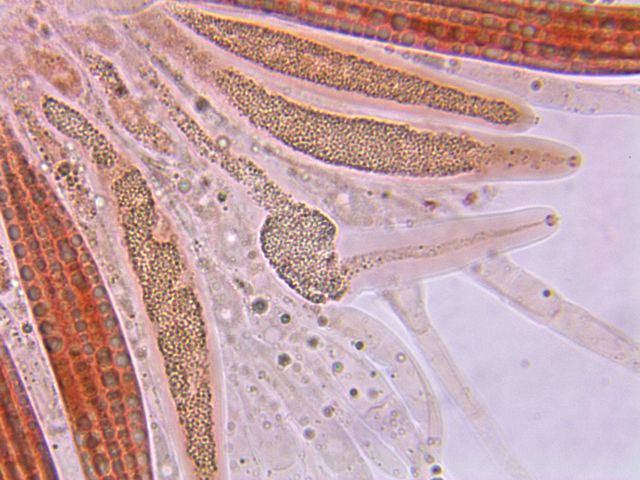
In the second examination, three days later, there were winding threads visible at both ends of the asci. These threads grew from each individual spore. In Congo red the "healthy" asci react strongly as well as the apical apparatus. I wonder if, what I thought to be paraphyses, are perhaps parasitic conidiophores?
Third examination: several asci bend like a banana and the contents disintegrated before my eyes.
Two questions: 1) which pyrenomycete have I examined?
2) Can anyone explain the phenomenon, is it maturation or a parasite?
Thank you for any additional information.
François Bartholomeeusen
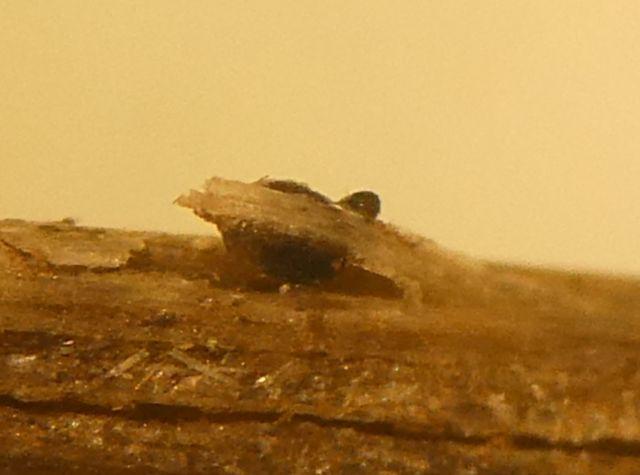
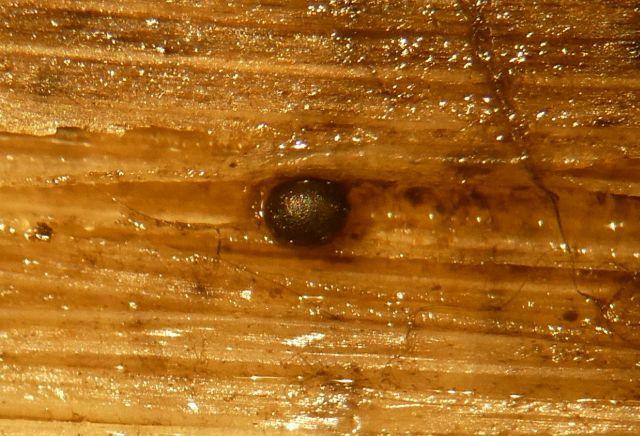
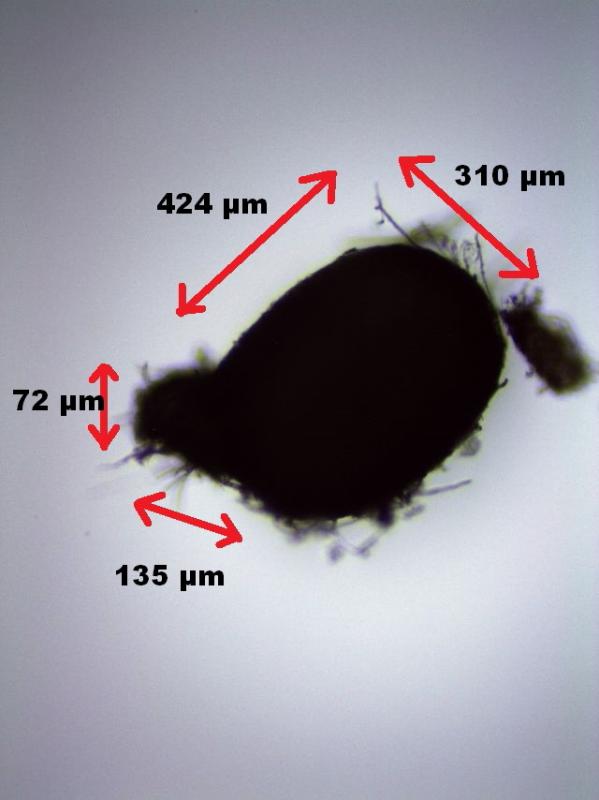
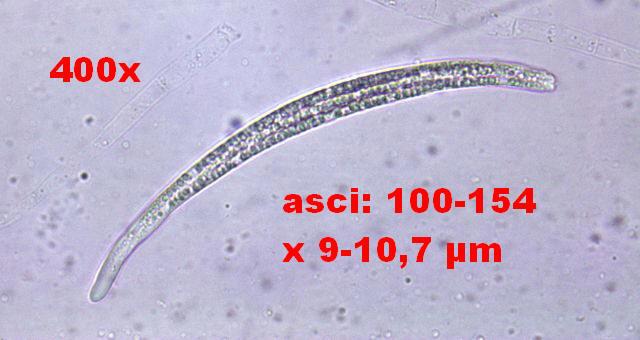
 cmcrascmirv-afkl-0001.jpg
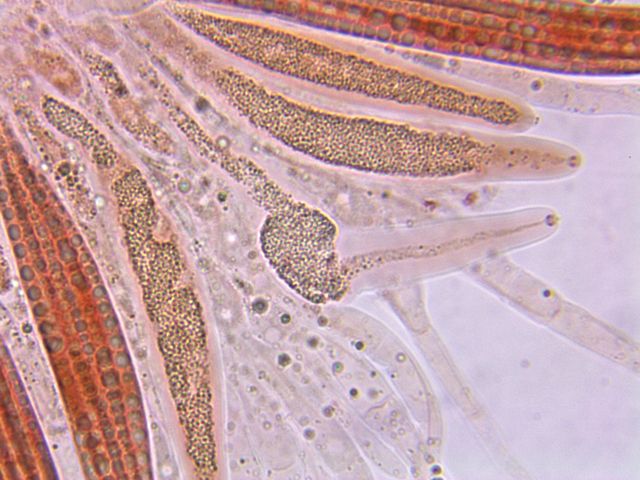 cmcrascmirv-afkl-0002.jpg
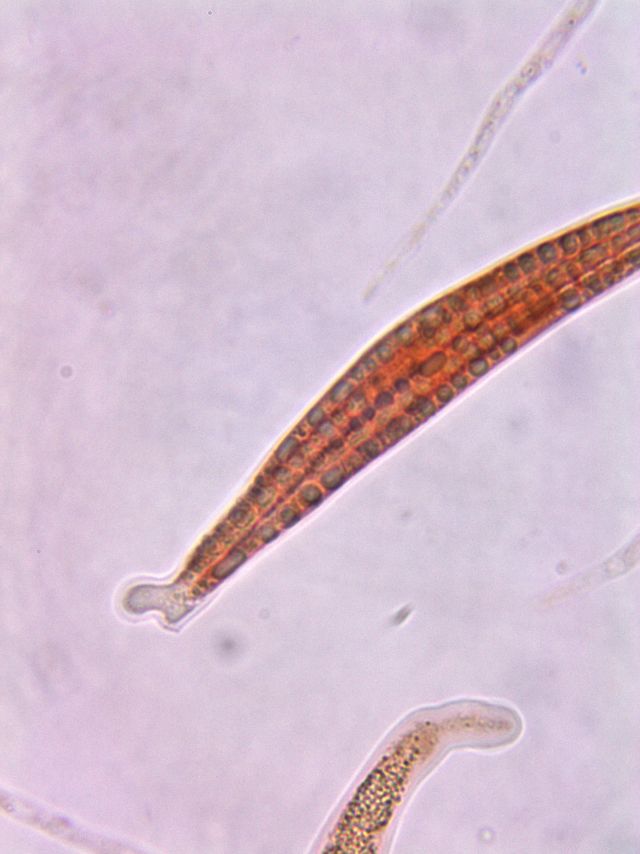 cmcrvoetasc-afkl-0001.jpg
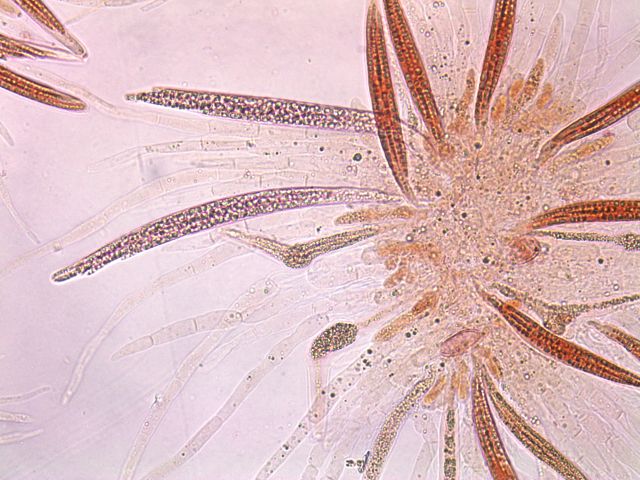 c400crparasc1-afkl-0001.jpg
Eduard Osieck,
07-05-2019 09:24
Re : pyrenomycete parasitized or not?
You may consider the genera Ophioceras and Plagiostoma although the latter has non-septate spores and is more or less confined to Urtica. The following key dealing with pyrenomycetes (s.l.) with filiform spores may be of help (i.e. key A9): https://www.mycologen.nl/NMV_Ascomyceten.html Eduard
Alain GARDIENNET,
07-05-2019 16:26

Re : pyrenomycete parasitized or not?
Please, compare to Plagiosphaera immersa.
François Bartholomeeusen,
07-05-2019 20:54
Re : pyrenomycete parasitized or not?
Good evening, Eduard and Alain,
Thank you for your advice, I will follow your guidelines and hopefully find the right solution.
Best regards,
François
Thank you for your advice, I will follow your guidelines and hopefully find the right solution.
Best regards,
François
Jac Gelderblom,
09-05-2019 19:17
Re : pyrenomycete parasitized or not?
why not Gaeumannomyces?
It was my first thought when I saw ypor pictures
greetings
Jac Gelderblom
Jac Gelderblom,
09-05-2019 19:17
Re : pyrenomycete parasitized or not?
why not Gaeumannomyces?
It was my first thought when I saw ypor pictures
greetings
Jac Gelderblom
Alain GARDIENNET,
09-05-2019 21:56
Re : pyrenomycete parasitized or not?
Yes Jac, of course. Plgiosphaera-like on grasses = Gaeumannomyces.
François Bartholomeeusen,
10-05-2019 11:34
Re : pyrenomycete parasitized or not?
Dear Jac and Alain,
Thank you very much for providing the solution. Probably it is Gaeumannomyces caricis, unfortunately I don't find a key or "Mycotaxon 11 (1): 23 (1980). I suspect that the website of Cyberliber is down!
Many greetings,
François
Thank you very much for providing the solution. Probably it is Gaeumannomyces caricis, unfortunately I don't find a key or "Mycotaxon 11 (1): 23 (1980). I suspect that the website of Cyberliber is down!
Many greetings,
François
Martin Bemmann,
10-05-2019 11:42

Re : pyrenomycete parasitized or not?
François Bartholomeeusen,
10-05-2019 12:07
Re : pyrenomycete parasitized or not?
Hi Martin,
Thank you very much, I've got it!
greetings,
François
Thank you very much, I've got it!
greetings,
François