
16-09-2016 20:41
Quijada LuisHi all, somebody has the following manuscript in
16-09-2016 15:22
Cvenkel MiranHost: BetulaThe brown stuff N.c. anamorph, Tubercu
15-09-2016 14:45
Marja PennanenHello,I have found some scanty yellow Hymenoscyhus
14-09-2016 20:29
 François Valade
hellolast saturday I found on wet wood (maybe Carp
11-09-2016 10:38
Patrice TANCHAUDBonjour,récolte sur sol en tourbière, parmi les
11-09-2016 23:51
 Rubén Martínez-Gil
Hola a todos. Subo unas fotos de un asco que enco
Karstenia?
Per Vetlesen,
10-09-2016 19:28
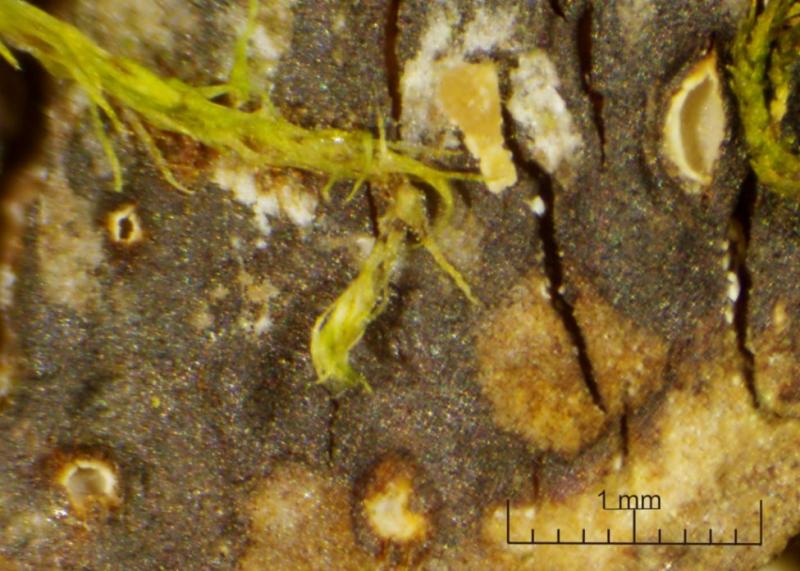
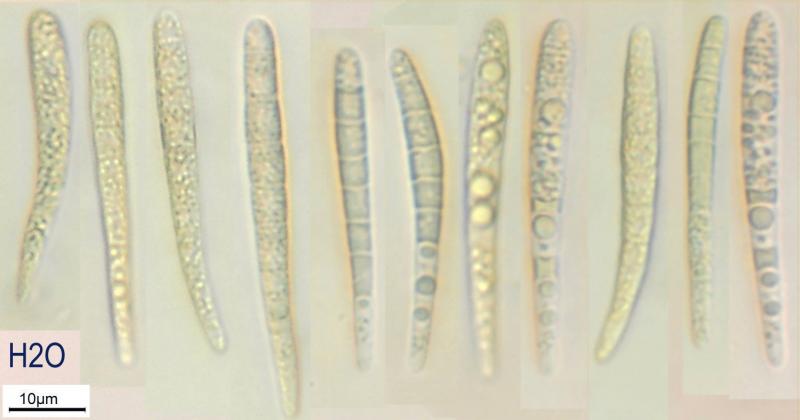
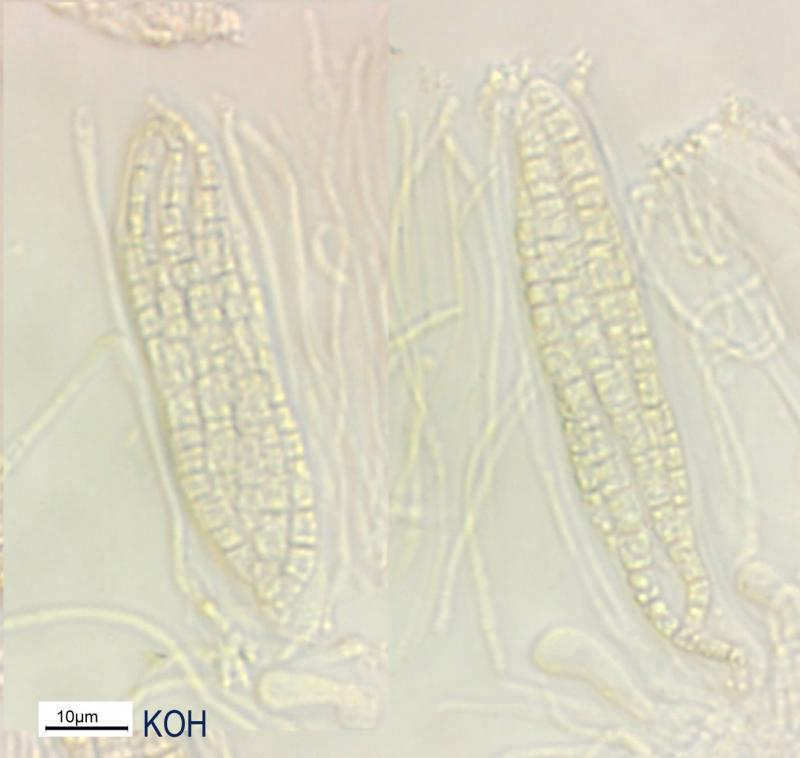
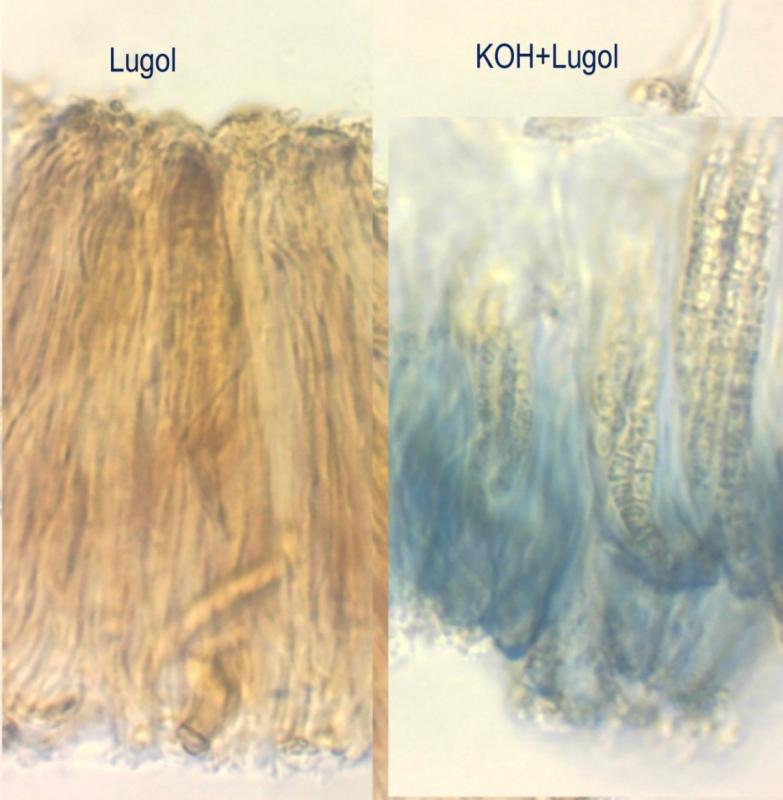
It was found on bark of Ulmus glabra in Stange, Norway. I think it is Karstenia, but I can't find any that fits 100%. It seems to be in between K macer and K rhopaloides with either too wide or too narrow spores, but I think it is closer K rhopaloides?
Spores: (6) 7 – 8 (11) septate; (34.2) 40.7 - 49.8 (56.9) × (3.8) 4 - 5.2 (5.3) µm; Q = (7.7) 8.6 - 11.7 (12.4) ; N = 24; Me = 45.6 × 4.7 µm ; Qe = 9.9
The IKI color reaction is stronger than the pic indicate.
Thanks in advance for help!
Regards
Per
Hans-Otto Baral,
11-09-2016 11:43

Re : Karstenia?
This is really difficult. It resembles also the description of K. lonicerae in Sherwood 1977: 55 but your spores are longer. So K. rhopaloides seems to be the best choice.
Per Vetlesen,
11-09-2016 13:12
Re : Karstenia?
Thank you very much for your opinion. Yes, Karstenia is very difficult; I also have 2 more collections, found on Juniperus communis in 2013 and 2015, I'm struggling with. I'll have a new look at them when I get time and maybe ask for help here on AscoFrance.