
06-05-2026 17:23
Thomas Læssøehttps://svampe.databasen.org/observations/10594257
06-05-2026 11:25
 Castillo Joseba
Me mandan el material seco de Galicia (España) re
28-04-2026 20:07
 Lothar Krieglsteiner
... on twig in the air at standing Ceratonia siliq
05-05-2026 22:40
Gernot FriebesHi,I believe this is a Plagiostoma growing on a Sa
04-05-2026 18:13
 Stephen Martin Mifsud
ID request for what seems to be a true aquatic fun
04-05-2026 16:39
Stephen Martin Mifsud
ID request: This specimen was collected in Malta o
28-07-2011 18:31
 Alex Akulov
Dear FriendsToday I made the pdf file of Velenovsk
04-05-2026 09:50
Castillo Joseba
Me mandan el material seco de Galicia,(España) re
02-05-2026 12:42
Alain BRISSARDBonjour à tousJeuidi 30 avril dernier on m'a remi
I found this ascomycete growing in sheet of Platanus.
Pseudotecios are inmersed, with a size of 150 um in diameter, and with a small neck about 40um.
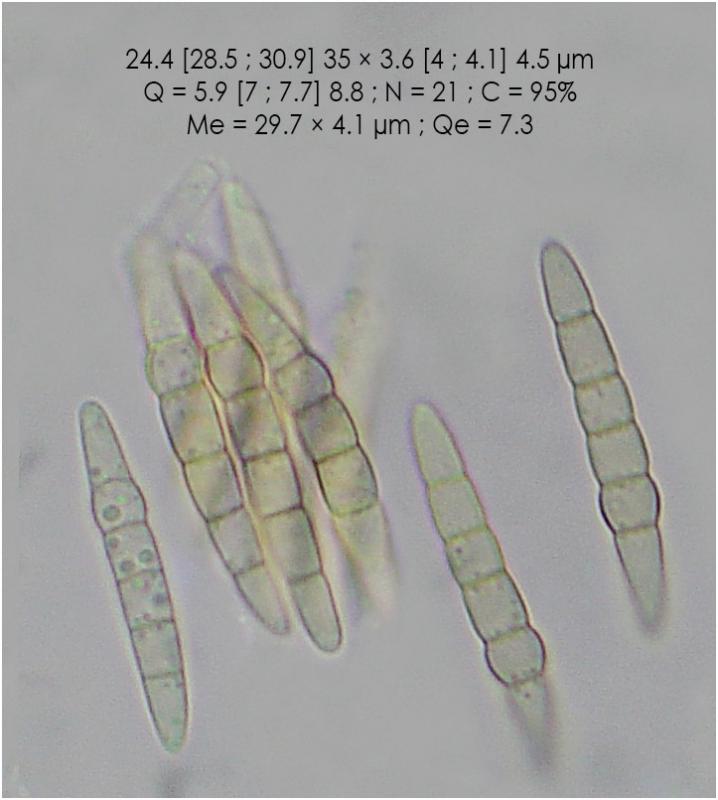
Spores with 5 SEPTA.
I think it is Leptosphaeria, but I could not determine the species.
Any idea?
Thanks, greeting
Susana
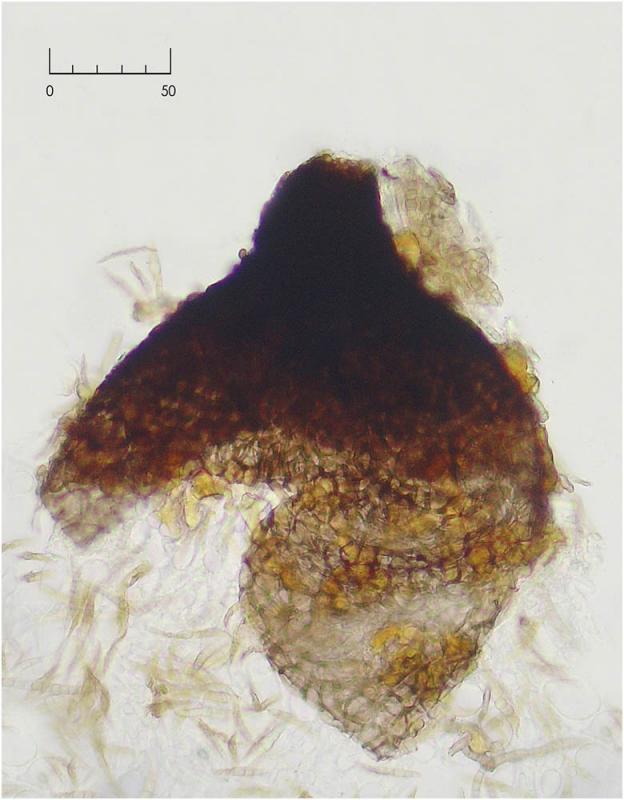
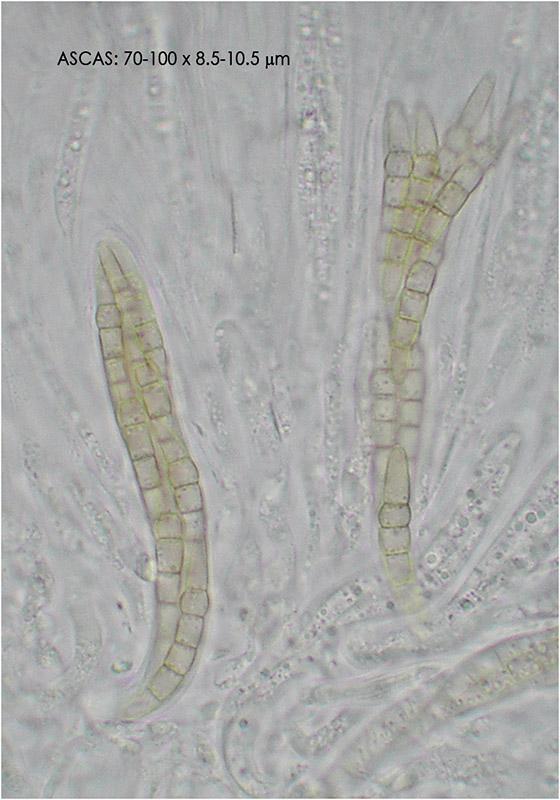

Either there's some weed leaf coming along with the Platanus leaf, and sticked on it, otherwise I have no clue.
Or maybe someone with more knowledge will find the solution...
Cheers - LUC.
No, there was no grass stuck to the sheet. The species was immersed in platanus leaf. The sheet had many "black spots", the majority belonged to Pleospora herbarum. I found 2 perithecia of this type.
To be P. vagans should have spores with some longitudinal septum, and I not saw it. In any case, it would seem more to P. nigrans, but here the spores are greater.
Saludos
Susana